Chest, Lap, or Back? What Your Cat's Climbing Spot Actually Means
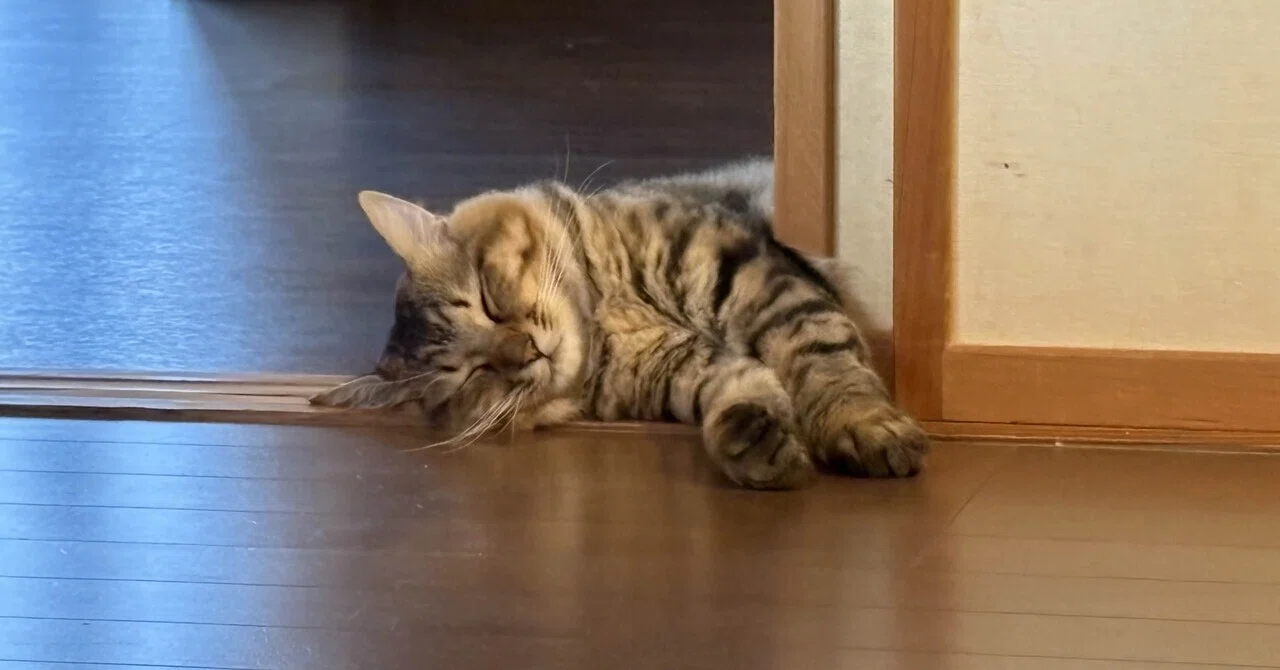
Anyone living with a feline knows the sensation: you sit down to check an email or recline on the sofa, and within minutes, eight to twelve pounds of purring mass lands squarely on your chest, curls across your lap, or drapes over your shoulders like an unruly scarf. Feline behavioral researchers and clinical observations compiled in a recent Yahoo!ニュース Report highlight that this insistent shadowing and climbing is not an accident of convenience. It is a precise physical language rooted in resource security, olfactory biology, and evolutionary safety.
While popular internet culture often paints cats as indifferent roommates who deign to tolerate humans, clinical reality contradicts that myth. When a cat mounts your torso or perches along your spine, it engages in high-stakes nonverbal communication. The specific physical zone your cat targets reveals whether you are dealing with an urgent request for breakfast, an instinctual quest for metabolic heat, or an act of profound social affiliation.
📌 Key Takeaways:
- Territorial Claim: Cats possess specialized sebaceous scent glands on their cheeks, chins, and paw pads; climbing onto an owner actively refreshes the cat's scent profile on their most valuable protector.
- Positional Significance: Chest sitting leverages human respiratory rhythms and direct eye lines, lap sleeping maximizes steady metabolic warmth, and back perching secures an elevated tactical viewpoint.
- Trust Dynamics: Choosing to sleep directly atop a human body leaves a predator temporarily vulnerable, representing one of the highest behavioral indicators of feline social security.
The Biology Behind the Climb: Scent Glands and Ownership
Domestic cats navigate their environment primarily through chemistry. Microscopic olfactory signatures govern their emotional equilibrium, and their relationship with you runs through the same sensory channels. When asking why cats climb on owners, the answer starts with feline scent marking glands located across the temporal regions, lips, chin, perianal zone, and between the toes.
When a cat steps onto your legs or climbs your torso, every downward step presses interdigital glands against your clothes. Rubbing their chin against your jawline or bunting their forehead against your sternum deposits facial pheromones. Ethologists categorize this behavior under feline territorial ownership, but it is rarely an act of aggressive dominance. In multi-cat colonies and feral groupings, related cats engage in allorubbing, intermingling their personal scents to create a group profile.
By climbing directly onto you, your cat is effectively refreshing the collective scent envelope of the household. If you spent eight hours outside surrounded by foreign smells, subway platforms, and unfamiliar dogs, you return home smelling chaotic to a cat. Climbing onto you immediately restores sensory balance, overwriting foreign odors with comforting home markers.
Pinned to the Mattress: Decoding the Cat Sitting on Chest Meaning
Waking up with your cat crouched directly over your lungs can feel both tender and mildly suffocating. The distinct phenomenon of a cat sitting on chest carries layered physiological and psychological explanations.
First, human respiratory mechanics provide rhythmic comfort. The rise and fall of your diaphragm, paired with the muffled tempo of an adult human heart rate hovering between 60 and 80 beats per minute, mirrors the sensory conditions kittens experience when nursing against their mother. Adult cats retain juvenile social behaviors toward trusted human caretakers.
Second, the human chest is prime visual real estate. When your cat wants to monitor your state of consciousness or initiate feeding time, sitting on your chest places their eyes roughly six inches from yours. If you twitch an eyelid, they see it immediately. This physical proximity shortens the communication feedback loop. If meowing from the floor failed to produce wet food, parking directly over your windpipe rarely goes unnoticed.
| Physical Perch | Primary Biological Driver | Observed Body Language Cues | Vulnerability Level |
|---|---|---|---|
| Chest | Heartbeat synchronization, tactile reassurance, direct eye contact. | Slow blinks, head-butting, persistent deep purring. | Moderate |
| Lap | Sustained thermal absorption, prolonged rest stability. | Loaf posture, paws tucked, half-closed third eyelids. | High |
| Back or Shoulders | Tactical elevation, environmental surveillance, balance testing. | Upright posture, scanning gaze, tail wrapped around ankles. | Low (High Vigilance) |
| Between Legs | Enclosed barrier security, drafts avoidance. | Curled crescent posture, deep rem-sleep twitching. | Extremely High |
Mapping the Contact Zone: Lap Sleeping Versus Back Perching
The choice between settling into a human lap and scaling someone’s shoulders reveals distinct psychological motivations. Standard cat lap sleeping behavior is primarily thermodynamic and relational. A resting domestic cat maintains a basal body temperature between 100.5°F and 102.5°F (38.1°C, 39.2°C). Maintaining that elevated baseline requires significant metabolic energy. Human thighs emit a constant field of radiant warmth, allowing the cat’s nervous system to downregulate its internal furnace and slip into restorative slow-wave sleep.
Cat perching on back functions under an entirely different operational logic. When you lie face-down or lean forward over a desk, your spine creates a raised terrace. Cats are natural ambush predators who instinctively seek high vantages to survey territory while remaining shielded from larger ground threats.
Perching along your shoulder blades elevates their eye line, transforming your body into a living observation post. A cat who chooses your back while you read or work feels safe in your presence, yet preserves tactical awareness. They can oversee the entire living space, tracking hallway movements or sudden noises while resting against your spine.

Feline Kneading and Social Grooming: Echoes of Kittenhood
Watch your cat's paws carefully the next time they climb onto your midsection. Almost immediately, an alternating rhythmic motion begins, left paw pushes down, right paw extends claws, repeat. This behavior, clinically referred to as feline kneading and marking, originates within hours of birth. Nursing kittens paddle against the mother cat's mammary glands to stimulate oxytocin release and milk flow.
When adult cats knead your stomach or thighs, they access that exact neural pathway. The motion is frequently accompanied by domestic cat social grooming, where the cat methodically licks your fingers, forearm, or chin with their raspy, filiform-papillae-covered tongue. In feral matriarchal colonies, queens groom one another to strengthen familial safety and clean hard-to-reach areas around the ears and neck.
If your cat cleans your hair while kneading your torso, you are witnessing an ancient bonding ritual. They treat you as a giant, slightly clumsy kin member who needs both hygiene management and scent integration.
Reading Subtle Cues: Affection Versus Attention-Seeking Demands
Not every instance of a cat climbing onto you is an act of pure adoration. Distinguishing genuine affection from cat attention seeking signals requires monitoring accompanying cat body language cues.
Look at the tail and the ears. A cat seeking genuine resting companionship approaches with a tail held vertical, often with a slight question-mark curl at the very tip, a universal sign of friendly intent. They step onto you gently, turn around once or twice, fold their paws inward, and emit low-frequency purrs without vocalizing.
In contrast, a cat climbing on you out of stress, boredom, or food anticipation exhibits rapid, erratic movements:
- The tail twitches side-to-side or thumps against your legs like a metronome.
- The ears swivel laterally toward room exits rather than remaining relaxed forward.
- High-pitched vocalizations interrupt the purring.
- The paws continually adjust weight without ever settling into a resting loaf.
If your cat repeatedly paces back and forth across your chest while staring directly at the kitchen doorway, you are dealing with a tactical blockade. They have learned that your mobility halts the second they place their weight on you, making your body a hostage until their bowl is filled.
Sleeping Positions Psychology: What Surface Contact Tells Us
Understanding pet sleeping positions psychology requires assessing vulnerability. A cat sleeping on the carpet a few feet away can spring into a defensive stance in under half a second. A cat that has climbed onto your chest, draped across your abdomen, or curled into the crook of your knees requires considerably more time to untangle itself and escape a perceived threat.
When a cat chooses to sleep directly against your body, they sacrifice rapid tactical mobility in exchange for social security. They trust that your larger frame, sharp senses, and presence will buffer them against any household disruption.
Field studies of multi-cat dynamics demonstrate that physical contact during deep sleep occurs almost exclusively between cats that share high social cohesion. Solitary cats will share a room, but they will maintain a critical flight distance of several feet. By eliminating that distance and settling into your lap, your cat signals that you are an integral part of their safe zone.
Frequently Asked Questions (FAQ)
Q1: Why does my cat suddenly sit on my chest early in the morning?
A1: Early morning chest perching usually combines environmental temperature drops with learned circadian routines. Indoor household temperatures often hit their lowest point between 4:00 AM and 6:00 AM, drawing your cat toward your core heat. Concurrently, cats learn your micro-waking cues, such as changes in your breathing depth, and use direct chest pressure to nudge you toward the kitchen for breakfast.
Q2: Is it safe to let a cat sleep directly on my neck or chest all night?
A2: For healthy adults, it presents minimal risk beyond minor sleep disruption or pet hair inhalation. However, individuals with asthma, severe seasonal allergies, or sleep apnea should gently redirect the cat toward an adjacent plush bed. Cats can unintentionally restrict deep diaphragmatic breathing when resting their full weight on your upper sternum across multiple sleep cycles.
Q3: How do I move a perched cat off my body without breaking our bonding trust?
A3: Avoid sudden, jarring thrusts or loud corrective vocalizations, which cats interpret as unpredictable environmental threats. Instead, slide both hands smoothly under their ribcage and hindquarters, lifting them steadily while maintaining firm body support. Transfer them directly onto an equally warm, comfortable nearby surface, like a fleece throw or heated pet mat, and offer a single calm chin stroke to validate the transition.
Deciphering Your Cat's Daily Gravitational Pull
Living alongside domestic cats means learning to read tactile architecture. The next time your cat scales your thighs, settles heavily across your ribcage, or balances along your shoulder line, treat the moment as a complex conversation rather than a simple quirk of convenience.
Every chin rub distributes invisible chemical security. Every deep purr harmonizes with your respiratory cadence, and every rhythmic knead reaches back to early maternal instincts. Your cat is running an ongoing calculation of safety, environmental control, and mutual warmth. In an urban world full of mechanical noise and sensory overload, stepping onto your torso remains the simplest way for a cat to say that this specific corner of the living room, and the human inside it, is safe ground.