Is Constant Licking a Hidden Cry for Help? The Alarming Truth Behind Canine Habits

A dog's tongue against bare skin often registers as an affectionate greeting. Then the rhythm changes. The licking turns frantic, continuous, and focused on your wrists, the upholstery, or their own reddened front paws late at night. Pet owners typically dismiss this persistent habit as endearing quirks or basic grooming. Clinical reality tells a more intricate story.
A veterinary behavioral review detailed in a わんちゃんホンポ on MSN Report underscores that localized licking after walks often begins with simple triggers: mud, tiny street pebbles, or irritating debris trapped between the toes. Left unexamined, those benign physical cleaning sessions can shift into compulsive loops. The tongue functions as both an investigative tool and an internal relief valve, operating where physical irritation and psychological strain collide.
📌 Key Takeaways:
- Neurochemical Feedback: Repetitive licking triggers an endorphin release in canines, transforming basic self-soothing into an addictive physical coping strategy during acute stress.
- Dermatological Indicators: Compulsive paw licking frequently unmasks untreated canine dermatitis and allergies, fungal overgrowth, or micro-foreign bodies rather than routine cleanliness.
- Behavioral Communication: Deciphering affection vs stress licking requires reading peripheral canine body language, separating relaxed bonding from appeasement and submissive behaviors.
Sensory Architecture: Why Canine Licking Behavior Runs Deep
Canine sensory stimulation relies heavily on the tongue and the vomeronasal organ situated above the roof of the mouth. Dogs do not experience their environment purely through sight or sound; they taste it. When an animal licks human hands, they sample ambient chemistry. Sweat deposits provide a tangible salt craving in dogs, offering a rich map of where a human has traveled, what they ate, and their immediate emotional state.
Maternal programming reinforces this behavior from birth. Mother dogs vigorously lick newborn pups to clean membranes, establish respiratory rhythm, and stimulate bladder functions. Natural dog grooming instincts stem directly from this neonatal period.
As dogs reach adulthood, the mechanical action takes on dual functions. Licking cleans physical debris, but it also carries neural weight. The physical movement activates nerve endings along the tongue, prompting an immediate endorphin release in canines. This biochemical discharge produces a calming, sedative sensation throughout the central nervous system. When external pressure mounts, the dog defaults to this self-medicating reflex. What appears to be an obsessive quirk is frequently an animal attempting to biochemically regulate its own rising panic.
Affection Versus Stress: Reading Subtle Canine Body Language
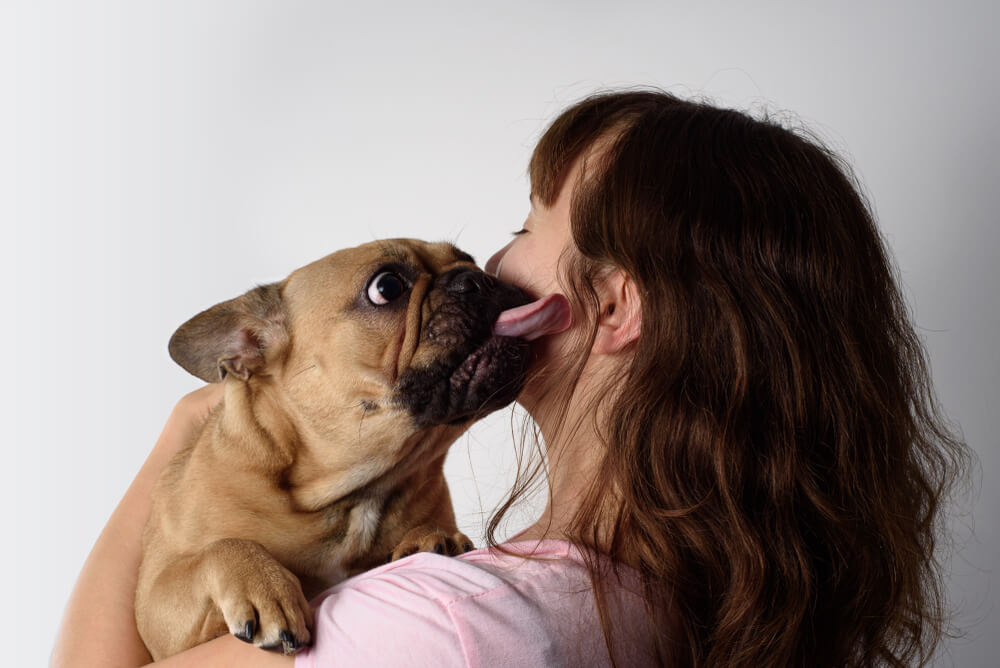
Distinguishing between genuine social bonding and anxiety-driven grooming requires looking past the tongue itself. Dogs use social licking to maintain pack cohesion, communicate respect, and request reassurance. In functional pack interactions, submissive behavior in dogs presents through low licking around the muzzles of senior animals, a gesture carried over into domestic life with human guardians.
Context changes everything. Affectionate licking happens when the dog has relaxed muscle tone. The eyes remain soft, the ears sit in their neutral position, and the tail executes wide, low-frequency wags. The licking is intermittent, easily interrupted by a spoken word, and accompanied by comfortable physical contact.
Stress licking presents an entirely different posture:
- Facial Tension: The dog displays "whale eye," revealing crescent slivers of white sclera around the iris, accompanied by tight commissures at the lips.
- Postural Freezing: The spine stays rigid, the head ducks low, and the tail either tucks tight or vibrates in a stiff, rapid oscillation.
- Appeasement Licking: The animal flicks its tongue rapidly toward its own nose or darts it out at human hands without making sustained eye contact, acting out classic dog anxiety symptoms.
- Inability to Disengage: Calling the dog's name or offering a verbal prompt fails to break their focus. The animal returns compulsively to the patch of skin, floor, or paw pad.
When appeasement behavior goes unrecognized, owners accidentally reinforce the panic. Petting or soothing a dog while it exhibits submissive licking can communicate that the perceived threat is real, locking the animal into an escalating cycle of appeasement.
Dermatology Meets Compulsion: Physical Versus Psychological Drivers
When licking turns inward toward the animal's own body, the risk of serious medical complications spikes. The boundary between a dermatological infection and a behavioral stereotypic disorder is remarkably thin. Canine skin responds aggressively to repeated friction and moisture, transforming a simple itch into an inflamed, open wound.
| Manifestation Site | Underlying Trigger | Physical & Behavioral Flags | Diagnostic Focus |
|---|---|---|---|
| Interdigital Spaces (Paw Pads) | Atopy, environmental allergens, de-icing salts, or embedded grass awns. | Rust-colored fur staining from salivary porphyrins; localized swelling; warm skin. | Cytology swabs for Malassezia yeast; allergen elimination trial. |
| Carpus & Lower Limbs | Deep joint discomfort, early osteoarthritis, or localized nerve pain. | Stiffness upon rising; avoidance of stairs; lick focal point sits over a joint. | Orthopedic palpation, functional mobility scoring, and limb radiographs. |
| Targeted Extremity Patch | Psychogenic acral lick dermatitis (lick granuloma); sensory deprivation. | Thickened, raised, ulcerated plaque; self-trauma during owner absence. | Separation anxiety assessment and behavioral history profiling. |
| Human Skin & Textiles | Sensory soothing, salt cravings, or gastrointestinal nausea. | Rhythmic pacing; frequent lip-smacking; sudden grass consumption. | Gastrointestinal screening and dietary evaluation. |
A common physical driver is canine dermatitis and allergies. When a dog walks across lawns treated with chemical fertilizers or paths scattered with mold spores, the microscopic spaces between their toes trap those irritants. The dog licks to remove the foreign matter.
Unfortunately, canine saliva does not sterilize damaged tissue. It introduces moisture that disrupts the skin barrier, creating a perfect habitat for fungal pathogens like Malassezia pachydermatis. What started as a speck of mud transforms within 48 to 72 hours into an itchy, burning fungal flare-up that drives further compulsive paw licking.
The Neural Rut: How Licking Evolves into a Neurological Loop
If persistent licking continues unchecked, the dog crosses from situational relief into obsessive-compulsive territory. Veterinary dermatologists call this end stage an acral lick granuloma: an elevated, fibrous, ulcerated lesion caused by repeated mechanical friction from the tongue.
The progression follows a predictable cycle:
- The Trigger Event: An acute stressor, such as fireworks, crate confinement, or an insect bite, causes physical or psychological distress.
- The Behavioral Outlet: The dog begins licking an easily accessible joint, usually the carpus (wrist) or front paw.
- The Neurochemical Hit: The brain releases endorphins, blunting the dog's immediate anxiety.
- The Habit Loop: The skin erodes, exposing sensitive dermal nerves. This tissue damage produces a dull ache, prompting the dog to lick again to stimulate another soothing endorphin release.
By the time the lesion thickens into a callous-like plaque, the underlying trigger may be entirely gone. The physical sensation of the tongue against raw tissue has become the dog's primary coping mechanism. Breaking this cycle requires more than bitter-apple sprays or Elizabethan plastic cones. Physical barriers alone simply redirect the compulsion elsewhere, causing the animal to attack its flanks or hind legs instead.
Clinical Misconceptions: Debunking Everyday Licking Myths
Online pet communities often simplify canine behavior down to emotional tropes. Sorting clinical reality from popular myth protects both owner and pet from prolonged, mismanaged health problems.
Myth 1: "A dog's mouth is cleaner than a human's, so let them lick open cuts."
This old myth remains dangerous. Canine mouths harbor pathogenic bacteria, including Pasteurella multocida, Capnocytophaga canimorsus, and Staphylococcus pseudintermedius. When a dog licks its own abrasions or human skin, it deposits bacteria straight into open micro-fissures. This increases the risk of secondary cellulitis and delays tissue repair.
Myth 2: "They lick constantly because they love you unconditionally."
Affection is only one variable in a complex behavioral repertoire. Constant, frantic licking of an owner's face or hands frequently flags an appeasement gesture rooted in anxiety. If the dog's posture is stiff, its pupils dilated, and its respiration elevated, the animal is asking for personal space or attempting to defuse a perceived threat, not showering you with love.
Myth 3: "Paw chewing is simply an ingrained habit you have to live with."
Healthy dogs do not routinely chew their feet. Red fur staining on light-coated breeds reveals the presence of porphyrins, iron-containing waste products found in tears and saliva. If a dog's white paws turn a rusty mahogany, that color change signals chronic, excessive saliva contact driven by persistent allergies, structural joint pain, or unaddressed mental stress.
Practical Intervention: Breaking the Compulsive Cycle
Halting chronic licking requires a methodical approach that targets the root cause rather than punishing the symptom. Yelling at or physically restraining an anxious dog only elevates their cortisol levels, reinforcing their impulse to seek comfort through the tongue.
Begin with environmental de-escalation:
- Rinse Paws After Walks: Keep a bowl of lukewarm water and a clean microfiber towel by your entrance. Wash away salt, lawn chemicals, and trapped grit immediately to remove physical triggers before the dog begins licking.
- Apply Behavioral Redirection: The moment a dog starts licking their skin or furniture, calmly redirect their focus without raising your voice. Offer a high-value chew, a puzzle feeder, or engage them in an impulse-control exercise. Giving them a structured task disrupts the developing endorphin loop.
- Provide Healthy Oral Outlets: Licking remains a natural canine need. Substitute self-destructive grooming with textured silicone lick mats spread with plain kefir, pumpkin puree, or wet food. Freezing the mat prolongs the activity, letting the dog gain natural calming benefits safely.
- Schedule a Clinical Examination: If paw licking continues for more than three consecutive days, visit your veterinarian. Treating deep-seated allergies often calls for targeted therapeutics like oclacitinib (Apoquel), lokivetmab injections (Cytopoint), or prescription elimination diets. For behavioral cases, working with a certified animal behavior consultant (CDBC) helps address core environmental anxieties.
Frequently Asked Questions (FAQ)
Q1: Why does my dog lick my hands obsessively when I try to pet them?
A1: This reaction is typically an appeasement behavior rather than simple affection. If a dog finds petting overwhelming or feels cornered by hands reaching over its head, it licks as an appeasement gesture to ask for space. Watch their body language closely: if their head ducks away, their eyes narrow, or their body stiffens, pull your hands back and let the dog initiate contact on their own terms.
Q2: How do I tell if paw licking is caused by food allergies or seasonal irritants?
A2: Seasonal allergies usually flare during spring, summer, or fall, presenting with paw licking, watery eyes, and itchy bellies linked to pollen, mold, or grass exposure. Food allergies persist year-round and commonly produce recurring ear infections, gastrointestinal upset, and soft stools alongside itchy paws. Your veterinarian can run an eight-week strict elimination diet to pinpoint specific protein sensitivities.
Q3: Is human moisturizer or lotion dangerous if my dog licks it off?
A3: Yes. Many human skincare products contain ingredients that are toxic to dogs. Zinc oxide, parabens, synthetic fragrances, and hydrocortisone can cause acute gastrointestinal irritation or systemic poisoning. Creams containing calcipotriene (a vitamin D derivative used for psoriasis) or minoxidil (used for hair regrowth) can trigger fatal organ failure even in tiny amounts. Never let your dog lick recently moisturized skin.
Long-Term Management for Canine Wellbeing
Living with a dog caught in an obsessive licking loop can be frustrating. The damp sound of constant licking breaks the quiet of the night, while worn, inflamed patches of skin serve as daily reminders of an unresolved issue. Yet treating this habit simply as a nuisance overlooks what the behavior is actually telling you.
The tongue functions as a sensitive monitor of a dog's health. It registers physical abrasions from trail gravel, flare-ups from seasonal allergies, chronic aches in aging joints, and quiet changes in emotional security. The path to relief starts by setting aside frustration and looking for the underlying cause.
Wipe down irritated paws after every trip outside. Provide structured, calming activities that channel their oral instincts without harming their skin. Most importantly, consult your veterinarian early before a manageable physical itch settles into a stubborn neurological habit. Listening to what your dog's tongue is telling you helps you deliver the care and relief they truly need.