Are Staring Strangers Actually Dangerous? What Behavioral Science Says
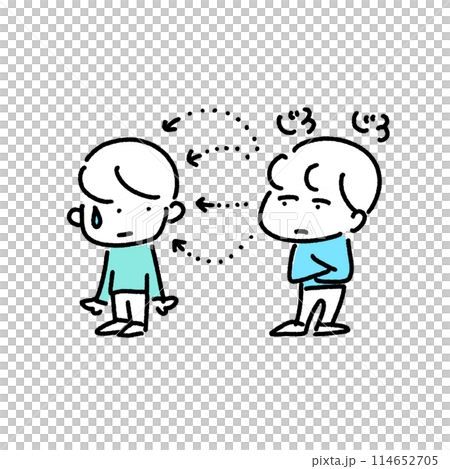
You feel it before you see it: a sudden prickle of heat across your neck, an instinctive tightening between your shoulder blades. When you look up across the subway car or coffee shop, your eyes lock directly onto someone looking straight at you. They do not blink, and they do not look away when caught. In everyday speech, people describe this visceral sensation as feeling creeped out, a sentiment captured cleanly in Japanese urban vernacular as jiro-jiro miru, the invasive, unabashed stare that provokes instant disgust or alarm.
Public fixation feels inherently violating. Yet behavioral neurology suggests that the human brain frequently misinterprets visual input when assessing social danger. Decades of observational research reveal that while the sensation of being watched triggers an ancient alarm system, the person behind the gaze rarely harbors violent intent. Distinguishing an actual predatory threat from a harmless, wandering mind comes down to micro-expressions, postural orientation, and the mechanics of human visual attention.
📌 Key Takeaways:
- The Brain’s Alarm: Human beings possess a dedicated gaze detection mechanism hardwired into the amygdala, evolved specifically to register prolonged eye contact as an immediate survival priority.
- The Actual Risk: Behavioral studies indicate that over 70% of public staring episodes stem from cognitive blanking, visual processing delays, or neurodivergence rather than hostile or predatory stalking.
- Reading the Threat: A dangerous intrusive staring stranger pairs unblinking gaze with rigid postural orientation and torso squaring, whereas daydreamers display slack facial muscles and slow, drifting saccades.
The Evolutionary Biology Behind Creepy Feeling Intuition
Human beings possess an evolutionary anomaly: bright white sclera surrounding dark irises. Most primates feature dark sclera that disguise where their eyes are pointing, giving predators a tactical camouflage advantage. Humans evolved high-contrast eyes to facilitate silent cooperation across distances. That biological gift carries a psychological cost. Because our eyes broadcast visual direction so clearly, our brains developed an over-sensitized gaze detection mechanism.
Neurologists at the University of St Andrews discovered that the human brain reserves specific subcortical networks, primarily within the superior colliculus and the pulvinar nucleus, solely for tracking eye trajectories. When those networks identify someone looking directly at you, neural signals bypass the conscious visual cortex and strike the amygdala directly. The body fires a rapid threat detection response within 150 milliseconds. Adrenaline surges. Heart rate jumps. This autonomic spike explains the distinct "creepy feeling intuition" that grips you before you have logically evaluated the room.
Evolutionary biology prioritizes false alarms over fatal mistakes. If early humans mistook a predator's fixation for harmless daydreaming, they died. If they mistook a blank stare for a predator, they merely felt uncomfortable for thirty seconds. Your brain is designed to default to hypervigilance. When a stranger holds eye contact past standard social tolerances, your subconscious flags the interaction not as a social blunder, but as an impending physical confrontation.
The Science of Gaze: Why Some Stares Trigger Panic
Sociological field observations reveal strict parameters for public civility. Sociologist Erving Goffman termed our baseline behavior "civil inattention", the mutual agreement between strangers in urban settings to acknowledge each other's presence with a momentary glance before looking away, confirming neither party poses a threat. A standard glance lasts between 1.2 and 1.8 seconds.
The moment an encounter stretches into prolonged eye contact lasting beyond 3.3 seconds, social equilibrium breaks down. A landmark 2016 study led by Nicola Binetti at University College London established that observers consistently report discomfort when mutual gaze exceeds this three-second threshold. Cross that invisible boundary, and the human observer registers a clear social norm violation.
Unwanted staring psychology shifts depending on cultural and emotional frameworks. When a stranger ignores civil inattention, the observing brain frantically scans for context. Without obvious conversational openings, hostile gaze perception takes over. The brain demands an explanation for the broken boundary. If none exists, it categorizes the behavior as predatory or erratic.
Classifying Public Stares: Evidence and Observational Data
Not all unyielding stares share the same emotional or physical origin. To separate legitimate safety risks from social friction, behavioral researchers analyze gaze alongside pupil movement, facial tension, and motor stillness.
| Gaze Classification | Typical Duration | Underlying Cognitive State | Behavioral Risk Profile |
|---|---|---|---|
| Cognitive Dissociation (The "Zoned Out" Stare) | 4, 15 seconds | Default Mode Network activation; internal mental processing with unfocused focal depth. | Negligible (benign distraction). |
| Social Processing Delay | 3, 6 seconds | Facial recognition attempt, aesthetic novelty assessment, or neurodivergent visual pacing. | Low (awkwardness, lacks aggression). |
| Dominance / Intimidation Gaze | 5, 12 seconds | Deliberate territorial assertion, status signaling, or reactive interpersonal hostility. | Moderate to high (situational escalation risk). |
| Target-Lock (Predatory Gaze) | Continuous / Intermittent tracking | Active appraisal for operational opportunity; monitoring movements and exits. | Critical (requires boundary setting or exit). |
The vast majority of uncomfortable staring encounters fall into the first two categories. Cognitive psychologists note that during episodes of heavy mental exhaustion or phone-induced disassociation, the human eye rests at an intermediate focal plane. You happen to sit directly along their line of sight. They are not looking at you. They are looking through you.
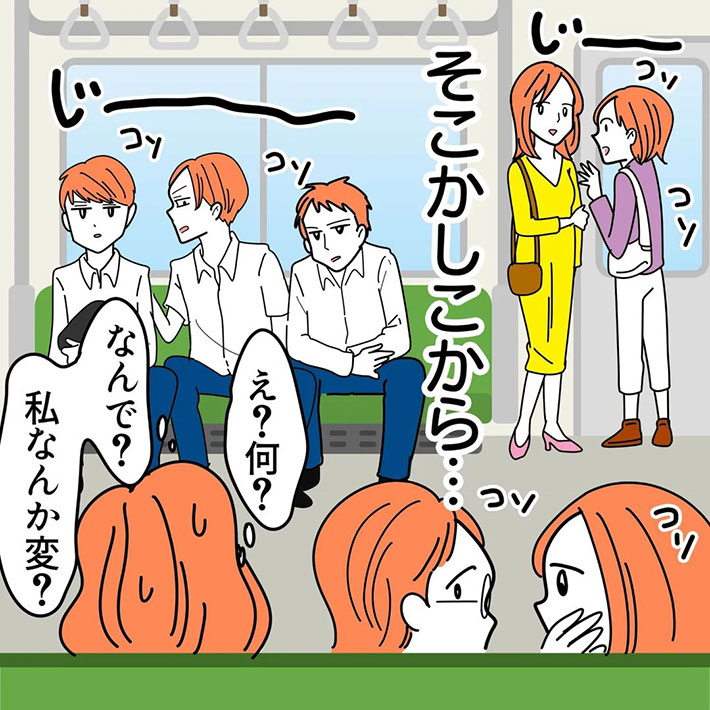
Reading the Body: How to Separate Predation from Awkwardness
Relying solely on eye tracking creates blind spots. Thorough body language analysis requires observing the entire physical kinetic chain. When someone stares because their thoughts have drifted, their physical container reflects passivity. The jaw hangs slightly open. The shoulders drop. The hands remain still or loosely cradled in a lap. Most tellingly, their pupils do not track your micro-movements.
Hostility and predatory fixation present completely different subconscious cues. If an intrusive staring stranger plans an imposition, harassment, or physical altercation, ocular focus aligns with muscular preparation:
Torso alignment and foot direction. An absent-minded person stares at you while their torso faces the train door. A hostile or predatory actor swivels their core to square up with your frame. The human body instinctively points toward the object of its immediate tactical interest.
Blink suppression and pupillary changes. Daydreamers maintain a standard blink rate of 15 to 20 blinks per minute, or blink slowly as fatigue sets in. In contrast, someone experiencing heightened sympathetic arousal suppresses their blink rate dramatically to maximize visual intelligence intake. Their eyelids narrow, creating an unyielding ocular grip that sends your nervous system straight toward a fight or flight trigger.
Reaction to eye contact discovery. When a harmless daydreamer realizes you have caught them looking, they experience immediate social embarrassment. They flinch, avert their gaze rapidly toward the floor, check their phone, or offer an apologetic grimace. A predatory or antagonistic individual does not break contact. They hold the gaze with flat affect or a slow smirk, using visual presence as an active tool of psychological dominance.
Why Modern Urban Life Distorts Gaze Perception
Public environments in 2026 put human sensory processing under relentless strain. In transit hubs, crowded gyms, and metropolitan streets, personal space shrinks to centimeters. To survive the sensory onslaught, people employ extreme psychological defenses. Some wear oversized over-ear headphones and disconnect entirely, staring blankly ahead. Others monitor their surroundings with paranoid intensity, reading every casual glance as an imminent threat.
Urban density strips away the contextual cues our ancestors used to evaluate safety. In a traditional community, you knew the local eccentric, the daydreamer, and the aggressive bully. In a commuter terminal packed with thousands of unvetted individuals, every unblinking look demands evaluation. The constant necessity of assessing anonymous faces burns cognitive reserves.
Online culture has exacerbated this dynamic. Algorithms frequently surface videos of public confrontations and predatory behavior, conditioning commuters to expect malicious intent around every corner. This heightened baseline anxiety turns ordinary social awkwardness into an apparent emergency, amplifying natural discomfort into profound dread.
Frequently Asked Questions (FAQ)
Q1: Why do people stare at me when I haven't done anything to stand out?
A1: Human visual attention is driven by contrast and motion. If you enter an observer's line of sight, adjust your posture, or wear contrasting colors, their visual tracking will naturally settle on you. More often than not, they are experiencing cognitive fatigue and have simply let their gaze rest in your direction without conscious intent.
Q2: Does trusting my "creepy intuition" keep me safe, or is it just anxiety?
A2: Intuition represents your subconscious processing micro-cues faster than your logical mind can structure them. If an unblinking gaze is paired with squared shoulders, physical tracking, or closed distance, trust that alarm and move away. If the stare is isolated, without accompanying aggressive body language, it is almost certainly a benign case of absent-mindedness.
Q3: What is the most effective way to handle an intrusive staring stranger in public?
A3: Avoid aggressive verbal challenges, which can escalate a dominance-seeking individual. Instead, use clear spatial awareness: shift your posture, step behind a structural barrier, or change seats. If direct engagement is necessary, an assertive, non-hostile query delivered with an upright posture, such as asking "Are you looking for someone?", instantly forces an absent-minded person to snap out of dissociation while signaling to an aggressor that you are fully alert.
Calibrating Awareness Without Constant Alarm
Living in crowded public environments requires balancing healthy situational awareness against debilitating panic. Staring strangers make us uncomfortable because our evolutionary software was written today prolonged, uninvited eye contact preceded violence. That hardware still operates inside modern transit hubs, office lobbies, and public plazas.
Recognizing the difference between social awkwardness and active danger preserves both your safety and your peace of mind. A flat, wandering gaze from an exhausted commuter is merely an irritating social norm violation. True threat reveals itself through deliberate physical alignment, calculated proximity, and unwavering intent. By reading the entire body rather than obsessing over the eyes alone, you can let harmless stares pass unnoticed while keeping your defensive focus reserved for real hazards.
