Inside the Sunrise Izumo B-Berth: Comparing Solo, Single, and Single Twin Compartments
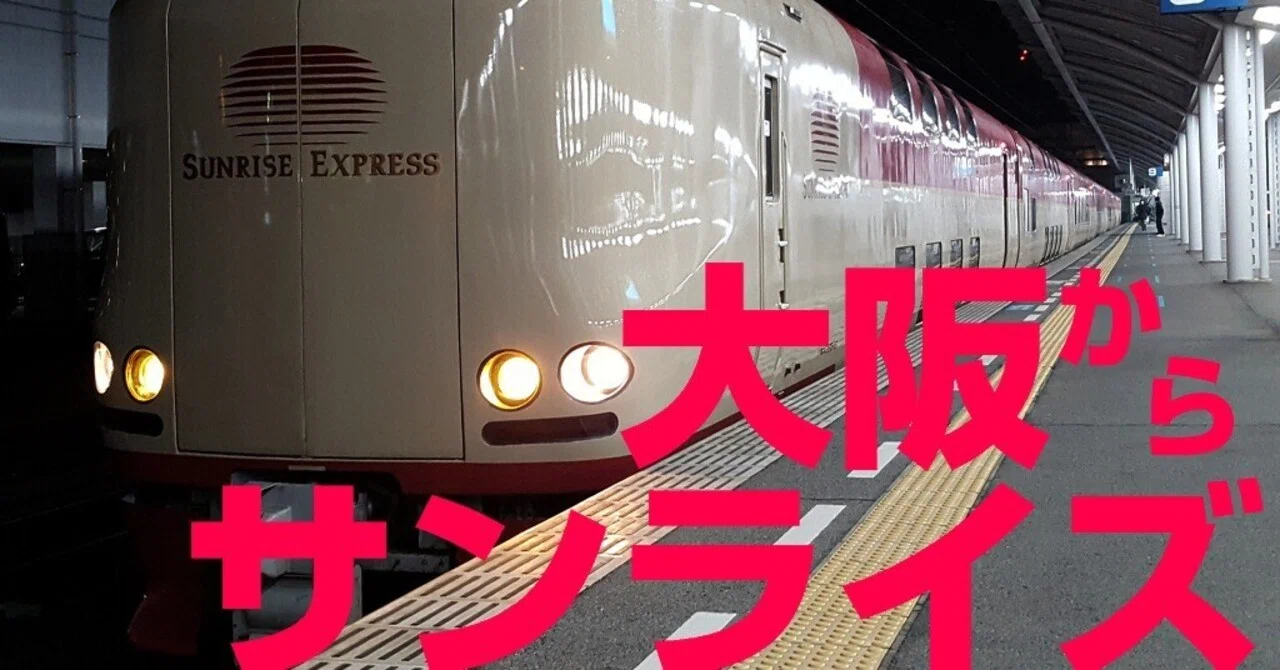
Every night at 21:50, the double-decker Series 285 train cars glide out of Tokyo Station bound for the western edge of Honshu. As Japan's last surviving daily scheduled overnight service, the Sunrise Express, splitting at Okayama into the Sunrise Seto for Shikoku and the Sunrise Izumo for Shimane Prefecture, operates at near-total capacity year-round. While high-speed Shinkansen lines cut cross-country transit to a matter of hours, travelers increasingly seek the unhurried privacy of a rolling hotel room. Navigating the ticket structure requires precise planning, particularly because pricing consists of three distinct parts: a basic fare, a limited express surcharge, and a dedicated sleeper berth fee, as documented in an exhaustive breakdown by a note Report analyzing overnight equipment economics and corridor boarding habits.
The train offers multiple service classes, but the bulk of its private accommodations belong to the B-berth category. These rooms balance cost and comfort, sitting between the budget open-carpet "Nobinobi" spaces and the premium A-berth Single Deluxe suites. Choosing among the four primary B-berth configurations, Solo, Single, Single Twin, and Sunrise Twin, shapes your entire overnight journey.
📌 Key Takeaways:
- Room Hierarchies: The standard Single offers superior headroom and sound isolation compared to the compact Solo, which sits directly above traction motors in Cars 3 and 10.
- Booking Constraints: Securing any private room requires booking through JR reservation systems at 10:00 AM JST exactly 30 days before departure, with peak-season allotments vanishing within 60 seconds.
- Onboard Amenities: Shower cards routinely sell out within ten minutes of Tokyo departure, making an immediate sprint to the vending machine essential upon boarding.
The Four B-Berth Options on Series 285 Sleeper Train Cars
The Series 285 electric multiple units (EMUs) were introduced in 1998 to modernize overnight rail travel, replacing aging locomotive-hauled blue trains. The interior architecture was developed in partnership with homebuilder Misawa Homes, using warm wood-grain paneling and modular spaces designed to feel more like a compact Japanese business hotel than a railcar.
B-berth rooms represent the standard private class on the train. Unlike older Japanese sleeper trains that relied on four-person open bunk curtains, a design that first evolved into four-person "Quartet" rooms in 1984, every Series 285 B-berth features an electronic PIN-code lock, individual temperature control, a radio/clock panel, an AC power outlet, and personal lighting.
The fleet splits B-berths into four distinct room profiles:
- Solo: A hyper-compact single room built across two levels, designed for budget-conscious solo travelers.
- Single: The standard, most common private room on the train, accounting for more than half of all private spaces.
- Single Twin: A versatile, high-ceiling room featuring a fixed upper bunk and a convertible lower seat-bed.
- Sunrise Twin: A rare two-person cabin fitted with side-by-side twin beds on the lower level.
Each tier commands a specific sleeper fee on top of the base passenger fare and limited express surcharge. A standard one-way journey from Tokyo to Izumoshi runs approximately ¥22,000 to ¥23,000 for a Single, while couples booking a Sunrise Twin spend upward of ¥30,000 to ¥32,000 combined.
Solo versus Single: Headroom, Storage, and Mechanical Noise
Choosing between the Solo and the standard Single is the most common dilemma for individual travelers. The price difference between the two is minimal, the Solo sleeper surcharge is roughly ¥6,600, while the Single sleeper surcharge sits at ¥7,700, yet the physical footprint diverges significantly.
The Single compartment interior layout prioritizes usable floor area. In a Single, the bed sits along the exterior wall, accompanied by a small wall-mounted shelf, a drink holder, and dedicated floor room between the mattress and the door. This corner provides enough clearance to park a 20-inch carry-on upright. A passenger standing inside a Single can stretch without grazing the ceiling, provided they are in a lower-deck or mid-level cabin.
The Solo, housed exclusively in Cars 3 and 10 (and Cars 17 and 24 on 14-car sets), trims space to absolute essentials. The room consists almost entirely of a mattress. In upper Solo rooms, travelers must climb three steep, recessed steps cut directly into the interior wall to reach the bed. Floor clearance at the entry is nonexistent; shoes must be tucked into a narrow floor recess. Large rolling suitcases cannot lie flat on the floor and must sit directly on the bedding at your feet.
Mechanical sound is another major differentiator. The Solo cabins occupy motorized cars (M-cars) fitted with pantographs, inverters, and traction equipment beneath the subfloor. Passengers sensitive to low-frequency hums and track vibration will notice the electrical whine when the train accelerates out of stops along the Tokaido Main Line. Standard Singles, spread across trailer cars and lower decks, offer a quieter ride.
Traveling in Pairs: Single Twin Bunk Setup vs Sunrise Twin Fare Rules
Couples or pairs traveling on the Tokyo to Izumoshi overnight route must choose between two distinct cabin designs, each governed by different ticketing regulations.
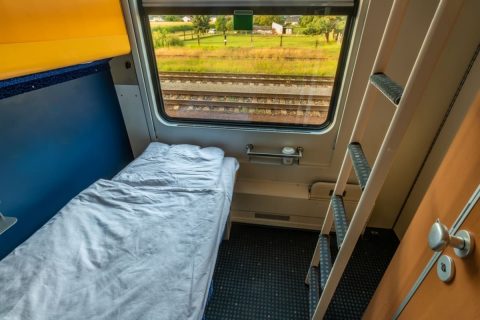
The Single Twin bunk setup features vertical stacking. The lower mattress functions as a day couch that folds flat into a bed, while a fixed upper bunk sits accessed via a small aluminum ladder. Because this room can legally be occupied by one passenger or two, its fare rules are flexible. When booked by a solo traveler, it serves as a high-clearance room with extra overhead storage. When booked for two, the second passenger pays an additional B-berth fee of ¥5,500 alongside their own base rail fare and express charge.
The Sunrise Twin represents true two-person luxury in the B-berth class. These rooms exist exclusively on the lower level of Cars 4 and 11. Instead of bunk beds, the cabin features two parallel single beds separated by a small nightstand. Space allows two adults to move simultaneously without stepping over one another.
Availability for the Sunrise Twin is notoriously limited: there are only four Sunrise Twin compartments per seven-car train set. The JR ticketing system requires passengers to buy the entire cabin at a flat room rate of ¥15,400, plus two adult basic fares and two limited express surcharges. These rooms routinely sell out within seconds of the reservation window opening.
Cabin Specifications, Pricing, and Deck Position Contrasts
Where your room sits within the train car affects your sleep quality. Upper-deck Single cabins feature large curved skylights that arch into the roofline, offering panoramic views of starlight and suburban station platforms. However, upper decks suffer from exaggerated lateral sway as the train winds through the Chugoku Mountains along the Hakubi Line. Lower-deck cabins place you closer to the wheel assemblies, dampening sway while introducing more click-clack track noise.
| Cabin Type | Deck Position | Sleeper Charge (2026) | Luggage Capacity | Ride & Noise Profile |
|---|---|---|---|---|
| Solo | Upper & Lower split | ¥6,600 | Extremely tight; fits soft bags only | Higher motor hum (Cars 3 & 10) |
| Single (Upper) | Upper deck | ¥7,700 | Fits 20-inch carry-on at foot of bed | Quiet, but noticeable sway on curves |
| Single (Lower) | Lower deck | ¥7,700 | Fits 22-inch roller bag on floor space | Stable ride; audible wheel-rail sounds |
| Single Twin | End-car single level | ¥9,600 (Single) / +¥5,500 (2nd pax) | High ceiling; fits 2 medium bags | Directly over bogies; jolts on points |
| Sunrise Twin | Lower deck | ¥15,400 (per room) | Best in class; room for 2 suitcases | Minimal sway; low track resonance |
End-car Single rooms (located on flat single-level platforms at car ends) offer the highest ceilings of any standard room. Taller western travelers over 6 feet (183 cm) often prefer these specific end-of-car Single rooms because they avoid the sloping glass contour that cuts into head clearance on upper-deck berths.
Securing Sleeper Bookings and Onboard Shower Cards
The mechanics of getting a ticket require discipline. JR applies a strict reservation window: tickets go live at 10:00 AM JST exactly one month prior to the travel date (e.g., May 15 for a June 15 departure).
International visitors have two main paths to purchase. The first is through the JR-West reservation portal (JR-West Odekake Net), which allows users to select room classes directly. The second is via JR East's reservation platform (eki-net) or in person at a Midori-no-Madoguchi ticket counter in Japan. During holiday periods such as Golden Week, Obon, or New Year, B-berth Singles disappear within three minutes. Specialized tours operated through Nippon Travel Agency sometimes offer packaged allotments before general sales begin, but independent travelers must rely on the 10:00 AM ticket drop.
Once aboard at Tokyo, an immediate challenge awaits: Sunrise Express shower card availability.
The train carries limited onboard water reserves. Shower facilities in Cars 3 and 10 operate on pre-paid shower cards costing ¥330, which deliver six minutes of pressurized hot water. The automated vending machines next to the shower booths hold roughly 20 to 30 cards per car.
Regular riders know the routine. The moment boarding opens at Tokyo Station Track 9 around 21:35, passengers drop their heavy bags and briskly walk directly to the Car 3 or Car 10 corridor. The vending machines accept cash (1,000-yen notes and coins) and occasionally transport IC cards. Once the machine displays a red sold-out indicator, no additional cards are issued for the remainder of the 12-hour run.
Frequently Asked Questions (FAQ)
Q1: Is the Japan Rail Pass valid for B-berth private rooms on the Sunrise Izumo?
A1: The standard nationwide JR Pass covers only the basic passenger fare. To sleep in a Solo, Single, or Twin, passholders must pay out of pocket for both the limited express surcharge (around ¥3,300 to ¥3,800 depending on distance) and the full sleeper room fee. The only accommodation fully covered by the JR Pass without additional surcharge is the open-carpet Nobinobi seat.
Q2: Will a 28-inch check-in suitcase fit inside a standard Single room?
A2: Barely, but it will severely disrupt movement. A 28-inch suitcase will block the floor pathway to the door lock. You will need to keep the bag standing on end or place it directly at the foot of the bed, which reduces sleeping length. Traveling with a 20- to 22-inch carry-on or a structured duffel bag is strongly recommended for Series 285 private rooms.
Q3: Which room deck level is better: upper deck or lower deck?
A3: Choose the upper deck if you prioritize curved skylight views and morning natural light as the train passes through Okayama and the mountain passes. Choose the lower deck if you are prone to motion sickness, as lower rooms sit close to the train's center of gravity and experience noticeably less lateral roll through mountain curves.
Strategic Preparations for the Overnight Journey
Traveling across Japan by night remains an exceptional rail experience, but success depends entirely on managing expectations around interior volume and physical boarding routines.
B-berth rooms represent clever mid-century Japanese spatial engineering, not sprawling modern suites. Pack a dedicated small daypack containing your nightwear, toiletries, electronics chargers, and 100-yen coins for the vending machines so you never have to unpack a large suitcase inside your cabin. Confirm your boarding platform early, set an alarm for the 10:00 AM reservation drop 30 days out, and step onto the train with your route planned straight to the shower card dispenser. Doing so turns a potentially cramped overnight haul into one of the most memorable journeys in global transit.