The Complete Handbook on Reassurance: How to Say 'No Problem' Naturally

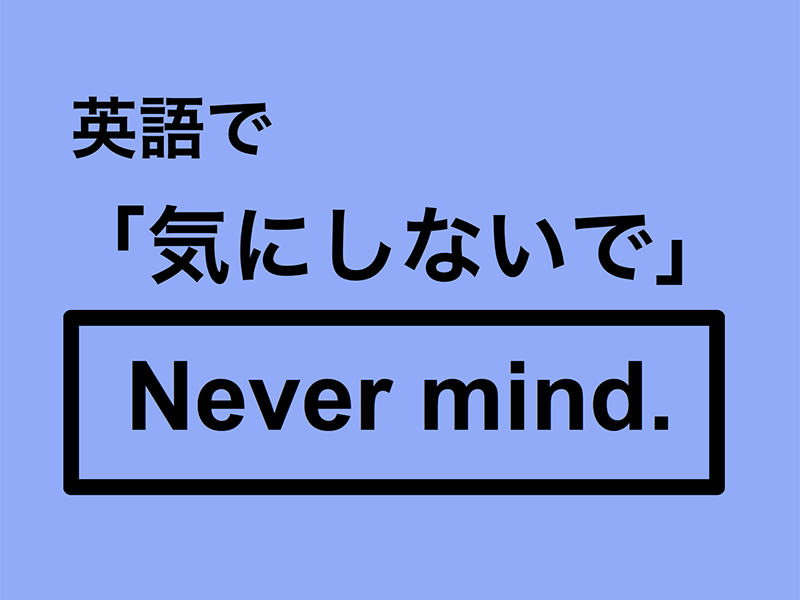
Every language contains phrases that carry far more weight than their literal dictionary definitions suggest. In Japanese, "気にしないで" (ki ni shinaide) serves as a universal social shock absorber, deployed dozens of times a day to brush off an apology, downplay an act of generosity, or ease someone's anxiety. When speakers attempt to export that single phrase into English, communication often stumbles. Translating it literally produces unnatural phrasing, and defaulting to a catch-all like "never mind" can inadvertently derail a conversation.
The challenge has gained renewed attention among bilingual educators and workplace trainers. As highlighted in a recent Yahoo!ニュース Report exploring how idiomatic awareness shapes practical English fluency, mastering conversational nuance requires moving beyond word-for-word substitution. When handling emotional subtext, whether you are reassuring an anxious colleague, accepting an apology, or acknowledging thanks, choosing the exact register makes the difference between projecting empathy and sounding dismissive.
📌 Key Takeaways:
- The Translation Trap: Relying on "never mind" or the loanword phrase "don't mind" often backfires because native speakers perceive them as irritated, abrupt, or ungrammatical.
- Context Dictates Form: English splits the functions of "気にしないで" across distinct categories, separating responses to apologies from responses to gratitude and anxiety.
- Professional Boundaries: In corporate settings, phrases like "think nothing of it" or "no trouble at all" establish polish, whereas casual phrases like "you're good" or "don't sweat it" belong strictly among peers.
The 'Never Mind' Trap and the Risk of Accidental Friction
The most common misstep bilingual professionals make is using "never mind" as an umbrella equivalent for "気にしないで." In Japanese, the phrase is warm and soothing. In English, "never mind" carries a sharp drop in pitch. It signals that an idea has been discarded or that the speaker has run out of patience trying to explain something.
Tell a colleague "never mind" after they apologize for being five minutes late to a project check-in, and they will likely assume you are annoyed. The phrase implies, "Drop the subject; it is not worth discussing anymore." It shuts down dialogue rather than offering comfort.
A similar hazard surrounds the Japanese-English loanword *donto maindo* (don't mind). While universally recognized on Japanese sports fields and in schoolyards as a cheer of encouragement, native English speakers do not use the phrase as an imperative to comfort someone. Saying "don't mind" to an American or British counterpart sounds truncated and grammatically incomplete. To offer actual comfort, the sentiment requires an object, a preposition, or an entirely different idiom.
Workplace Communication Etiquette: Polite Ways to Say No Worries
Professional environments require a delicate balance between approachability and deference. When an executive or client expresses regret over an administrative delay or a rescheduled call, replying with "no problem" can sometimes strike traditional ears as flippant. It subtly implies that an actual problem existed in the first place.
To establish warmth while maintaining executive presence, seasoned communicators rely on specific reassurance phrases in English designed to neutralize perceived inconvenience:
"Please don't give it another thought." This expression provides absolute closure. It directly instructs the other party to let go of their concern, functioning as an exact cultural equivalent to formal Japanese reassurance.
"No trouble at all." When someone apologizes for requesting a revision or asking for an additional document, this phrase emphasizes that your workflow was undisturbed. It communicates competence and generosity without casual slang.
"Think nothing of it." Best suited for situations where you did a favor or went out of your way to assist someone. It politely minimizes your own effort to ensure the other person does not feel indebted.
Casual Conversational Responses: When It's All Good
Outside corporate email threads, social dynamics shift toward brevity and warmth. Casual conversational responses aim to immediately put friends and peers at ease. In informal American and international English, these expressions signal that an incident was trivial.
"Don't sweat it." Originating from physical exertion, this idiom instructs the listener not to waste nervous energy on minor errors. If someone drops a pencil or arrives ten minutes late to dinner, "don't sweat it" immediately restores an easygoing dynamic.
"No big deal" (or "It's no biggie"). This option functions as a rapid status update on the situation. It explicitly states that the issue has zero consequence. It works equally well when responding to minor apologies or brushing aside modest compliments.
"You're good" / "It's all good." Ubiquitous across North American urban centers, "you're good" has become the default reflex when someone accidentally bumps into you in a hallway or apologizes for interrupting a sentence. It confirms that no social boundary was crossed and that both parties remain on friendly terms.
Evaluating Context: Choosing the Right Phrase by Situation
Selecting the right phrase depends entirely on whether the speaker is addressing an apology, receiving thanks, or calming an anxious peer. The table below outlines how native English conversational idioms align with specific social moments.
| Trigger Event | Literal Japanese Impulse | Natural Native Alternative | Pragmatic Register |
|---|---|---|---|
| Colleague apologizes for sending an email late | 気にしないでください (Never mind) | "No worries at all, thanks for following up." | Collaborative Professional |
| Friend feels bad about spilling soda on a table | 気にしないで (Don't mind) | "Don't sweat it, we can wipe it up in a second." | Casual / Reassuring |
| Client thanks you for resolving an unexpected bug | お気になさらず (No problem) | "Happy to help; glad we could get that sorted." | Executive / Service-Oriented |
| Peer worries excessively about an upcoming presentation | そんなに気に病まないで | "Try not to overthink it; you've prepared well." | Empathetic Peer |
The Critical Divide Between Apology and Gratitude
Linguistic research consistently identifies a recurring point of confusion for cross-cultural teams: the convergence of "thank you" and "I'm sorry." In everyday Japanese dialogue, the boundary between an apology and an expression of appreciation often blurs, encapsulated by the versatile term sumimasen.
English keeps these social functions clearly separate. When someone expresses heartfelt gratitude, answering with "no problem" or "it's nothing" can inadvertently minimize the value of the exchange. In customer-facing or senior-level environments, responding to thanks with "no problem" suggests that helping was merely a lack of inconvenience rather than a deliberate, positive action.
Replacing negative-construction phrases ("no problem," "not at all") with affirmative alternatives fundamentally improves tone. Phrases such as "my pleasure," "anytime," and "glad I could help" frame your assistance as an intentional act of goodwill. Reserve "no problem alternatives" and expressions like "it's all good" for moments when an actual mistake, inconvenience, or mishap occurred.
Frequently Asked Questions (FAQ)
Q1: Why does native English speech avoid using "Don't mind" as reassurance?
A1: In standard English, the verb "mind" requires an object or a gerund clause, as in "I don't mind waiting" or "Would you mind closing the door?" Used by itself as an exclamation, "don't mind" sounds incomplete and confusing. It persists in Japan strictly as a domestic loanword phrase (和製英語, wasei-eigo).
Q2: Is "No worries" acceptable in professional corporate emails?
A2: Yes, among immediate peers and within tech, media, and startup sectors across Australia, the UK, and North America. However, when writing to external clients, legal counsel, or senior corporate executives, more formal options like "No trouble at all" or "Glad to assist" carry greater professional polish.
Q3: What should I say when someone asks what I said, but I don't want to repeat it?
A3: This is the specific situation where "never mind" fits naturally. If you said something trivial that was drowned out by background noise, saying "Oh, never mind, it wasn't important" correctly signals that the other person does not need to strain to hear it.
Navigating Conversational Nuance in Global Communication
Mastering everyday conversation is rarely a matter of memorizing larger vocabulary lists. Real conversational ease comes from understanding how social weight shifts across cultural lines. When an interaction calls for easing someone's discomfort, relying on a mechanical translation risks creating the very awkwardness you are trying to prevent.
Moving fluidly between "think nothing of it" in a high-stakes presentation and "don't sweat it" over lunch reveals genuine linguistic confidence. Reassurance is fundamentally about making the other person feel heard, secure, and respected. Matching the right phrase to the exact social setting turns routine pleasantries into clear, effortless rapport.