The Evolution of Super Robot Wars Z Modding: From 2008 Discs to 2026 PC Rigs
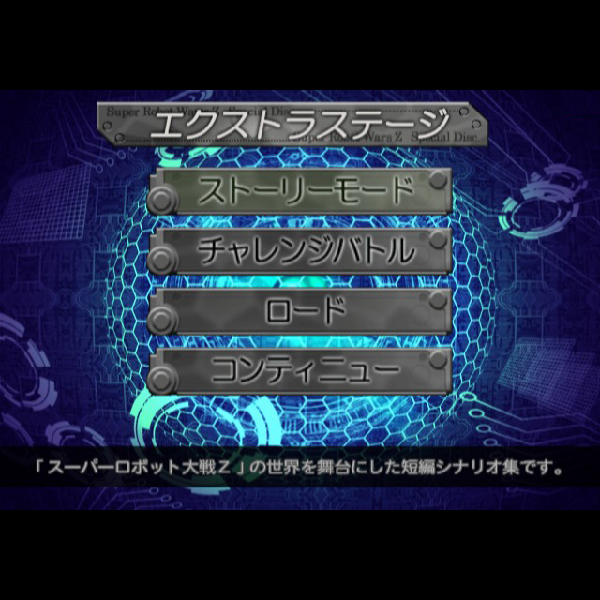
When Banpresto released Super Robot Wars Z on the PlayStation 2 in September 2008, conquering its grueling multi-route campaigns demanded either hundreds of hours of tactical planning or a physical cheat dongle plugged into the console's memory card slot. Japanese strategy RPG fans traded strings of hexadecimal values across 2channel bulletin boards, looking for ways to bypass punishing repair costs and unlock elusive secret mecha like the Destiny Gundam's early operational forms.
Eighteen years later, the culture surrounding these memory alterations has shifted entirely. What began as volatile hardware tampering has settled into seamless desktop script injection on modern emulators, preserving a foundational tactical epic for an international audience that never received an official English release.
📌 Key Takeaways:
- The Hardware Shift: Physical optical disc booters and peripheral dongles gave way to automated memory patch files executed via emulator runtimes.
- Tactical Adjustments: Players migrated from blunt invulnerability cheats toward fine-grained modifications, preserving tactical balance while bypassing obsolete level-grinding systems.
- Preservation Mechanics: Modern modding workflows run via PCSX2 2.0+ engine hooks, directly injecting localized assets, damage cap removals, and unit state modifications in dynamic system memory.
The Golden Age of Action Replay Dongles and Japanese Hex Forums
Booting a modified game on retail PlayStation 2 hardware in 2008 was a deliberate, mechanical ritual. Players relied on third-party commercial boot discs, primarily Datel’s Action Replay Max or the Japanese Pro Action Replay (PAR), which hijacked system memory routines before the console booted the game disc itself.
Users manually entered lines of alphanumeric data using a DualShock 2 controller. Entering Raw hex codes required hunting down threads on Japanese message boards like 2channel, where anonymous contributors reverse-engineered the memory addresses assigned to unit hit points, energy reserves, and pilot abilities.
A single typographical error in an encryption master code (M-Code) meant an immediate black screen or a corrupted memory card. Modders had to convert Raw unencrypted pointers into Action Replay Max format using PC utilities like MaxCrypt, bridging the gap between raw hardware hacking and home entertainment. The barrier to entry kept the community small, technical, and insular, concentrated largely among domestic Japanese enthusiasts and committed international import players.
From Raw Hex to Text Files: The Architecture of Emulation Patching
The arrival of mature 64-bit emulation erased the need for boot discs and hardware dongles. Instead of intercepting the console bus at power-on, modern enthusiasts configure PCSX2 pnach codes, which act as plain-text scripts parsed directly by the emulator’s virtual CPU core.
// Super Robot Wars Z (SLPS-25887) Infinite Funds
patch=1,EE,20593450,extended,05F5E0FF
A `.pnach` file detects the title's unique CRC checksum on launch and injects memory writes into the virtualized Emotion Engine RAM at specified clock cycles. Modern setups on platforms like PCSX2 version 2.0 apply these routines automatically.
Modern community repositories hold thousands of verified scripts covering both the base 2008 release and the subsequent 2009 Super Robot Wars Z Special Disc. The risk of irrecoverably damaging hardware or corrupting save storage has vanished. If an injected script causes an execution crash, the player simply unticks the entry in a graphical interface and reloads an emulator state.
The Technical Evolution of Modification Methods: 2008, 2026
| Method / Era | Core Delivery Mechanism | Common Modification Target | Failure Risk & Stability |
|---|---|---|---|
| Action Replay Max (2008, 2012) | Physical swap disc, encrypted dongle, manual controller entry | Infinite money cheat (99,999,999 credits), max squad points | High; disc-read failures, corrupted 8MB memory card blocks |
| Save Data Editors (2012, 2018) | PC GUI utilities parsing extracted `.psu` or `.max` save files | Pilot PP modifier, inventory injection for all power parts unlocked | Moderate; checksum mismatches could invalidate entire saves |
| Runtime Emulation Hooks (2019, 2026) | Dynamic memory writing via `.pnach` and external memory injectors | Damage limit bypass, custom squad cost removals, hidden unit unlocks | Near-zero; instant rollback, isolated host PC filesystem |

Mechanical Deconstruction: From God Modes to Tactical Rebalancing
Early modification was crude. Players often activated cheats that granted infinite EN and HP, rendering tactical movement obsolete and turning boss encounters into tedious exercises in button pressing.
Over time, players shifted toward structural adjustments that removed arbitrary friction while preserving tactical depth. Modders began deploying targeted seishin point modifications, giving pilots sufficient mental energy pools to test out varied abilities without relying on repetitive turn-delaying strategies.
Save manipulation moved forward as well. Through targeted PS2 save data editing, players gained the ability to modify specific deployment states. Instead of generating a full roster of maxed-out pilots, users inject specific hidden unit unlock codes to access rare route-exclusive mecha, such as the early acquisition of the Nirvash type theEND or secret variations of the Turn A Gundam, without having to replay fifty-stage branch paths multiple times.
Modern communities target mathematical ceilings built into the PlayStation 2 code. By deploying custom assembly injections, modders developed a stable damage limit bypass, breaking the hardcoded 99,999 damage ceiling. This enables max-tier combinations, upgraded squad attacks, and advanced support mechanics to scale as intended against endgame bosses whose defensive values were tuned around the limits of late-2000s hardware.
Preservation and the Legacy of the Special Disc
The evolution of modification codes for Super Robot Wars Z is directly linked to video game preservation. Unlike its PlayStation 3 and Vita sequels, the original PS2 installment remains bound by an intricate web of dynamic anime licensing agreements, spanning Zeta Gundam, Overman King Gainer, Eureka Seven, and The Big O. This complexity makes an official modern digital remaster or worldwide release commercially improbable.
Code modifications kept community interest alive long enough for fan translators to build functional English translation patches. The tools developed to read and alter live Emotion Engine memory addresses were the exact utilities required to extract dialogue scripts, rebuild font tables, and balance operational interfaces for wider audiences.
Modern modification workflows have shifted away from simple cheating. They serve instead as a digital toolkit for tactical preservation, giving long-standing mecha enthusiasts and newcomers complete control over how they experience one of the PlayStation 2 era's most ambitious strategy titles.
Frequently Asked Questions (FAQ)
Q1: Why do Action Replay codes look different from PCSX2 pnach codes?
Action Replay Max codes use proprietary encryption and line-formatting rules designed to prevent piracy and ensure compatibility with physical cheat engine software. Emulator `.pnach` files use unencrypted hexadecimal base addresses and direct memory write values targeted directly at the virtualized hardware bus.
Q2: Will applying memory modifications break specific mission triggers in Super Robot Wars Z?
Yes, if applied without care. Activating infinite health or killing a scripted boss unit in a single turn using a damage cap bypass can prevent stage events, mid-mission reinforcements, and skill points (SR Points) from registering correctly. Experienced players recommend activating modifications only during the intermission menu between tactical stages.
Q3: Can these modification scripts be used on the Super Robot Wars Z Special Disc?
Only if the memory addresses are updated. The *Special Disc* shares the core engine and visual assets with the original release, but its executable code points to completely different base memory offsets. Using codes meant for the original game on the *Special Disc* will cause immediate system freezes.
The Future of PlayStation 2 Strategy Modding
The lifecycle of code modification for Super Robot Wars Z mirrors the broader arc of classic game preservation. What started as simple, brute-force hardware tampering on physical consoles has transformed into a refined discipline of systems preservation and tactical re-tuning.
Modern players running these titles on high-end desktop rigs or handheld hardware no longer look for simple ways to break the game. Instead, they use memory adjustments to bypass outdated grinding loops, restore lost regional content, and enjoy the technical ambition of late-era PS2 game design on modern displays. The original hardware may be retired, but the tactical systems underneath remain as flexible and engaging as ever.
