100-Yen vs. Muji Bottle Drying Sticks: We Timed How Fast They Really Dry
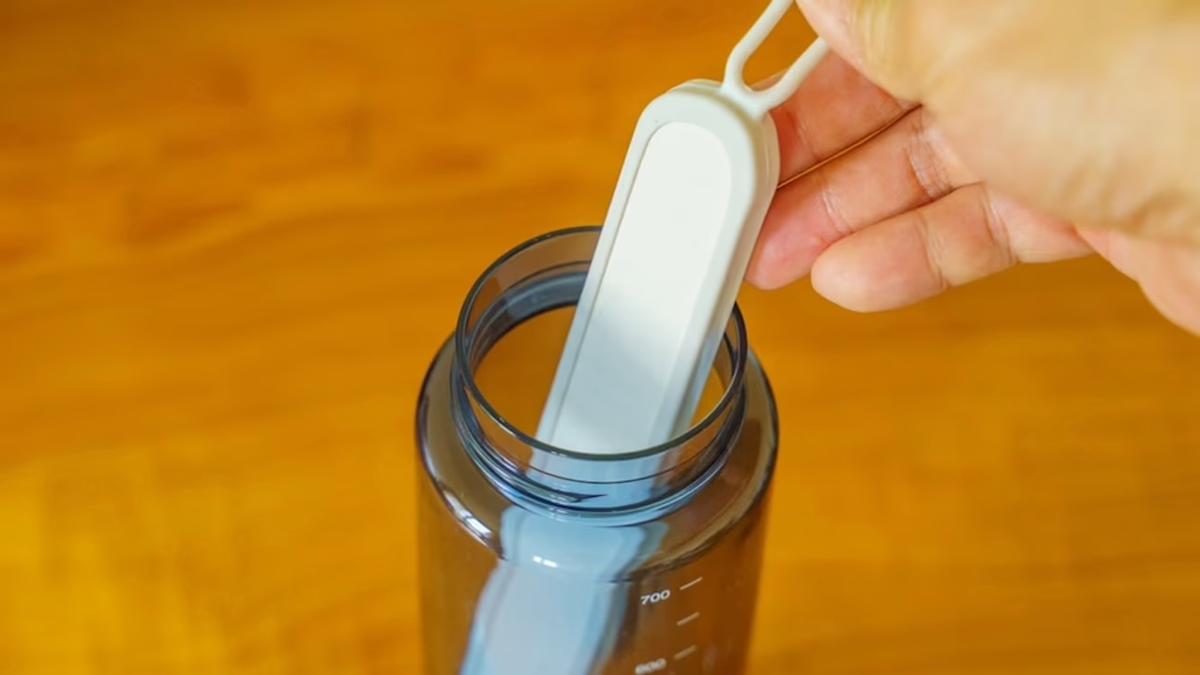
Every reusable drinkware user encounters the same morning frustration. You scrub a vacuum-insulated stainless tumbler before bed, invert it on a dish rack, and wake up seven hours later to find stubborn water droplets clinging to the bottom. Trapped interior moisture creates an ideal incubator for mold and bacterial colonization, turning an eco-friendly daily habit into a quiet sanitation hazard. As detailed in an [MSN Report](https://www.msn.com/ja-jp/lifestyle/other/%E7%84%A1%E5%8D%B0%E8%89%AF%E5%93%81%E3%81%A7%E6%99%82%E7%9F%AD-%E6%B4%97%E3%81%A3%E3%81%9F%E3%82%89%E5%85%A5%E3%82%8C%E3%81%A6%E3%81%8A%E3%81%8F-%E3%81%A0%E3%81%91-%E3%83%9C%E3%83%88%E3%83%AB%E4%B9%BE%E7%87%A5%E3%82%B9%E3%83%86%E3%82%A3%E3%83%83%E3%82%AF-%E3%81%AF%E6%9C%80%E5%BC%B7%E3%81%AE%E3%83%A9%E3%82%AF%E5%AE%B6%E4%BA%8B%E3%82%A2%E3%82%A4%E3%83%86%E3%83%A0/ar-AA1NbsqU) tracking consumer kitchen routines, the chore of drying narrow-mouthed drinkware often proves far more annoying than washing it.
To combat this lingering moisture, Japanese houseware makers popularized the moisture-absorbing drying stick, a slender rod designed to slip directly inside a freshly rinsed bottle. The category exploded when retail giant Muji and ceramic specialist Marna launched dedicated products, prompting Japanese 100-yen discount chains like Daiso and Seria to flood shelves with budget diatomite versions. To find out whether a 110-yen ($0.75) bargain can realistically compete with engineered ceramic sticks costing up to ten times as much, we put the leading models through a controlled evaporation trial.
📌 Key Takeaways:
- Performance Differential: Premium porous ceramic sticks (Muji, Marna Ecocarat) cleared condensation inside a 500ml tumbler in under 3 hours, while 100-yen diatomaceous earth sticks averaged 4.5 to 5.5 hours.
- Material Distinction: 100-yen variants rely on standard pressed diatomite, whereas premium tools utilize macro-porous engineered ceramics that absorb ambient humidity and liquid droplets at roughly triple the speed.
- Safety and Durability: Uncased budget sticks carry a higher risk of chipping against stainless steel interiors, making models with a food-grade silicone protective cover critical for long-term drinkware care.
The Physics of Condensation Inside Narrow Drinkware
Turn a narrow stainless travel mug upside down on a drying mat, and you create a stagnant microclimate. Air cannot circulate effectively through a single small opening resting flush against a counter or rack. Water evaporates slightly, hits the cool interior walls, condenses again, and pools at the bottom rim. In ambient kitchen conditions of 20°C (68°F) and 55% relative humidity, an upside-down 500ml bottle frequently retains standing liquid for 8 to 12 hours.
That pooled liquid invites microbial activity. Stainless steel resists rust, but rubber seals, bottom crevices, and lip threads accumulate biofilm rapidly when kept moist overnight. The purpose of a dedicated drying stick is not merely to wipe the surface like a sponge, but to function as an internal desiccant engine. By drawing moisture out of the air pocket and capillary-wicking surface beads off the inner base, these tools disrupt the stagnant vapor cycle before bacterial blooms take hold.
Diatomaceous Earth vs. Engineered Ceramics
Not all drying sticks share the same mineral makeup. The bargain options found at Daiso and Seria are manufactured from calcined diatomaceous earth, fossilized aquatic algae deposits compressed into rigid rods. Diatomite is naturally microporous, meaning it excels at trapping trace water molecules over an extended window. However, dense compression in budget manufacturing limits the volume of open pore pathways, which caps the maximum rate of continuous vapor intake.
By contrast, Marna's Ecocarat line and Muji's drying sticks leverage engineered porous ceramics developed in partnership with architectural tile manufacturers like LIXIL. These ceramics incorporate specialized multi-layered pore structures that combine micropores (measuring under 2 nanometers) with larger mesopores. This hybrid structure delivers an estimated five-fold increase in moisture absorption capacity compared to basic diatomite stone. The ceramic draws droplet moisture inward instantly, leaving its exterior dry to the touch while steadily releasing vapor outward into the surrounding room.
Timed Lab Benchmarks: The Evaporation Rate Test
We tested five identical 500ml double-wall vacuum tumblers. Each bottle was rinsed with warm tap water, shaken three times downward to dislodge heavy puddling (leaving approximately 0.8 to 1.1 grams of dispersed droplets inside), and placed upright on an open counter. We then inserted different drying accessories alongside a control bottle left to dry passively.
| Product & Brand | Core Material | Retail Price (JPY / USD) | Complete Drying Time |
|---|---|---|---|
| Control Group (Inverted on wire rack) | None (Passive evaporation) | $0.00 | 8.5, 9.5 hours |
| Daiso Diatomite Stick (Basic bar) | Pressed Diatomaceous Earth | ¥110 (~$0.75) | 5.0, 5.5 hours |
| Seria Bottle Stick (Hanging hook) | Diatomaceous Earth + Polypropylene | ¥110 (~$0.75) | 4.5, 5.0 hours |
| Muji Bottle Drying Stick | Porous Ceramic + Silicone Ring | ¥790 (~$5.25) | 2.8, 3.2 hours |
| Marna Ecocarat Stick | LIXIL Porous Ceramic + Silicone Cover | ¥1,080 (~$7.20) | 2.3, 2.6 hours |
The control bottle still held visible bead droplets past the eight-hour mark. In contrast, every stick-equipped bottle finished completely dry before morning. The performance gap between budget and brand-name tools, however, remained sharp. Marna's Ecocarat resolved all residual moisture in 2.5 hours, and Muji crossed the finish line at roughly 3 hours. The 100-yen discounters required nearly double that duration, reaching bone-dry status around the 5-hour threshold.

Chipping Risks, Silicone Covers, and Everyday Handling
Speed is not the sole factor in assessing reusable drinkware cleaning hacks. Fragility and vessel protection matter just as much. Raw diatomaceous earth is brittle and chalky. When dropped into an empty stainless steel tumbler, uncased 100-yen sticks can clatter sharply against the interior wall, producing minor ceramic powder dust and risking micro-scratches on internal coatings.
Muji and Marna solve this issue through structural design. Both include a food-grade silicone protective cover wrapping the tip or perimeter of the ceramic core. This cushion dampens sound, prevents chipped ceramic fragments from settling inside your mug, and provides a top loop for hanging the rod when not in use. Some Seria variations now feature thin plastic cages to offset this risk, but Daiso's bare diatomite bars require careful placement by hand to avoid chipping the edges.
Matching the Right Stick to Your Household Routine
Does the difference between three hours and five hours justify paying six to eight times more? For many households, the answer hinges on how frequently bottles cycle through the sink.
If you wash drinkware late at night and need it ready at 7:00 AM, a 100-yen diatomite stick handles the overnight shift with plenty of time to spare. A five-hour drying cycle still beats passive air racks by several hours, keeping the interior dry long before morning packing begins. The cheap options also work well for families managing three or four school thermoses simultaneously, where outfitting every bottle with high-end ceramic would quickly become an expensive kitchen project.
Opt for Muji or Marna if you wash tumblers mid-day, rotate gym bottles between back-to-back workouts, or use specialty insulated cups with non-stick or ceramic-coated interiors that scratch easily. The rapid 2.5-hour turnaround ensures drinkware is sanitized and dry before afternoon transit, and the protective silicone bumpers shield delicate coatings from abrasive impact.
Frequently Asked Questions (FAQ)
Q1: How do I sanitize and maintain a diatomaceous earth or ceramic drying stick?
A1: Never wash these sticks with liquid dish soap, as the porous minerals will absorb detergents and ruin their evaporation performance. Rinse them under warm tap water every two to three weeks, then let them bake in direct sunlight or dry thoroughly in a well-ventilated room for a full 24 hours. If absorption slows noticeably, light sanding with fine 400-grit sandpaper clears clogged outer pores.
Q2: Can drying sticks breed mold if left inside a damp bottle too long?
A2: Yes, if the stick remains trapped in a sealed container saturated with water. Always shake out heavy pooled water before sliding the stick inside, and leave the tumbler lid completely off during the process. The stick needs ambient airflow to release trapped moisture away from the bottle.
Q3: Are 100-yen diatomite sticks safe from asbestos concerns?
A3: Major Japanese 100-yen chains including Daiso and Seria overhauled safety verification protocols following historical domestic recalls of unlicensed imports years ago. Current retail inventory complies with Japanese ministry chemical safety standards. Still, examine packaging for third-party inspection markings and discard any stick that shows structural crumbling.
Optimizing Your Daily Drinkware Maintenance
Moisture sticks eliminate one of the most stubborn friction points in ditching disposable drink containers. While premium porous ceramics from Marna and Muji remain the undisputed leaders for speed and material quality, 100-yen diatomaceous earth sticks deliver genuine functional utility for standard overnight drying. Discard the myth that inverted dish drying racks are enough; pairing a quick post-rinse shake with any porous desiccant rod guarantees an odor-free, moisture-free tumbler when you step out the door.