2-Ton or 3-Ton Truck: Complete Buyer's Guide to Licensing, Costs, and Job Suitability
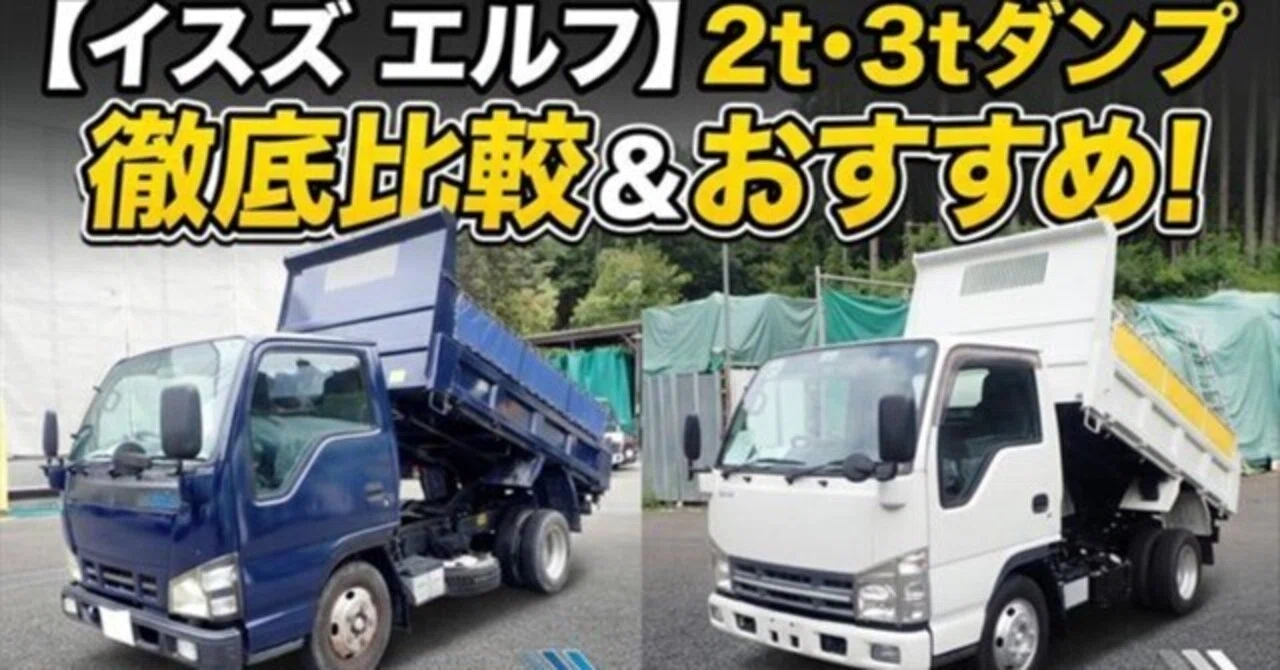
Contractors and logistics operators assessing light-duty commercial vehicles routinely wrestle with a deceptive decision: stepping up from a 2-ton platform to a 3-ton variant. On paper, gaining an extra 1,000 kilograms of maximum payload capacity sounds like an automatic win for job site efficiency. Yet fleet acquisition data and regulatory enforcement reveal that this choice frequently derails operational schedules due to licensing miscalculations, escalating maintenance costs, and strict chassis weight limits.
The most persistent industry blind spot involves driver licensing credentials. According to analysis highlighted in a recent note Report, many buyers assume an ordinary Japanese driver's license covers any vehicle marketed under a "2-ton" badge. In practice, specialized configurations such as dump trucks frequently push gross vehicle weight well past statutory thresholds, demanding identical license qualifications regardless of whether the badge reads 2t or 3t.
📌 Key Takeaways:
- The Licensing Reality: Heavy equipment additions push both 2-ton and 3-ton dump trucks past 5,000 kg Gross Vehicle Weight, requiring drivers to hold a quasi-medium driver's license.
- The Payload Trade-off: Stepping up to a 3-ton chassis yields higher maximum payload capacity but requires wide-cab configurations that compromise urban job site turning radius.
- Long-Term Operating Costs: Fleet operational expenditure grows noticeably with 3-ton units due to heavier tire wear, wider chassis dimensions, and lower diesel fuel consumption rates.
The Standard License Illusion and Regulatory Weight Thresholds
A widespread operational misunderstanding among young tradespeople and logistics startups centers on the standard driver license weight limit. Following Japan's revised Road Traffic Act implemented in March 2017, a standard ordinary license permits the operation of vehicles with a Gross Vehicle Weight (GVW) under 3,500 kilograms and a maximum payload capacity below 2,000 kilograms. Drivers who earned their licenses between June 2007 and March 2017 are capped at a GVW under 5,000 kilograms and a payload under 3,000 kilograms.
These strict boundaries create immediate legal friction. Even if a truck is classified commercially as a 2-ton model, that figure refers exclusively to maximum payload capacity, not the entire operational weight. Once the curb weight of the cab, chassis, structural reinforcements, fuel, and two passengers are factored in, the total GVW consistently climbs above 4,000 kilograms. For any driver licensed after March 2017, getting behind the wheel of virtually any standard 2-ton commercial vehicle requires a quasi-medium driver's license (準中型免許), which authorizes vehicles up to 7,500 kilograms GVW.
The distinction dissolves almost entirely when comparing specialized body types. A bare flatbed 2-ton truck might squeak beneath older license grandfathering clauses, but hydraulic machinery fundamentally changes the equation. Because drivers must hold the exact same quasi-medium credential to operate either vehicle legally, fleet managers cannot treat driver availability as a reason to automatically default to the smaller truck.
Isuzu Elf Dump Specifications: When Equipment Destroys Weight Limits
Examining the mechanical layout of Japan’s light-duty staple, the Isuzu Elf, clarifies why the nominal 2t versus 3t distinction collapses in practical applications. Standard flatbed trucks rely on lightweight aluminum or drop-side steel bodies. In contrast, dump trucks require heavy-gauge steel floors, reinforced side gates, dual hydraulic lifting rams, power take-off (PTO) assemblies, and high-tensile subframes.
Those hydraulic and structural components add roughly 600 to 900 kilograms of tare weight compared to a dry-cargo van or flatbed. An Isuzu Elf 2-ton dump truck typically registers an unladen curb weight around 2,800 to 3,050 kilograms. When loaded with its rated 2,000 kilograms of gravel or demolition rubble, plus two crew members at 55 kilograms each, the total calculated GVW lands between 4,910 and 5,260 kilograms.
Because the calculated GVW routinely breaches 5,000 kilograms, even drivers holding the older pre-2017 ordinary license are barred from operating many modern 2-ton dump variants. Meanwhile, a 3-ton Isuzu Elf dump truck exhibits an unladen curb weight around 3,150 to 3,400 kilograms. Combined with a 3,000-kilogram payload, its GVW lands firmly between 6,250 and 6,550 kilograms. Both vehicles sit squarely within the 3,500 kg to 7,500 kg bracket governed by the quasi-medium driver's license. From a regulatory perspective, buying the 2-ton dump truck does not expand your available driver pool if your staff holds post-2017 licenses.
Head-to-Head Comparison: Licensing, Dimensions, and Fleet Financials
Selecting between these two vehicle tiers requires balancing mechanical capacities against municipal access constraints and recurring overhead. The following baseline metrics demonstrate how nominal payload changes cascade into physical dimensions and operational overhead.
| Evaluation Metric | 2-Ton Commercial Variant | 3-Ton Commercial Variant | Operational Consequences |
|---|---|---|---|
| Gross Vehicle Weight (GVW) | 4,200, 5,300 kg (Dump/Rigid) | 5,800, 6,800 kg | Both variants breach the 3,500 kg limit; both require quasi-medium permits. |
| Cab & Chassis Width | Standard Narrow (1,695 mm) | Semi-Wide / Wide (1,880, 2,220 mm) | 3t models struggle in dense residential neighborhoods and historic alleys. |
| Urban Turning Radius | 4.5, 4.9 meters | 5.2, 5.8 meters | Standard 2t models navigate single-lane intersections without multi-point turns. |
| Diesel Fuel Consumption | 9.5, 11.5 km/L | 7.8, 9.2 km/L | Larger displacement engines on 3t platforms increase long-term fueling costs. |
| Annual Automotive Tax | ¥11,500 (Commercial/Green plate) | ¥16,000 (Commercial/Green plate) | Taxes scale directly with maximum payload thresholds on commercial registrations. |
Urban Maneuverability and Narrow Job Site Access
While license requirements run parallel, physical dimensions diverge sharply. A standard 2-ton truck built on a narrow cab maintains an overall width of 1,695 millimeters. This narrow stance allows drivers to slip through Japan's historic 4-meter municipal roadways without obstructing ongoing traffic. The urban job site turning radius for a short-wheelbase 2-ton dump sits at a compact 4.5 meters, enabling single-motion cornering on suburban job sites.
Moving up to a 3-ton capacity alters the truck's footprint. Supporting a 3,000-kilogram payload across commercial axles requires wider track widths, heavier leaf spring packages, and wider tire dimensions (typically moving from 195/75R15 configurations up to 205/85R16 or 225/70R16). Most 3-ton models rely on wide-cab or semi-wide frameworks measuring 1,880 to 2,220 millimeters across.
That additional 200 to 500 millimeters of width transforms day-to-day route planning. On narrow residential access roads, scaffolding, parked utility vans, and utility poles turn access into a hazard. A 3-ton truck's minimum turning radius commonly stretches past 5.3 meters. Contractors handling urban interior renovations or residential trenching often find that a 3-ton vehicle cannot enter private driveways, forcing crews to stage equipment at the street curb and hand-cart materials.
Fleet Operational Expenditure, Tax Brackets, and Compliance
Evaluating fleet operational expenditure requires looking beyond the initial showroom invoice. Commercial vehicle annual taxes in Japan assign rates based on maximum payload brackets. For green-plate (commercial transport) vehicles, a 2-ton truck sits at approximately ¥11,500 annually, while a 3-ton model steps up to roughly ¥16,000. For private-use white-plate commercial vehicles, the tax gap widens further, rising from ¥16,000 on a 2t platform to ¥22,500 on a 3t platform.
Mandatory vehicle inspection costs (shaken) also reflect the heavier workload of 3-ton chassis. While both weight classes require annual commercial vehicle roadworthiness renewals, 3-ton models incur higher mechanical restoration costs during inspections. Thicker brake shoes, heavy-duty suspension bushings, and larger commercial tires drive parts replacement bills up roughly 20% to 30% compared to standard 2-ton equivalents.
Fuel economics exhibit a parallel variance. Because 3-ton platforms carry heavier curb weights and employ larger displacement 3.0L to 4.0L turbocharged diesel engines tuned for high low-end torque, their diesel fuel consumption rates sit between 7.8 and 9.2 kilometers per liter under stop-and-go conditions. Modern narrow-cab 2-ton units regularly deliver 9.5 to 11.5 kilometers per liter across comparable urban delivery cycles.
Despite these running costs, opting down to a 2-ton chassis introduces serious legal exposure if your daily payloads regularly exceed rated limits. Overloading fines and compliance enforcement under the Road Traffic Act carry severe administrative penalties. Japanese transport bureaus and prefectural police regularly deploy mobile wheel-load scales near aggregate quarries and expressway interchanges. Operating a 2-ton vehicle at 150% capacity (carrying 3 tons of material) leads directly to administrative license points, vehicle impound notices, corporate safety audits, and potential criminal referrals for the fleet director.
Matching Truck Profiles to Specific Contractor Workflows
Choosing between these two classes ultimately comes down to material density and job site location rather than nominal payload figures.
Who should choose the 2-ton truck:
- Residential plumbers, urban scaffolders, and residential demolition specialists working inside dense neighborhoods.
- Operators managing routes defined by roads narrower than four meters with tight street parking.
- Companies looking to lower routine maintenance, tire change expenses, and annual inspection overhead.
- Fleets that transport light, voluminous cargo, such as cardboard, packaging, or furniture, where volume fills before maximum weight is reached.
Who should choose the 3-ton truck:
- Civil engineering contractors hauling heavy bulk material like wet sand, concrete aggregate, soil, and asphalt millings where a 2-ton bed hits weight capacity well before filling its physical volume.
- Fleets where all primary drivers already carry a quasi-medium license, eliminating regulatory distinctions.
- Operations operating primarily in open industrial zones, commercial developments, or suburban infrastructure corridors with broad avenues and easy access.
- Contractors seeking to avoid overloaded vehicle penalties by running legally compliant high-mass runs that would otherwise overload a 2-ton chassis.
Frequently Asked Questions (FAQ)
Q1: Can a driver with an ordinary license issued after 2017 drive a 2-ton flatbed truck?
A1: Rarely. An ordinary license obtained after March 12, 2017 limits drivers to vehicles with a Gross Vehicle Weight under 3,500 kilograms and a maximum payload under 2,000 kilograms. Most commercial 2-ton flatbeds possess an unladen weight of 2,200 to 2,500 kilograms. Combined with a 2,000-kilogram payload capacity, the GVW reaches roughly 4,400 kilograms, making it illegal to operate without a quasi-medium license.
Q2: Is the cargo bed volume noticeably different between 2t and 3t dump trucks?
A2: Cargo bed dimensions and volume are often remarkably similar in length and width on standard short-wheelbase models. However, 3-ton dump bodies feature higher steel side gates and reinforced tailgates to accommodate denser material loads without spilling over the side walls during transit.
Q3: Does vehicle inspection (shaken) occur annually for both 2t and 3t trucks?
A3: Yes. Under Japanese vehicle classification, all commercial trucks registered in the 1-number or 4-number category must complete mandatory vehicle safety inspections once every 12 months following their initial two-year factory inspection cycle, regardless of whether they are 2-ton or 3-ton models.
Strategic Fleet Sizing Decisions
Evaluating light commercial trucks requires looking beyond the number stamped on the tailgate. When assessing dump trucks, the assumption that smaller capacity broadens your pool of eligible drivers is false. Because heavy hydraulic hoists push vehicle curb weights up, both 2-ton and 3-ton dump configurations land above standard regulatory weight thresholds, requiring operators to hold a quasi-medium driver's license.
If your drivers already hold that qualification, evaluating a 3-ton truck becomes a straightforward operational trade-off: higher maximum payload capacity and protection against overloading violations against reduced urban maneuverability, wider cab profiles, and higher fuel and tire expenses. For companies handling heavy aggregate on open jobs, the 3-ton chassis protects legal compliance. For firms managing residential remodels down tight urban alleyways, the narrow-cab 2-ton platform remains the practical, maneuverable workhorse.