Acetone vs Warm Water vs Salt: Which Superglue Skin Remover Actually Works?

A momentary slip with a tube of instant glue creates an immediate, visceral spike of adrenaline. Within two to three seconds, fingers lock together with astonishing tensile strength as the liquid polymerizes against the microscopic moisture on human skin. As detailed in an investigative technical breakdown by the MSN Report on adhesive mechanics, consumer mishandling and improper application techniques cause thousands of accidental bonds each year. The instinctive reaction is almost always catastrophic: pulling the fingers apart with brute force.
Ripping bonded tissue tears the stratum corneum long before the adhesive fractures, producing painful skin irritation and peeling, bleeding, and open dermal wounds. Resolving the problem safely requires understanding the chemical weaknesses of modern household adhesive remedies rather than relying on mechanical force.
📌 Key Takeaways:
- The Chemical Fact: Instant glue relies on moisture-cured acrylic chains that yield to polar organic solvents or lipid-assisted shear stress, not brute force pulling.
- Primary Household Fix: Acetone nail polish remover dissolves the cured polymer within 2, 5 minutes, but it strips essential epidermal lipids and demands post-treatment care.
- Gentle Alternatives: A warm soapy water soak or a table salt and olive oil scrub takes longer, roughly 10, 20 minutes, yet eliminates chemical irritation on broken or sensitive skin.
The Polymer Chemistry of Cyanoacrylate Adhesive
Every commercial superglue belongs to the alkyl cyanoacrylate family, predominantly ethyl 2-cyanoacrylate. The liquid form contains stabilized monomer molecules. When exposed to ambient hydroxyl ions, readily available in the invisible film of moisture on human palms, an exothermic anionic polymerization chain reaction begins instantly. Long, rigid molecular chains weave through the microscopic ridges of your fingerprints.
The resulting bond creates shear resistance exceeding 1,000 to 2,000 pounds per square inch on non-porous surfaces. On living tissue, the glue adheres directly to sebum and dead keratinocytes. If you yank your fingers apart, the glue remains intact while the living epidermis underneath gives way. True release requires chemical swelling of the polymer network or mechanical breakdown along the epidermal border.
Acetone Nail Polish Remover: The Fast Chemical Solvent
Acetone is a volatile, low-molecular-weight polar ketone. Its molecular geometry allows it to infiltrate the cyanoacrylate matrix, disrupting intermolecular dipole-dipole bonds. The hard acrylic softens into a malleable, gum-like gel that slides away from finger ridges without pulling skin layers.
To use this approach effectively, saturate a cotton pad or lint-free cloth with standard acetone nail polish remover containing at least 90% pure acetone. Press the pad firmly against the bonded edge for 3 to 5 minutes. Slowly wiggle the fingers in a gentle rolling motion. Avoid straight-line pulling. Once the adhesive yields, wash the area thoroughly under running water and immediately apply petroleum jelly Vaseline to rebuild the stripped lipid barrier.
Safety parameters matter here. Applying acetone to an open wound or mucous membrane causes intense burning. The solvent also rapidly evaporates, leaving underlying skin severely dehydrated. For readers handling extensive hand contamination, chemical burn prevention starts with keeping the solvent away from thin, irritated, or chapped flesh.
Warm Soapy Water Soaks for Sensitive Skin
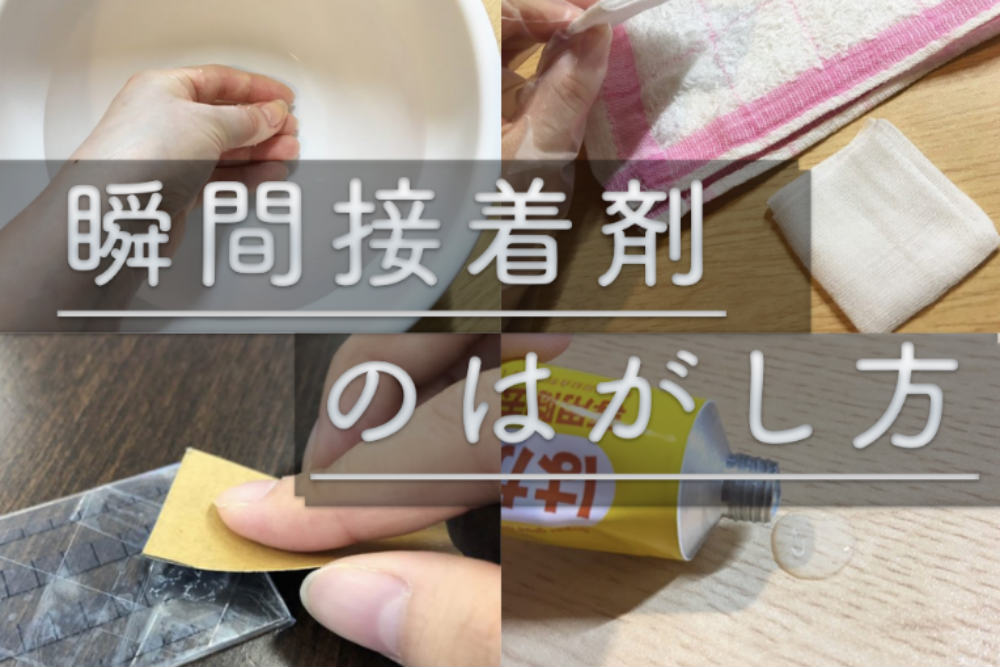
Soaking hands in warm soapy water operates on physical swelling and mild hydrolytic degradation. Cyanoacrylate resists cold water, but prolonged immersion in warm water heated to 100°F, 105°F (38°C, 40°C) softens the polymer edge. Surfactants found in liquid dish soap lower water's surface tension, letting moisture creep into the microscopic gap between the adhesive and the shedding top layer of skin.
Submerge the bonded area for roughly 10 to 15 minutes. As the skin absorbs water and begins to swell, the rigid glue layer cannot stretch to match it. This physical shearing separates the edges. After soaking, gently rub the glue line with a damp towel or perform gentle pumice stone exfoliation using circular, zero-pressure motions. Never scrape aggressively; let the softened boundary roll away layer by layer.
The Table Salt and Olive Oil Scrub Technique
The salt and oil method provides a reliable mechanical and lipid-based solution when harsh solvents are out of the question. Table salt (sodium chloride) acts as a microscopic, sharp-edged abrasive that will not cut living skin tissue. Olive oil, coconut oil, or mineral oil provides a dense hydrocarbon base that softens dried cyanoacrylate while lifting loose skin oils.
Pour roughly one tablespoon of table salt into your palm alongside one tablespoon of olive oil. Rub your hands together across the glue deposits, focusing direct friction on the seam. The salt crystals plane away the outer edges of the brittle glue, while the vegetable oil migrates underneath the loosened flaps. Within 5 to 8 minutes of continuous, rhythmic scrubbing, the structural integrity of the glue collapses completely. Rinse the residual slurry off with warm water and hand soap.
Comparing Superglue Skin Removal Methods Head-to-Head
Each treatment comes with specific trade-offs between speed, chemical intensity, and skin safety. The table below outlines how common options compare in typical household emergencies:
| Remedy Method | Active Mechanism | Resolution Speed | Skin Irritation Risk |
|---|---|---|---|
| Acetone Nail Polish Remover | Dissolves polymer backbone directly | 2, 5 minutes | Moderate (dehydrates, strips natural oils) |
| Warm Soapy Water Soak | Surfactant creep and epidermal swelling | 10, 20 minutes | Very low (ideal for sensitive profiles) |
| Table Salt & Olive Oil Scrub | Micro-abrasive shearing + lipid penetration | 5, 8 minutes | Low (mild friction erythema only) |
| Commercial Debonder Solvent | Nitromethane chemical cleavage | 1, 3 minutes | High (potential contact dermatitis) |
Specialized Debonders and Common Home Remedy Traps
Hardware stores sell dedicated superglue debonder solvent products, frequently formulated with nitromethane or specialized solvent mixtures. While these formulas dissolve hardened cyanoacrylate rapidly during industrial cleanups, they are not intended for prolonged dermal contact. Using an industrial debonder without gloves can trigger rapid contact dermatitis.
Another common mistake involves rubbing alcohol isopropyl. While isopropyl alcohol works well as a general degreaser, it will not dissolve polymerized cyanoacrylate chains. Applying high-concentration alcohol only dehydrates your skin without softening the bond, adding unnecessary irritation.
Keep vegetable oils, mineral oils, and Vaseline on hand instead. If you have no acetone or simply want to avoid chemical exposure, coating your hands in petroleum jelly, slipping on cotton gloves, and sleeping with them on will naturally lift the bond by morning. As sebum production and perspiration continue beneath the crust, the adhesive loses grip naturally over 8 to 12 hours.
Critical Emergency Protocols for Eyes and Lips
Accidental bonding of delicate facial tissue demands emergency skin safety measures that bypass standard chemical treatments. If instant glue contacts the eyelids, never apply acetone, alcohol, or commercial solvents. These harsh compounds can cause permanent corneal damage and chemical blindness.
Wash the eye immediately with copious amounts of lukewarm sterile saline or tap water for 15 straight minutes. Bandage the eye loosely with a damp gauze pad and seek immediate emergency ophthalmic care. The human eye naturally produces moisture and sheds epithelial cells rapidly; the cyanoacrylate will release on its own over 24 to 72 hours under clinical supervision.
If lips bond together accidentally, avoid forcing the mouth open. Wash the external perimeter with generous amounts of warm water. Apply warm butter, olive oil, or petroleum jelly along the seam. Saliva inside the mouth rapidly breaks down the internal glue line. Continuous tongue pressure from the inside, combined with surface oils outside, will safely free sealed lips within 20 to 45 minutes.
Frequently Asked Questions (FAQ)
Q1: Does rubbing alcohol remove instant glue from hands?
A1: No. Isopropyl rubbing alcohol cannot break down the strong molecular chains of cured cyanoacrylate. It strips moisture from the surrounding skin without softening the glue, increasing overall irritation. Stick to acetone, warm soapy water, or oil scrubs.
Q2: What happens if I simply leave the superglue on my skin?
A2: If left alone, cured glue naturally falls off within 2 to 4 days. Your body continually sheds old dead skin cells through normal desquamation. As underlying epidermal layers shed, the adhesive patch loosens and flakes away on its own.
Q3: Why does instant glue feel hot when it hits my skin or clothing?
A3: The polymerization reaction is strongly exothermic. When glue contacts excess moisture or natural fibers like cotton and wool, the rapid curing cycle releases concentrated heat that can produce noticeable thermal burns.
Safety Principles for High-Strength Adhesives
Preventing adhesive accidents starts with disciplined workshop habits. Never wear thin cotton or wool knit gloves when applying cyanoacrylate formulations. The open fibers wick the monomer inward, generating an accelerated exothermic reaction that can cause sudden, deep thermal burns.
Work with heavy-duty nitrile or polyethylene barriers, keep acetone and petroleum jelly within arm's reach before uncapping the applicator, and keep your hands steady. When accidents happen, patience and basic chemistry will protect your skin far better than panic and force.