Are 100-Yen Condiment Graters Worth It? Daiso's Viral Tool Put to the Test

Professional kitchens guard their grating tools fiercely. From micro-etched stainless steel rasps to hand-hammered tin-plated copper oroshigane and expensive sharkskin paddles, culinary orthodoxy insists that releasing the delicate aromatics of raw roots requires precision metalwork. Yet a quiet culinary disruption has unfolded across Japanese kitchen counters. Daiso's budget shelves now stock miniature, multipurpose plastic rasps priced at a modest ¥110 (roughly $0.75), drawing intense curiosity from amateur cooks and seasoned chefs alike.
According to an MSN Report, home cooks are turning to Daiso's double-sided hand grater to recreate restaurant-style toppings, most notably the signature crunchy daikon radish served at Japanese beef bowl chains, without buying dedicated specialty tools. To test whether these 100-yen kitchen gadgets can genuinely replace high-end culinary gear, we evaluated their mechanics, durability, and raw performance across garlic, fresh ginger, daikon radish, and wasabi root.
📌 Quick Summary:
- Core Finding: Daiso's multi-surface graters produce surprisingly crunchy coarse radish and functional garlic paste, though fibrous ginger exposes the limits of molded plastic teeth.
- The Driver: Clever three-in-one geometry and integrated storage containers eliminate cleanup bottlenecks that plague bulky metal box graters.
- The Verdict: Perfect for rapid weeknight prep and outdoor cooking, but serious home cooks will still require metal rasps for fibrous aromatics.
The Cult Rise of Daiso's Double-Sided Hand Grater
The sensation began with a deceptively simple piece of molded plastic: Daiso's Handy Double-Sided Grater. Rather than forcing cooks to commit to a single texture, the tool combines three distinct prep zones on a handheld frame. One side features triangular, wide-spaced spikes modeled after the traditional Japanese oni oroshi (demon grater). The reverse presents a tight, uniform fine-tooth lattice. Tucked along the base sits a miniature ginger and garlic grater zone built specifically for quick, single-clove passes.
That coarse oni oroshi surface drives most of the online enthusiasm. Standard graters pulverize daikon radish into a watery, translucent mush that loses its structure within minutes. Daiso's oversized plastic pegs shear the vegetable into crisp, jagged shreds. The result delivers the crunchy, moisture-retaining bite that diners associate with casual Japanese beef bowl (gyudon) toppings. For home cooks accustomed to spending ¥3,000 to ¥5,000 on traditional bamboo demon graters, achieving this distinct mouthfeel for a single coin represents an undeniable practical appeal.
Testing Ginger, Garlic, and Wasabi Under Pressure
Extracting clean aromatic paste without fibrous stringiness is the supreme test for any condiment rasp. We took Daiso's compact food grater through standard culinary prep, beginning with raw garlic cloves. The plastic teeth handled peeled cloves with ease. Moving the clove in circular strokes broke the cellular walls quickly, producing a uniform puree while trapping the hard base stem cleanly on the upper deck. Cleanup took seconds under running tap water.
Fibrous ginger told a different story. High-end microplane rasps feature photo-etched razor edges that cleanly slice ginger root fibers as they break the pulp. Daiso's rounded polypropylene teeth cannot shear dense cellulose fibers. Instead of slicing, the tool tears the flesh, leaving stringy mats wrapped around the plastic nodules while releasing pooled juice underneath.
Fresh wasabi presented a middle ground. Traditional wasabi prep demands an ultra-fine abrasive surface, historically provided by dried sharkskin (samegawa), which folds air into the root paste to spark the volatile enzymatic reaction behind the pungent allyl isothiocyanate. The fine surface of the Daiso compact tool produced a respectable paste with noticeable heat, but it lacked the velvety, whipped consistency delivered by specialized ceramic wasabi grater plates.
Performance Benchmarks: Budget Plastic vs Specialized Tools
To measure raw utility, we pitted Daiso's headline grating items against professional culinary standards across four standard kitchen tasks.
| Tool & Material | Primary Prep Strengths | Fiber Management | Price Point |
|---|---|---|---|
| Daiso Handy Double-Sided Grater (Polypropylene) | Coarse daikon radish; quick raw garlic paste | Poor; clogs on mature ginger root | ¥110 (~$0.75) |
| Daiso Prep & Store Box (D-5191) (ABS / PE Lid) | Batch condiment storage; mess-free grating | Moderate; retains pulp in catch-basin | ¥110 (~$0.75) |
| Professional Etched Rasp (Stainless Steel) | Citrus zest, hard cheeses, dense ginger | Exceptional; shears clean through stringy fibers | ¥2,200, ¥3,500 ($15, $24) |
| Traditional Copper Oroshigane (Tin-Plated Metal) | Fine daikon paste, artisanal wasabi puree | High; hand-chiseled teeth release aromatic juices | ¥4,500, ¥9,000 ($30, $60) |
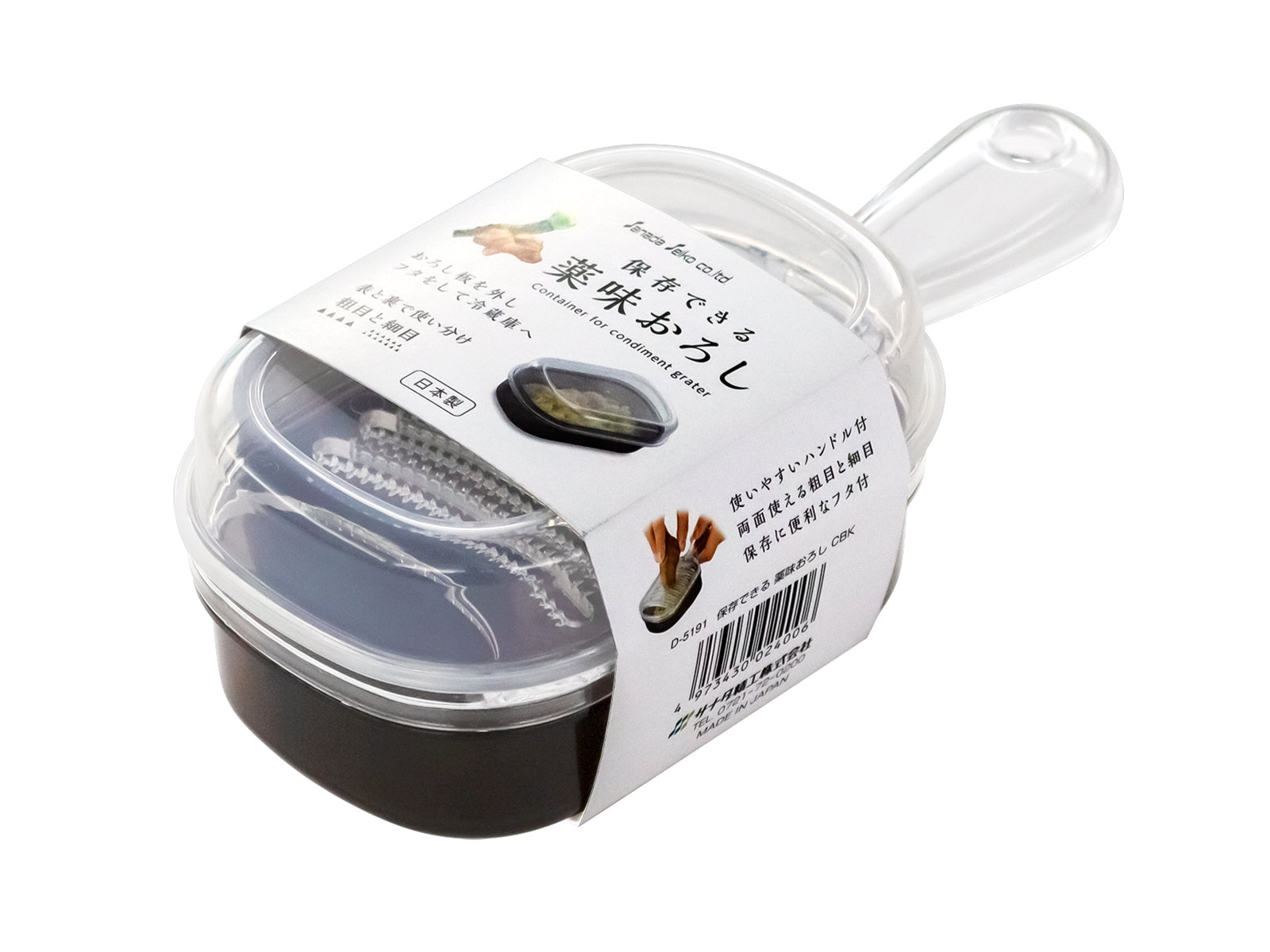
Integrated Prep: The Rise of Daiso's Storage Box Grater
While the handheld tool focuses on versatility, another Daiso design has quietly built a following: the Prep and Store Condiment Grater (cataloged under item code D-5191). Measuring 78 × 168 × 54 mm, this compact modular unit consists of a snap-on grater plate seated over a transparent catch basin, complete with an airtight polyethylene lid.
The appeal here lies in workflow efficiency. Grating garlic or ginger onto a standard cutting board soils surfaces and leaves aromatic oils stuck to knives. The D-5191 solves this by turning grating and cold storage into a single step. You grate two bulbs of garlic directly into the tray, snap on the lid, and slide the container into the refrigerator.
During our kitchen tests, this all-in-one format proved exceptionally handy for weeknight stir-fries and hot pot dipping sauces. The basin features non-skid feet that hold firm against a granite countertop, preventing the annoying slips common with lightweight hand rasps. By eliminating prep bowls and sticky cutting boards, the design delivers genuine easy clean condiment prep that outclasses traditional flat ceramic dishes.
Material Realities: Where 100-Yen Kitchenware Shows Its Age
Budget Japanese kitchenware achieves its price point through injection-molded plastics like polypropylene and ABS resin. These materials make the tools dishwasher-tolerant, lightweight, and completely rust-proof. There are, however, clear structural trade-offs that buyers must accept.
- Edge Degradation: Unlike stainless steel or glazed ceramic, plastic teeth dull quickly when exposed to frequent friction from tough root vegetables. After three to six months of regular use, the fine grating zone begins bruising garlic rather than grating it.
- Pigment and Odor Staining: Turmeric, aged ginger, and sulfurous alliums penetrate porous plastics over time. While running the grater through hot water removes surface residue, persistent garlic aromatics stubbornly cling to the basin.
- Flex Under Force: Pressing a firm daikon radish against the coarse grating face causes noticeable bending along the center spine. Users must apply measured, steady pressure rather than aggressive downward force to avoid snapping the handle.
For camping kits, small apartment kitchens, and casual weekend cooking, these compromises are largely cosmetic. For daily, high-volume prep, metal remains king.
Frequently Asked Questions (FAQ)
Q1: Can Daiso's plastic condiment grater produce genuine wasabi paste without turning it bitter?
A1: Yes, provided the root is peeled and grated in slow, circular motions against the fine-tooth surface. However, because plastic teeth lack the microscopic grit of sharkskin or unglazed ceramic, the paste will be slightly grainier and less aromatic than paste prepared on traditional Japanese wasabi tools.
Q2: How does the coarse face compare to an authentic wooden or bamboo demon grater?
A2: It replicates the crunchy texture of oni oroshi remarkably well for daikon radish. While a traditional bamboo demon grater produces slightly thicker, more rustic chunks, Daiso's tool delivers roughly 80% of that signature crunch, making it an outstanding budget substitute for noodle and beef bowl toppings.
Q3: Is the Daiso prep and store container safe for high-heat dishwashers?
A3: The main basin and grating plate generally withstand standard wash cycles up to 70°C (158°F), but the flexible storage lid (often made of softer polyethylene) will warp if placed near bottom heating elements. Always place the lid on the top rack or wash it by hand.
What Daiso's Grater Craze Reveals About Modern Home Cooking
The ongoing fascination with Daiso's condiment graters is not merely about saving money. It reflects a clear shift in how everyday cooks balance culinary tradition against modern convenience. Specialized Japanese kitchen tools were once strictly single-purpose instruments requiring dedicated drawer space and meticulous hand maintenance. By folding oni oroshi, fine grating surfaces, and airtight storage into a single palm-sized form factor, Daiso engineered an accessible gateway to regional Japanese prep methods.
It will not replace a commercial-grade Microplane or a master craftsman's copper oroshigane. It does not need to. For the cost of loose pocket change, it brings crisp, restaurant-style daikon radish and fast garlic prep within reach of any kitchen counter. That alone makes it one of the smartest budget kitchen buys on the market.