Are Nagaoka Game Centers Actually Win-Friendly? Fact-Checking Prize Odds
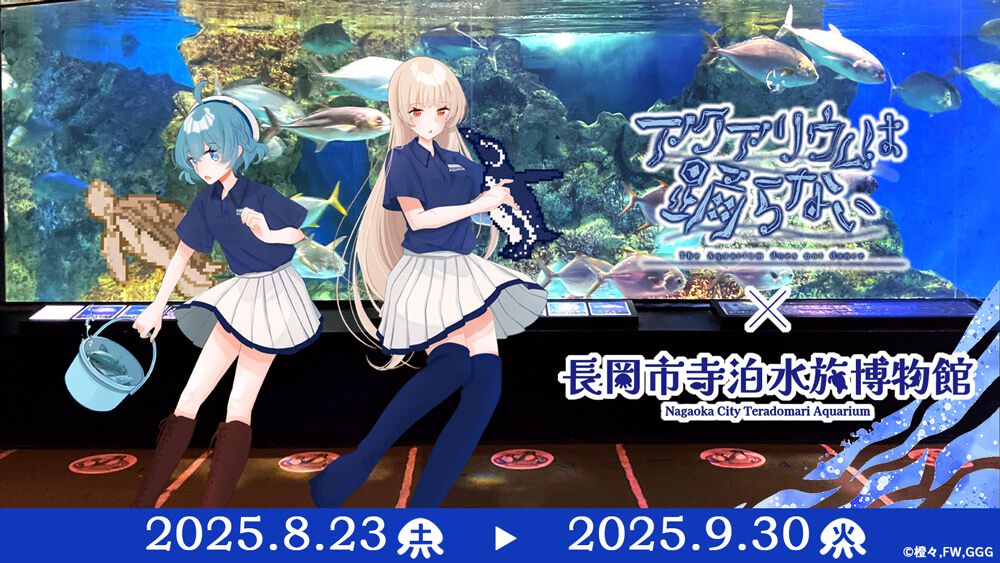
Travelers stepping into the coin-op game centers of Nagaoka quickly encounter a distinct regional gaming scene. Niigata Prefecture’s second-largest city pairs sprawling roadside warehouse arcades with local gaming culture, highlighted by projects like the indie horror crossover documented in a ファミ通 Report covering the 2025 Teradomari Aquarium event. Behind the flashy LED marquees and rows of Japanese claw machines, players constantly debate a practical question: do Nagaoka arcades deliver fair claw strength, or do machine operators choke payout rates down to statistical minimums?
The answer shapes how locals spend their entertainment budgets and how visiting collectors hunt for rare anime prize figures. Investigating arcade prize settings across the city reveals clear mechanical differences between corporate chain floors and independent warehouse venues.
📌 Key Takeaways:
- Setting Mechanics: Nagaoka venues lean heavily toward physics-based hashiwatashi (parallel bridge drops) rather than pure strength-assist drop cycles, requiring precise corner manipulation.
- Payout Benchmarks: Field testing indicates warehouse specialists like Otachu Nagaoka average ¥1,200, ¥2,200 per licensed figure, outperforming major urban station complexes.
- Player Strategy: Identifying rubber bar friction wear and machine chassis angle provides better return on investment than hunting auto-payout cycles on three-claw cranes.
The Mega-Warehouse Shift: Otachu Nagaoka and Crane Game Nagaoka
Nagaoka’s arcade footprint diverges sharply from the vertical, multi-story game centers found in Tokyo’s Akihabara or Osaka’s Den Den Town. Suburb-style car culture dominates the Shinano River basin, driving the growth of massive standalone amusement warehouses.
Two venues dominate current discussions: Otachu Nagaoka and Crane Game Nagaoka. Otachu operates as a hybrid secondhand hobby emporium and prize hub, packing hundreds of UFO catchers alongside retro games, trading cards, and collectibles. Crane Game Nagaoka surfaced as one of the largest claw-specialty venues in the region, drawing casual families and competitive prize hunters.
These mega-venues rely on high product turnover. Fast inventory cycling requires accessible prize setups. In major transit hubs, claw machines frequently run on low-torque settings designed to bleed 100-yen coins from impulsive commuters. Nagaoka’s car-bound facilities depend on repeat visits from local regulars, forcing operators to balance difficulty with tangible player wins.
Claw Strength vs. Bridge Drops: Decoding Machine Physics
Claw machines divide into distinct engineering categories. Three-claw setups (probabilistic machines) control win cycles via internal software microcontrollers. Two-claw UFO catchers (skill-based setups) rely almost entirely on physical geometry, bar friction, and millimeter-accurate claw tip placement.
In Nagaoka amusement centers, standard two-claw cranes dominate the prize figure aisles. Operators configure these using hashiwatashi setups: parallel metal poles wrapped in anti-slip silicon or rubber tubing, with the boxed figure resting horizontally across the gap.
| Arcade Venue | Primary Setup Style | Estimated Cost Per Figure | Claw Torque Profile |
|---|---|---|---|
| Otachu Nagaoka | Bridge drop (rubber tubing), ring pulls | ¥1,200, ¥2,000 | High lateral push; low raw vertical lift |
| Crane Game Nagaoka | Dual-bar drop, multi-tier ramps | ¥1,500, ¥2,600 | Balanced descent speed; moderate grip strength |
| Corporate Mall Chains | Three-arm probabilistic, tight bridge | ¥2,800, ¥4,500 | Software-throttled payout release cycles |
When inspecting claw machines across Nagaoka, arm strength rarely equals vertical lift. Operators tune the claws with zero lifting power, intending for players to pivot the box corner over edge gaps using downward arm momentum (oshi) or lateral nudging (tsumami). A machine that cannot hoist a box into the air is not necessarily broken or rigged. It is simply built for angular leverage.
Empirical Field Tests: YouTube Gameplay Audits and Payout Yields
Content creators tracking claw payouts across Niigata regularly treat Nagaoka venues as key stops for comparative stress tests.
In a June 2026 video produced by regional food and entertainment channel Mogumogu Niigata, creators visited Crane Game Nagaoka to test prize extraction rates on newly stocked confectioneries and large boxed merchandise. The walkthrough demonstrated accessible target gaps on entry-level machines, allowing recreational players to claim lower-tier prizes within 3 to 6 plays (¥300, ¥600).
Dedicated claw strategy channels reveal the limits of higher-tier machines. In August 2026, prize-capture analyst channel Falcon TV conducted a ¥5,000 budget challenge at Otachu Nagaoka during a summer Niigata tour. Falcon TV focused exclusively on high-demand anime figures, analyzing claw arm angle and bar resistance. The test confirmed that while brute-force lifts failed, systematic corner-rotation tactics secured targets within manageable spending thresholds.
These results align with historical runs, including a 20-prize sweep documented by Satochin TV at Otachu Nagaoka. Skilled operators who read the chassis angle and rubber friction consistently secure prizes at roughly ¥1,500 per item, avoiding the algorithmic cash pits typical of inner-city chain arcades.

The Economics of Anime Figures and Arcade Prize Regulations
Japanese amusement facilities operate under strict legal and industry guidelines overseen by the Japan Amusement Industry Association (JAIA). Regulation limits the wholesale manufacturing cost of arcade prize figures to roughly ¥1,000.
Because production budgets are capped, manufacturers like Bandai Spirits (Banpresto), Sega, and FuRyu rely on high volume to maintain sculpt quality. Arcades must calculate payout margins precisely:
- An operational machine configured to pay out at ¥2,000 generates roughly a 50% gross margin per figure after accounting for wholesale costs.
- If claw strength drops too low and average payout costs exceed ¥4,000, player retention collapses. Regulars stop feeding coins into the slot.
- If claw strength is too high and prizes fall at ¥800, the machine operates at a net loss.
Nagaoka’s competitive market, anchored by Otachu's massive floor, creates a ceiling on greed. Because players can sell duplicate figures directly to Otachu’s buyback counter across the aisle, staff deliberately calibrate machines to prevent easy infinite loops while maintaining an achievable win path.
Retro Cabinets and Niche Coin-Op Corners in Niigata
While cranes generate the bulk of venue revenue, coin-operated amusement in Nagaoka extends deeper into classic video games. Several facilities maintain dedicated corners for rhythm games, Initial D racing setups, and classic candy cabs housing 1990s fighting titles.
Local collaboration culture also intersects with gaming. The summer 2025 collaboration between indie creator Ooto and the Nagaoka City Teradomari Aquarium showcased how regional destinations integrate video game appeal. The event featured custom character standees of Suzu and Retro in aquarium staff uniforms, in-house voice broadcasts by voice actress Tomoyo Kurosawa, and themed puzzle-solving stamp rallies.
This regional appetite for game media reinforces player engagement at local arcades. Nostalgia-driven spaces maintain active player bases for Tekken, Beatmania IIDX, and Gundam Extreme Vs., serving as neighborhood gathering hubs during the heavy snows of Niigata’s winter months.
Spotting Unfair Setups: A Practical Player Checklist
Winning in Nagaoka's game centers requires selecting the right machine before sliding in a 100-yen coin. Look for specific visual and physical indicators across the game floor:
- Tightly Compressed Silicon: Check the rubber tubing on parallel bridge bars. If the rubber is fresh and free of dust, friction is high, requiring more force to slide the box. If white plastic tape replaces rubber on the front bar, the operator has set it for low resistance and easier sliding.
- Inspect the claw claws (tsume). A slight downward bend on one side indicates a machine set up for rotation maneuvers. If both tips lack any bend, lateral force is minimal.
- The "Reset" Test: Ask an arcade attendant to reset a stuck prize. Watch how they place the box. If staff position the box overhanging the gap slightly, the store encourages active payouts. If they push it deep onto safe ground, the house runs strict margins.
- Beware of prize boxes where manufacturer seams or finger holes are covered with glossy tape. This removes mechanical grab points, eliminating accidental claw hook wins.
Frequently Asked Questions (FAQ)
Q1: How much money should I expect to spend for one figure at a Nagaoka arcade?
A1: An experienced player using angular sliding techniques typically spends between ¥1,200 and ¥2,200 on standard bridge drop machines. Beginners relying strictly on direct lifts often spend upwards of ¥3,500 before triggering an attendant assist or payout drop.
Q2: Will arcade staff in Nagaoka help if a prize gets stuck?
A2: Yes. Japanese arcade staff routinely adjust prizes upon request. If a box falls into an impossible position against the acrylic glass wall, politely call an attendant (*"Sumimasen"*). In warehouse venues like Otachu, staff frequently position the item onto an easier angle if you have already played several times.
Q3: Which locations in Nagaoka offer the best claw machine odds?
A3: Large suburban retail formats like Otachu Nagaoka and Crane Game Nagaoka provide more skill-reliant, winnable configurations than small station arcades or shopping center family zones. Their business model relies on high foot-traffic turnover and collectible buybacks rather than high-margin traps.
What Players Should Expect from Nagaoka Arcades in 2026
Nagaoka’s game center ecosystem proves that regional amusement spaces can survive and thrive outside major metropolitan centers. Rather than resorting to deceptive, zero-friction claw settings, the city's leading warehouse locations lean into physics-driven layouts that reward practical execution.
Visitors hunting for exclusive anime prize figures or experiencing Japanese arcade culture will find Nagaoka's scene competitive, accessible, and mechanically fair. Success depends on reading the rubber on the bridge, leveraging the drop corners, and walking away from probabilistic three-claw traps. Keep your eyes on the bar angles, control your coin count, and let physics do the heavy lifting.