Boeing 787-9 Seat & Screen Face-Off: Direct Specs of ANA vs JAL Business Class
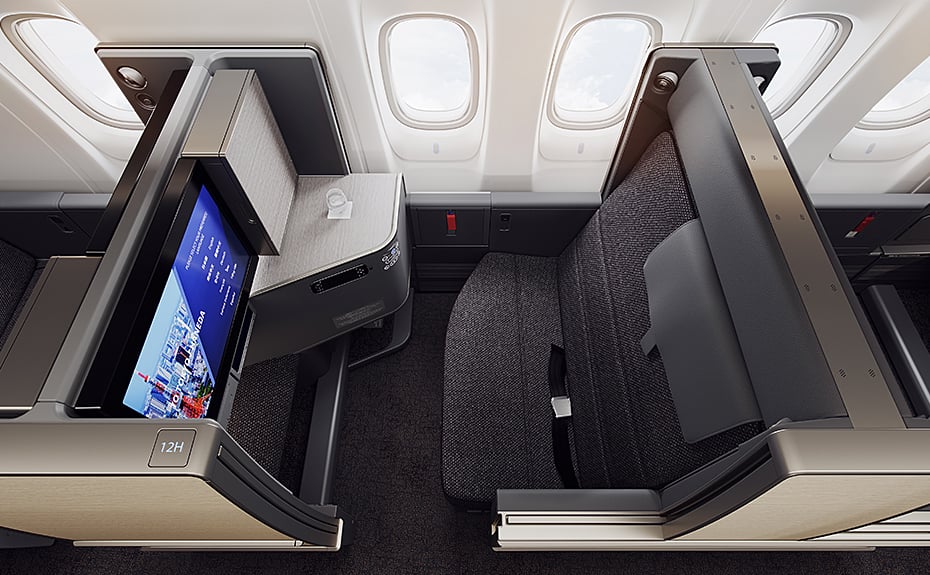
Selecting between All Nippon Airways (ANA) and Japan Airlines (JAL) for long-haul transpacific travel frequently hinges on the equipment scheduled on your route. While both Tokyo carriers command sterling global reputations for service, their mid-sized widebody flagships take wildly divergent approaches to passenger space, ergonomics, and privacy. A detailed dispatch from Turning Left For Less highlights how radically different the real-world cabin experience can feel between these two Japanese legacy operators, even when flying identical airframes between North America, Europe, and Japan.
The distinction matters most aboard the Boeing 787-9 Dreamliner, the backbone of long-range international operations across both fleets. While ANA has captured headlines with its cavernous, enclosed "The Room" suites on select Boeing 777-300ER refits, the vast majority of its international 787-9 network continues to fly a standard staggered forward-facing seat. JAL, conversely, relies heavily on the Safran-built Apex Suite, branded as the JAL Sky Suite, to deliver unrestricted aisle access and full-height partition screens without adopting a staggered configuration. Understanding how these mechanical layouts alter sleeping comfort, entertainment, and personal space is vital before committing your capital or frequent flyer miles.
📌 Key Takeaways:
- Core Geometry: JAL provides genuine 25.5-inch width and an open footwell on the Boeing 787-9, whereas ANA's staggered seat tapers into an enclosed foot cubby that cramps side sleepers.
- Screen & Tech Specs: ANA offers an 18-inch touch display against JAL's legacy 23-inch monitor; JAL brings larger real estate, but ANA runs newer operating firmware.
- Privacy Dynamics: Neither carrier standardizes sliding cabin privacy doors on the 787-9; JAL uses a retractable privacy wall that fully isolates window seats, while ANA leaves passengers exposed to aisle movement.
The Boeing 787-9 Dreamliner Cabin Architectures
Airlines design widebody premium cabins around strict trade-offs between passenger density and individual floor area. On the Boeing 787-9 Dreamliner, ANA installs the Safran Seats Stelia Solstys model across a 1-2-1 layout. This staggered floor plan shifts alternate rows closer to the window or directly adjacent to the aisle. Footwells tuck into the console table of the passenger seated immediately ahead. The layout guarantees direct aisle access for everyone, but it imposes severe geometric penalties on your lower extremities.
Japan Airlines picked an entirely different path. On its international long-haul 787-9s, JAL deployed the Collins Aerospace Apex Suite in a 2-2-2 configuration. Casual observers often assume a six-abreast layout means stepping over a seatmate's legs. The Apex Suite eliminates that friction through clever engineering. Window passengers access the aisle via a private, dedicated 8-inch egress walkway routed behind the adjacent seat. This preserves complete aisle independence while keeping seats parallel to the fuselage, avoiding the angular compression found in staggered shells.
Direct Dimension Face-Off: Pitch, Bed Comfort, and Monitor Specs
Physical cabin specifications reveal significant divergences in how both airlines treat passenger space. JAL offers substantial bed length and width, whereas ANA relies on a more compact spatial envelope.
| Cabin Specification | ANA Business Class (787-9 Staggered) | JAL Sky Suite (787-9 Apex Suite) |
|---|---|---|
| Seat Pitch / Bed Length | 76 inches (193 cm fully flat) | 74, 78 inches (188, 198 cm fully flat) |
| Seat Width (Between Armrests) | 21.0 inches (53 cm) | 25.5 inches (65 cm) |
| In-Flight Entertainment (IFE) | 18-inch HD Touchscreen | 23-inch HD Non-Touch (Remote Controlled) |
| Bed Surface Construction | Nishikawa Sangyo Air Cyclone pad | Airweave dual-sided mattress pad |
| Footwell Design | Enclosed cubby beneath console table | Completely open ottoman bench |
Lie-flat bed comfort exposes the biggest functional divide between the two hard products. On ANA's 787-9, when the seat reclines into a 180-degree bed, your feet slide into a tapered cubbyhole under the side table of the passenger ahead. If you sleep on your back, it works reasonably well. Side sleepers, however, frequently bump their knees against the hard internal casing of the composite shell. JAL avoids this restriction entirely. The Apex Suite uses an open ottoman design with zero lateral obstruction. You can sleep in any position without feeling pinned down.
Mattress padding tilts the scales further. JAL equips its Sky Suite with custom Airweave mattresses. These pads feature a firm side and a soft side, allowing passengers to flip the topper according to preference. ANA supplies a Nishikawa Sangyo Air Cyclone pad. It dissipates heat efficiently, but provides noticeably less structural cushioning against the mechanical joints beneath the upholstery.
Privacy Panels, Doors, and the Halo Effect of "The Room"
A widespread misconception exists among transpacific travelers regarding cabin privacy doors. Much of ANA's recent media presence centers on "The Room", a business class product unveiled on its Boeing 777-300ERs featuring double-wide sofa cushions and full closing doors. Marketing visuals often blur fleet realities. ANA does not offer The Room on its Boeing 787-9 fleet. Instead, 787-9 passengers encounter standard open-aisle shells. Passengers seated on the aisle rows remain fully exposed to cabin traffic, service carts, and overhead illumination.
JAL achieves superior privacy on the Dreamliner through mechanical screening rather than doors. Window seats in the Apex Suite layout, seats A and K, rank among the most private un-doored business class berths in aviation. Once seated, passengers raise an electronic partition that extends fully to shoulder height. It creates an isolated cocoon with direct window sightlines, entirely shielded from the cabin aisle. If you secure a window berth on JAL's 787-9, you enjoy privacy comparable to a dedicated suite, whereas middle and aisle seats feel substantially more exposed.

Inflight Catering, Ground Hospitality, and Passenger Amenities
Beyond seat hardware, the culinary programs represent distinct philosophies of high-end Japanese hospitality (omotenashi). ANA collaborates with external culinary stars through its "THE CONNOISSEURS" program. Multi-course washoku meals arrive meticulously styled, featuring seasonal dishes like simmered yellowtail, snow crab flan, and regional koshihikari rice steamed directly onboard. The Western menu options, while competent, are noticeably more pedestrian.
JAL partners with prominent chefs for its "JAL BEDD" program, delivering some of the finest rice and seafood dishes served at 35,000 feet. The airline pairs meals with boutique sakes like Jikon and Dassai alongside premier French vintages. JAL's snack-on-demand service runs via the inflight entertainment handset, allowing travelers to summon hot bowls of duck soba or curry without pressing a physical call bell.
On the ground, both airlines operate massive hub presences at Tokyo Haneda (HND) and Tokyo Narita (NRT):
- Haneda Lounge Access: ANA's Haneda Terminal 2 and Terminal 3 international lounges deliver sprawling floor space, automated draft beer dispensers, and live noodle bars serving freshly prepared soba and ramen. JAL's Sakura Lounges at Haneda counter with celebrated signature beef curry and serene architectural design, though they encounter severe crowding during the late-night departure push between 21:00 and 00:30.
- Amenity Kit Comparison: ANA partners with British heritage brand Ettinger, packing basic skincare, toothbrushes, and eye masks inside durable fabric folios. JAL collaborates with Maison Kitsuné or Heralbony, featuring distinctive graphic pouches stocked with French cosmetics and restorative dental supplies.
Booking Verdict: Which Transpacific Product Deserves Your Capital?
The choice between these carriers shifts depending on individual seat selection, traveling party size, and physical build. Neither airline provides an objectively superior product across every metric, but clear operational trade-offs emerge once you evaluate the cabin floorplans.
Reserve JAL's Boeing 787-9 Sky Suite if:
- You can secure a true window seat (A or K) to maximize the isolation of the Apex Suite layout.
- You are taller than 6 feet or sleep on your side, making an open footwell essential.
- You place a premium on sleeping surface support via JAL's modular Airweave mattress system.
- You value large entertainment hardware, utilizing JAL's expansive 23-inch monitor.
Reserve ANA's Boeing 787-9 Staggered Business Class if:
- You are stuck booking late and must choose an aisle seat, where ANA's staggered 1-2-1 layout guarantees you will never sit directly alongside a stranger.
- You prefer responsive, modern software navigation over raw display size, where ANA's 18-inch touchscreen runs rings around JAL's aging handset controller.
- You want more usable personal tabletop storage; ANA provides broad side consoles ideal for housing laptops, documents, and charging electronics during flight.
Frequently Asked Questions (FAQ)
Q1: Does ANA fly "The Room" business class on its Boeing 787-9 routes?
A1: No. ANA has deployed The Room almost exclusively on select Boeing 777-300ER airframes servicing routes between Tokyo and major international hubs such as London (LHR), New York (JFK), and San Francisco (SFO). The international 787-9 Dreamliner fleet uses standard staggered seating without sliding privacy doors.
Q2: Why does JAL use a 2-2-2 configuration if it offers direct aisle access?
A2: JAL uses the Collins Aerospace Apex Suite platform. Although seats sit adjacent to one another, window and center passengers exit through an independent 8-inch private walkway situated directly behind the aisle seat. You will never climb over or disturb another passenger when getting up.
Q3: How do the in-flight Wi-Fi services compare on long-haul flights?
A3: ANA supplies business class travelers with a voucher for complimentary basic messaging, charging roughly $19.95 to $21.95 for full-flight unthrottled internet. JAL offers similar tier structures, providing first-class fliers with free full access and running time-based promotions for business class passengers through the JAL Wi-Fi network.
Strategic Booking Considerations for 2026
Fleet renewals will reshape transpacific options over the coming years. Japan Airlines continues to roll out its modern Airbus A350-1000 flagships on high-capacity routes, introducing fully enclosed business suites fitted with headrest speakers and closing doors to phase out older long-haul cabins. Meanwhile, ANA has outlined broad interior modernization programs that will ultimately standardize enclosed suite design across its broader international widebody operation.
Yet for travelers traversing long-haul sectors aboard the Boeing 787-9 Dreamliner today, legacy seat geometry remains the definitive benchmark. Securing a solitary Apex Suite window seat on JAL yields one of the quietest, most comfortable sleeps in commercial aviation. Conversely, if your itinerary confines you to middle or aisle selections, ANA's consistent staggered configuration offers greater separation from your seatmate and broader personal desk space for long working journeys across the Pacific.