Bukchon Hanok Village Regulations Timeline: From Overtourism Crisis to Curfews

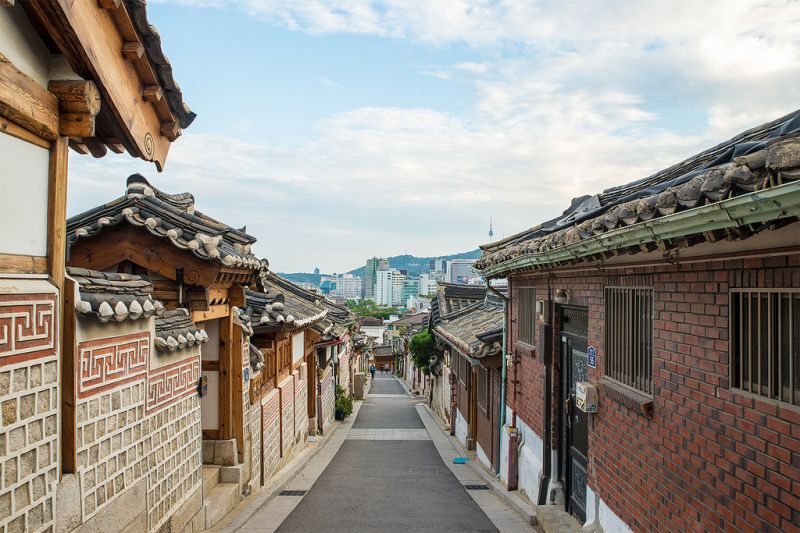
When dusk falls over Seoul's Jongno District, neon signs flicker to life across the surrounding downtown avenues, but the alleys of Bukchon Hanok Village go completely silent. Under municipal curfews enforced by municipal wardens, foot traffic inside the historic enclave halts sharply at 5:00 PM. Tourists lingering on the steep stone alleys are turned away, ending decades of round-the-clock sightseeing across South Korea's most famous concentration of traditional timber homes.
The move follows years of escalating conflict between local residents and millions of international travelers. As documented in a VOA - Voice of America English News Report, the neighborhood reached a breaking point where aggressive administrative action became the only path toward preserving a functional community. What began as informal recommendations has hardened into statutory fines and physical perimeter checkpoints.
📌 Key Takeaways:
- The Enforcement: Visitors face a strict 5:00 PM to 10:00 AM exclusion window across Bukchon's core residential Red Zone, backed by 100,000 KRW ($75) fines.
- The Origin: Severe population decline, unauthorized trespassing, round-the-clock tour buses, and discarded waste forced the Jongno District administration to invoke the Tourism Promotion Act.
- The Impact: Overnight guests at licensed hanok stay accommodations and dining patrons in adjacent commercial corridors remain exempt, but casual evening strolls are entirely outlawed.
How Bukchon Reached Its Breaking Point
Bukchon Hanok Village was never designed as an open-air museum. Built between Gyeongbokgung and Changdeokgung palaces during the Joseon Dynasty and redeveloped with compact urban hanok in the 1930s, the hillside neighborhood remains an active residential area. Families occupy the tiled-roof courtyards, drying laundry behind carved wooden gates and walking narrow uphill lanes to work.
That residential balance disintegrated over the past decade. Social media visibility and South Korea's international tourism surge brought more than 6.4 million visitors annually into a neighborhood housing fewer than 6,000 permanent residents. Tour buses clogged the narrow arterial roads feeding into Samcheong-dong, while self-guided crowds flooded Bukchon-ro 11-gil, the signature alley flanked by wooden eaves.
The daily consequences for residents were severe. Tourists frequently twisted door latches to peek inside private courtyards, launched camera drones outside second-story windows, dumped takeout beverage cups on front stoops, and created echoes through the quiet corridors before dawn. Between 2014 and 2024, the neighborhood lost more than 27% of its resident population, as elderly occupants and families abandoned their ancestral properties to escape the unrelenting foot traffic.
The Policy Shift: From Gentle Signs to Legal Penalties
Early attempts by Seoul Metropolitan Government relied on soft diplomacy. City officials deployed multilingual "quiet guides" in 2018, painted yellow footsteps advising visitors to lower their voices, and installed signage reading "Please respect our homes." These interventions failed completely. Tour groups continued arriving at dawn to capture sunrise photos, and late-night crowds gathered with street food after dinner in nearby Insadong.
Recognizing that voluntary cooperation had collapsed, the Jongno District administration invoked Article 48-3 of South Korea's Tourism Promotion Act in mid-2024. The law empowers local governments to designate "special management zones" in residential areas threatened by overtourism. The resulting system established enforceable boundaries, scheduled operating hours, and punitive fines for unauthorized access.
The initial rollout began on November 1, 2024, operating as an educational trial period where wardens distributed informational flyers and directed tourists toward commercial avenues. On March 1, 2025, the city phased out grace periods. Wardens began issuing formal citations of 100,000 KRW (roughly $75) to any unauthorized tourist entering restricted streets outside designated visiting hours.
The Regulatory Timeline: 2024 to 2026
Managing tourist flows across Bukchon required segmenting the neighborhood into three distinct operating sectors based on resident density and street layouts:
| Zone Designation | Geographic Boundaries | Operating Rules & Restrictions |
|---|---|---|
| Red Zone | Bukchon-ro 11-gil (Core Residential Ridge) | Curfew strictly enforced 5:00 PM, 10:00 AM daily. 100,000 KRW fine for non-residents. |
| Orange Zone | Bukchon-ro 5-gil & Gyedong-gil | Mixed residential-retail corridor. Wardens patrol to direct flow; no direct fine, but idling discouraged. |
| Yellow Zone | Bukchon-ro 12-gil (Bordering Samcheong-dong) | Commercial transit zone. Active tour bus curb controls and idling fines since mid-2025. |
The curfew's implementation followed a strict progression:
- Jongno District officially announces the Special Management Zone plan, publishing the tri-color boundary map.
- Physical checkpoints and multilingual digital signage go up along Bukchon-ro 11-gil.
- November 1, 2024: The 5:00 PM curfew takes effect on an advisory basis. Patrol officers issue verbal warnings.
- March 1, 2025: Warning phase ends. Wardens begin writing mandatory 100,000 KRW fines under the Tourism Promotion Act.
- Curbside parking restrictions on charter tour buses expand across Anguk Station and Jahamun-ro to reduce street congestion.
- Autonomous multilingual mobile checkpoints and QR verification for local homestay guests enter full operation.
The Hanok Stay Dilemma and Neighborhood Business
The curfew created immediate operational friction for Bukchon's hospitality industry. Over the past decade, dozens of traditional residences were converted into licensed hanok stay accommodations, providing domestic and foreign travelers with authentic ondol floor heating and courtyard experiences.
When the 5:00 PM restriction went live, international travelers arriving with rolling luggage found themselves stopped by municipal monitors. To keep these businesses running, the district established an exemption database. Accommodations now issue digital reservation badges to confirmed guests, granting them unrestricted access through checkpoints at all hours.
The commercial corridors of Samcheong-dong and Anguk-dong have experienced mixed outcomes. Cafes and tea houses located immediately outside the Red Zone reported lower late-afternoon foot traffic as day-trippers cleared out ahead of the 5:00 PM cut-off. Conversely, boutique dining establishments located deeper in the commercial perimeter benefited from an influx of visitors seeking evening dinner reservations away from the residential alleys.
Local preservation groups maintain that commercial compromises are necessary. Without intervention, unchecked foot traffic threatened to empty the village of permanent occupants entirely, converting Bukchon into a hollow retail façade rather than a living historic neighborhood.
Frequently Asked Questions
Can tourists still photograph Bukchon Hanok Village after 5:00 PM?
No, not within the designated Red Zone (primarily Bukchon-ro 11-gil). Wardens actively clear the corridor starting at 4:45 PM. Photography is permitted only during open hours between 10:00 AM and 5:00 PM Monday through Saturday, with partial Sunday restrictions.
How do wardens tell the difference between residents and tourists?
Residents carry district-issued identification passes or digital neighborhood credentials. Guests staying at registered hanok accommodations must show an active digital check-in confirmation on their smartphones to pass through entry checkpoints.
Are all streets in Bukchon closed in the evening?
No. The curfew applies strictly to designated residential corridors, primarily the Red Zone. Major commercial throughways such as Samcheong-dong, Gyedong-gil, and Bukchon-ro remain open, along with their shops, galleries, and restaurants.
What Bukchon Means for Urban Heritage in 2026
Seoul's decision to wall off Bukchon after hours marks an important evolution in urban heritage management. Rather than letting visitor spending dictate municipal policy, city leaders established clear limits to protect the neighborhood's residential fabric.
The Bukchon framework demonstrates that historic urban areas can enforce boundaries without shutting down completely. By defining explicit daytime hours, monitoring access routes, and providing carve-outs for registered overnight guests, municipal authorities have preserved a functional community where people continue to live their lives behind traditional wooden gates.