Can You Really Make a Luxury Tweed Shoulder Bag with $1 Fabric? The Viral Seria Hack
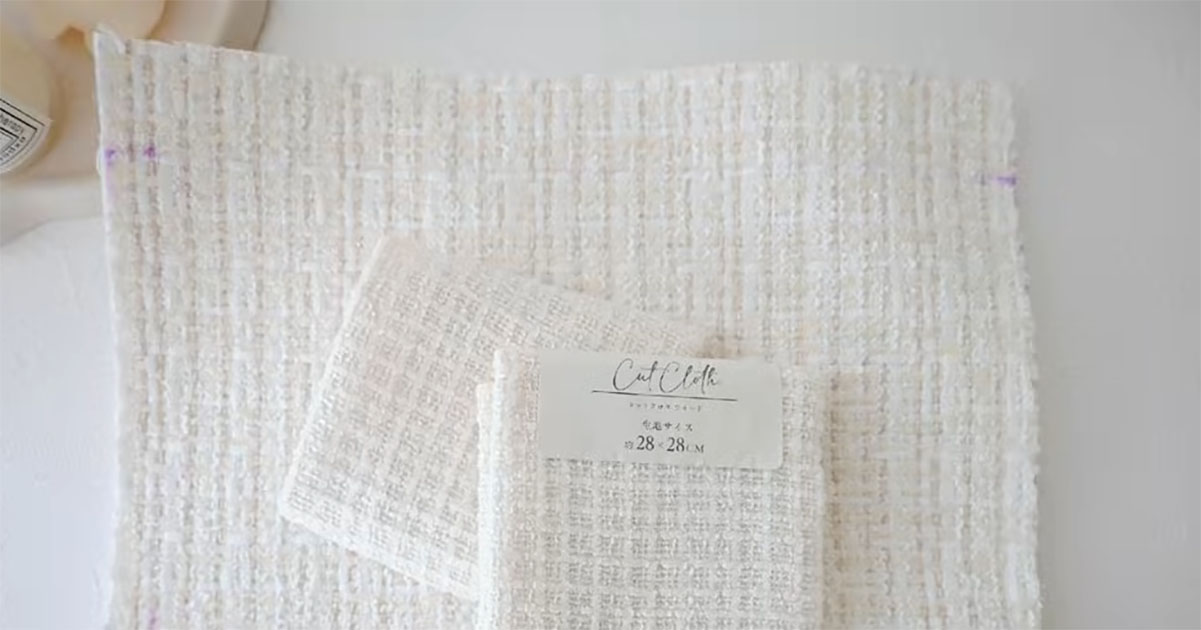
A small craft movement originating in Japan is quietly rewriting how home makers approach elevated accessories. Using inexpensive 100-yen cuts, roughly $0.70 to $1.00 USD, from lifestyle retailer Seria, hobbyists are turning textured, Chanel-inspired woven textiles into structured crossbody phone cases and ruffled pouches. As highlighted in a recent ITmedia Report covering the viral YouTube wave, online creators solved a widespread practical challenge: building a chic, hands-free carryall sized specifically to fit modern oversized smartphones without spending hundreds of dollars.
The phenomenon cuts against the perception that quality accessories require bespoke atelier budgets. Instead, it relies on foundational sewing geometry, strategic interfacing, and smart notions sourcing. With thousands of home sewists replicating the design across social media, the project demonstrates how basic workshop techniques can transform discount-bin yardage into high-end street style.
📌 Key Takeaways:
- The Trend Origin: Japanese DIY creators proved that $1 Seria tweed cuts, paired with basic fusible interfacing, can replicate boutique-grade shoulder bags.
- The Functional Pivot: The pattern addresses modern utility by tailoring pouch dimensions around larger smartphones like the iPhone 16 Pro Max rather than traditional clutches.
- Cost Efficiency: Total material costs average under $5 per unit, challenging commercial fast-fashion pricing while improving personal repairability.
The Japanese 100-Yen Phenomenon That Reshaped Fabric Crafting
For decades, Japanese 100-yen shops like Seria, Daiso, and Can Do supplied mundane household necessities. Over the past five years, however, Seria distinguished itself by catering directly to the nation’s meticulous craft culture. Rather than stocking coarse utility felt, the chain began sourcing pre-cut woven bouclé, houndstooth, and textured wool-blend remnants.
These small cuts measure approximately 35 by 50 centimeters. That is just enough surface area to build small leather-goods alternatives. Japanese textile hobbyists recognized an opening: fast fashion prices were climbing due to supply chain inflation, while mass-market phone holsters remained overwhelmingly synthetic and generic.
When maker communities paired these textured offcuts with minimalist assembly plans, the concept exploded across sewing forums. The trend is not merely about frugality. It centers on tactile satisfaction: the sensory experience of sewing heavyweight tweed without the terror of ruining a $90-a-yard Scottish wool cut.
Pattern Architecture: Blueprint for an Oversized Smartphone Pouch
Standard commercial mini-bags frequently fail a basic test: they cannot comfortably fit a modern flagship smartphone enclosed in a protective case. The viral Seria design solves this by working backwards from device dimensions. An iPhone 15 or 16 Pro Max measures roughly 160 millimeters high by 77 millimeters wide. Factoring in bumper cases, a raw fabric panel must provide adequate clearance while preserving structural proportions.
To build the foundational ruffled mini shoulder pouch, makers cut two exterior tweed rectangles measuring 22 centimeters tall by 15 centimeters wide. Two matching rectangles serve as the interior cotton lining.
For the side ruffles, the decorative detail that conceals structural side seams, crafters prepare two strips of matching or complementary ribbon measuring 5 centimeters wide by 40 centimeters long. These strips are gathered down to 20 centimeters using a long basting stitch, creating soft, uniform volume along the exterior edges before the perimeter is locked down.
Component Breakdown: Budget Crafting Versus Commercial Production
Replicating high-end construction on a domestic sewing machine depends on material density rather than expensive equipment. Below is a detailed breakdown comparing the DIY dollar-store approach to standard retail equivalents.
| Structural Element | Viral Seria Hack Method | Commercial Boutique Equivalent | Typical Unit Cost |
|---|---|---|---|
| Main Shell Fabric | 1 cut 100-yen tweed (35×50 cm) | Milled bouclé or imported wool yardage | $0.70, $1.00 vs $45, $80/yd |
| Stabilizer / Interfacing | Medium-weight non-woven fusible | Multi-layer canvas or horsehair canvas | $0.50 vs $8, $14/yd |
| Hardware Closure | 14mm pronged magnetic snap | Cast brass turnlock or hidden rare-earth magnet | $0.70 (2-pack) vs $6, $15 each |
| Strap Assembly | Synthetic leather cord or chain clips | Edge-painted calfskin strap | $1.00, $2.00 vs $25, $60 |
Mastering the Assembly: Essential Stabilizers and Fasteners
The critical technical failure point for amateur tweed projects is fraying. Cheap open-weave fabrics disintegrate under needle tension if unreinforced. To prevent edge collapse, makers iron medium-weight fusible non-woven interfacing across the entire wrong side of the tweed panels before cutting final pattern lines. This stabilizes the weave, eliminates stretch, and provides enough body for the pouch to stand upright on its own.
Installing the magnetic snap closure requires precision. Insert the snap halves into the inner lining pieces, not the outer tweed shell, before assembling the bag layers.
Measure 3 centimeters down from the top center edge of each lining piece. Cut two microscopic slits using seam rippers, slip the snap prongs through, place a 1-inch scrap of fusible interfacing behind the prongs as backing reinforcement, and bend the wings flat. This prevents the metal prongs from tearing through delicate lining cotton over months of repeated opening and closing.
For side attachments, sew two small fabric loops or mini D-rings directly into the upper side seams 1.5 centimeters below the bag's rim. These anchor points permit wearers to swap between an adjustable webbing strap, a gold-tone curb chain, or an interchangeable magnetic lanyard depending on the occasion.
Practical Friction: Durability Realities and Wear Considerations
While finished projects photograph identically to luxury small leather goods, performance trade-offs exist. Seria tweed fabrics rely heavily on acrylic and polyester filament blends. Under heavy friction against wool winter coats or rough denim, these short synthetic fibers will pill faster than high-twist worsted wools.
Washing machine cycles will ruin the pouch. The combination of heat, water agitation, and fusible glue causes delamination, leaving the outer shell blistered. Spot cleaning with a damp microfiber cloth represents the only viable maintenance route.
Furthermore, weight distribution matters. A smartphone, keys, and a compact wallet sit well within the structural capacity of the 14mm magnetic snap. Overloading the bag pulls down on the top hem, warping the clean horizontal neckline. Crafters looking to transport heavier batteries or multiple devices should opt for top-zipper conversions or reinforced webbing bases.
Frequently Asked Questions (FAQ)
Can complete beginners sew this bag on an entry-level sewing machine?
Yes. The pattern involves only straight-line stitching and gentle gathering. Because the tweed is stabilized with fusible interfacing, standard domestic machines fitted with a size 90/14 universal needle can stitch through the layered seam allowances without skipped stitches or thread breaks.
How do you stop budget tweed from fraying while cutting?
Iron your fusible interfacing to the back of the uncut tweed fabric block first, then trace and cut your pattern dimensions. The thermal adhesive binds the crossed threads together, allowing you to slice clean edges without loose weave unraveling.
What is the best strap length for a crossbody phone bag?
For standard cross-body positioning where the bag rests against the hip, strap length typically ranges between 110 and 125 centimeters (43 to 49 inches). Building an adjustable strap using a slide buckle and swivel lobster clasps allows you to adjust the drop height across seasonal jackets and light clothing.
The Maturation of Everyday Japanese Craft Culture
The viral popularity of the Seria tweed bag project reflects a broader shift in consumer values. Crafting is no longer merely an exercise in thrifty necessity or an archaic domestic chore; it functions as an intentional design filter against disposable micro-trends.
By deconstructing the visual cues of high-end design houses down to simple rectangular components, everyday sewists gain agency over their wardrobes. The project demystifies high fashion finishes. A yard of woven cloth, an iron-on backing sheet, and twenty minutes behind a presser foot prove that aesthetic sophistication is a matter of technique rather than retail price tags.