Complete Styling Guide: How to Fix Blunt Bangs for Flawless Job Hunting ID Photos
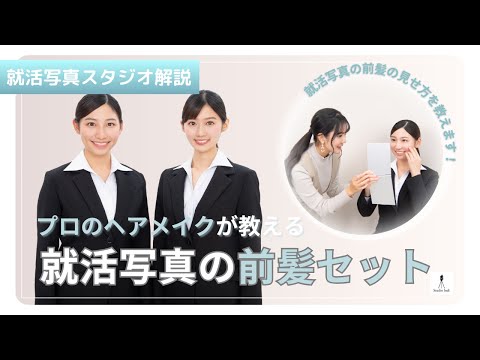
Straight-across blunt bangs, known in Japan as pattsun, remain a dominant street-style aesthetic among university students, yet they remain one of the most penalizing styling choices on a traditional corporate resume. Every spring, thousands of applicants across Tokyo and Osaka discover that heavy fringe obscures facial cues, casts deep shadows under professional studio strobes, and signals student-like immaturity to conservative screening panels. According to veteran portrait stylists in a detailed YouTube (スタジオインディ) Report, visual readability directly dictates how recruiters assess energy, openness, and readiness for the corporate workforce.
Securing a passing mark during initial document screenings requires mastering the mechanics of the professional resume headshot. By controlling the forehead exposure ratio and mastering quick salon adjustment methods, applicants can preserve their everyday hair cut while meeting strict Japanese corporate etiquette without stepping foot into a salon for a drastic trim.
📌 Key Takeaways:
- The Screening Standard: Unbroken, straight-across blunt bangs violate conservative recruiter visual criteria by hiding eyebrows and casting ocular shadows under strobe lighting.
- The Salon Fix: Transitioning blunt fringe into a side-swept curve exposes at least one eyebrow and an open wedge of the forehead, instantly improving facial brightness.
- Tool Discipline: Clean, durable hold relies on pea-sized amounts of matte styling wax paired with fine-mist setting spray applied via comb, avoiding heavy oil clumping.
The Eyebrow Visibility Rule and Recruiter Psychology
Japanese corporate document screening operates at extreme speed. Hiring managers sift through hundreds of entry sheets daily, spending roughly 3 to 5 seconds reviewing each candidate's visual profile before reading their credentials. In this compressed window, facial openness serves as a proxy for social competence and communicative transparency.
When heavy bangs cover the brows and skim the upper eyelids, they create two distinct issues for the candidate:
First, the human brain registers emotional sincerity through subtle eyebrow movements. Concealing the brows flattens facial expressions, making the applicant appear distant, unenthusiastic, or sullen. Second, studio flash heads cast downward shadows directly below thick fringe lines, creating dark circles over the eyes that digital retouchers struggle to correct without making the image look artificial.
Career visual consultant Naomi Sakai notes that while blunt bangs look cute and stylish in casual settings, corporate recruiters interpret them through an institutional lens: flat horizontal bangs evoke junior high and high school dress codes, signaling that a candidate has not yet made the psychological transition into professional adulthood.
Transforming Straight Bangs with the Side-Swept Technique
Candidates do not need to cut their fringe to pass visual inspection. Commercial photo studio hair and makeup artists rely on a structured parting methodology to sweep even thick, straight-cut bangs neatly to one side.
The standard baseline is the 7:3 or 8:2 diagonal parting ratio. Starting from the arch of the non-dominant eyebrow, artists draw a diagonal parting line back toward the crown. This angular division breaks the horizontal mass of the hair, allowing stylists to direct the bulk across the forehead in a smooth, polished arc.
Direct the sweep toward the side of your face that you consider your stronger profile, leaving your opposite eyebrow and temple completely unobstructed. If the bangs are cut too blunt and short to stay tucked behind the ear, stylists introduce a gentle bend using a narrow 26mm curling iron or flat iron. Heating the mid-lengths and curving them laterally creates mechanical tension, locking the hair into a sweeping diagonal trajectory that stays flush against the brow bone.
Visual Screening Metrics Across Different Fringe Styles
How an applicant styles their bangs significantly shifts how hiring directors gauge competence across different industries. The data below illustrates the distinct trade-offs between fringe orientations during initial resume assessments.
| Bangs Orientation | Forehead Exposure Ratio | Recruiter First Impression | Industry Alignment |
|---|---|---|---|
| Heavy Blunt Fringe (Pattsun) | 0% (Full coverage) | Immature, passive, guarded | High risk across all formal sectors |
| Classic Side-Swept (Naname) | 25%, 35% (Diagonal triangular gap) | Polished, cooperative, attentive | Finance, trading, manufacturing, civil service |
| Light See-Through Fringe | 40%, 50% (Segmented vertical gaps) | Modern, approachable, casual | IT startups, media, advertising, fashion |
| Fully Exposed Forehead (All-Back) | 85%, 100% (Complete exposure) | Decisive, assertive, confident | Aviation, luxury hospitality, consulting |

Precision Styling Protocol: Wax, Setting Spray, and Hidden Pins
Adapting blunt bangs for high-resolution studio cameras demands strict product discipline. Digital sensors accentuate stray flyaways, but they also highlight oily hair separation caused by overusing styling creams.
Begin by resetting the hair root memory. Spritz the fringe roots with water and blow-dry them downward while brushing vigorously from left to right. This eliminates stubborn center splits and cowlicks.
Work a matchhead-sized dab of water-based or matte hair wax thoroughly between your palms until translucent. Lightly coat only the inner mid-lengths and ends of the fringe. Avoid touching the roots, which causes hair to grease up under hot photographic lights.
To lock the side-swept shape, slide a black bobby pin horizontally through the hair tips, anchoring them behind your ear or underneath longer side locks. Ensure the pin sits completely concealed beneath surface strands. Finish by misting extra-hold hairspray onto a fine-toothed comb and gently brushing it over the sweep. This prevents individual hairs from separating under the camera's high-wattage strobe lights without creating a stiff, shiny helmet look.
Adapting Face-Framing Fringe for Different Corporate Sectors
Corporate tolerance for personal style varies significantly depending on the sector you target. Mega-banks, insurance agencies, and government departments demand strict uniformity. In these environments, both eyebrows should be clearly visible, and side-framing strands (okurege) must be gathered completely into the main ponytail. Loose tendrils around the ears photograph as messy rather than deliberate.
By contrast, creative agencies, apparel companies, and tech startups appreciate candidates who project individual personality. In these spaces, a lightly bundled side sweep or a sheer fringe that shows the brow line strikes the right balance between clean grooming and contemporary personal style.
When applying across mixed industries, default to conservative grooming standards. A polished side-swept fringe that clearly displays your eyebrows will never disqualify you at a modern tech company, but loose, face-obscuring blunt bangs can quickly knock you out of contention at a traditional financial firm.
Frequently Asked Questions (FAQ)
Q1: Can I keep my straight blunt bangs if they sit above my eyebrows?
A1: Micro-bangs cut well above the brow line do fulfill the eyebrow visibility requirement, but they frequently read as eccentric or artsy. For traditional industries like banking, rail, or civil service, pinning them to the side remains the safer corporate approach.
Q2: How do I keep short blunt bangs from popping out of a side-sweep?
A2: Use a narrow flat iron to curve the ends inward toward your temple, apply a matte styling wax to bond the tips, and anchor them using a small, ridged bobby pin hidden beneath your top hair layer. Mist a clean mascara wand or spoolie with hairspray to lock stubborn short flyaways in place.
Q3: Should I visit a hair salon for a professional trim right before my photo shoot?
A3: It is best to avoid last-minute haircut adjustments. Unfamiliar stylists may trim the fringe shorter than intended, leaving little length to work with. Book an appointment at a dedicated job hunting photo studio with an in-house hair and makeup artist instead. These specialists know how to temporarily shape and pin blunt bangs for the camera without cutting your hair.
Mastering the Resume Headshot Before Interview Season Begins
Your resume photo serves as your professional introduction long before you step into an interview room. Treating hair arrangement as a purely aesthetic choice overlooks how visual grooming functions in Japanese corporate hiring. Clean lines, open expressions, and unobstructed eyes demonstrate that an applicant respects company protocol and understands workplace expectations.
Rather than making an irreversible cut, focus on mastering the 7:3 side sweep, balancing your product application, and keeping your eyebrows clearly visible. Once your photo shoot is finished, you can release the pins, brush out the wax, and return to your blunt fringe for daily life, confident that your formal application meets every corporate hiring standard.