The Secret Behind Beach Hut Yakisoba: Why Your Homemade Noodles Turn Soggy and How to Fix Them
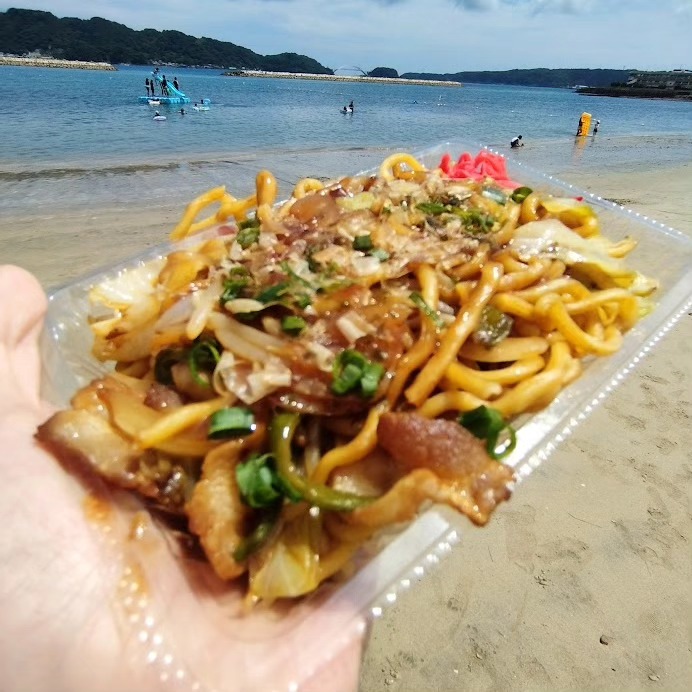
Every July along the coasts of Shonan, Kamakura, and Enoshima, wooden open-air shacks known as umi no ie (beach huts) open their shutters. Above the sound of breaking waves and buzzing cicadas, a sharp sizzle rings out across the sand: thinly sliced pork belly hitting smoking iron, followed by a sweet, tangy blast of Worcestershire-based sauce vaporizing in the heat. Beach hut yakisoba is an indelible cultural fixture of Japanese summers. Yet home cooks recreating the dish routinely hit a frustrating wall. Instead of springy, taut noodles infused with charred sauce, grocery store noodle packs cooked in standard nonstick skillets invariably slump into a wet, limp sludge. Regional food reporting, including an analysis from an Excite エキサイト Report on Japan’s seaside diner traditions, shows how deeply coastal cooking methods rely on moisture displacement, heat volume, and regional flavor profiles to preserve texture under heavy humidity.
📌 Key Takeaways:
- The Moisture Trap: Adding water to loosen pre-steamed packaged noodles drops pan temperature and steams vegetables, turning the dish soggy.
- The Teppan Searing Secret: Commercial vendors sear oil-coated noodles separately without water, crisping the outer starch before introducing any sauce.
- The Tenkasu Advantage: Crisp tempura scraps absorb excess vegetable runoff while melting lard into the sauce for distinct stall-grade richness.
The Physics of the Coastal Beach Hut Griddle
Walk up to any beach hut stall between Zushi and Yuigahama, and you will notice a half-inch-thick steel griddle (teppan) running above 230°C (450°F). These heavy plates store immense thermal energy. When a cook drops cold cabbage, pork belly slices, and bean sprouts onto the surface, the surface temperature barely dips. Water escapes immediately as steam, whistling off into the coastal air rather than pooling on the metal.
Home kitchens rarely generate that level of thermal momentum. A lightweight nonstick frying pan or electric skillet loses heat instantly the moment raw ingredients hit the pan. If vegetables release water, that moisture pools at the base of the pan. The ingredients boil in their own juices instead of searing.
In beach huts, rapid evaporation leaves only rendered pork fat and concentrated sugars clinging to the ingredients. Replicating this result at home requires rethinking pan management. You must manage moisture aggressively before a single drop of sauce enters the skillet.
The Core Error: Why Traditional Package Instructions Ruin Yakisoba
Nearly every package of three-serving steamed yakisoba sold in Asian grocery stores prints identical instructions: fry the meat and vegetables, dump the cold clumped noodles on top, pour in 30 to 50 milliliters of water, cover to steam-loosen, and stir in the seasoning packet.
Following these steps guarantees failure. Pre-steamed noodles are coated in vegetable oil to keep individual strands separate inside the plastic wrapper. Pouring cold tap water into the skillet creates an emulsion with that surface oil, washing away starch barriers and soaking the noodles from the inside out. The noodles swell, turn spongy, and lose their chew (koshi).
Culinary researcher Kanae Inoue, known widely as Kana-nee, addressed this exact structural breakdown in a widely cited cooking clinic for Japan's Foodist Note. Her findings confirmed that dumping water onto noodles while stir-frying drops surface heat and boils the dough. Inoue demonstrated that cooks must sear the noodles alone in an oiled pan first, letting them brown undisturbed, before combining them with separately sautéed fillings.
The Tenkasu Method: The Hidden Street Stall Emulsifier
Commercial festival stalls and seaside shacks rely on an inexpensive ingredient that home cooks routinely skip: tenkasu (crispy tempura batter scraps). While commonly seen as a simple topping for udon or okonomiyaki, tenkasu plays a mechanical role in high-heat noodle frying.
As reported by The Huffington Post Japan, swapping water out for tenkasu transforms homemade yakisoba into an authentic replica of street vendor fare. Tenkasu acts as a moisture sponge inside the pan. Fresh cabbage and shredded carrots expel liquid as their cellular walls collapse under heat. When scattered across the pan midway through cooking, crisp tenkasu fragments capture that runaway moisture before it can dilute the noodles.
Tenkasu also introduces rendered fat. Commercial tempura scraps carry trace amounts of sesame oil and vegetable fat from the fryer. As the flakes soften in vegetable liquid, they release savory fats into the pan, thickening the yakisoba sauce and helping it cling directly to each noodle strand without requiring cornstarch or thickeners.
| Variable | Standard Package Method | Beach Hut Method |
|---|---|---|
| Noodle Prep | Steamed in pan using 30, 50ml tap water | Microwaved in bag, then seared dry until blistered |
| Pan Management | All ingredients crowded into a single pass | Sequential two-stage cooking (noodles first, fillings second) |
| Moisture Control | Water pools; cabbage boils in pan runoff | Tenkasu absorbs vegetable runoff; zero added water |
| Sauce Application | Poured directly over wet noodles and tossed | Splashed along bare pan rim to caramelize sugars |
| Finished Texture | Soft, limp, waterlogged noodle mass | Firm, chewy core with blistered, smoky edges |
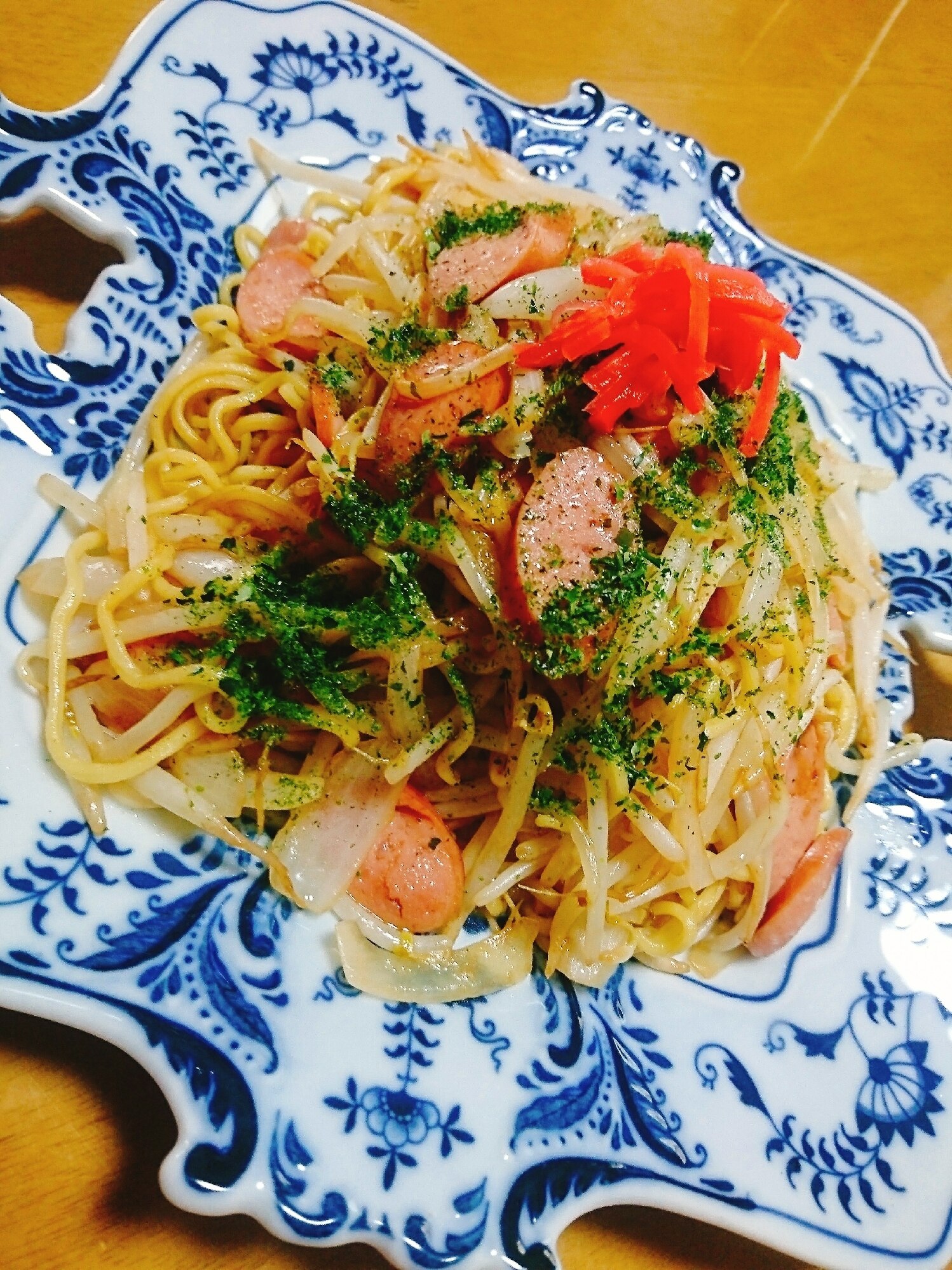
Mastering the Two-Stage Fry: Step-by-Step Execution
To achieve the springy snap of outdoor yatai (food stalls) inside an apartment kitchen, abandon one-pan assembly lines. The process relies on sequencing heat properly.
First, warm the noodle pack in the microwave for 40 to 60 seconds at 600W before opening the plastic. This softens the factory-applied vegetable oils, allowing the strands to loosen effortlessly without breaking or needing water.
Heat a wide skillet or carbon steel wok over high heat with a tablespoon of high-smoke-point oil. Spread the loosened noodles across the surface. Do not shake the pan. Allow the underside to fry undisturbed for 2 to 3 minutes until a pale golden crust develops, flip the bundle using a spatula, and toast the opposite side. Remove the noodles to a plate.
Return the empty pan to high heat and lay down 100 grams of thinly sliced pork belly. Once the pork renders its fat, toss in coarse-cut cabbage squares and onion slices. Add two tablespoons of tenkasu directly over the softening vegetables. When the cabbage edges begin to char, return the seared noodles to the pan and toss everything together with tongs.
Sauce Caramelization: Building the Smoked Umami Profile
The unmistakable aroma that lures beachgoers out of the Pacific surf is not raw sauce, it is pyrolyzed sauce. Commercial Japanese yakisoba sauce contains pureed fruits, tomato paste, brewed vinegar, and concentrated sugar syrups. If poured over cold ingredients, it acts as a cold bath, extinguishing pan sizzle.
Instead of pouring sauce directly over the noodles, push the noodle-and-vegetable mound to one side of the skillet. Pour your sauce mixture, typically a 2:1 blend of thick chuno sauce and Worcestershire sauce, supplemented with a splash of soy sauce and a pinch of MSG or oyster sauce, directly onto the exposed metal on the opposite side.
The sauce will flash-boil within two seconds. Let the vinegars boil off and watch the sugars bubble into a rich, dark foam. The moment that sharp molasses aroma hits the air, pull the ingredients through the bubbling reduction using tongs. The sauce glazes the seared exterior of the noodles instantly, leaving no excess liquid behind at the base of the pan.
Cabbage Moisture Control and Ingredient Ratios
Cabbage makes up roughly 40% of standard beach hut yakisoba volume, but improper preparation can overwhelm the griddle with moisture. Standard western green cabbage contains upwards of 92% water. Shredding cabbage finely exposes thousands of ruptured cells, which weep water the second salt touches them.
Cut your cabbage into broad, bite-sized squares measuring roughly 3 to 4 centimeters across. This reduces cellular surface area and preserves structural crunch during high-heat contact. Never wash cabbage leaves immediately before throwing them into the pan; dry them thoroughly between paper towels.
Balance moisture-heavy additions against dry seasonings. While bean sprouts (moyashi) offer a refreshing crunch, their water content exceeds 95%. When cooking at home on standard burners, cap bean sprouts at no more than 30 grams per noodle serving, or skip them entirely in favor of scallions and sliced pork belly to keep the pan bone-dry.
Frequently Asked Questions (FAQ)
Q1: Can I use fresh ramen or soba noodles instead of packaged yakisoba noodles?
A1: Traditional Japanese yakisoba uses steamed, oil-coated wheat noodles (mushimen), not buckwheat soba or fresh soup ramen. If packaged yakisoba noodles are unavailable, boil fresh Chinese egg noodles or thick alkaline ramen noodles until al dente, drain them completely, toss them thoroughly with vegetable oil, and let them cool on a sheet pan before searing.
Q2: What is the best pan to use if I do not own a commercial teppan griddle?
A2: A seasoned 12-inch cast iron skillet or heavy carbon steel flat-bottom wok works best. These materials retain heat far better than thin aluminum nonstick pans, allowing moisture to vaporize on contact and preventing temperature crashes when cold ingredients are added.
Q3: What can I substitute if I cannot find Japanese tenkasu?
A3: Fresh homemade tempura flakes made by dripping a flour-and-water batter into hot oil work best. In a pinch, crushed unsweetened pork rinds (chicharrones) or fried shallots deliver comparable moisture absorption and savory fat, though they will alter the traditional flavor profile slightly.
What Lies Ahead for Street-Style Yakisoba at Home
Recreating Japan’s coastal beach hut fare is not a matter of sourcing industrial griddles. It is a matter of respect for pan moisture. Once you eliminate water from the noodle preparation, sear the starch bundles before introducing moisture, and let tenkasu absorb the runaway vegetable juices, store-bought grocery noodles lose their limp sogginess. You are left with firm, springy noodles enveloped in caramelized, deeply savory umami glaze, bringing the sunlit magic of a Japanese summer directly to your kitchen.