Daiso vs. Seria Tomica Displays Tested: Which 100-Yen Option Actually Fits Best?
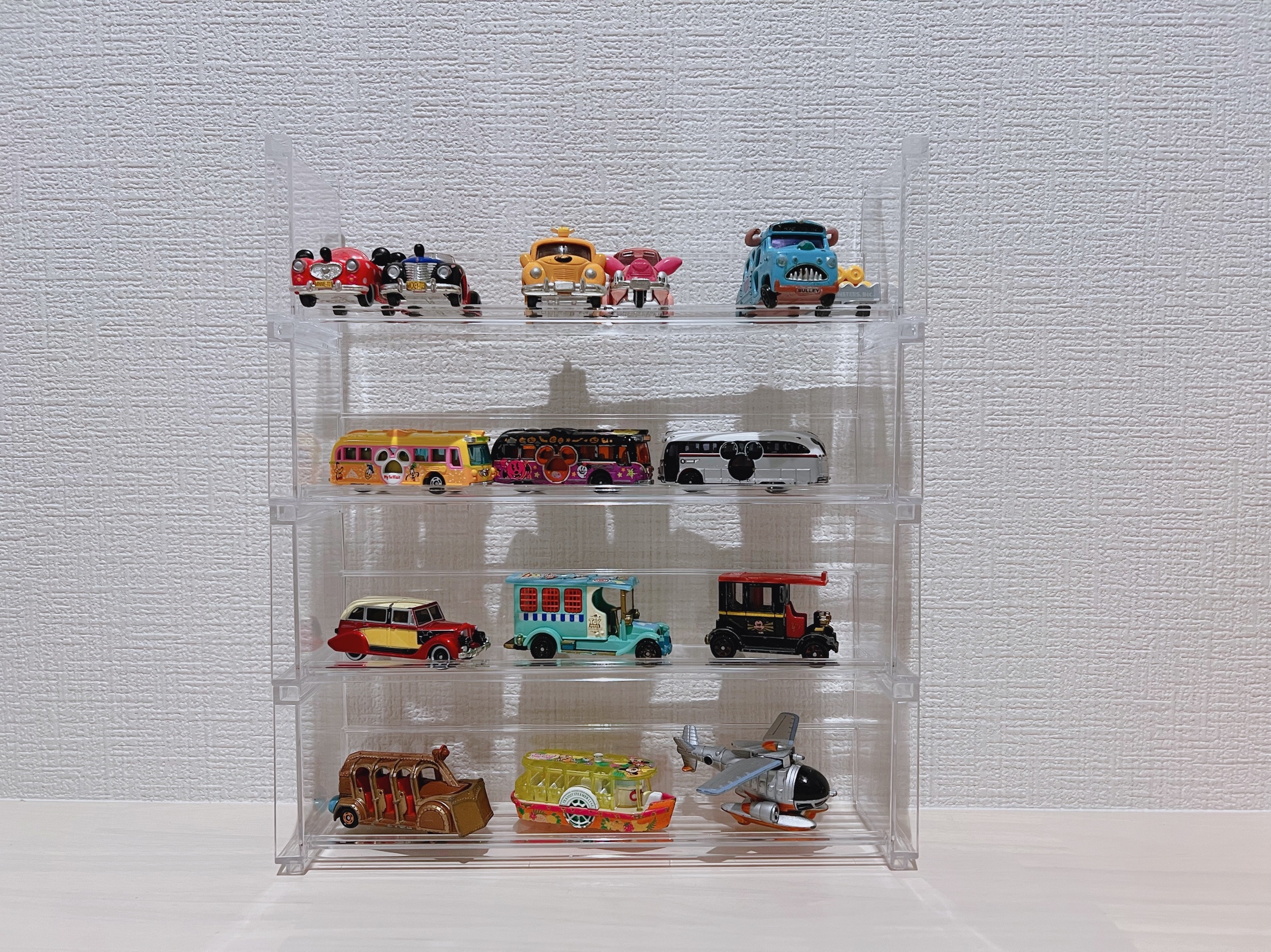
Every die-cast collector eventually faces the same spatial reckoning. A modest handful of Takara Tomy pocket cars quietly balloons into fifty, then two hundred, until small cardboard boxes clutter desk corners and plastic tubs hide prized castings out of sight. Official branded display cases look sharp, but paying $35 to house twenty cars feels absurd when the models cost roughly $3 to $5 each. This pricing mismatch explains why Japan’s 100-yen shop culture, spearheaded by Daiso, Seria, and Can Do, has become the global underground blueprint for toy vehicle preservation.
The problem is clearance. Takara Tomy builds regular Tomica castings to fit standardized retail packaging (roughly 78mm box length), but wheel tracks, suspension travel, and chassis profiles vary wildly across sports cars, lifted SUVs, and delivery vans. Shoving a die-cast car display into a bargain bin organizer frequently leads to stuck axles, scuffed bumpers, and warped plastic. We pulled standard 1:64 and box-scale castings, pulled out precision digital calipers, and tested Japan’s three major discount retailers to verify which 100-yen solutions actually work without destroying your paintwork.
📌 Key Takeaways:
- The Clearance Reality: A standard Tomica car averages 70, 78mm in length, 27, 30mm in width, and 25, 38mm in height, making interior depth the single biggest failure point across discount acrylic compartments.
- The Top Contender: Seria’s untreated wooden partition shelf remains the collector favorite for warm, custom displays, while Daiso’s clear acrylic showcase units win strictly on dust protection and high-density stacking.
- The Zero-Yen Fix: Applying 15mm masking tape or adhesive felt strips to compartment floors prevents rubber and ABS plastic wheels from rolling, stopping paint rash caused by micro-vibrations.
The Geometry of a Die-Cast Fleet: Why Tomica Measurements Break Generic Organizers
Takara Tomy does not manufacture die-cast miniatures to an unwavering 1:64 scale. Instead, the company designs vehicles to fit inside a uniform retail carton measuring 78mm wide, 41mm high, and 39mm deep. A Suzuki Jimny might arrive at 1:57 scale, while a commercial Hino dump truck shrinks to 1:120. This design quirk produces wide variances in ride height and bumper projection across the standard blister line.
Most generic 100-yen shop organizers cater to cosmetics, sewing bobbin threads, or small office supplies. Those compartments rarely match vehicle proportions. When you place a sports car like the Nissan GT-R Nismo into a shallow craft bin, the 28mm wheel track might fit, but the protruding front splitter often jams against structural injection molding ridges. Taller models, including high-roof minivans and box trucks, collide directly with fixed overhead plastic tabs.
Collector communities on X and specialized die-cast forums regularly warn newcomers about wheel jamming. The friction occurs when a compartment’s internal floor width narrows slightly near the base, a common draft angle trick used in budget plastic injection molds. Once a Tomica’s free-spinning wheels settle into that wedge, retrieving the car requires prying the chassis loose with a fingernail or a pry tool, risking severe paint chips along the door sills.
Daiso Clear Acrylic Showcase: Maximum Dust Defense at $1.50 Scale
Daiso dominates modern budget storage through its molded polystyrene lines. The heavyweight champion among Japanese collectors is the Daiso display case with sliding front panel, often sold under the "Collection Case" or "Display Box" product tags. Ranging between 100 and 300 yen (roughly $0.75 to $2.20 depending on overseas import pricing), these clear units offer a completely enclosed, dustproof collector box environment.
Testing Daiso's three-tiered riser stand reveals why it commands widespread praise. The interior step depth measures approximately 42mm, easily accommodating the full length of standard sports cars parked side-profile. Alternatively, parking cars nose-out allows you to fit up to nine standard vehicles across three ascending tiers. The clear plastic mimics commercial museum vitrines without visual distortion.
The unit carries distinct structural trade-offs. The rigid polystyrene scratches easily if wiped with dry paper towels; static charge pulls airborne grit directly against the surface, turning micro-dust into abrasive sandpaper. If you choose Daiso acrylics, keep a microfiber cloth and antistatic plastic polish on hand to maintain clarity over years of shelf exposure.
Seria Wooden Partition Shelf: The Aesthetic Community Darling
Seria takes an entirely different design philosophy. While Daiso prioritizes clear plastic, Seria caters to home crafters, offering natural materials and rustic interiors. Its standout product is the Seria wooden partition shelf, a six-compartment or eight-compartment natural plywood grid sold raw and unvarnished for exactly 100 yen.
Each individual cubby inside Seria’s standard six-grid box measures roughly 82mm across and 40mm deep. These dimensions match Tomica vehicle specifications like a bespoke glove. A standard regular line car parks straight inside with two to three millimeters of clearance on either side, allowing fingertips to lift the car cleanly without touching adjacent vehicles. Collectors frequently mount three or four of these units together to build an expansive, uniform wall-mounted mini shelf system.
The unsealed wood presents its own set of technical considerations. Rough interior grain can catch on delicate side mirrors or scuff thin tampon-printed side decals if cars slide roughly against raw plywood walls. Japanese craft hobbyists universally recommend a light sanding with 400-grit paper, followed by a coat of water-based craft varnish or dark walnut stain, transforming a budget grocery-store wooden crate into a display that looks like handmade furniture.

Can Do Garage Storage: Modular Utility for Modest Footprints
Can Do occupies a middle ground that die-cast enthusiasts often overlook. Rather than focusing solely on large open boxes, Can Do stocks specialized stackable miniature tray units and modular drawer inserts aimed at small desktop items. For collectors with tight desk space or rental restrictions that ban wall nails, Can Do garage storage concepts deliver exceptional floor-space efficiency.
The core standout is Can Do’s interlocking front-opening mini container line. These miniature shipping containers feature folding front doors that snap shut, stacking upward like shipping berths at a container port. Placing construction vehicles, off-road trucks, or weathered customs inside turns ordinary storage into an interactive industrial diorama.
However, accessibility requires careful planning. Unlike open shelving or clear sliding cases, stacked storage bins require unstacking to retrieve a vehicle buried near the bottom. If your collection thrives on rotational handling, reserve Can Do containers for backup storage or themed garage setups rather than primary showcase lines.
Dimensional Benchmark: 100-Yen Options vs. Tomica Factory Specifications
| Product & Retailer | Grid / Shelf Dimensions (W × D × H) | Capacity (Standard Cars) | Fit Tolerances & Jamming Risk |
|---|---|---|---|
| Official Tomica Standard CarTakara Tomy Baseline | ~70, 78mm × 27, 30mm × 25, 38mm | Single Unit (Baseline) | Baseline standard; varies between passenger sedans and high-roof vans. |
| Daiso Display Case (Sliding Door)Clear Polystyrene Vitrine | 240mm × 70mm × 80mm (Overall) | 6, 8 Cars (Angled or Nose-Out) | Zero risk of axle jamming; clear front cover protects paint from dust buildup. |
| Seria Wooden Partition ShelfNatural 6-Grid Box | 82mm × 40mm × 38mm (Per Compartment) | 6 Cars (1 Per Grid) | Exceptional side clearance; long buses will overhang front edge by ~35mm. |
| Can Do Mini Cargo ContainerInterlocking ABS Module | 84mm × 45mm × 42mm (Interior) | 1, 2 Cars (Depending on Model) | Generous clearance for lifted 4x4s; rear bumper may rub interior hinge joints. |
| Daiso 9-Divider Accessory TrayClear Stackable PS Tray | 68mm × 32mm × 28mm (Per Compartment) | 9 Cars (Compact / Keicars only) | High risk. Compartment length (68mm) pinches front bumpers of cars over 70mm. |
Essential Scratch Prevention Hacks for Budget Showcases
A bare display shelf poses subtle risks to collector-grade die-cast models. Tomica models roll with minimal friction by design, equipped with springy wire suspensions and free-spinning wheels. An inadvertent bump against a shelf or natural room vibration can send a metal car rolling straight into the acrylic front wall, dulling nose emblems and bumper paint over time.
Seasoned Japanese collectors solve this with simple scratch prevention hacks sourced directly from the stationery aisle. Laying down a strip of 15mm-wide textured washi masking tape creates just enough rolling resistance to lock tires in place without chemical residue. For Seria’s wooden cubbies, cut 1mm thick adhesive craft felt to match each compartment floor. The soft velvet texture cushions chassis pins and eliminates vibration wear completely.
Long Tomica models, such as articulated articulated transit buses, bullet trains, and semi-trailer rigs, demand specialized treatment. These heavy castings stretch between 130mm and 160mm in length, rendering standard compartmentalized boxes unusable. Daiso’s elongated horizontal pencil cases or clear utensil organizers fill this gap neatly. Line the bottom with non-slip silicone shelf liners to hold heavy metal chassis securely without wheel binding.
Frequently Asked Questions (FAQ)
Q1: Do 100-yen acrylic cases degrade Tomica tires or paint over several years?
A1: Standard polystyrene and acrylic display boxes from Daiso and Seria are chemically inert and will not leach into factory automotive finishes or ABS plastic tires. However, displaying painted die-cast models in direct sunlight accelerates UV fading and paint crazing, regardless of box quality. Keep your cases away from south-facing windows and intense incandescent light sources.
Q2: How do you mount Seria wooden partition shelves securely without wall damage?
A2: Rather than using heavy nails, attach two small triangular picture-hanging brackets to the top outer corners of the wooden box. Secure them to drywall using micro-gauge Japanese staple pins or damage-free command strips rated for at least 1.5 kg (3.3 lbs). An eight-car wooden display filled with die-cast models typically weighs under 500 grams.
Q3: Will Hot Wheels or Matchbox cars fit into the same 100-yen organizers?
A3: Most Hot Wheels passenger cars fit easily into Seria wooden cubbies and Daiso tiered stands. Note that Hot Wheels mainline models generally measure slightly wider along the axle line (30, 32mm) than domestic Japanese Tomica vehicles. Double-check your compartment widths when buying divided plastic cosmetic trays to avoid pinched tire rims.
Curating a World-Class Wall on a Shoestring Budget
Building an impressive die-cast showcase does not require hundreds of dollars in high-end hobby shop fixtures. By understanding vehicle proportions and steering clear of narrow cosmetic organizers with tapering walls, you can transform standard Japanese discount organizers into stunning gallery walls. Whether you lean into the clean transparency of Daiso’s acrylic vitrines or the warmth of Seria’s wooden craft boxes, spending pocket change on your displays leaves far more capital where it actually belongs: hunting down the next prized casting.