Don't Force It! Why Forcing a Stuck Apple Watch Band Destroys the Chassis
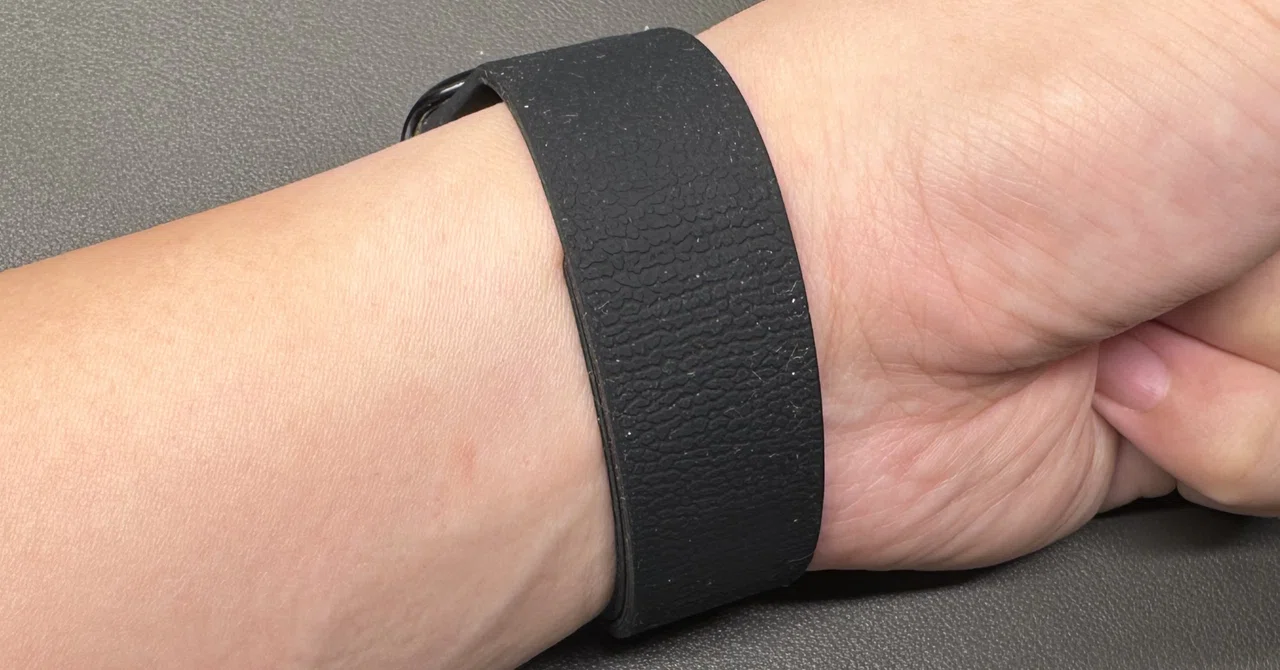
When an Apple Watch band refuses to budge, intuition urges you to yank it harder. That instinctive pull often turns a minor friction jam into a catastrophic repair bill. The channel holding the strap inside an Apple Watch is milled to tolerances measured in fractions of a millimeter, and applying lateral brute force will warp the micro-machined aluminum or titanium slot long before the band gives way. Countless owners discover this seizing issue only after years of continuous wear, a pattern highlighted in a long-term lifestyle [note Report](https://note.com/calm_panda756/n/ncaf1135421a9) tracking three years of unbroken daily wrist time before a planned strap swap revealed trapped grime and localized wear.
A band that will not slide is rarely broken at the outset. Instead, it is almost always bound by trapped sweat salts, dried skin debris, or a seized spring pin beneath the chassis release button. Understanding the mechanical interface between the watch case and the lug reveals why gentle chemical dissolution works while raw physical force guarantees structural destruction.
📌 Key Takeaways:
- The Real Damage: Yanking a jammed strap shears the interior retaining groove, turning a zero-dollar cleaning task into a $299, $499 out-of-warranty chassis replacement.
- The Culprit: Dried sweat salts, mineral buildup, and compressed sebum crystallize inside the slot, locking the spring-loaded band latch mechanism in place.
- The Solution: Controlled exposure to lukewarm water, a non-conductive wooden toothpick, and micro-wiggling will release the lock without scoring the casing.
How Sweat and Micro-Debris Cement the Watch Channel
Smartwatches endure harsh environments. They sit against human skin during intense workouts, soak in chlorinated pool water, and absorb daily layers of sunscreen, dead epidermal cells, and sebum. Over months of uninterrupted wear, this slurry migrates into the microscopic gap between the watch chassis and the strap lug.
Water evaporates from that mixture every single day. What remains are solid mineral crystals, desiccated organic matter, and salt crusts. These deposits act like mortar inside the track. When you finally press the release button, the spring cannot compress because the cavity beneath it is packed solid with compacted matter. The spring remains frozen open, anchoring the metal catch inside the lug.
Worse, galvanic corrosion can occur when cheap third-party stainless steel lugs contact the bare aluminum casing of entry-level watch models. Without periodic cleaning, microscopic oxidation bonds the two dissimilar metals together. The band ceases to be a detachable accessory; it effectively welds itself to the housing.
The Latch Mechanism and What Shears When You Pull
Apple engineered the band retention system around three tiny moving parts. In the center of the watch channel sits a spring-loaded metal locking tooth. On the strap lug, a matching spring-loaded polymer or steel pill drops into that center indentation to prevent sliding. Pressing the oblong button on the underbelly of the watch case pushes that central tooth downward, clearing the path for the band to slide horizontally out of the track.
When you pull on a band without depressing that latch fully, you are placing tremendous shear stress on two minuscule contact surfaces. The retaining lip inside an aluminum chassis measures less than 0.8 millimeters in thickness. Aluminum is ductile. Pulling a band with ten to twenty pounds of sideways force will gouge the softer aluminum track, carving a permanent burr into the channel.
Once that metal scores, the channel shape deforms permanently. Even if you manage to rip the old band out, any replacement band will either catch on the damaged metal or wobble loosely, failing to lock securely. At that point, the entire housing requires replacement because Apple does not service or re-machine individual chassis rails.
Comparing Jam Removal Techniques and Risk Profiles
Treating this mechanical failure requires patience rather than torque. The following matrix illustrates how common home remedies impact the delicate tolerances of the watch casing.
| Method Applied | Primary Risk Factor | Chassis Impact | Success Rate |
|---|---|---|---|
| Horizontal Brute Force | Shearing channel lip | Catastrophic gouging | Low (High failure cost) |
| Petroleum Lubricants (WD-40) | Dissolving acoustic/water seals | Gasket degradation | Moderate (Ruins water seal) |
| Metal Screwdriver Prying | Cracking ceramic back / scratch | Visible cosmetic gouges | Very Low |
| Lukewarm Water Soak | None (on water-resistant models) | Zero physical impact | High (90%+ on grime jams) |
The Step-by-Step Lukewarm Water Protocol
Every Apple Watch from Series 2 through Series 10 and the Ultra line features water resistance rated to at least 50 meters under ISO standard 22810:2010. You can use clean water safely to dissolve the dried salts seizing your band release button.
Start by running a small stream of lukewarm tap water over the band release button. Do not use boiling water, harsh chemical detergents, or industrial degreasers. Surfactants degrade the water-resistant rubber gaskets around the speaker diaphragms and barometer ports. Plain water at roughly 85°F, 95°F softens dried sweat crystals within minutes.
While the watch sits under the trickle, press the release button repeatedly using the meat of your thumb. Avoid using a metal SIM ejector tool or a steel probe. Metal tools slip, gouging the rear sensor cluster or permanently crushing the spring-loaded button into its recess. If your fingernail lacks leverage, use the flat edge of a wooden toothpick. Wood provides sufficient rigidity to depress the mechanism without scratching the anodized finish.
Once the button travels downward freely, apply gentle bidirectional pressure to the strap. Do not pull outward. Push the strap slightly inward toward the center of the watch case first. This inward shift relieves friction tension off the locking pin. Keep the button held down firmly, then slide the band smoothly to the left or right.
Third-Party Lugs and Dimensional Discrepancies
Not all jams stem from dirt. The explosion of bargain-tier silicone, leather, and magnetic bands on open marketplaces has introduced a severe mechanical tolerance issue. Authentic bands adhere to exact millimeter tolerances, whereas knockoff lugs regularly deviate by 0.15, 0.30 millimeters.
That microscopic variance makes a massive difference inside a precision channel. Oversized rubber bumpers on cheap strap lugs compress tightly when jammed into the rail, creating a friction lock that resists sliding. In other instances, the spring-loaded center latch on a third-party strap is built with low-grade metal springs that bind or snap off inside the channel cavity.
Magnetic bands introduce their own unique hazard. Strong neodymium magnets inside wrap-around loops often attract microscopic magnetic grit, ferrous dust found in urban environments and workshops. When drawn into the band slot, these magnetic iron filings pack together like metallic sand, jamming the sliding action. If you use a magnetic band, inspect the slot regularly to wipe away accumulated dark magnetic grit before it lodges deep inside the spring cavity.
When the Button Is Jammed Flat: Assessing Professional Repair
If the release button remains stuck in a depressed position and will not pop back out, the internal micro-spring has either collapsed or become packed with solid sediment that dissolved water cannot clear. Conversely, if the button will not depress even half a millimeter under heavy thumb pressure, the locking latch has seized mechanically.
Stop applying manual force immediately. Continued attempts to jam tools into the button housing can rupture the water-seal membrane beneath the switch assembly. If that seal tears, your watch loses its ingress protection entirely, leaving the logic board vulnerable to sweat and atmospheric humidity.
Apple does not maintain a modular repair SKU for jammed band slots. If you take a structurally damaged watch to an Apple Store without active AppleCare+ coverage, the service response typically classifies channel deformation as out-of-warranty enclosure damage. Replacing the unit out-of-warranty ranges from $299 for standard aluminum models to over $499 for titanium and Ultra variants. An authorized technician may attempt an ultrasonic or manual release using non-marring tools, but they will not bend a damaged channel back into alignment.
Frequently Asked Questions (FAQ)
Q1: Can I use isopropyl alcohol to break down the grime in my band slot?
A1: Avoid soaking the watch in alcohol. While 70% isopropyl alcohol is safe for wiping exterior glass surfaces, soaking the channel in alcohol can degrade the acoustic water-resistant membranes and dry out the silicone friction pads that keep the watch band seated firmly.
Q2: My band slides out a few millimeters and then hits a hard stop. What is catching?
A2: The center locking pin on the strap lug has partially dropped back into the release cavity. Press and hold the release button continuously while sliding the band. If it catches, push the band back to the center, press the button down firmly, and slide it through in one continuous motion.
Q3: How often should I clean the Apple Watch band channels to prevent locking?
A3: If you exercise daily or work in dusty environments, remove the band and rinse the slots under fresh lukewarm water once every 30, 60 days. Dry the channels thoroughly with a lint-free microfiber cloth before sliding the bands back into place.
Smart Maintenance Habits for Seamless Swaps
The channel locking mechanism on your wrist is a miniature feat of mechanical engineering, but it requires basic hygiene to function across multiple years. A watch worn through hundreds of sweaty workouts gathers debris that will eventually freeze the delicate release buttons in place. Treating a stuck band as a chemical dissolving problem rather than a physical pulling contest prevents permanent chassis deformation. A simple two-minute rinse under warm water with a wooden toothpick saves the integrity of the watch casing and protects you from an unnecessary trip to the repair counter.