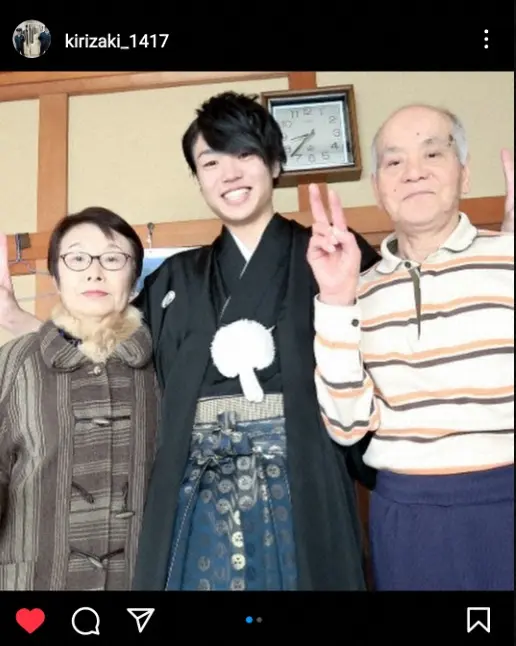
Fact-Check: Dissecting the Myth, Misquotes, and Modern Legacy of 'Duncan Kono Yarou'

When veteran comedian and musician Great Gidayu died at 67 on September 7, 2026, his longtime cohort Duncan stood outside the service with heavy eyes. "He looked peaceful," Duncan told reporters, holding back tears. "Just way too early. Gidayu, you idiot..." As documented in a recent SANSPO Report, the tribute from Duncan, alongside grief shared by fellow Takeshi Gundan members Tsumami Edamame, Ide Rakkyo, and Rusher Itamae, instantly rekindled nationwide affection for the golden age of Japanese television. Yet within hours, social media commentary predictably defaulted to an immortal four-word punchline: "Duncan, kono yarou!" (ダンカン、この野郎!, "Duncan, you bastard!").
Every Japanese comedy fan can mimic the cadence immediately: a sharp tilt of the head, a rapid shoulder twitch, and a raspy, nasal bark attributed to visionary filmmaker and comedian Beat Takeshi (Takeshi Kitano). The phrase is embedded in Japan's modern lexicon. There is only one historical problem. Takeshi Kitano never actually said it.
📌 Key Takeaways:
- The Phantom Origin: The phrase "Duncan, kono yarou!" is pure Japanese comedic Mandela effect, invented and popularized not by Beat Takeshi, but by impressionist Kunihiro Matsumura during the 1990s.
- The Caricature Mechanism: Matsumura merged Kitano's real-life verbal tick (bakayarou) with the name of his most prominent lieutenant, creating a synthetic catchphrase that eventually eclipsed reality.
- A Living Heritage: The name "Duncan" originated in traditional rakugo theater under master Tatekawa Danshi, a title revitalized in March 2026 when rakugoka Dankichi officially succeeded the name as the Second-Generation Tatekawa Duncan.
The Phantom Line That Conquered Japanese Pop Culture
Ask three generations of television viewers in Tokyo to impersonate Beat Takeshi, and all three will give you the identical routine. They will jerk their neck slightly to the right, squint their eyes, and snap "Duncan, kono yarou!" or its close cousin, "Duncan, bakayarou!" The line has been sampled in hip-hop tracks, plastered across graphic tees, and even adopted as the moniker for an indie rock band that made headlines in September 2026 while debating its recording lineup.
The collective cultural memory insists that during the chaotic heyday of shows like Takeshi's Castle or Super Jockey in the late 1980s, an exasperated Kitano constantly shouted down his disciple on camera. Television archivists and Gundan historians have combed through thousands of broadcast hours. The footage does not exist.
While Kitano routinely addressed Duncan off-camera, assigned him screenwriting tasks, or chided his troupe on variety stages, he never linked the proper noun to the insult as a trademark television catchphrase. The line is a complete fabrication of parody culture, a phantom quote so powerful that it retroactively reprogrammed how a nation remembers its most famous living entertainer.
How Kunihiro Matsumura Invented an Icon
The real architect of the phenomenon is impressionist Kunihiro Matsumura. During the early 1990s, Matsumura emerged as a prodigy of monomane (celebrity mimicry). Where older impressionists aimed for polite, vocal accuracy, Matsumura specialized in hyper-kinetic distortion. He magnified an artist's minor physical mannerisms into grotesque, hilarious theater.
Matsumura worshipped Beat Takeshi. When preparing his impression, he needed a shorthand device that immediately established Kitano's backstage aura: the impatient, cigarette-smoking director shouting orders at his loyal subordinates. Matsumura noticed two independent realities. First, Kitano ended sentences with a blunt "bakayarou" when joking with peers. Second, Duncan served as Kitano’s most visible real-life liaison, handling administrative chores and scripts for the troupe.
Matsumura welded them together. On high-rating variety programs and radio broadcasts, he threw his neck sideways, screwed up his face, and hollered "Duncan, bakayarou!" at the top of his lungs. The audience roared. The joke repeated weekly for a decade. Eventually, public memory blurred the line between the impressionist and the auteur. By the turn of the century, ordinary citizens assumed Kitano had been saying it all along.
Myth Versus Reality: Mapping the Legacy of the Catchphrase
Examining the evolution of the phrase reveals how media parody repeatedly overrides historical fact in the Japanese entertainment industry.
| Dimension | The Viral Misconception | Documented Historical Reality |
|---|---|---|
| Origin of the Quote | Shouted by Beat Takeshi during Showa-era TV broadcasts (1985, 1989). | Engineered by impressionist Kunihiro Matsumura as an exaggerated parody trope in the 1990s. |
| Takeshi Kitano's Reaction | Anger or irritation at having his backstage temper publicly parodied. | Open amusement. Kitano later performed the gag himself on late-night shows to indulge fans. |
| Origin of the Name "Duncan" | A random, absurd nickname chosen by Kitano for variety show skits. | Bestowed by legendary rakugo master Tatekawa Danshi in 1978 as "Tatekawa Duncan" (立川談寛). |
| Screen Presence | Duncan is strictly known as the butt of slapstick stunts and physical comedy. | Duncan wrote and starred in internationally acclaimed cinema, including Kitano's Getting Any? (1994). |
From Tatekawa Danshi to the Silver Screen: Who Duncan Really Is
Behind the catchphrase stands Takayuki Iizuka, known professionally simply as Duncan. He is not merely a slapstick stooge. He is an essential architect of Kitano’s creative universe.
Duncan did not start his comedic apprenticeship with Beat Takeshi. In the late 1970s, he enrolled under the sharpest, most intimidating mind in postwar traditional storytelling: rakugo titan Tatekawa Danshi. Danshi assigned him the stage name Tatekawa Duncan (立川談寛). When Duncan subsequently defected from rakugo to join Kitano's chaotic television orbit in the early 1980s, he retained the stage name. Danshi never stripped him of it.
That classical connection came full circle on March 1, 2026. Rakugoka Tatekawa Dankichi, the final direct apprentice of the late Danshi, earned his promotion to shin'uchi (master status) and officially assumed the historic stage name "Second-Generation Tatekawa Duncan" (二代目立川談寛). Writing to followers on social platforms, the new master joked that he welcomed being addressed casually as "Duncan." The announcement served as a reminder that the name carries artistic weight reaching far beyond variety show punchlines.
Within the Takeshi Gundan, Duncan proved indispensable. When Kitano shifted from television superstar to internationally revered auteur, Duncan sat beside him, co-writing scripts and contributing dry, surreal scenarios. He wrote the screenplay for and starred in Kitano’s absurd 1994 comedy Getting Any? (みんな〜やってるか!), earning critical attention at festivals abroad. When Kitano directed dramatic crime masterworks, Duncan provided grounded, haunting supporting turns, most notably in Boiling Point (1990).
The Passing of Great Gidayu and the Twilight of the Gundan
The emotional weight of the name resurfaced under somber circumstances in early September 2026. The death of Great Gidayu, born Masayuki Suzuki, at age 67 marked a definitive closing chapter for the core ensemble. Gidayu had fought severe diabetes and chronic illness for decades, undergoing dialysis while remaining an active performer.
The Gundan formed in the early 1980s as a modern samurai retinue around Kitano. They absorbed real physical blows in dangerous television stunts, weathered the notorious 1986 Friday magazine editorial raid alongside their master, and remained bound by fierce loyalty. Today, Tsumami Edamame is 68, Ide Rakkyo is 66, Duncan is 66, and Rusher Itamae is 63. Their ranks are thinning.
When Duncan spoke to the press following Gidayu's passing, his genuine slip of the tongue, "Gidayu, baka...", carried zero media artifice. It sounded like an older brother speaking to a younger sibling who left the room too early. Online observers noted the poignant contrast: the fabricated shout of anger that made Duncan famous had given way to a quiet, heartbroken whisper between real-life comrades.
Frequently Asked Questions (FAQ)
Q1: Did Beat Takeshi ever say "Duncan, kono yarou" on camera?
A1: No authentic broadcast records show Beat Takeshi uttering the exact line during his classic television runs. Impressionist Kunihiro Matsumura invented the phrasing during his comedic parodies in the 1990s, which the public later conflated with real events.
Q2: Did Beat Takeshi ever acknowledge that he didn't invent the phrase?
A2: Yes. On multiple talk show broadcasts over the past two decades, Kitano explicitly noted that he never spoke to Duncan in that manner. However, Kitano found Matsumura's mimicry so entertaining that he occasionally performed the impression of Matsumura performing him, deliberately feeding the joke.
Q3: Why did someone inherit the name Duncan in March 2026?
A3: Duncan began his performance career in rakugo under the late master Tatekawa Danshi, who gave him the name Tatekawa Duncan (立川談寛). On March 1, 2026, Danshi's final apprentice, Tatekawa Dankichi, was promoted to the rank of master (shin'uchi) and formally inherited the title as the Second-Generation Tatekawa Duncan.
How Parody Rewrote Japan's Comedy History
The staying power of "Duncan, kono yarou!" demonstrates how parody can outlive the original text it claims to reference. Kunihiro Matsumura did not just imitate Beat Takeshi. He built a caricature so compelling, so phonetically satisfying, that fifty years of television history quietly cleared a path for it.
Takeshi Kitano remains one of world cinema's most layered figures: a violent poet on film, a cynical philosopher on radio, and an unruly anarchist on television. That his broader cultural profile in Japan was captured by a fictitious line shouted at an empty chair speaks volumes about the surreal mechanics of Showa and Heisei entertainment. Duncan was never the target of a broadcast tirade. He was the anchor of a creative circle that redefined Japanese humor, long before an impressionist gave the country a line it will never forget.