Fact-Checking Shintaro Kitaoka's Career and Marriage: From #Re:room Fashion Success to Sudden Divorce
When Shintaro Kitaoka and Michiko Yamanaka announced their mutual divorce in October 2024, it marked the quiet close of a nine-year partnership that had long served as a benchmark for Tokyo’s independent creative class. Both were prominent figures in their own right: Kitaoka as a fashion model and apparel director running the menswear label #Re:room, and Yamanaka as the swimwear designer whose appearance on Fuji TV’s reality series Terrace House launched her brand, ALEXIA STAM, into mainstream recognition. For almost a decade, their shared aesthetic and family life defined a modern, aspirational lifestyle across Japanese social media.
The joint statement posted to their respective accounts signaled an amicable split centered on cooperative parenting for their daughter rather than personal discord. Behind that public resolution lies a substantive business and creative journey. Corporate records and industry reports, including coverage in the Excite エキサイト Report detailing his corporate operations, show Kitaoka spending the past decade methodically constructing a dedicated menswear enterprise out of Tokyo’s competitive streetwear market while managing the distinct pressures of high-visibility marriage.
📌 Key Takeaways:
- The Factual Event: On October 9, 2024, Shintaro Kitaoka and Michiko Yamanaka released a joint statement confirming their divorce after nine years together, emphasizing shared respect and an ongoing co-parenting agreement for their young daughter.
- Corporate Operations: Kitaoka co-directs Shibuya-based parent company LIFEST JAPAN alongside partner Suguru Yajima, successfully steering menswear label #Re:room through limited-run production models and high-profile fine art collaborations.
- Brand Trajectory: Unlike typical celebrity-backed fashion ventures that rely exclusively on cross-promotion, both Kitaoka's #Re:room and Yamanaka's ALEXIA STAM maintained separate balance sheets and distinct corporate identities throughout their marriage.
Building #Re:room from Shibuya Roots
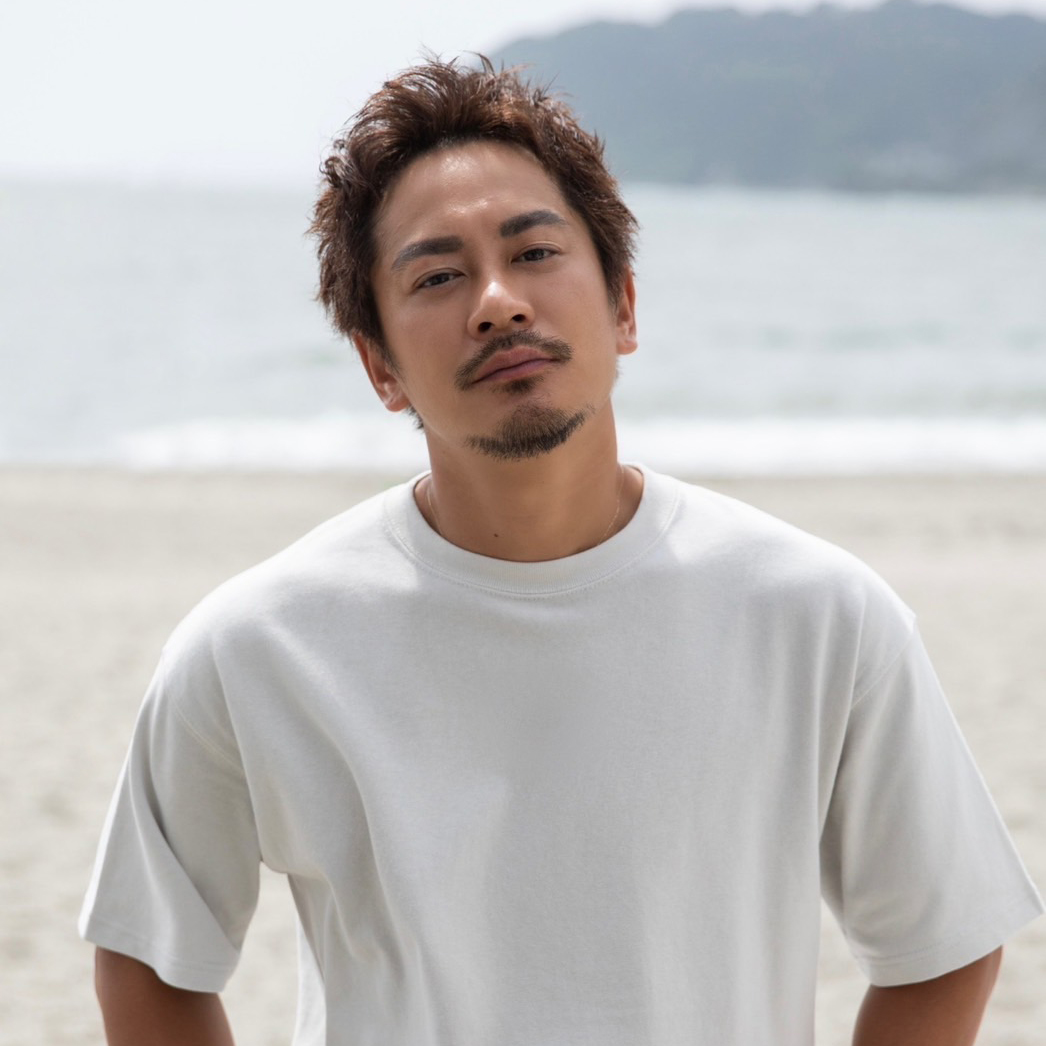
Kitaoka first gained public recognition through Japanese fashion magazines, establishing a profile as a model known for an effortless, coastal-casual aesthetic. Rather than resting on commercial modeling contracts, he co-founded LIFEST JAPAN alongside business partner Suguru Yajima. Headquartered in Shibuya, Tokyo, the venture launched #Re:room as a brand tailored to modern city life with relaxed silhouettes, durable fabrics, and subtle surf culture influences.
The label carved out a dedicated following by avoiding standard mass-market licensing. Kitaoka took the position of hands-on apparel director, personally overseeing cut-and-sew sampling, fit development, and pop-up retail experiences across Tokyo and Osaka. While contemporary digital fashion brands often struggle with identity dilution, #Re:room secured longevity by anchoring its catalog in versatile everyday pieces: structured heavy-weight hoodies, tailored beachside loungewear, and distinct outerwear that resonated with men in their twenties and thirties.
Streetwear Meets Fine Art: The Yuta Okuda Collaboration
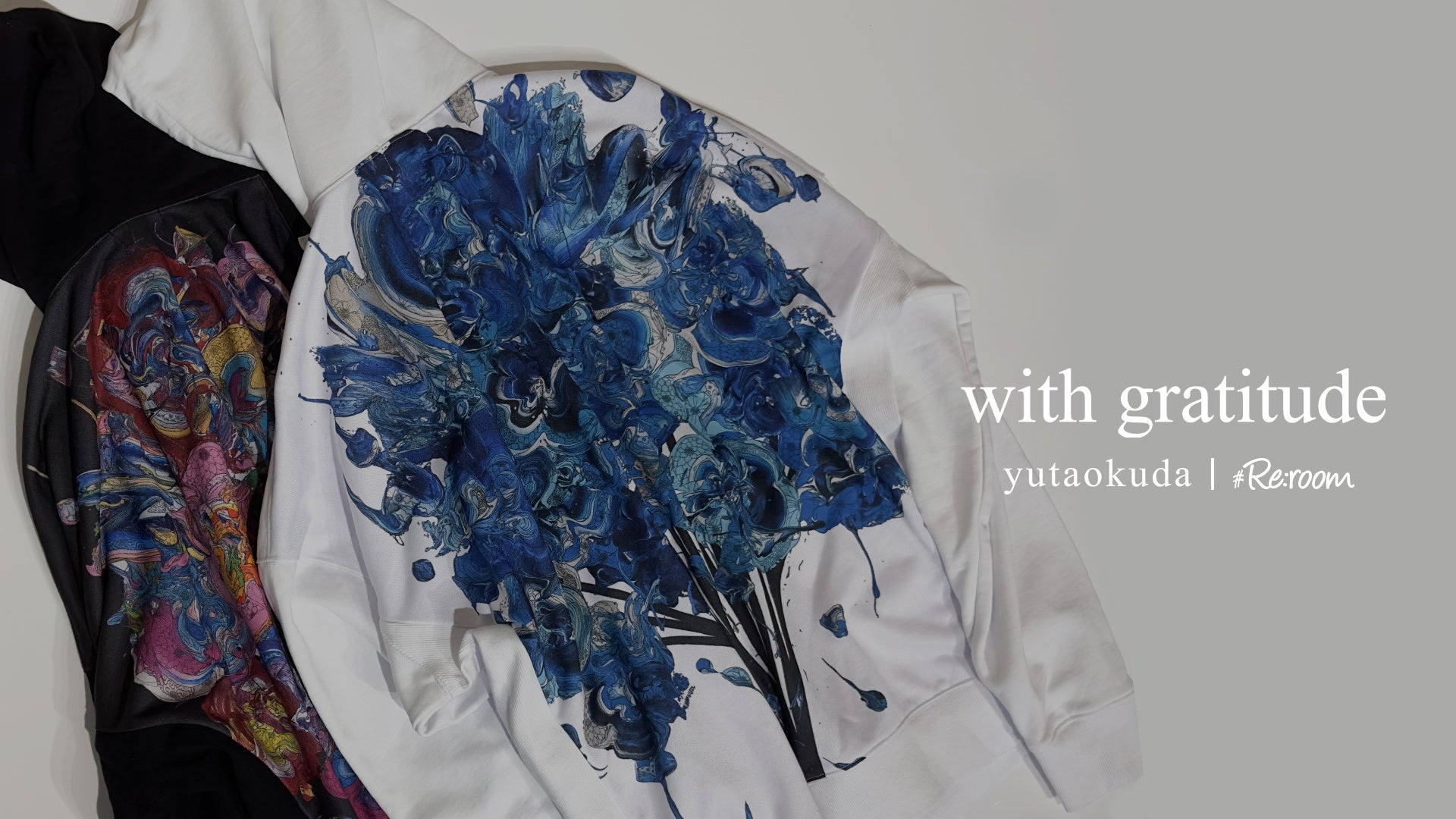
In May 2022, Kitaoka steered #Re:room into the fine art sphere through a deliberate project with contemporary painter Yuta Okuda. Known for intricate floral patterns and micro-detailed line work that explore themes of memory and nature, Okuda brought a distinct artistic complexity to Kitaoka’s casual silhouettes. Rather than simply printing existing artwork onto blank garments, the partnership integrated custom compositions directly into premium Japanese cotton t-shirts and apparel items.
To preserve exclusivity and eliminate warehouse overproduction, LIFEST JAPAN executed the launch on a complete made-to-order (MTO) reservation model. The collection proved so successful that LIFEST JAPAN and Okuda announced an expanded second collaboration run in October 2022. This production framework insulated the Shibuya fashion brand from inventory markdowns while proving that Kitaoka’s design direction could command credibility among serious art and fashion collectors.
The 2015, 2024 Timeline: High-Profile Romance to Mutual Split
The public fascination with Kitaoka intensified when his relationship with Yamanaka came to light in 2015. Yamanaka had captured national attention during the 2014 broadcast of Terrace House: Boys × Girls Next Door, where her entrepreneurial drive as the founder of ALEXIA STAM won widespread admiration. Their relationship progressed rapidly, culminating in a legal marriage registration in early 2016 and the birth of their daughter later that year.
| Timeframe | Milestone Event | Professional & Public Impact |
|---|---|---|
| 2015 | Relationship confirmed; #Re:room founded | Kitaoka establishes LIFEST JAPAN with Suguru Yajima while entering the public spotlight alongside Yamanaka. |
| 2016 | Marriage & birth of their daughter | The couple emerges as a prominent creative household, maintaining separate design labels while collaborating on lifestyle imagery. |
| 2022 | #Re:room × Yuta Okuda collaboration drops | LIFEST JAPAN expands beyond conventional retail with two consecutive limited-reservation art collaborations. |
| October 2024 | Official joint divorce announcement | Both parties publish formal statements honoring their nine-year marriage and confirming their ongoing co-parenting agreement. |
The Joint Statement and Co-Parenting Reality
Public breakups in Japan’s entertainment sphere frequently carry sensational speculation, but Kitaoka and Yamanaka controlled the narrative through direct coordination. On October 9, 2024, Yamanaka posted an official announcement alongside a composed two-shot photograph, simultaneously shared by Kitaoka. Both expressed profound gratitude for the nine years they spent together, clarifying that their paths had shifted organically over time.
The central pillar of their message focused on their daughter. Japanese family law historically leans heavily toward sole parental authority following a split, but both creators explicitly stated their intention to raise their child in continuous mutual communication. Their approach matches a growing trend among contemporary metropolitan parents in Japan who favor structured co-parenting arrangements over complete domestic severance.
Navigating Independent Brands Under Public Scrutiny
A crucial factor in the durability of both Kitaoka and Yamanaka’s commercial ventures was the structural independence of their businesses. High-profile influencer couples often merge their corporate entities, creating severe financial and legal entanglements when personal relationships end. Kitaoka avoided that trap by maintaining LIFEST JAPAN as a standalone operational entity alongside Suguru Yajima.
ALEXIA STAM built its own distribution pipelines, boutique locations, and seasonal swimsuit production lines, while #Re:room developed a separate menswear customer base that purchased clothes for their cut, construction, and brand identity rather than their director’s personal life. Consequently, the October 2024 announcement caused minimal operational friction for either label. Both companies entered subsequent retail seasons with their core supply chains and consumer trust intact.
Frequently Asked Questions (FAQ)
Q1: Why did Shintaro Kitaoka and Michiko Yamanaka decide to divorce?
A1: According to their joint public statements released on October 9, 2024, the separation was mutual. After nine years together, both concluded that their individual paths and family dynamics were best served by separating as a couple while remaining supportive co-parents to their daughter.
Q2: What is Shintaro Kitaoka’s primary professional role today?
A2: Kitaoka serves as the representative director and lead apparel director of LIFEST JAPAN Co., Ltd., based in Shibuya, Tokyo. He manages the menswear brand #Re:room alongside business partner Suguru Yajima, overseeing product design, brand marketing, and retail partnerships.
Q3: Will the divorce affect operations at #Re:room or ALEXIA STAM?
A3: No. The two brands have always been legally and operationally distinct. Kitaoka's #Re:room operates under LIFEST JAPAN, while Yamanaka’s ALEXIA STAM operates under its own corporate entity. Neither brand experienced leadership disruptions or equity disputes following the divorce announcement.
Creative Autonomy and the Road Past 2024
Shintaro Kitaoka’s public narrative reflects the challenges of managing creative ambition alongside an intensely visible domestic life. Building a Tokyo apparel brand from the ground up requires relentless seasonal execution, a reality often obscured by the easy gloss of social media followings. His work with LIFEST JAPAN demonstrates that thoughtful design, careful inventory control, and legitimate artistic partnerships carry enduring weight.
As Kitaoka moves forward, his professional focus remains firmly on expanding the visual language of #Re:room. The transition out of a public marriage provides him the space to let his apparel work speak on its own merits, grounded in the Shibuya design studio where his entrepreneurial foundation was built.