Fast Nail Growth and Ridges: What Your Nails Are Visually Telling You
Trimming your fingernails on Sunday night only to find them razor-sharp by Wednesday morning is an experience shared by millions, sparking persistent folklore that equates quick growth with a mischievous lifestyle or overactive libido. As highlighted in a viral note Report documenting the sudden realization of rapid nail resurgence mere days after clipping, this common domestic observation often collides with playful social myths. Yet clinical onychology paints an entirely biological picture.
Beneath the nail plate, the germinal matrix functions as one of the most metabolically demanding micro-environments in the human anatomy. When your nails appear to shoot forward overnight, or when they develop conspicuous vertical nail ridges and irregular cuticles, your hands are reporting the real-time velocity of your internal physiology.
📌 Key Takeaways:
- The Biological Velocity: The standard fingernail growth cycle advances roughly 3.47 millimeters per month, but acute metabolic spikes and localized blood flow can push that rate past 4.5 millimeters.
- Structural Texture Signals: Vertical ridges represent natural cellular turnover variations akin to skin wrinkles, whereas deep horizontal depressions signal systemic physiological shock.
- Cuticle and Matrix Dynamics: Intact cuticles seal the sterile nursery of the nail matrix, where rapid keratin production directly mirrors nutritional delivery and peripheral circulation.
The Biological Engine Behind Accelerated Keratin Production
Human fingernails consist of densely compacted layers of dead, hard alpha-keratin cells. The living factory sits tucked behind the visible nail fold: the nail matrix. Here, specialized basal cells divide at breakneck speeds, migrate forward, flatten, lose their nuclei, and dehydrate to form the nail plate.
When onychologists analyze rapid nail growth causes, they focus on capillary perfusion and metabolic throughput. The matrix demands vast reserves of ATP, oxygen, and amino acids. An uptick in metabolic rate and nails accelerating in tandem is an established clinical observation: individuals with hyperthyroidism, high-protein dietary intake, or sustained physical activity regularly exhibit elevated growth rates.
Micro-trauma plays a role as well. Repeated light impact, typing on mechanical keyboards, classical piano playing, or frequent manual handling, stimulates local cytokine release and arterial capillary flow. The body responds to peripheral resistance by accelerating its protective keratin armor.
Decoupling Myth from Fact: Hormones, Seasons, and Age Trajectories
Cultural jokes claiming fast-growing nails reveal promiscuity or an unrestrained social life stem from a distorted observation of hormonal shifts. Androgens, estrogens, and thyroid hormones regulate the basal metabolic rate. Surges in these chemical messengers, common during puberty, athletic conditioning, and pregnancy, fundamentally alter the fingernail growth cycle. During gestation, placental growth hormones and elevated maternal blood volume cause nails to accelerate dramatically, only to slow noticeably during postpartum recovery.
Seasonal oscillations produce measurable differences. Nails consistently lengthen faster in warm summer months than in dry, freezing winter temperatures. High ambient heat causes peripheral vasodilation, increasing blood circulation in fingers and feeding matrix tissue continuously.
Age dictates an unmistakable timeline. An infant nail growth speed routinely surpasses adult rates by double, forcing parents to clip microscopic, needle-sharp edges every few days to prevent accidental facial scratches. As people cross age 40, cellular division slows, reducing longitudinal extension by roughly 0.5% each year.
| Demographic & Lifecycle Stage | Average Monthly Growth (mm) | Primary Physiological Driver |
|---|---|---|
| Infants & Toddlers (0, 3 Years) | 4.5, 5.5 mm | Peak basal metabolism, tissue turnover |
| Young Adults (18, 35 Years) | 3.4, 3.8 mm | Stable sex hormones, daily digital tactile use |
| Third Trimester Pregnancy | 4.2, 4.8 mm | Circulating growth factor, 40% higher blood volume |
| Older Adults (65+ Years) | 2.0, 2.8 mm | Reduced peripheral microcirculation, slower mitosis |
Reading the Terrain: Vertical Lines, Transverse Ridges, and Pitting
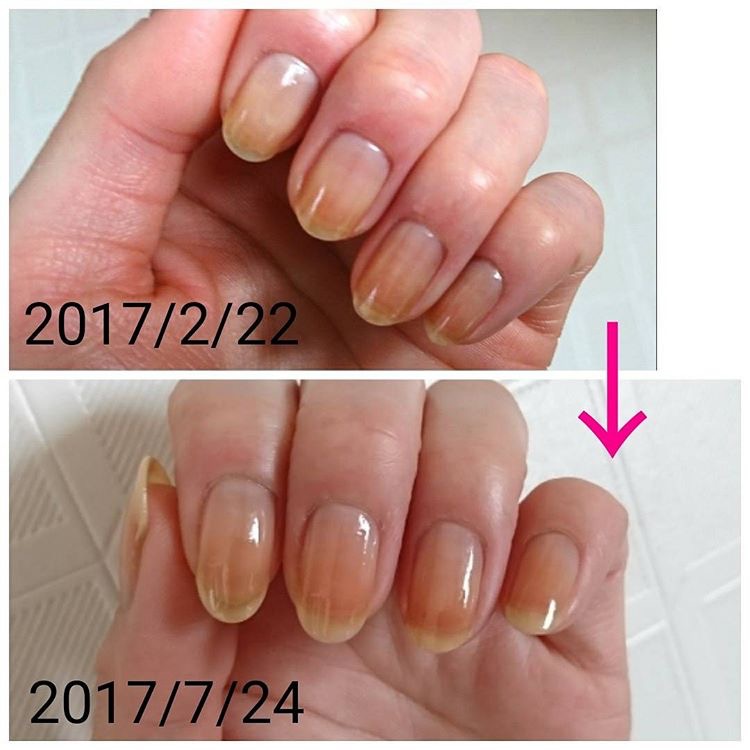
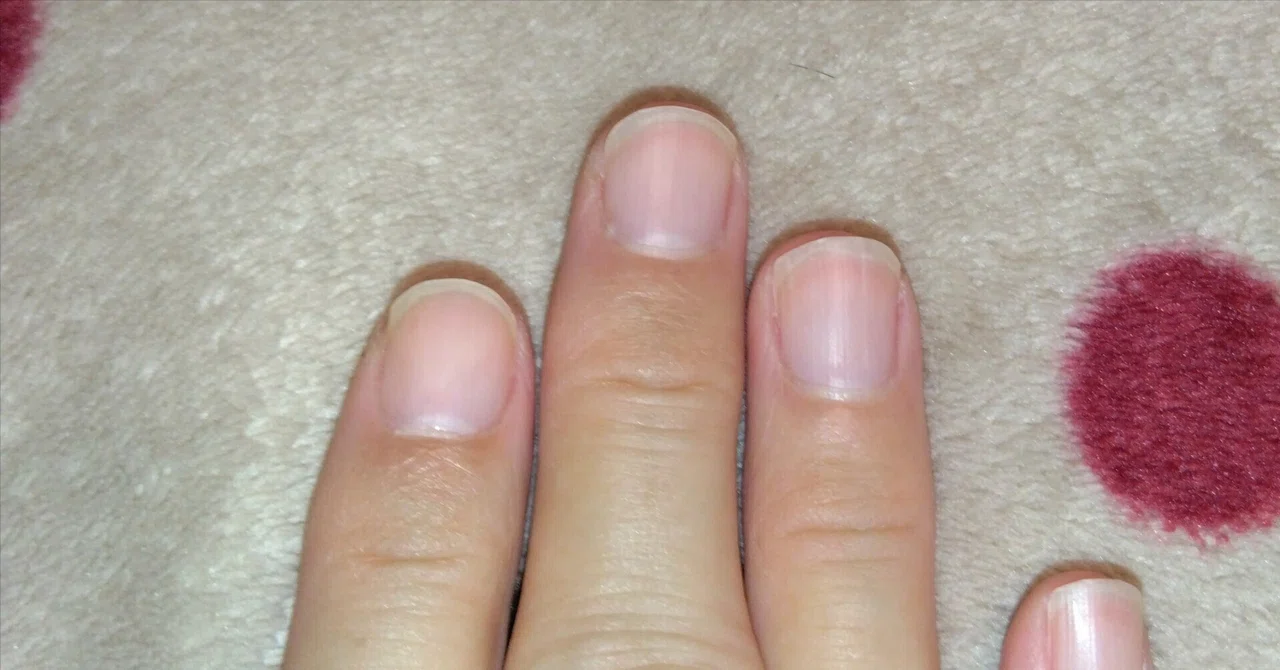
While speed reveals metabolic efficiency, texture reveals biological stress. Countless patients inspect their hands and panic upon seeing vertical striations running from the cuticle edge straight to the free tip. In the vast majority of cases, vertical nail ridges, clinically classified as onychorrhexis, are harmless. They represent the physiological equivalent of facial lines, developing as matrix columns age and deposit keratin at slightly uneven densities.
Transverse markings tell a different story. If horizontal grooves appear across multiple fingers simultaneously, doctors examine medical histories for acute shock. Known as Beau's lines, these horizontal troughs occur when an intense physiological event temporarily suspends matrix cell division. High systemic fevers, sudden surgical trauma, severe metabolic disruptions, or intense chemotherapy cycles put keratin production on hold. Because nails take about six months to regenerate from root to tip, a physician can calculate the approximate week an illness occurred by measuring the distance between the ridge and the proximal nail fold.
Surface pitting, by comparison, manifests as tiny, pinpoint depressions scattered across the plate. Rather than pointing to nutrition, pitting frequently accompanies dermatological conditions such as nail psoriasis, alopecia areata, or severe eczema, signaling an inflammatory assault on the dorsal matrix.

The Microvascular Pipeline: Why Dominant Hands and Specific Fingers Grow Faster
Nails do not grow at a uniform speed across all ten digits. The middle finger typically clocks the fastest pace, closely trailed by the index and ring fingers, with the thumb and pinky lagging behind. Toenails advance at less than half the pace of fingernails, averaging just 1.6 millimeters each month.
Longest Digits (Higher Microtrauma & Flow) ────► Accelerated Growth (3.6, 4.0 mm/mo)
Middle / Index Fingers
Shorter Digits & Lower Mobility ─────────────► Moderate Growth (3.0, 3.4 mm/mo)
Thumb / Little Finger
Toes (Lower Peripheral Temperature) ─────────► Slow Growth (1.2, 1.8 mm/mo)
Great Toe to Pinky Toe
Dominant hands consistently outpace non-dominant hands by an average of 5% to 10%. The biomechanics are straightforward. Your dominant hand experiences greater movement, repetitive muscular contraction, and physical contact throughout the working day. These actions drive arterial blood into distal phalanges. Micro-pumps in the digital arteries sustain localized warmth and oxygen saturation, accelerating matrix division. Where blood flows easily, keratin accumulates swiftly.
The Cuticle Seal and Matrix Defense System
The cuticle, scientifically named the eponychium, is often treated as cosmetic surplus during manicures. In reality, it acts as a primary immunological firewall. This thin band of non-living tissue creates a waterproof, antibacterial barrier between the external environment and the fragile matrix beneath.
When individuals cut, tear, or roughly strip the cuticle back, they breach that sterile seal. Ambient pathogens, including Staphylococcus bacteria and Candida yeasts, infiltrate the proximal nail fold, causing chronic paronychia. The ensuing inflammation disrupts normal matrix mitosis, producing deformed, discolored, or chronically wavy nail plates.
Healthy cuticles remain flat, pliable, and hydrated. If the skin around your nail borders begins to peel, crack, or thicken into coarse calluses, the tissue is signaling environmental dehydration or harsh surfactant exposure. Stripping the lipid barrier with alcohol-based sanitizers or harsh acetone solvents compromises the root system that builds your keratin architecture.
Nutritional Scaffolding: Fueling the Keratin Matrix
You cannot build sturdy nails out of thin air. Dietary factors dictate the structural integrity of every millimeter your matrix produces. While thousands of cosmetic supplements promise salon-grade nails overnight, the actual biochemistry comes down to fundamental dietary building blocks.
- Amino Acids and Dietary Protein: Keratin is fundamentally a protein rich in cysteine, a sulfur-containing amino acid that creates disulfide bridges within the nail plate, giving it rigid structural strength. Inadequate protein intake immediately degrades nail plate density.
- Ferritin stores fuel oxygenation to the matrix. Iron deficiency, with or without full anemia, leads directly to brittle plates, vertical splitting, and in severe situations, koilonychia (spoon-shaped concave nails).
- B-Complex Vitamins and Biotin: Biotin (Vitamin B7) assists lipid synthesis and supports cellular division within the germinal matrix. Controlled trials show biotin supplementation improves thickness in individuals with documented brittleness, though it does not accelerate growth in healthy subjects.
- Zinc and Essential Minerals: Zinc deficiency directly arrests protein synthesis, often presenting visibly as transverse white flecks across the plate (leukonychia punctata).
Frequently Asked Questions (FAQ)
Q1: Does clipping or filing nails more frequently make them grow faster?
A1: No. Unlike plant stems or facial hair myths, trimming the free edge has no biological connection to the living matrix underneath the skin. Filing removes dead keratin cells; it does not stimulate the germinal root to speed up production.
Q2: Why do fingernails grow faster than toenails?
A2: Distance from the heart and ambient temperature are the decisive factors. Fingers receive superior arterial microcirculation and regular tactile stimulation. Feet stay further from the central circulatory pump, experience lower baseline temperatures, and sit confined within footwear, cutting peripheral velocity by roughly 60%.
Q3: Should I worry if only one fingernail has a dark vertical stripe?
A3: Yes, this requires immediate professional evaluation. While multiple faint ridges are benign signs of aging, a solitary pigmented vertical band (longitudinal melanonychia) can indicate subungual melanoma, a serious form of skin cancer that demands prompt examination by a certified dermatologist.
Interpreting Your Hands for Everyday Wellness
Your fingernails serve as a biological readout of internal health, turning metabolic fluctuations, nutritional states, and cellular stress into visible physical architecture. Fast growth usually reflects vigorous peripheral circulation, robust cellular turnover, and active metabolism.
Paying close attention to sudden texture shifts, persistent discoloration, or severe horizontal ridges offers genuine preventative health value. Safeguard your cuticles, maintain balanced protein and micronutrient levels, and view your hands not simply as cosmetic features, but as responsive daily monitors of your internal physiological balance.