From 1996 Golden Era Juniors to 2026 Icons: The Unbreakable Bond of Toma Ikuta and Tomohisa Yamashita
On July 3, 2026, actor Toma Ikuta published a stark monochrome photograph to his official Instagram account that instantly commandeered Japanese social media feeds. The image showed Ikuta seated beside lifelong friend and collaborator Tomohisa Yamashita, casually slinging an arm over Yamashita’s shoulder as both men stared directly into the lens. Ikuta accompanied the portrait with a single-word caption: "確保" (Kakuho), a playful Japanese term meaning "secured" or "apprehended." Within hours, entertainment desks scrambled to cover the post, while the portmanteau "Yamatoma" spiked across global trending charts, as highlighted by a モデルプレス Report detailing the overwhelming public response.
For longtime followers of Japanese entertainment, the candid portrait was far more than an ordinary celebrity selfie. It represented a living link to one of the most transformative eras in modern J-pop and television history. Both men, now 41, entered the entertainment industry together in 1996 as pre-teens. Over three decades of massive structural shifts, agency upheavals, and individual career transformations, their camaraderie has endured without public friction, turning a casual backstage snapshot into an emotional cultural landmark.
📌 Key Takeaways:
- The Viral Moment: Toma Ikuta's July 3, 2026 Instagram post featuring Tomohisa Yamashita under the caption "確保" generated millions of impressions across Instagram and X within hours.
- Historical Roots: Both performers auditioned and joined the Japanese talent industry in 1996, forming the cornerstone of the celebrated late-1990s "Johnny's Jr. Golden Era."
- Independent Paths: Despite taking radically divergent career routes, Yamashita through chart-topping idol groups and global streaming series, Ikuta through specialized theater and elite cinema, their bond remains a rare constant in an industry defined by volatility.
The Single-Word Instagram Post That Broke Japanese Social Feeds
The visual composition of the photo was deliberate in its simplicity. Stripped of high-glam production, color correction, or commercial tags, the black-and-white frame highlighted the quiet maturity of two men who have spent three-quarters of their lives under studio lights. Ikuta's deadpan, proprietary posture, clasping Yamashita's shoulder as if staging a lighthearted citizen's arrest, leaned directly into an inside joke decades in the making. Fans recognized the body language immediately. It was the same unvarnished familiarity that characterized their joint television appearances during the late 1990s.
Social platforms across East Asia reacted with visceral enthusiasm. Thousands of comments underneath Ikuta's feed echoed variations of the phrase "Watashi no seishun" ("My youth"), underscoring how deeply interwoven the duo's early days are with the coming-of-age memories of an entire generation. Mainstream Japanese news outlets, including Oricon News and Mainichi Shimbun, noted that the upload triggered spontaneous retrospectives across morning television broadcasts. The spontaneous gathering proved that star power in Tokyo does not always require high-budget promotion; sometimes, raw relational history carries the heaviest currency.
From the 1996 Trainee Cohort to Four Tops: Roots of the 'Yamatoma' Alliance
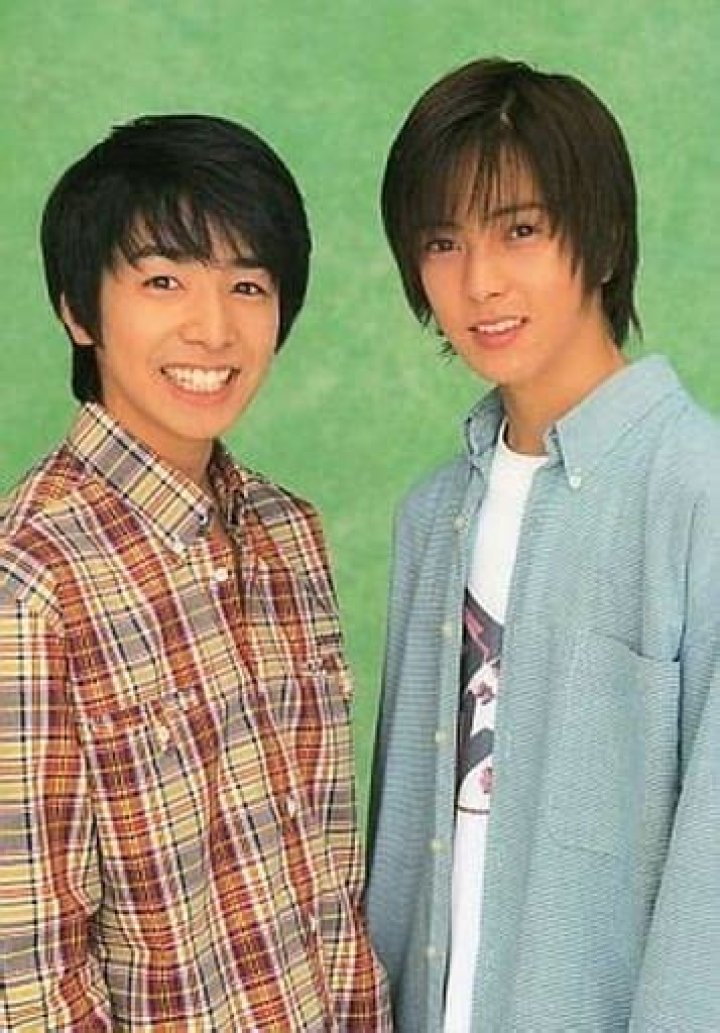
To grasp the emotional weight of the image, one must look back to 1996. That year, an influx of young boys joined Johnny & Associates, forming what historians of Japanese pop culture still refer to as the "Golden Era" of trainees. Among them were eleven-year-old Toma Ikuta and eleven-year-old Tomohisa Yamashita. During weekly television broadcasts such as 8-ji da J, trainees competed for screen time through dance routines, comedic skits, and physical challenges. Ikuta and Yamashita gravitated toward each other early, developing an effortless chemistry that earned them the joint fan moniker "Yamatoma."
By 2002, the agency formalized their commercial momentum by grouping Ikuta and Yamashita alongside Shunsuke Kazama and Jun Hasegawa to create "Four Tops." Unlike typical trainee units, Four Tops carried immense prestige. They served as primary hosts and main eventers for junior showcases. Industry observers expected the quartet to debut formally as an official CD-releasing unit. Instead, executive decisions fractured that trajectory in autumn 2003. Yamashita was selected as the centerpiece and leader of a newly manufactured nine-member group, NEWS, leaving Four Tops dissolved and Ikuta without an immediate musical home.
Such an abrupt divergence would have severed relationships in typical competitive agency environments. Ikuta later acknowledged in television retrospectives that seeing Yamashita debut without him was agonizing, forcing him to confront whether he had an ongoing future in show business. Yamashita, burdened with the sudden expectations of carrying a nationwide pop group, faced relentless pressure of his own. Yet rather than turning into bitter rivals, the two preserved their personal bond behind closed doors while Ikuta made the radical choice to abandon pop music entirely and build an acting career from scratch.
A Thirty-Year Parallel Journey: From Idols to Definitive Screen Actors
Over the subsequent two decades, both performers redefined the modern Japanese leading man. Yamashita established himself as a dominant television phenomenon, driving cultural juggernauts like Nobuta wo Produce (2005), Kurosagi (2006), and the generation-defining medical franchise Code Blue (2008, 2018). Simultaneously, Ikuta charted an unprecedented path inside his agency: he became the first talent to establish a permanent, top-tier career exclusively as an actor without ever releasing a debut single. His breakout turn in 2007's Hanazakari no Kimitachi e (Hana-Kimi) showcased comedic precision, while subsequent roles in cinematic adaptations like No Longer Human (2010) and Brain Man (2013) proved his dramatic range.
| Timeframe | Toma Ikuta Milestone | Tomohisa Yamashita Milestone |
|---|---|---|
| 1996, 2001 | Auditions for talent agency; debuts on variety shows like 8-ji da J. | Joins agency; quickly emerges as the most popular trainee of the Golden Era. |
| 2002, 2003 | Co-leads trainee unit Four Tops; navigates unit dissolution after agency pivot. | Anchors Four Tops; selected as central leader for national CD debut group NEWS. |
| 2005, 2011 | Breakout in Hana-Kimi; commits full-time to dramatic theater and major feature films. | Stars in record-breaking TV dramas (Nobuta, Code Blue); launches solo music career. |
| 2020, 2023 | Earns critical acting accolades; departs agency in late 2023 to establish independent practice. | Departs agency in late 2020; secures international streaming roles (The Head, Drops of God). |
| 2024, 2026 | Solidifies autonomous creative agency; stars in flagship television and theatrical plays. | Expands multinational film credits; commands massive arena tours as an independent artist. |
Navigating Agency Upheaval and Artistic Autonomy
The shared longevity of Ikuta and Yamashita is particularly compelling because of how both navigated the collapse of Japan’s legacy agency system. For decades, male idols operated inside an insular corporate framework that tightly restricted overseas distribution, personal social media engagement, and public friendships across agency borders. When Yamashita departed the agency in October 2020 to seek independent international roles, skepticism ran high in Tokyo business circles. Industry insiders wondered whether a performer raised in strict domestic studio systems could navigate Hollywood productions and multinational streaming platforms.
Yamashita answered those doubts swiftly. Fluent in English, he secured prominent roles in HBO Asia’s The Head, Netflix’s Alice in Borderland Season 2, and Apple TV+’s critically acclaimed multilingual adaptation of Drops of God. He demonstrated that Japanese talent could transition out of legacy talent stables without sacrificing cultural relevance. Three years later, in late 2023, Ikuta followed a parallel impulse toward creative autonomy, officially departing the reconstructed agency to manage his own career independent of corporate safety nets.
When the two stood shoulder to shoulder in 2026, they did so not as junior idols bound by company contracts, but as self-directed industry veterans who built sustainable artistic infrastructure on their own terms. Their casual ease in the photograph reflects an unspoken reality: both took immense professional risks to secure their creative independence, and both succeeded.
Why J-Entertainment Nostalgia Runs Deeper Than Casual Fandom
Public fixation on the "Yamatoma" reunion highlights an emotional mechanism unique to Japanese entertainment fandom: the ritual of collective aging. In Western markets, child actors often retreat from view or re-emerge under contentious circumstances. In Japan's Golden Era trainee system, audiences witnessed Ikuta and Yamashita grow up in real time on weekly television, tracking every growth spurt, vocal change, and awkward adolescent interview.
For individuals who watched them on portable cathode-ray tube televisions in 1998, seeing both men comfortable, thriving, and visibly fond of each other in 2026 validates their own personal memories. The image bridges the gulf between the pre-digital era of VHS tapes and mail-order fan magazines and the hyper-connected, streaming-first realities of modern Tokyo. It reassures an aging demographic that some connections survive corporate disruption, industry scandals, and decades of relentless creative labor.
Frequently Asked Questions (FAQ)
Q1: What does the caption "確保" (Kakuho) mean in Toma Ikuta's post?
A1: "確保" translates directly to "secured," "captured," or "apprehended." Ikuta used the word humorously to suggest that he had tracked down and caught Yamashita, poking fun at their busy schedules while staging a playful arrest for the camera.
Q2: Did Toma Ikuta and Tomohisa Yamashita ever release music together?
A2: They performed together extensively as Johnny's Jr. trainees and as members of the four-man unit Four Tops between 2002 and 2003, but they never released an official commercial CD single together before Yamashita was assigned to NEWS.
Q3: Are Ikuta and Yamashita planning a formal acting project together in 2026?
A3: As of mid-2026, neither actor has officially confirmed a joint drama or film production. However, both operate as independent professionals, removing the historic corporate barriers that previously prevented them from collaborating on screen.
The Enduring Architecture of a Thirty-Year Bond
In an entertainment landscape increasingly engineered around ephemeral algorithmic virality, the weight behind Toma Ikuta and Tomohisa Yamashita’s reunion stems from something code cannot manufacture: thirty years of shared history. They began as children running through studio hallways in oversized tracksuits, survived the emotional fallout of group reorganizations, and ultimately outgrew the corporate apparatus that created them.
The monochrome frame captured in July 2026 was not a calculated corporate rollout or a sponsored promotional stunt. It was an unadorned acknowledgment between two peers who weathered the harsh currents of high-stakes celebrity and remained standing. For their audience, the message behind "確保" was unmistakable: through three decades of personal growth and professional reinvention, the bond forged in 1996 remains entirely intact.