From Running Water Soba to Thaw-Safe Rice: How Quick-Freezing Tech Is Evolving
Every summer across Japan, millions of midday lunchboxes face an identical, silent hazard. Office workers pack solid blocks of frozen noodles directly into insulated tote bags, hoping the ambient morning heat leaves them chilled and ready to eat by noon. Yet, peeling back the lid often reveals a soggy, brittle clump swimming in free-standing moisture rather than an al dente meal. According to a milestone Excite エキサイト Report examining new commercial freeze-preservation standards, food developers are racing to solve the cellular collapse that occurs when starches defrost without heat, completely altering how consumers handle cold buckwheat rations.
The gap between consumer habit and food microbiology has widened. While people assume boiled noodles behave like store-bought frozen dumplings, leaving a block of cooked soba on a kitchen counter triggers rapid molecular decay and microbial exposure. Industrial food processors have spent years refining quick-freezing food technology to counteract this decay, introducing targeted packaging formats designed to bypass room-temperature exposure entirely.
📌 Key Takeaways:
- The Molecular Trap: Leaving boiled buckwheat noodles to defrost at ambient room temperature triggers severe starch retrogradation, expelling moisture and turning noodle strands crumbly.
- Microbial Exposure: Using standard frozen noodles as an edible bento ice pack holds food inside the 20°C, 50°C danger zone, encouraging swift bacterial proliferation.
- Engineering Workarounds: Liquid-nitrogen blast freezing and dedicated running water defrosting protocols have emerged as the only verified methods to preserve noodle chewiness without cooking them twice.
Why Ambient Air Destroys Buckwheat Noodle Texture
Buckwheat flour contains minimal gluten. Wheat noodles rely on strong gluten networks to trap moisture, but Japanese cold soba noodles depend largely on gelatinized starches and delicate protein bonds to maintain their bite. When fresh soba is boiled, these starches swell and absorb water, creating an elastic matrix that culinary traditionalists call koshi.
Natural room temperature thawing ruins that balance. As temperatures hover between 15°C and 25°C, noodle starch retrogradation accelerates. The gelatinized amylose molecules recrystallize and pack tightly together, actively pushing trapped water out of the noodle strand. This syneresis pools water at the base of the container while the noodles turn dry, chalky, and structurally fragile. What was cooked as a smooth strand splits along its length when lifted by chopsticks.
Flash frozen noodle texture can survive the freeze cycle, but it cannot survive an uncontrolled warm-up. Commercial cryogenic tunnels freeze cooked noodles past -30°C in minutes, locking water molecules into micro-crystals that spare cell walls. If a consumer simply lets that block sit on a counter for two hours, the microscopic ice crystals melt slowly, merge into large pools, and degrade the buckwheat preservation framework from the inside out.
The Food Safety Danger Zone and Bento Ice Pack Misconceptions
The urge to treat frozen meals as passive cooling packs is widespread, yet hazardous. In an investigative deep-dive published by ORICON NEWS in July 2025, food safety inspectors cautioned against treating standard frozen groceries as substitutes for blue gel coolant packs. Frozen foods lack the sealed, steady phase-change stability of industrial gel, creating temperature pockets that encourage microbial expansion.
Most commercial frozen entrees require thorough heating before consumption to neutralize surface pathogens. A distinct category labeled "natural thaw compliant" (shizen-kaito) undergoes strict sterile packaging protocols under Ministry of Health, Labour and Welfare guidelines, clearing rigorous baseline bacterial thresholds. Regular boiled noodles do not fall into this category.
Leaving a block of boiled noodles inside a briefcase or school locker keeps the core temperature in the bacterial food poisoning danger zone (between 20°C and 50°C) for several uninterrupted hours. Common kitchen contaminants, including Staphylococcus aureus and Bacillus cereus, multiply readily in damp, carbohydrate-rich starch environments. An eater might unwrap what looks like a chilled, refreshing lunch, unaware that the interior moisture harbors bacterial loads capable of triggering acute gastrointestinal distress.
Defrosting Methods Compared: Texture, Safety, and Execution
Handling frozen starch demands precision. The table below outlines how common defrosting techniques affect buckwheat noodles, summarizing practical metrics for home prep and packed lunches.
| Method | Time Required | Texture Retention | Food Poisoning Risk |
|---|---|---|---|
| Natural Room Thaw | 90, 150 minutes | Severe degradation; chalky and snapping | High (lingers in danger zone) |
| Running Cold Tap Water | 3, 5 minutes | Crisp, firm surface; preserves core bite | Negligible (under 15°C continuous flow) |
| Microwave Burst (500W) | 1, 2 minutes | Uneven; edges dry out while center stays icy | Low if eaten immediately |
| Boiling Water Refresh | 30, 60 seconds | Restores gelatinization; requires ice shock | Extremely low (thermal sterilization) |

How Food Processors Engineered the Running Water Breakthrough
Recognizing that consumers wanted cold noodles without firing up boiling cauldrons in summer, Japanese manufacturers took an engineering detour. Rather than pushing for ambient thaw profiles, which battle physics and biochemistry at every turn, they optimized packaging around running water defrosting methods.
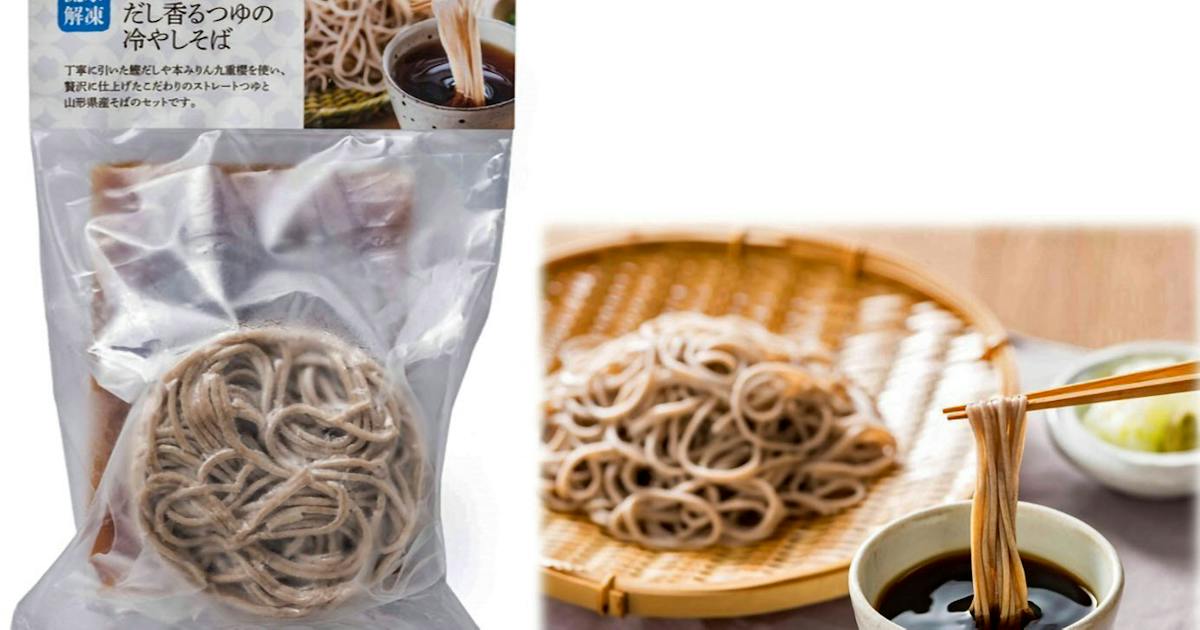
In August 2026, Nikkei reported on a standout release by Aichi-based brewer Kokonoe Mirin: an all-in-one chilled soba pack engineered specifically to thaw entirely under a running kitchen faucet. The kit packages flash-frozen soba alongside concentrated dashi broth in water-permeable polymer channels. Consumers hold the pack under tap water for roughly 3 to 4 minutes. The constant flow transfers thermal energy far faster than air can, warming the frozen block to 8°C while simultaneously washing away residual surface amylose.
This approach bypasses room temperature thawing risk altogether. Running tap water keeps the food safely below the threshold for rapid pathogen growth. It also prevents the water loss linked to slow thaws, ensuring the buckwheat retains the springy consistency expected of restaurant-grade noodles.
Advanced Freezing Tech Expands to Bento Staples
The push to eliminate kitchen prep has triggered parallel breakthroughs across other carbohydrate staples. For years, white rice presented the exact same headache as buckwheat: freezing it cooked and letting it thaw at room temperature produced chalky, unpalatable grains because rice amylopectin recrystallizes rapidly at room temperature.
Specialty cold-chain developers solved this puzzle by pairing customized liquid-immersion freezers with moisture-balanced formulas. As covered in the Excite report, freezer manufacturer DayBreak partnered with contract lunch provider Tamagoya to roll out ambient-thaw frozen onigiri (rice balls). By adjusting the moisture content before flash freezing at -40°C, the team prevented retrogradation entirely. Workers simply place the frozen rice ball in their bag at 7:00 AM; by noon, it thaws into tender rice without a microwave.
A similar breakthrough occurred in early 2025 when food-tech firm AIVICK launched its additive-free "Fish Power" frozen bite-sized rice balls through its specialized subscription platform. By dialing in specific starch gelation profiles, these portions thaw naturally without chemical retrogradation retardants. While onigiri chemistry has cracked the ambient-thaw puzzle, soba noodles remain distinct. Their higher surface area and low gluten make them far more prone to rapid drying, keeping running water and short boil shocks the primary prep choices.
Home Freezing: Preserving Leftover Noodles Correctly
Attempting to freeze homemade leftover boiled noodles requires strict controls. A common culinary mistake involves dumping drained noodles into plastic tubs while still warm. Trapped steam condenses on the container ceiling, drizzles back onto the pasta, and forms large ice crystals that shred the noodle walls within twenty-four hours.
As home economics specialists highlighted in an August 2026 MSN culinary guide detailing summer noodle preservation, home cooks must follow three core rules to protect boiled starch:
First, shock the boiled noodles in ice water to lock surface firmness and strip excess loose starch. Second, drain them completely, spinning them in a colander until no visible droplets cling to the surface. Third, bundle individual servings into flat, thin nests wrapped snugly in airtight plastic wrap before sealing them in a heavy freezer bag. Flattening the profile accelerates freezing speed in domestic units, mitigating cellular damage.
When cooking time arrives, bypass the kitchen counter. Never let the wrapped bundle sit on the counter to defrost. Drop the frozen portion straight into boiling water for 30 to 45 seconds to re-hydrate the starches instantly, then shock it in cold water once more. Alternatively, run the frozen block under cold running tap water for three minutes. Both techniques keep the starch intact and the food safe.
Frequently Asked Questions (FAQ)
Q1: Can I safely pack standard frozen soba straight into my morning lunchbox?
A1: No. Standard frozen noodles are not engineered for ambient thawing. Leaving them to melt over three to four hours invites bacterial growth between 20°C and 50°C while turning the buckwheat mushy and brittle through starch retrogradation.
Q2: What is the fastest safe way to thaw frozen soba without cooking equipment?
A2: The running water method is the safest fast approach. Place the frozen noodle pack or unwrapped block in a colander under cold running tap water for three to five minutes. The water transfers heat quickly while keeping the noodles too cold for bacterial growth.
Q3: Why do some frozen items say "Natural Thawing OK" while noodles generally do not?
A3: Foods labeled for natural thawing pass rigorous sanitation standards that keep initial bacterial counts exceptionally low, and they typically contain adjusted fat or starch matrices that prevent drying out. Standard boiled noodles carry moisture levels that degrade rapidly without high-heat flash reconstitution.
Practical Takeaways for Smarter Defrosting
Treating cold soba as a shelf-stable, self-thawing convenience food goes against starch chemistry. Ambient air acts as an enemy to boiled buckwheat, extracting essential moisture, degrading structural proteins, and creating environments where foodborne bacteria thrive. Quick-freezing food technology continues to make strides across the lunchbox industry, as seen in next-generation flash-frozen onigiri, yet noodles demand their own handling rules.
Keep your kitchen routine simple. Rely on a short stream of running tap water or a 45-second plunge into boiling water to refresh your noodles. Taking those extra three minutes protects the distinctive bite of cold buckwheat and keeps your midday meal completely safe.