From Rural Farmsteads to Viral Bentos: The Sweet Potato Lemon Craze
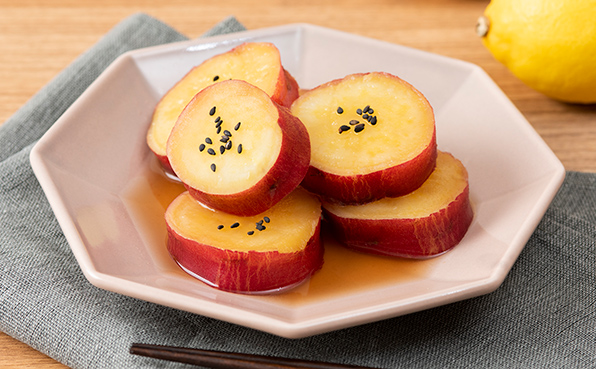
For decades, the standard narrative around Japanese sweet potatoes, known domestically as satsumaimo, belonged entirely to the smoky, caramel-heavy warmth of winter street food. Peddlers pushed roasting carts through residential alleys, and convenience stores retrofitted warming stones to roast sugary cultivars like Beni Haruka to a syrupy collapse. Yet over the past eighteen months, home cooks across Japan have engineered a noticeable pivot away from cloying, one-note sweetness. Digital community boards, Instagram meal-prep accounts, and major lifestyle platforms have turned an unassuming regional preparation, satsumaimo no lemon-ni (sweet potato simmered with lemon), into an everyday kitchen standard.
(Source: MSN: "お砂糖なしで簡単「さつまいものみりんレモン煮」のつくり方 ...")
The surge blends rural resourcefulness with modern dietary priorities. As culinary authority and fermentation specialist Misa Enomoto demonstrated in a detailed MSN Report, the dish sidesteps heavy refined sugars in favor of gentle mirin reduction and fresh lemon juice. The resulting profile is light, tangy, and deeply savory. What began generations ago as a clever way for Tohoku farmers to preserve garden tubers has found new life among urban workers seeking vibrant, shelf-stable lunchbox side dishes.
📌 Key Takeaways:
- The Farmhouse Origin: Traditional agrarian recipes from regions like Fukushima challenged the dominance of syrupy roasted sweet potatoes by cutting dense starch with raw citrus.
- The Culinary Mechanism: Citric acid tightens the potato's internal pectin network and prevents oxidation, yielding a firm bite and a clean, vivid yellow presentation.
- The Bento Phenomenon: Home cooks rely on the dish as an essential make-ahead side dish (*tsukurioki*) that holds moisture and brightens lunchboxes without refrigeration.
Fukushima Farmhouses and the Antidote to Sugar Overload
The modern resurgence began with a quiet correction. Commercial breeding programs over the past two decades yielded intensely sweet cultivars such as Anno Imo and Silk Sweet. These potatoes were designed to turn soft and candy-like under dry heat. While popular for casual snacking, their overwhelming sugar content made them difficult to integrate into balanced, multi-dish Japanese meals.
In late 2024, food documentarians and home cooks began rediscovering older methods preserved in rural prefectures. Farmers in Fukushima had long treated sweet potatoes not as confectioneries, but as staple root vegetables suited for simmering. Their custom involved cooking thick rounds of red-skinned tuber alongside freshly sliced lemons. The pairing seemed counterintuitive to cooks accustomed to dousing root vegetables in dark soy sauce and white sugar. Yet the acidity cut straight through the dense starch, keeping the palate clean. The dish felt refreshing rather than heavy.
That farmhouse practicality spread quickly to metropolitan kitchens. Working parents faced with packing balanced bento boxes (okazu) found that lemon-simmered rounds solved a persistent culinary problem: cooked tubers typically dull in color and turn soggy by midday. Citrus changed that entirely.
The Biochemistry of Acid, Pectin, and Color Stability
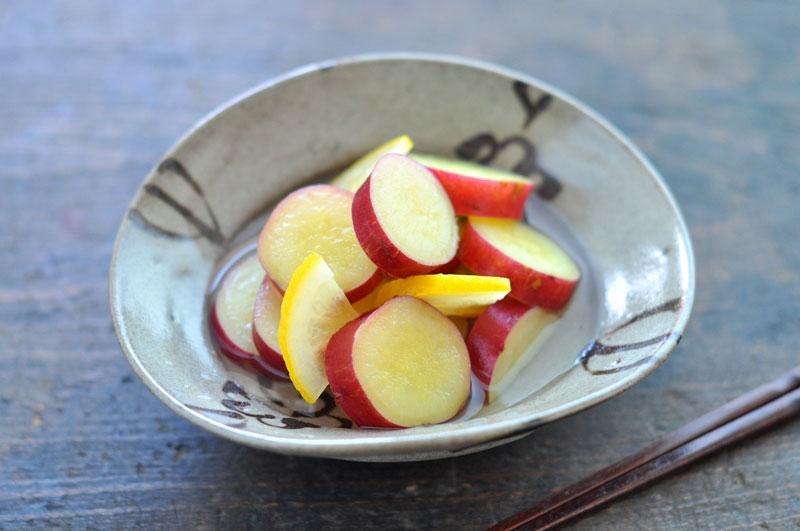
The culinary success of simmering satsumaimo with lemon rests on simple food chemistry. Japanese sweet potatoes contain chlorogenic acid, an organic compound that oxidizes when exposed to air and alkaline water, turning cut edges an unappealing gray-green. Slicing the potato into clean 1-centimeter rounds and soaking them immediately in cold water strips away surface starch. Adding fresh lemon slices directly to the simmering liquid drops the pot's pH.
This acidic environment achieves two concrete outcomes:
- It neutralizes polyphenol oxidase, locking in a luminous, golden-yellow flesh that contrasts against the purple skin.
- Citric acid strengthens the intercellular pectin. Instead of disintegrating into mush during a rolling simmer, a common failure in classic nimono cooking, the rounds hold their structural integrity while the interior softens into a velvety crumb.
The acid creates a natural buffer against starch heaviness. Rather than coating the tongue in dense sugar, each bite finishes with a clean citrus note.
Three Cooking Approaches: Speed, Texture, and Heat
As the preparation migrated across digital communities, Japanese cooks branched out from standard earthenware simmering pots to faster countertop techniques. While traditionalists stick to low-and-slow stovetop reductions, time-pressed urban cooks rely heavily on microwave steaming.
| Method | Active Cook Time | Flavor Profile | Best Kitchen Application |
|---|---|---|---|
| Classic Stovetop Simmer | 20, 25 minutes | Mellow, deeply infused, soft exterior | Sunday batch cooking and multi-day meal prep |
| Microwave Steaming | 6, 8 minutes | Sharp citrus punch, firmer core | Quick morning bento assembly |
| Skillet Butter-Lemon Glaze | 10, 12 minutes | Rich, savory-sweet, lightly caramelized | Evening side dish or drinking snack (*otsumami*) |
Community reception across Japanese recipe sharing hubs reveals clear preferences. On Cookpad, Japan's largest user-generated cooking site, hybrid preparations that combine lemon with a touch of butter entered the platform's prestigious "Hall of Fame" category, earning over 1,400 user cooking reports (tsukurepo). While purists favor the subtle water-and-mirin simmer, younger home cooks frequently add butter to mimic Western glazed carrots while preserving Japanese seasoning lines.
The Sugar-Free Movement and Mirin Fermentation
Alongside convenience, nutritional reassessment has driven this dish back onto family menus. Standard simmered sweet potato recipes from post-war Japan called for generous scoops of refined white sugar. That extra sweetness suited an era of physical labor, but it clashes with modern, lower-glycemic preferences.
Culinary expert Misa Enomoto helped reshape the recipe for contemporary diets by removing refined sugar entirely. Her framework relies instead on hon-mirin, authentic fermented rice cooking wine, simmered gently alongside fresh lemon juice and water. As the mirin reduces, its natural glucose and maltose concentrate into a light glaze that coats the starch without creating a syrupy shell.
The nutritional payoff is practical. A serving made with mirin and lemon delivers steady carbohydrates alongside unstripped dietary fiber and heat-stable vitamin C, which sweet potato skin retains remarkably well during simmering. It satisfies afternoon cravings without producing the sharp insulin spike common to roasted commercial tubers.
Why Bento Creators Rely on Tsukurioki Citrus Sides
For home cooks managing the morning rush of bento preparation, stability is paramount. Food packed at 7:00 AM must remain safe, appetizing, and visually appealing at room temperature by noon.
Popular bento creator moco, whose family lunchbox tutorials draw regular coverage across Japanese lifestyle media, notes that lemon-simmered sweet potato functions as an ideal chromatic and architectural filler. Japanese lunchboxes traditionally strive for five distinct colors: white, black, red, green, and yellow. Cooked eggs often satisfy the yellow requirement, but they spoil quickly in warm weather. Lemon-simmered satsumaimo fills that void safely.
Because the dish is cooked through and preserved with mild acidity, it acts as a reliable tsukurioki item. Cooked on a Sunday night, the rounds can sit in an airtight glass container in the refrigerator for 4 to 5 days without deteriorating. The cold rest actually improves them; as the potato cools, starch molecules retrograde slightly, locking the citrus-infused cooking liquor into the center of each round.
Frequently Asked Questions (FAQ)
Q1: Can Western orange sweet potatoes be substituted for Japanese satsumaimo in this recipe?
A1: You can use them, but the texture will differ significantly. Western varieties contain higher moisture levels and far less starch, causing them to turn soft and collapse during a stovetop simmer. Japanese satsumaimo has a dense, chestnut-like texture that retains its shape when cooked with acidic liquids. If using orange sweet potatoes, reduce the simmer time by half or steam them briefly instead.
Q2: Should the sweet potato skin be peeled before cooking?
A2: Keep the skin on. The purple peel contains polyphenols and fiber that provide nutritional balance, but more importantly, it holds the potato slices together during simmering. For visual appeal, many cooks use a peeler to create decorative alternating stripes ("tiger stripes") along the exterior before slicing.
Q3: How do you prevent the lemon from making the dish turn bitter?
A3: Bitterness comes directly from the white pith underneath the lemon zest. Use thin lemon slices and remove any visible seeds before cooking. If you simmer the pot for longer than 15 minutes, consider pulling the lemon slices out halfway through, leaving only the citrus-infused syrup to coat the potatoes.
The Lasting Appeal of Farm-Style Balance in Modern Kitchens
The renewed interest in lemon-simmered sweet potato reflects a broader reassessment of Japanese domestic cooking. For several years, viral food culture prioritized spectacle: ultra-rich broths, mountain-high cheese pulls, and hyper-sweetened baked tubers designed for social media feeds. The return of satsumaimo no lemon-ni suggests an appetite for everyday equilibrium.
By bringing farmhouse resourcefulness to weekday meal prep, home cooks have reclaimed a humble root vegetable from the realm of junk food. The dish requires four ingredients, takes under twenty minutes, and rests quietly in a refrigerator container ready for the morning rush. In an era when convenience often means processed additives, this clean intersection of citrus acid and earthy starch proves that the most enduring kitchen trends are simply old farm wisdom brought back to the stove.