How Dollar Stores Shook the Sneaker Market with $1 to $5 Display Cases
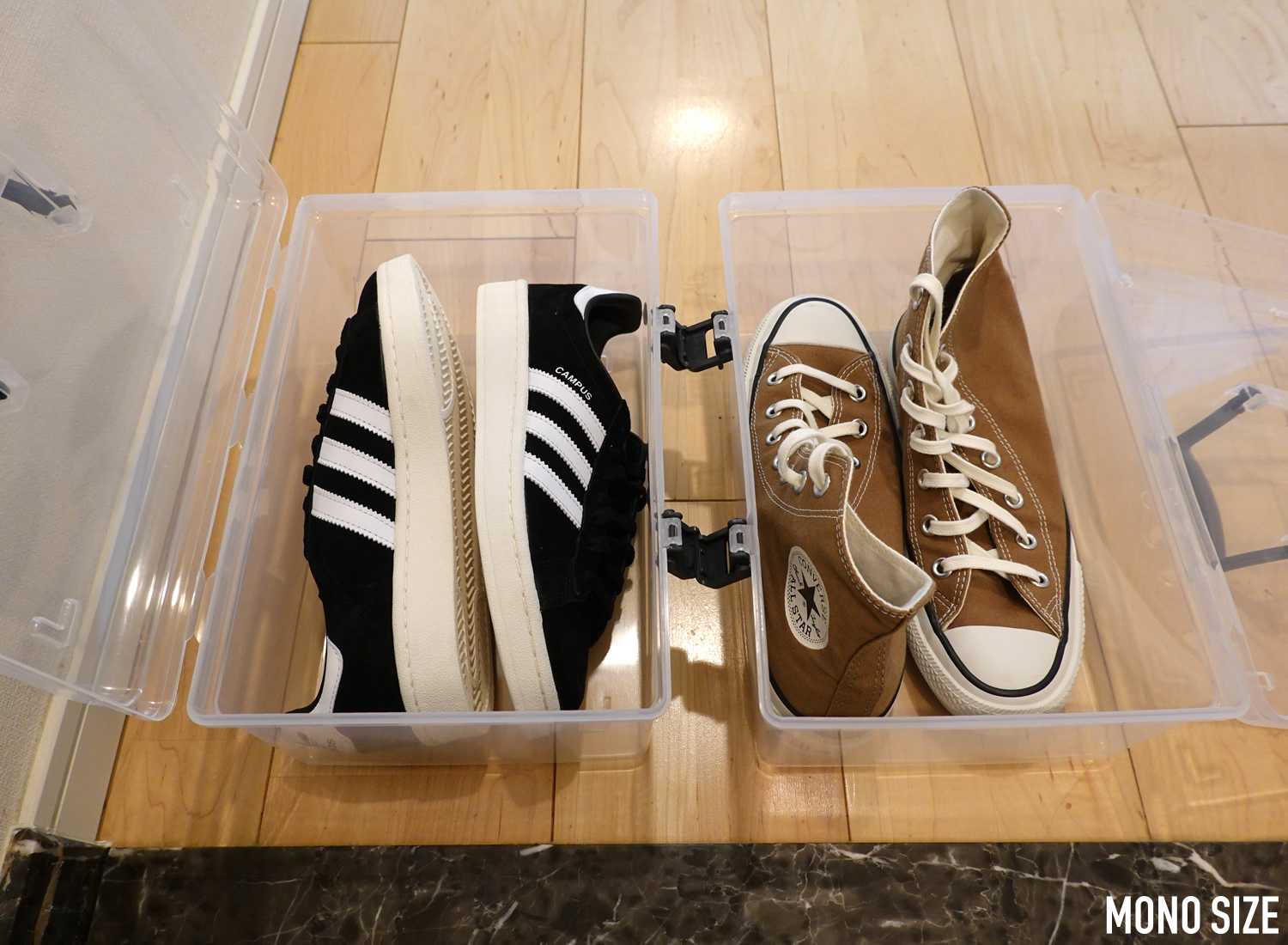
Walk into the apartment of a dedicated collector a decade ago, and you would see wall-to-wall transparent acrylic containers costing upwards of $30 apiece. Today, the backdrop looks strikingly similar, but the receipts tell a radically different story. Japan's 100-yen discount retailers, led by retail heavyweights Daiso, Seria, and Can Do, have systematically dismantled the boutique footwear organization market. What began as thin, foldable polypropylene dust covers sold for pennies has mutated into structured, front-loading modular display containers. As consumer spending tightened globally, collector communities realized they no longer needed to spend a fortune to keep their grails safe from grime, sun, and time.
The shift caught legacy lifestyle retailers flat-footed. In a retail breakdown on consumer storage solutions, a マイナビニュース Report detailed how dedicated sneaker boxes evolved into mandatory household equipment for urban collectors seeking to reclaim ceiling-height dead space without sacrificing ventilation. By engineering tiered price points, ranging from base 100-yen trays to 300-yen and 500-yen drop-front display cases, discount chains turned an elite subculture accessory into an impulse-buy commodity.
📌 Key Takeaways:
- The Budget Disruption: Japanese discount chains expanded into $2, $4 (300, 500 yen) heavy-duty clear shoe storage boxes, undercutting specialized boutique brands by nearly 80%.
- Functional Evolution: Modern 100-yen shop releases moved beyond flimsy dust sleeves, incorporating magnetic closures, rigid side-panels, and calculated airflow channels to prevent hydrolysis.
- Strategic Trade-offs: While budget options excel at dead space vertical storage, high-value collections still demand third-party silica packs and deliberate positioning away from direct sunlight due to baseline plastic limitations.
From Flimsy Plastic Sleeves to Drop-Front Display Cases
The early days of buying footwear storage at a 100-yen shop required heavy compromises. The original products were flat-packed, milky sheets of thin polypropylene that buyers folded along creased scorelines. They sagged under the weight of a single running shoe. Stacking them higher than two units risked crushing the toe box of whatever sat on the bottom shelf.
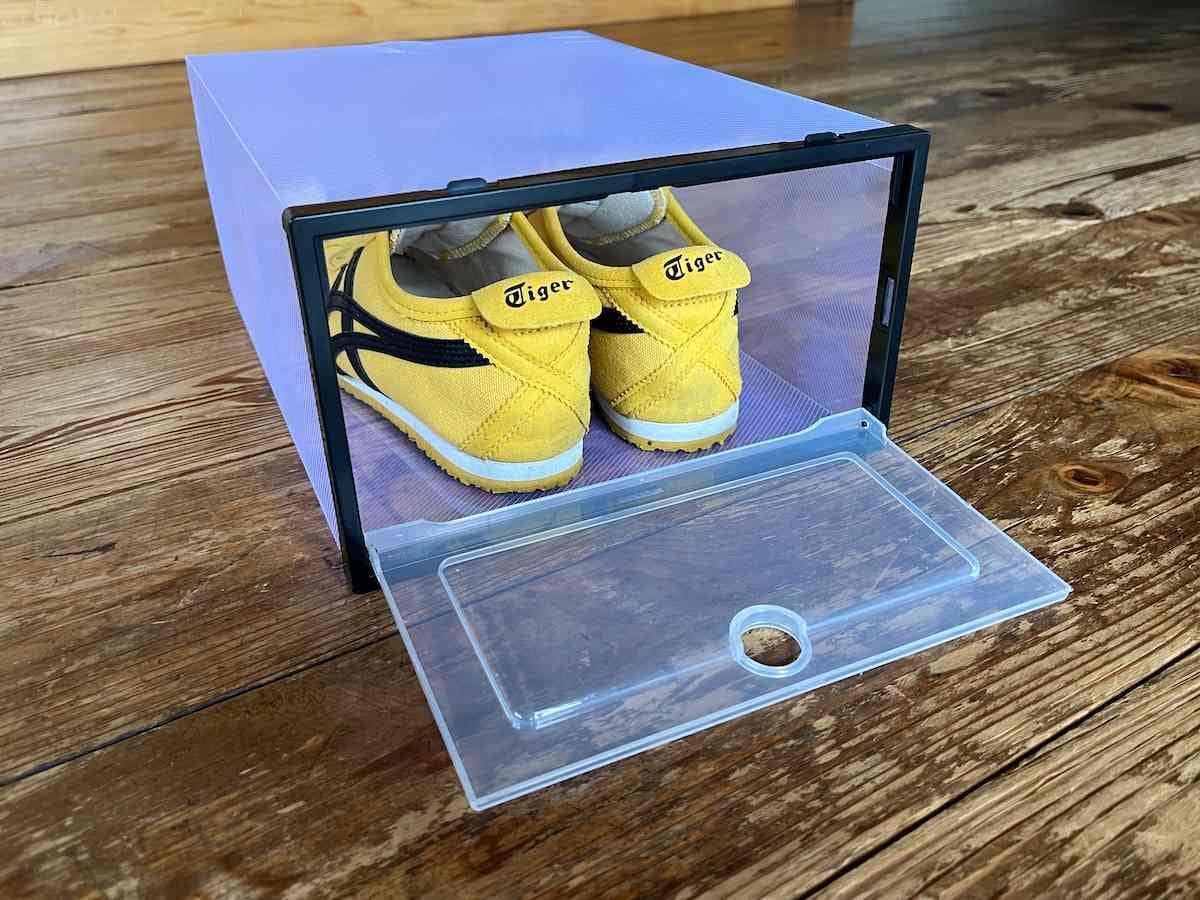
That dynamic broke open around 2022 when Daiso debuted its standard-line storage upgrades, followed quickly by tiered products priced at 300 yen ($2.00) and 500 yen ($3.30). Instead of top-opening lids that forced collectors to unstack an entire tower just to grab a pair of retro runners, discount manufacturers adopted front-loading doors with hard snap tabs or embedded mini-magnets.
Community forums on Reddit and Japanese lifestyle blogs lit up with modification guides. Enthusiasts began sharing Daiso shoe box hacks, demonstrating how to reinforce rear corners with acrylic struts or link modular units together with cheap binder clips. By mass-producing these containers with transparent front panels, discount retailers met the baseline visual standards of sneaker culture: full-profile visibility without opening the container.
The Chemistry of Soles: Hydrolysis, Dust, and Sunlight
Sneaker preservation is a battle against atmospheric degradation. Polyurethane midsoles, common in classic basketball silhouettes, degrade when moisture breaks chemical bonds in a process known as hydrolysis. Trapping shoes in completely airtight plastic without humidity regulation creates a greenhouse environment that accelerates sole crumbling.
Boutique crates from specialty brands often advertise airtight seals, but experienced collectors know that stagnant air can ruin footwear just as quickly as open dirt. The newer generation of 100-yen chain display boxes solved this issue almost by accident. Because their structural tolerances are less rigid than high-end acrylic, micro-gaps around the door hinges allow natural air exchange.
Collectors who build wall displays using discount crates typically pair them with cheap moisture-absorbing desiccant packets placed behind the heel. This DIY setup balances dust and oxidation protection with subtle airflow. The trade-off lies in light exposure: ultra-budget plastics lack specialized UV-absorbing chemical coats. Anyone setting up a stackable wall using discount plastic must position the display away from direct window exposure to prevent yellowing along transparent outsoles and white leather uppers.
Pricing Realities: Discount Chains Versus Premium Storage Brands
The economic appeal of discount chain boxes is undeniable when building out vertical storage in tight urban apartments. A standard sneaker collection of 40 pairs once demanded a storage investment exceeding $800. Discount chains brought that entry cost down to under $150.
| Product Category | Unit Cost (USD / JPY) | Structural Material | Stacking Limit |
|---|---|---|---|
| Entry 100-Yen Foldable Box | $0.70, $1.00 (¥110) | Thin Sheet Polypropylene | 2, 3 Units Max |
| Tiered Discount Drop-Front | $2.00, $3.50 (¥330, ¥550) | Molded ABS & Polystyrene | 6, 8 Units Safe |
| Boutique Collector Cases | $18.00, $35.00 (¥2,800, ¥5,400) | Heavy Optical-Grade Acrylic | 12+ Units Stable |
As the table shows, the structural gap narrows considerably when comparing tiered 300-to-500-yen models against high-end boutique storage brands. Molded ABS resin frames provide enough rigidity to build towers reaching seven feet high without warping the lower frames.
Sizing Limitations and High-Top Clearance Challenges
Budget crates come with clear physical boundaries. Most products sold at general merchandise discount chains are engineered around domestic Japanese average sizing. This creates distinct friction for collectors wearing US Men's size 11 (29cm) or larger.
High-top silhouettes present another hurdle. While low-profile running shoes and standard tennis sneakers slide into 100-yen boxes effortlessly, basketball sneakers often hit the ceiling panel. Placing high-top sneakers inside cheaper crates often means laying the shoes flat on their sides. Doing so hides the profile of the sneaker, defeating the visual purpose of a drop-front display box.
Boutique manufacturers still dominate this specific segment. Premium alternatives offer side-loading formats with extra vertical clearance, designed specifically for high-top profiles and oversized soles. However, budget-conscious buyers have responded by mixing solutions: using 500-yen front-drop boxes for mid and low-cut pairs, while reserving premium, high-clearance display cases for their most valuable high-tops.
Why Specialty Storage Brands Are Forced to Pivot
The democratization of modular sneaker storage upended the retail ecosystem. When clear display boxes cost $30, sneaker displays remained an exclusive trend reserved for serious enthusiasts with disposable income. Discount retailers broke that wall down, turning storage into an accessible home organization project for casual streetwear fans.
Specialty lifestyle brands have responded by abandoning baseline plastic crates altogether. To justify retail prices above $25 per box, premium manufacturers now focus on features that budget manufacturing cannot match at low margins:
- Optical-grade, scratch-resistant acrylic walls that mimic museum display cases.
- Built-in 99% UV-blocking compounds molded directly into the transparent resin.
- Integrated app-controlled LED illumination arrays wired directly into interlocking baseplates.
- Reinforced magnetic catches designed to snap shut with satisfying weight.
By conceding the basic storage market to dollar-store giants, high-end manufacturers are carving out a luxury preservation tier. Yet for the vast majority of consumers who simply want to eliminate closet clutter, stack ten pairs safely, and admire their shoes on a Saturday morning, the discount aisle has won the argument.
Frequently Asked Questions (FAQ)
Q1: Do 100-yen shop shoe boxes actually prevent sneaker hydrolysis?
A: No plastic box can completely stop hydrolysis on its own. Hydrolysis is caused by environmental humidity reacting with polyurethane. However, budget boxes protect shoes from dust while allowing enough natural air circulation to prevent moisture buildup, especially when paired with an inexpensive silica gel packet inside the box.
Q2: Can discount front-drop cases hold high-top basketball sneakers?
A: Standard 100-yen models usually lack the height needed for high-tops to stand upright. Shoes often need to be laid on their sides. Tiered 500-yen models offer improved clearance, but sizes above US Men's 10.5 often require specialized oversized storage crates.
Q3: How high can you stack 300-yen and 500-yen plastic shoe boxes safely?
A: Units constructed from molded resin frames can safely stack 6 to 8 boxes high against a flat wall. Ultra-thin, foldable polypropylene boxes priced at 100 yen should not be stacked more than 2 or 3 units high, as the bottom containers will buckle under the weight.
The Future of Everyday Sneaker Storage
The rise of budget shoe storage displays highlights a lasting change in how home organization products are designed and priced. By analyzing enthusiast habits and stripping away unnecessary markups, 100-yen retail giants turned a niche collector luxury into a practical household staple. Premium brands will continue to cater to pristine museum-grade collections, but the battle for everyday modular storage has shifted decisively toward the discount aisle. Modern sneaker storage is no longer defined by how much money sits on the shelf, but by the practical engineering that keeps the collection clean.