Iconic Press Conference vs. Today: Visual Proof of Sorimachi and Matsushima's Enduring Bond
On an icy evening in February 2001, hundreds of entertainment reporters squeezed into a soundstage at Fuji Television's Odaiba headquarters. Flashbulbs detonated every second. Takashi Sorimachi and Nanako Matsushima had just registered their marriage at a Tokyo ward office, stepping onto the riser to confirm rumors that had consumed the nation for months. A quarter of a century later, the couple commands identical fascination, even as television landscapes shift and ratings fluctuate around network drama slates, as recently highlighted in a tokyo-sports Report analyzing Fuji TV's prime-time schedules.
Yet the visual narrative surrounding Japan's quintessential celebrity power couple has transformed fundamentally. Where their historic February 21, 2001 press conference presented two youthful stars navigating extreme institutional scrutiny, their joint Shiseido Men commercial and recent on-screen reunions showcase something rarely sustained in the Japanese entertainment industry: quiet, mutual longevity.
📌 Key Takeaways:
- The Historic Precedent: Their February 2001 press conference at Fuji TV marked one of the few times two apex drama stars openly faced the media together to announce a marriage.
- The Visual Evolution: Shiseido Men's high-profile campaign replaced formal corporate stiffness with unscripted intimacy, marking their first commercial pairing in decades.
- Strategic Independence: By enforcing strict professional separation for over 20 years, both actors preserved individual box-office credibility without diluting their collective brand.
February 2001: The Press Conference That Gripped Tokyo
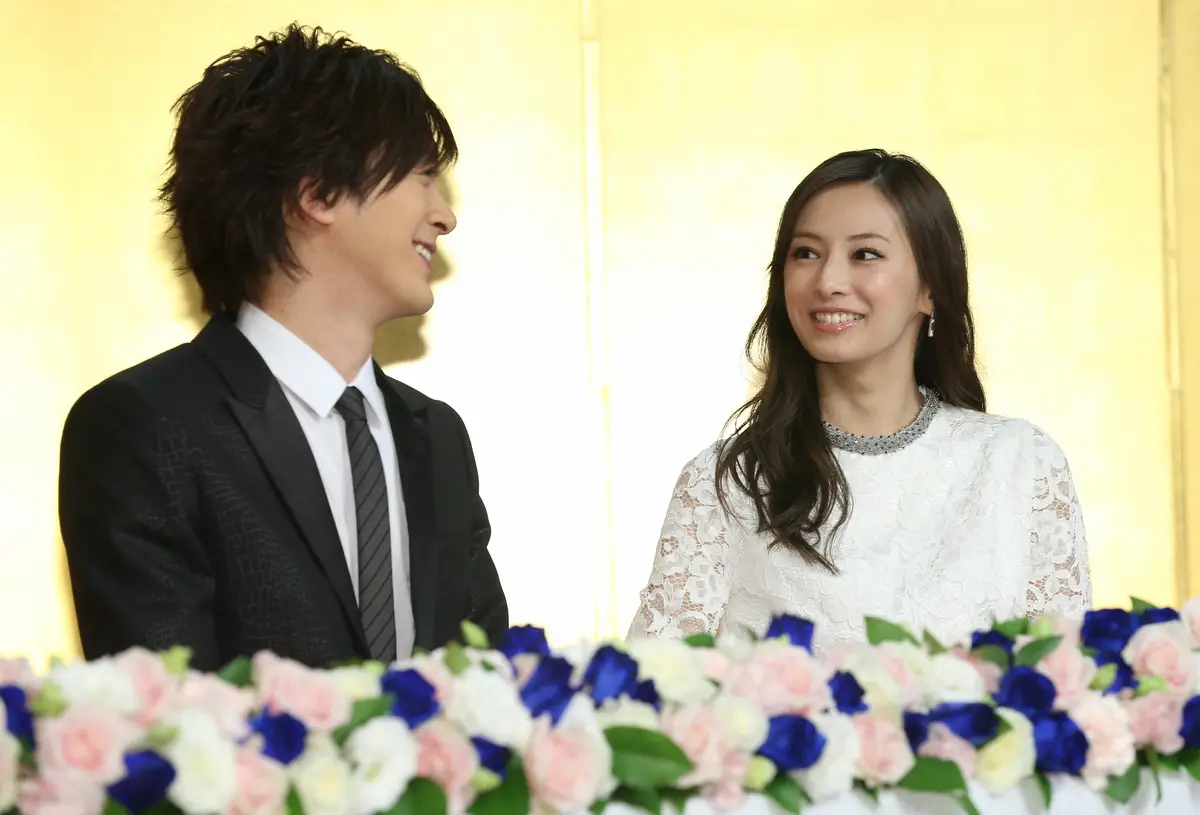
The atmosphere inside Fuji Television on the night of February 21, 2001, resembled an emergency political briefing rather than an entertainment announcement. Over 350 accredited journalists packed the hall. Millions of domestic viewers tuned into breaking television bulletins. Japanese entertainment agencies typically kept talent unions behind closed doors or managed them through sterile faxed statements. Sorimachi and Matsushima chose direct visibility.
Sorimachi wore a sharp, minimalist dark suit; Matsushima stood beside him in an understated white blouse and tailored jacket. Their posture was guarded but resolute. When pressed on what drew him to Matsushima, Sorimachi answered without hesitation: "Her domesticity, her strength, and her natural warmth." Matsushima reflected his composure, noting that their relationship grew organically during the 1998 production of GTO (Great Teacher Onizuka) before transitioning into a quiet courtship in 1999.
That press briefing set a precedent. It broke the unspoken industry rule that major drama headliners must avoid public attachments to protect their commercial marketability. Instead, the conference established them as peer equals.
The Shiseido Men Campaign and Modern Marital Poise
The contrast between the 2001 media gauntlet and the couple’s visual work for Shiseido Men is striking. In the campaign images that quickly went viral across East Asia, the frantic energy of 2000s tabloid culture gave way to measured stillness.
Sorimachi sits in warm, natural lighting. Matsushima stands behind him, looking directly into his face with an easy, unforced smile. Running under the campaign banner of #ずっとずっといい顔で ("Always with a great expression"), the campaign succeeded precisely because it bypassed manufactured romance. Viewers were not looking at a scripted pair; they were observing two people who had spent 25 years managing demanding public careers while raising two daughters out of the tabloid spotlight.
The visual contrast hits three distinct registers:
- The defensive, hands-clasped formality of the 2001 press riser shifted into relaxed physical proximity in 2024, 2026.
- Matte studio backdrops and heavy flash photography were replaced by warm, cinematic framing emphasizing natural aging and character lines.
- Rather than staring straight into a wall of press cameras, the two actors look primarily at each other, signaling autonomy from media validation.
A Quarter-Century Contrast: 2001 Press Conference vs. Today
The shifting public presentation of Takashi Sorimachi and Nanako Matsushima mirrors the broader evolution of the Japanese entertainment industry, moving from rigid, agency-dominated press spectacles to curated digital independence.
| Dimension | 2001 Wedding Press Conference | Modern Brand & Screen Era (2024, 2026) |
|---|---|---|
| Setting & Medium | Packed Fuji TV studio; live broadcast media | High-definition commercial sets; official social media |
| Visual Expression | Nervous smiles, stiff shoulders, defensive posture | Subtle warmth, shared eye contact, relaxed presence |
| Professional Status | Rising drama icons under intense agency pressure | Established industry veterans with career autonomy |
| Audience Reception | Shock, intense tabloid skepticism, idol-culture scrutiny | Widespread admiration for balance, grace, and privacy |
Navigating the Strict Rules of Japan's Entertainment Ecosystem
Maintaining an enduring celebrity marriage in Tokyo requires severe discipline. When Sorimachi and Matsushima married, both were at the absolute peak of Japanese television ratings. Matsushima had anchored historic ratings juggernauts like Yamato Nadeshiko, while Sorimachi was synonymous with the cultural phenomenon of Beach Boys and GTO.
Following their 2001 marriage announcement, the couple made a deliberate strategic calculation: complete professional separation. They refused joint variety show appearances, declined dual brand endorsements, and avoided discussing home life in print interviews.
This strict firewall protected their individual bankability. Matsushima expanded her range in serious medical procedurals like Kyumei Byoto 24-ji and the record-breaking Kaseifu no Mita, which hit a staggering 40.0% viewership share in 2011. Sorimachi reinvented himself over seven seasons on TV Asahi’s long-running detective franchise Aibou. By declining to commodify their marriage during their thirties and forties, they ensured that when they finally shared a frame in the 2020s, the public viewed it as an earned milestone rather than a commercial gimmick.
From Fictional Classrooms to Behind-the-Scenes Chemistry
The original connection between the two began with fiction. On the 1998 set of GTO, Sorimachi played former biker gang leader turned unorthodox teacher Eikichi Onizuka, while Matsushima played the composed, dedicated English teacher Azusa Fuyutsuki. Their dynamic on screen became television history; the 1998 series finale captured a massive 35.7% household rating in the Kanto region.
Decades later, the barrier between their on-screen legacy and real-life partnership has gently softened. During recent production work reviving the GTO universe, production staff noted Sorimachi casually mentioning his partner during making-of reels, referring to Matsushima simply as "uchi no kami-san" ("my wife"). When their characters shared scenes again as husband and wife on screen, social media reactions surged across platforms. Rather than distracting from the drama, their real-world continuity added weight to the story.
The couple demonstrated that privacy and public presence do not have to cancel each other out. They endured the hyper-scrutiny of the early 2000s Japanese media system without retreating entirely or sacrificing their marriage to agency demands.
Frequently Asked Questions (FAQ)
Q1: When and where did Takashi Sorimachi and Nanako Matsushima hold their marriage press conference?
A1: The couple held their historic joint press conference on the evening of February 21, 2001, inside a studio at Fuji Television headquarters in Odaiba, Tokyo, just hours after submitting their marriage registration.
Q2: Why did their Shiseido Men campaign cause such a massive public reaction?
A2: The campaign marked their first major commercial pairing in over two decades. Because both actors had maintained a strict policy of never appearing together or discussing their marriage publicly since 2001, seeing them share an intimate frame generated widespread public admiration.
Q3: How did Sorimachi and Matsushima first meet?
A3: They met on the set of the hit live-action drama *GTO (Great Teacher Onizuka)* in 1998, where Sorimachi starred as Eikichi Onizuka and Matsushima co-starred as Azusa Fuyutsuki. They began dating around a year after filming wrapped.
The Cultural Blueprint of a Lasting Japanese Power Couple
The journey from the intense, flashbulb-heavy soundstages of February 2001 to the elegant frames of Shiseido Men illustrates how modern celebrity can mature. Takashi Sorimachi and Nanako Matsushima did not build their brand on constant oversharing or manufactured public drama. They achieved longevity through patience, professional boundaries, and creative independence. When they appear side by side today, the public sees not just two of Japanese television's most recognizable faces, but a quiet demonstration of mutual respect that has stood firm across decades.