Inside Incheon T2 Gridlock: Photographic Evidence and the Smart Check-In Workaround

Inside Incheon T2 Gridlock: Photographic Evidence and the Smart Check-In Workaround
At 6:40 a.m. on January 20, 2026, the departures concourse of Incheon International Airport Terminal 2 ground to a near-complete halt. Travelers bound for Tokyo, Los Angeles, and Frankfurt stood four-abreast in snaking lines that stretched past the check-in islands toward the curb. Passenger Cho Chang-yeon, interviewed on site by the Chosun Ilbo, waited nearly an hour just to drop a single checked bag, noting that congestion had exploded following Asiana Airlines' relocation to Terminal 2. The scene is the physical manifestation of South Korea's massive aviation consolidation, where the impending Korean Air merger transition has collided head-on with peak-season travel demand.
The administrative strain behind these bottlenecks is intensifying. According to a detailed MSN Report via Korea Wave, Korean Air is actively running pre-departure reservation transfer protocols to swallow Asiana’s operations ahead of their final legal union in December. Central to this integration is the systemic retirement of Asiana’s historic OZ designator, which will convert entirely to Korean Air’s KE flight codes between November 2 and December 3. For passengers navigating Incheon T2 passenger congestion, relying on legacy physical counters is now a recipe for missed departures. Surviving the terminal demands executing an Asiana Airlines online check-in well before arriving at the curb.
📌 Key Takeaways:
- Terminal Gridlock: Asiana's co-location alongside Korean Air at Incheon T2 has caused acute processing bottlenecks, with manual counter queues regularly exceeding 50 to 70 minutes during morning rush hours.
- The System Shift: Asiana’s iconic "OZ" flight prefix will be phased out from November 2 to December 3, migrating to Korean Air’s "KE" system ahead of the final corporate merger in December.
- The Smart Workaround: Travelers who execute Asiana advance check-in on mobile or web bypass the primary lobby lines entirely, cutting airport dwell time down to automated baggage drop and express biometric security gates.
How the Terminal 2 Consolidation Sparked a Morning Rush Crisis
The decision to consolidate operations under Terminal 2 was intended to streamline ground infrastructure before the corporate merger closes. Instead, it concentrated twin fleets of widebody aircraft into the same departure banks between 06:30 and 09:30. Incheon Airport's Terminal 2 was originally engineered to handle SkyTeam partners, anchored by Korean Air. Injecting Asiana’s Star Alliance traffic into this footprint has pushed ticketing zones, security checkpoints, and on-site parking garages past peak operational capacity.
Visual records captured across January 2026 illustrate the severity of the choke point. Passengers attempting to obtain printed boarding passes or process basic travel documents at staffed desks have overwhelmed the physical counters. The ripple effect extends backward into the ground transport loop, where short-term parking structures reach 100% capacity before sunrise. With Korean Air processing hundreds of flights simultaneously, Asiana's check-in desks at Zone B and Zone C bear the brunt of travelers who failed to secure advance seat assignment or digital credentials before arriving at Yeongjong Island.
Airlines and ground handlers face an operational ceiling. Check-in staff must juggle dual reservation software architectures as engineering teams harmonize legacy Asiana platforms with Korean Air’s centralized backend. Terminal 2 departure delays are no longer rare occurrences driven by weather; they are routine scheduling headaches born of manual counter throughput limits.
Step-by-Step: Bypassing Counter Lines via Asiana Online Check-In
Air travelers can sidestep the concourse chaos by completing their check-in digitally. Asiana Airlines opens online check-in 48 hours prior to scheduled departure for international flights (24 hours for itineraries bound for the United States, due to federal Department of Homeland Security screening rules). The procedure eliminates the need to join counter queues.
Follow these steps on a desktop browser or the official Asiana mobile application:
Step 1: Retrieve the Booking. Navigate to the "Check-in" tab on flyasiana.com or open the mobile app. Input your 6-character reservation booking reference (PNR) or 13-digit e-ticket number, alongside your legal surname. If your flight was booked via a partner airline or online travel agency during the transition, verify whether you hold an Asiana booking code or a Korean Air locator.
Step 2: Enter Passport and Travel Documents. Scan your machine-readable passport zone via the smartphone camera or manually input document numbers, expiration dates, and country of issue. Passengers traveling to visa-requiring jurisdictions must input electronic travel authorization numbers, such as ESTA for the US or K-ETA for foreign visitors entering Korea.
Step 3: Confirm Advance Seat Assignment. Select or modify your cabin seat. Passengers who checked in early secure remaining exit-row or forward-cabin seats without paying late-counter change fees. Once confirmed, finalize the selection.
Step 4: Mobile Boarding Pass Issuance. Save the digital boarding pass directly to Apple Wallet, Google Wallet, or download the dynamic QR code as a PDF. Note that passengers flying to select destinations requiring physical document validation at the gate will receive an "Online Check-In Confirmation" instead of an active boarding barcode, requiring an express document check at an airport drop desk.
Step 5: Process Bags via Automated Baggage Drop. Upon arriving at Incheon T2, skip the main ticket lines and proceed directly to the Self Bag Drop kiosks located at dedicated zones. Scan your mobile boarding pass, scan your passport, attach the machine-printed adhesive luggage tag to your suitcase handle, and send the bag down the induction belt. The entire bag drop takes approximately 90 seconds.
The 2026 Merger Road Map: What the OZ to KE Migration Means for Travelers
Underneath the daily terminal friction lies the complex technical uncoupling of Asiana Airlines as an independent operational carrier. As detailed in the MSN reporting, Korean Air has set a definitive timeline to fold Asiana passenger manifests into its own systems between November 2 and December 3, paving the way for full legal integration.
The operational milestones structuring this transition explain much of the current airport turbulence:
| Phase / Timeline | Operational Action | Impact on Passengers |
|---|---|---|
| January, October 2026 | Terminal 2 Co-location & Capacity Sharing | Severe morning counter congestion; shared parking and security infrastructure strains. |
| November 2, December 3, 2026 | OZ to KE Flight Number Shift | Pre-departure reservation transfer phase. Flight codes re-keyed from OZ to KE; systems migration across global distribution platforms. |
| December 2026 | Final Corporate & Fleet Consolidation | Asiana Airlines formally dissolved as a separate operating brand; single check-in engine under Korean Air. |
This phased reservation handover carries significant digital implications. Travelers holding an Asiana OZ ticket for travel after early November must monitor their booking references. When flights migrate into Korean Air's database, a parallel Korean Air PNR is generated. Failure to track this updated code can prevent the mobile app from displaying advance check-in screens, forcing bewildered passengers back into the physical lines at Incheon.
Smart Airport Check-In Kiosks vs. Manual Desks: The Real Time Savings
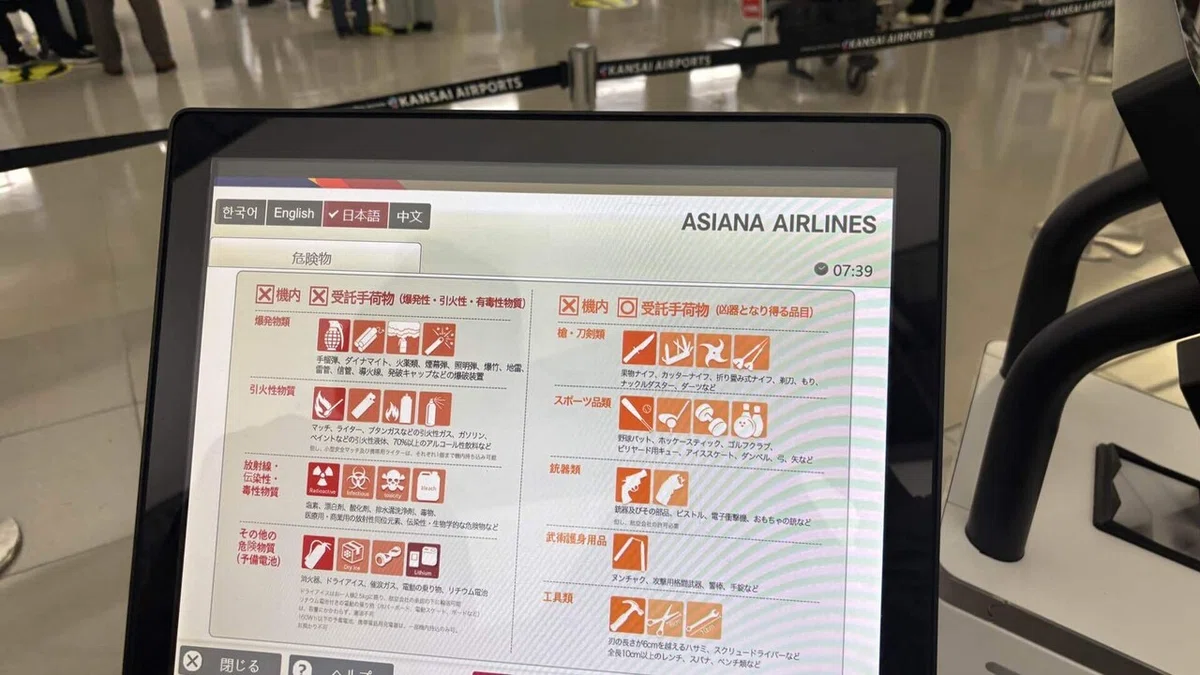
Field data collected across peak departure blocks reveals an immense discrepancy between self-service processing times and conventional queueing at Incheon T2. Ground observations from late January demonstrate that travelers using the conventional queue spent an average of 52 minutes between joining the line and walking away with a boarding pass. During morning peak surges, this time reached 68 minutes.
In contrast, passengers utilizing smart airport check-in kiosks or arriving with a mobile boarding pass cut processing down to a fraction of that time. Touchscreen kiosks across the T2 concourse process passport reads, seat assignments, and slip printing in roughly 3 to 4 minutes per party. Automated baggage drop belts require an additional 90 to 120 seconds.
Travelers who bypass human desks save close to an hour inside the public concourse. That time savings directly insulates travelers from missing tight boarding windows when outbound security lanes back up. Incheon Airport's automated lanes allow digital pass holders to walk straight to the SmartPass facial recognition security gates, completely skipping the crowded queue at the center of the terminal.
Navigating Exceptions: When Advance Check-In Fails
While digital check-in resolves most airport delays, specific traveler categories cannot generate a final digital boarding pass. Knowing whether you fall into an exception category prevents unpleasant surprises at the terminal gate.
The following profiles face specific digital check-in restrictions:
Unaccompanied Minors and Special Assistance: Passengers traveling with infants, travelers requiring wheelchair service, or unaccompanied minors cannot complete self-service check-in. Aviation safety regulations require human agents to verify documentation and seat suitability at dedicated special assistance desks.
Complex Multi-City or Codeshare Tickets: If the initial leg of an itinerary is operated by another carrier before transferring to Asiana, or if the ticket involves complex interline agreements, mobile check-in engines frequently throw an error code. During the current integration schedule, codeshare flights shared between Korean Air and Asiana occasionally encounter database mismatches that necessitate physical kiosk intervention.
Destination Visa Verification Rules: Travelers flying to countries requiring manual visa checks, return ticket verification, or health screenings may find their mobile check-in ends with a confirmation voucher rather than an active QR code. In these cases, head straight to the "Baggage Drop / Document Check" lane rather than joining the primary ticketing queue. Dedicated drop desks process document validation in minutes compared to full-service ticketing counters.
Frequently Asked Questions (FAQ)
Q1: Exactly how early before departure can I complete Asiana online check-in?
A1: For international routes, check-in opens 48 hours prior to your scheduled flight time. For routes departing to or from the United States (including Guam and Saipan), check-in opens exactly 24 hours before departure due to US customs and border security regulations. Domestic flights within South Korea open 24 hours prior.
Q2: If my flight number changes from OZ to KE during the late 2026 transition, will my seat reservation remain intact?
A2: Korean Air has stated that pre-assigned seats, cabin class privileges, and basic passenger data will automatically migrate during the scheduled reservation transfers between November 2 and December 3. However, passengers should log into the airline portal 48 hours before departure to verify that their seat assignment transferred accurately to the new KE itinerary.
Q3: Can I drop baggage at Incheon T2 using an automated self-bag drop if I checked in on my phone?
A3: Yes. Once you possess a mobile boarding pass with an active QR code, you can walk directly to any automated baggage drop unit in Terminal 2. Simply scan your boarding pass, scan your passport, attach the luggage tag printed by the machine, and place the bag onto the conveyor.
Managing Departure Friction Through the 2026 Aviation Transition
The operational gridlock at Incheon Terminal 2 is not an isolated service hiccup. It represents the inevitable friction of integrating two airline giants into a single mega-hub. As the corporate calendar ticks closer to the definitive December merger deadline, infrastructure constraints across check-in desks, tarmac positions, and terminal roadways will remain elevated.
Passengers flying Asiana cannot afford to treat terminal procedures as an afterthought. Avoiding multi-hour lines means taking ownership of your travel credentials before stepping out the front door. Check in via the mobile app the moment the 48-hour window opens, secure your boarding passes in your digital wallet, and aim for the automated bag drop bays. In an aviation environment shifting rapidly under real-time corporate restructuring, digital preparedness is the only guaranteed way through the terminal crowd.