Inside Nissin's Soupless Donbei: Packaging, Preparation, and Taste Breakdown
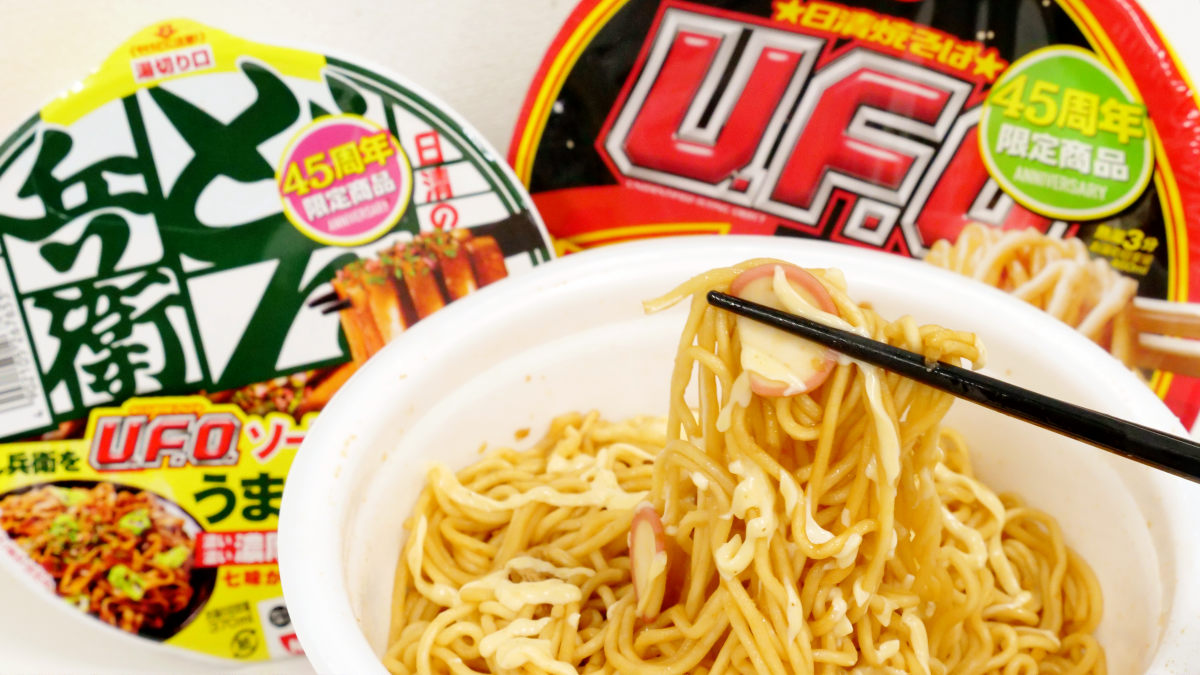
In May 2021, Nissin Food Products pulled off an unexpected brand swap across Japan’s convenience store aisles: crossbreeding the thick, chewy wheat noodles of Donbei with the brothless, drainage-reliant mechanics of its Yakisoba UFO line. As detailed in an early GIGAZINE Report, Nissin stripped away the traditional dashi soup bath to create "Shirunashi Donbei", a concentrated, abura soba-adjacent dish engineered around a perforated liquid drainage spout and an emulsion of dark soy, rendered fat, and smoked bonito dashi flavor profile.
What began as a novelty collaboration has grown into an established subcategory in Japanese instant noodles. By eliminating the steaming broth, Nissin altered how dehydrated wheat starch hydrates, how surface fats adhere to broad-cut noodles, and how consumers handle the logistical mess of liquid disposal at office desks and commuter hubs. Soupless Donbei is an exercise in food chemistry, industrial packaging design, and targeted flavor concentration.
📌 Key Takeaways:
- The Mechanics: Replaces the deep soup bowl with a dual-stage peel-back lid and integrated water drainage system, eliminating messy broth disposal.
- The Flavor Engine: Shifts from a diluted soup stock to a low-moisture dashi soy sauce seasoning fortified with lipid emulsions reminiscent of Tokyo-style abura soba.
- Noodle Behavior: Requires a strict five-minute hydration threshold to maintain chewy udon texture without turning limp once water is discarded.
The Mechanical Shift from Soup Bowl to Drainage Spout
Traditional instant udon depends on hot water remaining inside the bowl until the final slurp. The liquid keeps the thick wheat strands buoyant and hot, but it also presents a persistent domestic friction: what to do with the leftover soup. Pouring high-sodium, oily dashi down office sinks clogs grease traps and offends coworkers. Discarding it into plastic trash bags risks leaks.
Nissin adapted the metallic-finish drainage membrane pioneered by its Yakisoba UFO brand to solve this issue. The Shirunashi Donbei package uses a dual-tab configuration. Tab A opens partially to admit 400, 450 milliliters of boiling water over the dehydrated noodle cake and dehydrated garnish. Tab B remains locked until the steeping cycle ends. Once lifted, Tab B exposes a precision-punched grid of small venting spouts that allow boiling water to pour out cleanly while trapping every noodle strand and cabbage flake inside.
Liquid evacuation must be fast. If the water drains too slowly, residual steam turns the lower layers of the noodle cake mushy. The spacing and diameter of the perforation grid ensure complete drainage within six to eight seconds. That leaves a clean, hot foundation ready to receive the viscous seasoning sachet.
Starch Hydration and the Five-Minute Threshold
Wheat udon behaves differently from fried buckwheat soba or alkaline ramen noodles. Udon noodles feature a wide, flat cross-section packed with dense wheat gluten. In soup-based Donbei, these strands continue absorbing liquid while the meal is eaten. In a brothless format, all hydration stops the moment the water pours through the spout.
Nissin Food Products modified the noodle cake's porous matrix through high-speed steam-drying, creating microscopic channels that pull boiling water into the core within exactly five minutes. Premature drainage at the four-minute mark leaves an unpleasantly starchy, brittle center. Waiting six minutes causes the exterior gelatinized starch to slough off, creating a gummy film that prevents the sauce from adhering properly.
When timed accurately, the resulting noodle showcases an elastic resistance known in Japan as koshi. The wide, flat profile provides extensive surface area. Without hot broth washing over the noodles, the starch grips the seasoning sauce immediately upon contact.
The Dashi Soy Sauce Seasoning Architecture
A standard Donbei broth dilutes soy, mirin, and fish extracts across hundreds of milliliters of water. Shirunashi Donbei takes the opposite route: flavor density through emulsified reduction. The liquid packet contains an oil-rich sauce that mimics the abura soba style popularized in western Tokyo noodle bars.
The flavor base relies on double-brewed dark soy sauce coupled with a heavily concentrated bonito dashi flavor profile, often fortified with kombu (kelp) extract and tiny amounts of rendered lard or vegetable oils. When stirred vigorously into the drained noodles, the residual surface moisture combines with the sauce's fats to form a high-gloss, clinging glaze. Every bite delivers a sharp punch of wood-smoked skipjack tuna, umami-dense glutinous sweetness, and roasted soy aroma without pooling at the bottom of the plastic container.

Specifications: Soupless Donbei Versus Industry Counterparts
Understanding where Shirunashi Donbei sits requires a look at its mechanical, nutritional, and procedural metrics alongside classic benchmarks.
| Product Variant | Prep Time & Method | Flavor Base Mechanism | Net Weight / Caloric Density | Post-Meal Liquid Waste |
|---|---|---|---|---|
| Nissin Soupless Donbei (Yaki Udon / Abura Soba) | 5 minutes; complete water drainage via perforated spout | Emulsified dashi soy sauce glaze with rendered lipids | 95g, 105g / 420, 480 kcal | 0 ml (water dumped during prep) |
| Classic Nissin Donbei Kitsune Udon | 5 minutes; full broth retention in vessel | Dilute Kansai/Kanto dashi soup (kombu, bonito, light soy) | 96g / 413 kcal | 250, 300 ml residual broth |
| Nissin Yakisoba UFO | 3 minutes; drainage via UFO spout | Acidic Worcestershire-style dark sauce with spices | 128g / 556 kcal | 0 ml (water dumped during prep) |
Crunch-Infused Toppings and Structural Contrast
One sensory danger of brothless instant noodles is palate fatigue. Without the temperature swings and varying salinity of a liquid soup, eating a monochromatic pile of oily noodles can quickly feel heavy. Nissin counters this by pairing its savory noodle sauce with dry garnishes added post-drainage.
Standard editions provide a packet of seasoned agedama (crisp tempura bits), crushed nori, and shichimi togarashi (seven-spice chili blend). Tossing these toppings over the noodles after the sauce has coated the surface ensures the fried crisps never sit in boiling water. They retain an audible crunch, offering a stark textural contrast against the soft, springy wheat. The inclusion of subtle citrus notes, frequently yuzu or powdered sansho pepper, cuts through the richness of the concentrated soy glaze.
Convenience Culture and the Brothless Boom
The success of the brothless Donbei format reflects shifting consumption patterns in urban Japan. Instant noodles are no longer strictly eaten at home over a kitchen sink. They are staples for convenience-store counters, late-night transit workers, and shared office breakrooms where cleaning up leftover soup is a logistical nuisance.
By shifting to an all-in-one preparation process where hot water is discarded right into the pantry sink before sauce packets are even torn open, Nissin eliminated the most inconvenient part of the instant meal. The format proved durable: the concept has expanded from limited-edition seasonal runs into recurring shelf regulars across Japanese convenience stores and global import markets alike.
Frequently Asked Questions (FAQ)
Q1: What happens if I forget to drain the water before adding the sauce packet?
A1: Adding the sauce packet before draining ruins the meal. The concentrated dashi soy sauce glaze is calibrated for direct adherence to wet noodles, not water dilution. If mixed into the full 400ml water bath, the flavor becomes weak and overly greasy, and draining the water afterward washes the seasoning straight down the sink.
Q2: Is the sodium content lower in soupless Donbei compared to soup-based Donbei?
A2: Not necessarily. While the total volume of seasoning liquid is much lower, the sodium concentration is high, typically between 3.5 and 4.5 grams per container. Because you consume all the sauce adhering to the noodles rather than leaving broth behind in the cup, your actual ingested sodium may be comparable to or slightly higher than someone who leaves half the broth in a standard soup bowl.
Q3: Can soupless Donbei noodles be prepared with cold water in an emergency?
A3: Cold water will hydrate the noodles, but it takes roughly 40 to 45 minutes rather than five. Cold water struggles to activate the starches and melt the fried oils in the dried noodles, resulting in a rubbery texture. Additionally, the concentrated seasoning packet contains lipids that require residual heat from the freshly drained noodles to melt and emulsify effectively.
The Evolution of Brothless Noodle Design
Nissin’s soupless Donbei proves that brand longevity relies on structural reinvention rather than quiet complacency. By crossbreeding the mechanical utility of Yakisoba UFO with the comfort-food identity of Donbei udon, the company engineered an answer to real-world consumer pain points: mess-free disposal, rapid hydration, and dense umami impact. Brothless noodles have moved beyond gimmick status, establishing a permanent place in the global instant food landscape.