Inside Yusuke Iseya's Hair Evolution: The Return of Japan's Boldest Undercut
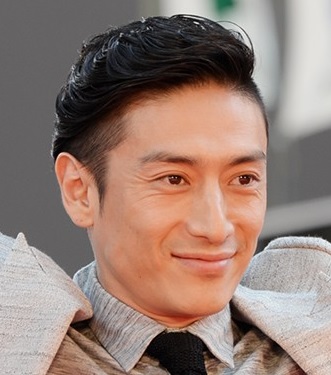
Yusuke Iseya has spent three decades defying the rigid, polite conventions of Japanese mainstream entertainment. The Tokyo University of the Arts graduate and veteran actor has cultivated an unmistakable visual identity that balances fine-art minimalism with raw subcultural rebellion. When Iseya resurfaced across Japanese social channels, captured in a rare candid moment alongside actress Asaka Seto following their work on The Little Prince, as highlighted by a livedoor ニュース Report, fans and salon stylists immediately zeroed in on his appearance. Even in mid-career, his iconic hair geometry remains as sharp and influential as ever.
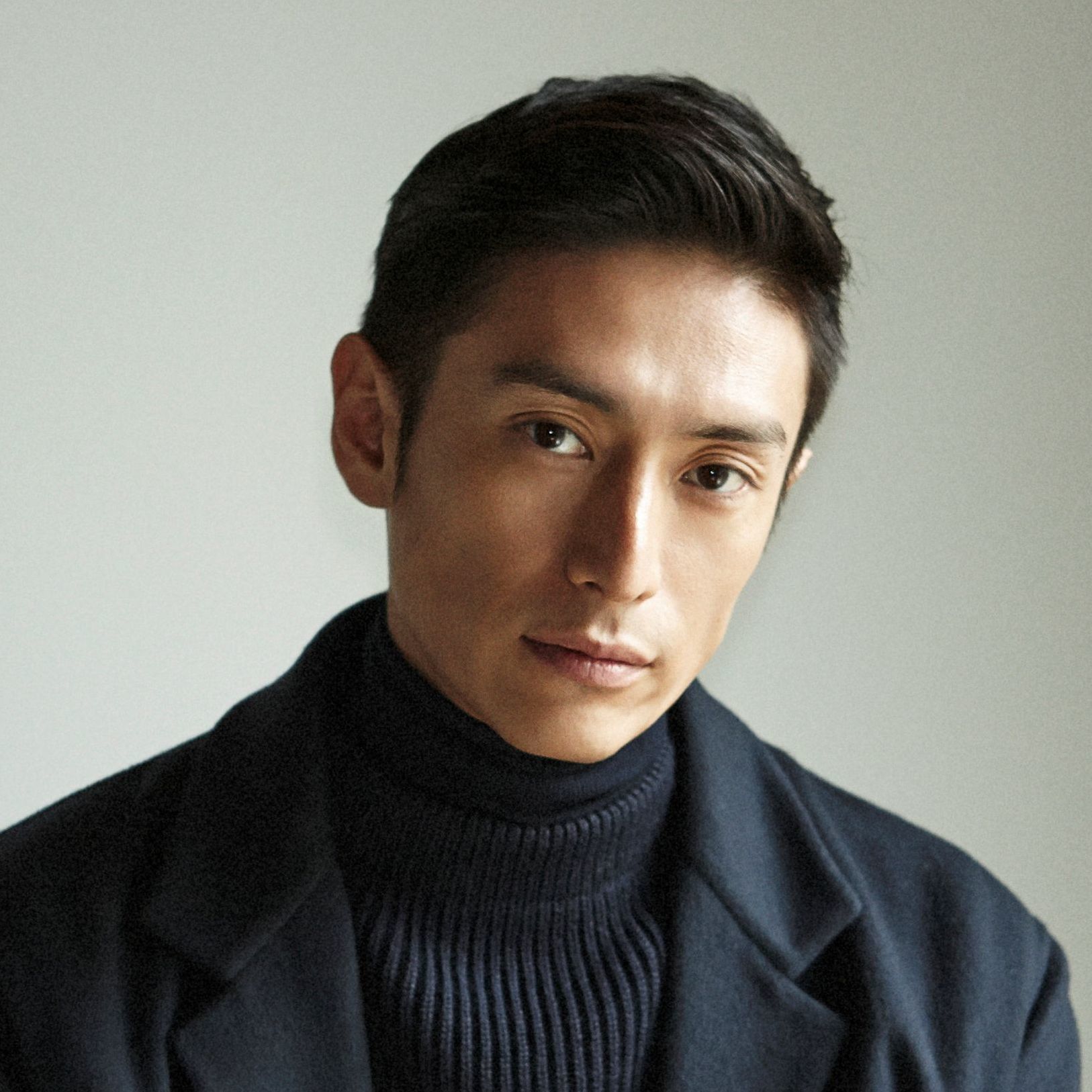
What Japanese men simply call the "Iseya two-block" is not a standard salon trim. It is an aggressive, architecturally disconnected undercut that transformed how East Asian men manage dense, straight hair textures. Where conventional salaryman cuts prioritize soft transitions, Iseya’s approach pairs shaved temples with an unapologetic, sweeping canopy of textured length. Decades after he first debuted the cut on red carpets and in indie cinema, barbers from Omotesando to Osaka still receive daily requests for this exact silhouette.
📌 Key Takeaways:
- The Signature Blueprint: Iseya's cut relies on a high, unblended disconnection along the parietal ridge, paired with 10 to 14 centimeters of textured crown hair.
- The Asian Texture Solution: The deep side shave eliminates the lateral "porcupine effect" common in coarse East Asian hair without requiring daily chemical perms.
- Barber Communication: Getting this look requires requesting a clean taper on the undercut and heavy point-cutting on top, avoiding any conventional blend into the sides.
The Cultural Roots of Yusuke Iseya's Disconnected Silhouette
Before Iseya popularized this aesthetic, the Japanese two-block (known locally as tsū-burokku) carried a very different reputation. Throughout the late 1990s and early 2000s, the style lived primarily in two extremes: utilitarian schoolboy cuts designed to pass strict uniform codes, or hyper-styled host-club looks soaked in glossy wax. Iseya demolished that dichotomy. Drawing on his background in fine arts and street sculpture, he treated the human skull as a set of interlocking planes rather than a canvas for feathered layers.
His breakthrough looks in early 2010s cinema stripped away unnecessary fluff. He paired shaved sides with clean, angular side-parts and textured fringe, projecting an aura of refined menace and artistic poise. Young professionals, designers, and creatives throughout Tokyo immediately adopted the cut. It became a shorthand for independent taste. The style proved that a Japanese man could look impeccably tailored without looking like a corporate clone.
The enduring fascination with this look stems from its refusal to age out. While fluffy, perm-heavy Korean "comma" bangs and messy wolf cuts surged through TikTok in recent seasons, Iseya’s high-contrast undercut maintained its status as the default power cut for men who prefer crisp edges and deliberate maturity over adolescent volume.
Structural Mechanics: Asian Hair Texture Meets High Disconnection
Coarse East Asian hair presents a notorious challenge for barbers worldwide. Because individual hair shafts are round, thick, and exceptionally straight, they tend to grow straight outward from the scalp rather than draping downward. In a traditional Western crew cut or short back-and-sides, the lateral sides stick out horizontally like porcupine quills once the length exceeds one centimeter. Salons historically tackled this with harsh down-perms or by leaving the sides long enough to weigh themselves down.
The disconnected undercut solves this physiological issue through subtraction:
- Strategic Volume Removal: By carving out the side panels completely up to the temple hollows, the barber eliminates 40% of the head's total bulk.
- Natural Weight Overhang: The hair from the crown and top parietal line is grown long enough, typically hitting the cheekbone when pulled taut, so gravity forces it to fall flat over the shaved section.
- Drafted Air Flow: Without bulky sides trapping heat and moisture, the head stays cooler, making the cut exceptionally practical for Tokyo's stifling summers.
This structural split creates dramatic movement. When Iseya turns his head, the upper canopy swings freely, revealing the dark, shadowed skin of the undercut beneath. That visual contrast between the stark skin line and the textured drape gives the style its kinetic punch.
Taper Fade vs Two-Block: The Structural Showdown
Western grooming relies heavily on the seamless gradient of skin fades, whereas Japanese street style favors sharp boundaries. The table below breaks down the technical and maintenance differences between these two foundational aesthetics.
| Structural Element | Western Taper Fade | Japanese Disconnected Two-Block |
|---|---|---|
| Transition Point | Continuous micro-gradient; zero visible lines | Hard shelf; overhang completely detached from base |
| Base Guard Length | 0 mm (foil shaver) to 3 mm (#1 guard) | 3 mm to 6 mm (#1 to #2 guard) uniform or soft taper |
| Top Length Range | 4, 8 cm, typically sculpted upward | 10, 15 cm, swept laterally or backward |
| Salon Upkeep Cycle | Every 10, 14 days to preserve gradient | Every 3, 4 weeks; top section lasts 6, 8 weeks |
| Styling Workload | Low-to-medium; matte clays and texturizing powders | Medium-to-high; directional blow-dry mandatory |
While a taper fade flatters softer jawlines by slimming the cheeks, the two-block creates horizontal width across the top of the skull. This emphasizes high cheekbones and angular bone structure, which explains why Iseya’s face shape carries the silhouette with such arresting presence.
The Salon Blueprint: Exact Barber Specifications for the Cut
Walking into a barber shop and asking for a generic "two-block" will rarely yield Iseya’s razor-sharp outcome. Most commercial stylists default to a conservative variation that leaves the sides at 9 millimeters and softly feathers the canopy, muting the edge completely.
To replicate Iseya’s balance, give your barber these four explicit guidelines:
- Specify the parting boundary: Instruct the barber to take the disconnection line straight back from the recession point of the hairline, curving down slightly behind the ear. It should not sit too high on the crown, or the hair will lose its resting weight.
- Define the base clipper length: Ask for a 3 mm (#1) to 4.5 mm (#1.5) clipper length on the sides and nape. Request a clean natural taper at the neckline rather than a harsh block.
- The top hair must fall completely unconnected over the sides. The stylist must not cross-cut the shelf into the clipper work.
- Demand aggressive deep point-cutting: Japanese hair needs interior negative space. Ask the stylist to use point-cutting and slide-cutting techniques through the mid-lengths. Thinning shears used at the roots will only cause short hairs to push the top canopy upward, destroying the sleek, sweeping drape.
Bring reference images showing the hair in motion, not just static front-facing portraits. Stylists need to see how the back corner of the disconnect sits relative to the occipital bone.
Precision Finish: From Matte Pomade to Wet-Look Separation
The cut’s architecture does half the heavy lifting; daily blow-drying handles the rest. Without heat sculpting, straight hair falls into a featureless curtain over the eyes.
Begin on towel-damp hair. Apply a quarter-sized drop of lightweight sea salt spray or thermal styling tonic throughout the roots. Grab a high-velocity blow dryer with a concentrator nozzle. Direct the airflow from front to back while using your fingers to pull the roots upward at a 45-degree angle. This builds root tension and prevents the top from collapsing flat against the crown.
Once the roots are bone-dry, switch the dryer to the cool-shot setting. Direct the blast across your chosen parting, typically a deep 7:3 or 8:2 offset, to freeze the directional memory in place.
For product application, Iseya’s appearances alternate between two distinct finishes:
- Rub a dime-sized amount of dry matte clay or water-soluble matte pomade thoroughly across your palms until clear. Rake your fingers through the top section, distributing product evenly from mid-lengths to ends. Use your fingertips to pinch small, irregular bundles along the fringe, allowing a few strands to fall naturally across the forehead.
- The High-Contrast Editorial Sheen: For formal settings or evening events, swap clay for a traditional water-based pomade or Japanese hair grease (birei). Comb the product through from root to tip using a wide-toothed comb to create defined rake lines. Keep the sides tight and let the gloss catch the light against the short, clipped temple hair.
Who Wears It Best: Profile Suitability and Maintenance Demands
Not every face shape or hair type accommodates this cut with equal ease. The strong horizontal line created by the undercut will visually alter facial proportions.
Ideal Profiles:
- Men with pronounced cheekbones and defined jawlines mirror Iseya’s geometry effortlessly.
- Dense, Straight Hair: Thick strands provide the physical heft required for the canopy to drape cleanly over the clipped sides without looking sparse.
- The angularity of the cut harmonizes with broad bone structure, lending the wearer an authoritative silhouette.
Risk Flags to Consider:
- If hair density on the crown is low, the disconnected line will expose scalp through the upper layer, making the hair look thin rather than deliberate.
- Round Face Shapes with Soft Jaws: Leaving heavy bulk on top while shaving the sides can accentuate cheek fullness, creating an unwanted mushroom-like profile.
- Strict Corporate Environments: Conservative Japanese finance or municipal sectors still penalize visible two-blocks as untrustworthy or eccentric. Ensure your daily setting permits distinct subcultural accents before committing to a 3 mm buzz underneath.
Frequently Asked Questions (FAQ)
Q1: How long does my hair need to be before getting the Iseya two-block?
A1: You need at least 8 to 10 centimeters of length along the top and crown before buzzing the sides. If you cut the undercut while the top is too short, the hair will spike outwards horizontally rather than falling flat against the temples.
Q2: Can I pull off this style with naturally wavy or curly hair?
A2: Yes, and it often requires less blow-drying than straight hair. Natural wave patterns create organic volume and break up the harsh shelf line, producing a softer, bohemian variation of the cut reminiscent of Iseya’s late-2010s appearances.
Q3: How do I maintain the sides between barber visits?
A3: If you possess steady hands, pin the long top section completely out of the way using salon grip clips. Use a home trimmer with a #1.5 (4.5 mm) guard to clean up the temple region. Never cut above the original parting line drawn by your stylist, as creeping upward into the crown will ruin the drape.
The Enduring Power of Tokyo's Sharpest Silhouette
Hair trends move through Tokyo at breakneck speed, driven by digital algorithms, seasonal idol debuts, and micro-influencer cycles. Yet Yusuke Iseya’s disconnected two-block has outlasted nearly every fleeting grooming wave of the past fifteen years. Its longevity lies in structural honesty: it solves a physical limitation of Asian hair texture by embracing tension, geometry, and negative space.
For the modern man seeking a haircut that commands authority without sacrificing personal style, Iseya’s signature undercut remains the undisputed standard. It is not simply a cut that survives the test of time, it is a functional masterpiece of East Asian grooming.