Is a $3 Dollar-Store Car Rod Holder Actually Safe for High-End Rods?
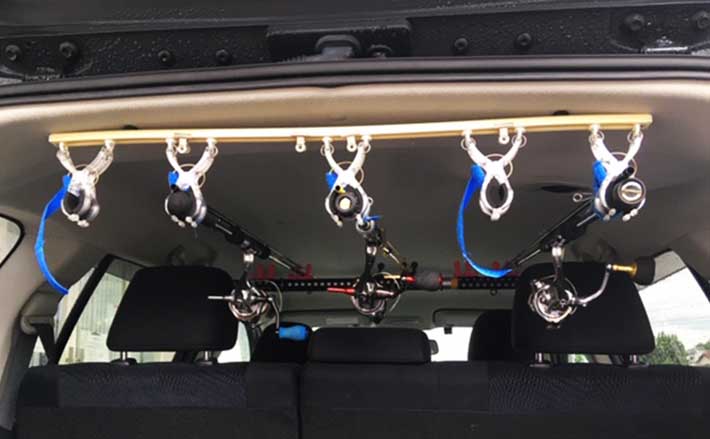
Anglers across social media routinely celebrate a tempting budget hack: stringing two spring-loaded tension rods between the overhead assist grips of an SUV to create an instant rod carrier for less than the price of a cup of coffee. The lure makes sense on paper. Commercial vehicle roof mount storage systems from brands like Carmate Inno easily cost upwards of $200, prompting DIYers to scavenge dollar-store aisles for Daiso rod holder alternatives, plastic utility clamps, and elastic cords. Yet while resting rods loosely across car seats invites disaster, a hazard documented in an Excite エキサイト Report highlighting how makeshift indoor and vehicle storage frequently snaps guide rings and blanks, relying on friction-based tension poles introduces a completely different set of structural liabilities.
📌 Key Takeaways:
- The Hardware Reality: Standard dollar-store tension rods rely on unthreaded spring friction that fails under sudden lateral vehicle deceleration.
- The Blank Threat: Unpadded plastic clips transmit road harmonic vibrations directly into brittle 40-ton carbon rod blanks, creating micro-fractures before you ever reach the water.
- The Structural Limit: A $3 DIY rig works adequately for sub-$30 fiberglass poles, but carrying multi-piece graphite gear demands mechanical crossbar anchoring and high-density foam isolation.
The Viral Rise of 100-Yen Store Vehicle Fishing Racks
Budget angling culture has turned the search for cheap vehicle interior bars into an art form. Walk into Daiso, Seria, or Can Do, and the ingredients for an overhead fishing rod rack sit side-by-side: expandable curtain rods, rubber twist-ties, mesh cargo nets, and adhesive coat hooks. The most common iteration uses two extendable tension poles wedged between the passenger grab handles above the rear doors, lined with stick-on plastic cable organizers to seat individual rod blanks.
The appeal stems from instant convenience. Anglers driving compact hatchbacks or crossovers face an ongoing struggle with tailgate rod transport. Breaking down a two-piece rod after every sunrise session wastes valuable casting time, while laying assembled rods across duffel bags invites crushed guides when loading coolers. Spending $3 to $5 to suspend three rods cleanly against the vehicle headliner feels like an undisputed financial win. But calculating cost savings without factoring in the physics of vehicle movement creates an expensive blind spot.
Mechanical Vulnerabilities of Dollar-Store Tension Rods Under G-Force
Spring-loaded tension rods were engineered to hold lightweight linen curtains against stationary window frames. They rely entirely on axial friction: an internal coil spring presses rubberized end caps outward against vehicle trim panels.
Automotive environments violently undermine that static friction. A 3,500-pound vehicle navigating potholed backroads subjects its interior cabin to continuous low-frequency vibrations, sharp vertical jolts, and sudden lateral torque. Every speed bump compresses the vehicle chassis slightly, momentarily flexing the distance between the grab handles. The moment that interior clearance widens by two millimeters, an unanchored tension rod drops its clamping force.
Under sudden braking from 45 mph, a suspended rod rig transforms into a dynamic projectile. Three medium-heavy baitcasting rods paired with reels represent roughly three to four pounds of mass. If held only by unbolted tension poles and loose bungee cord securing, that assembly will slip off the grab handles and slide forward, driving delicate rod tips straight into the windshield or driver-side headrests.
Carbon Rod Blanks and the Hidden Cost of Vibration Impact
Modern high-performance fishing rods do not bend like classic fiberglass poles. High-end rods utilize 30-ton to 46-ton carbon rod blanks saturated with minimal resin content to maximize sensitivity and reduce swing weight. This architectural stiffness makes the blank exceptionally light, yet acutely vulnerable to point-load impact and high-frequency friction wear.
When you lock a graphite blank into a cheap hard-plastic clamp, vehicle engine rumble and asphalt texture create sustained microscopic hammering along the rod wall. Over a 50-mile commute to the coast, that localized chatter scratches the exterior clear coat and compromises the outer composite hoop fibers.
Even worse is the absence of rod tip protection. When overhead setups lack rigid forward-tip retainers, rod tips bounce freely against the fabric headliner or rear glass. The SiC (silicon carbide) and Torzite ceramic guide inserts housed inside titanium frames are brittle. Repeatedly slapping them against hard window trim during transit can chip the inner ring, producing jagged micro-grooves that later slice through braided line during a hookset.
Cost Breakdown and Structural Resilience Across Mounting Methods
Evaluating whether to build or buy comes down to understanding the structural thresholds of different mounting systems:
| Mounting Category | Typical Cost | Safe Load Capacity | Vibration Impact Resistance | Catastrophic Failure Risk |
|---|---|---|---|---|
| Dollar-Store DIY (Tension rods + stick-on clips) | $3, $8 | Under 2.5 lbs (Rods without reels) | Extremely Low (Hard plastic on bare carbon) | High (Friction loss during hard braking) |
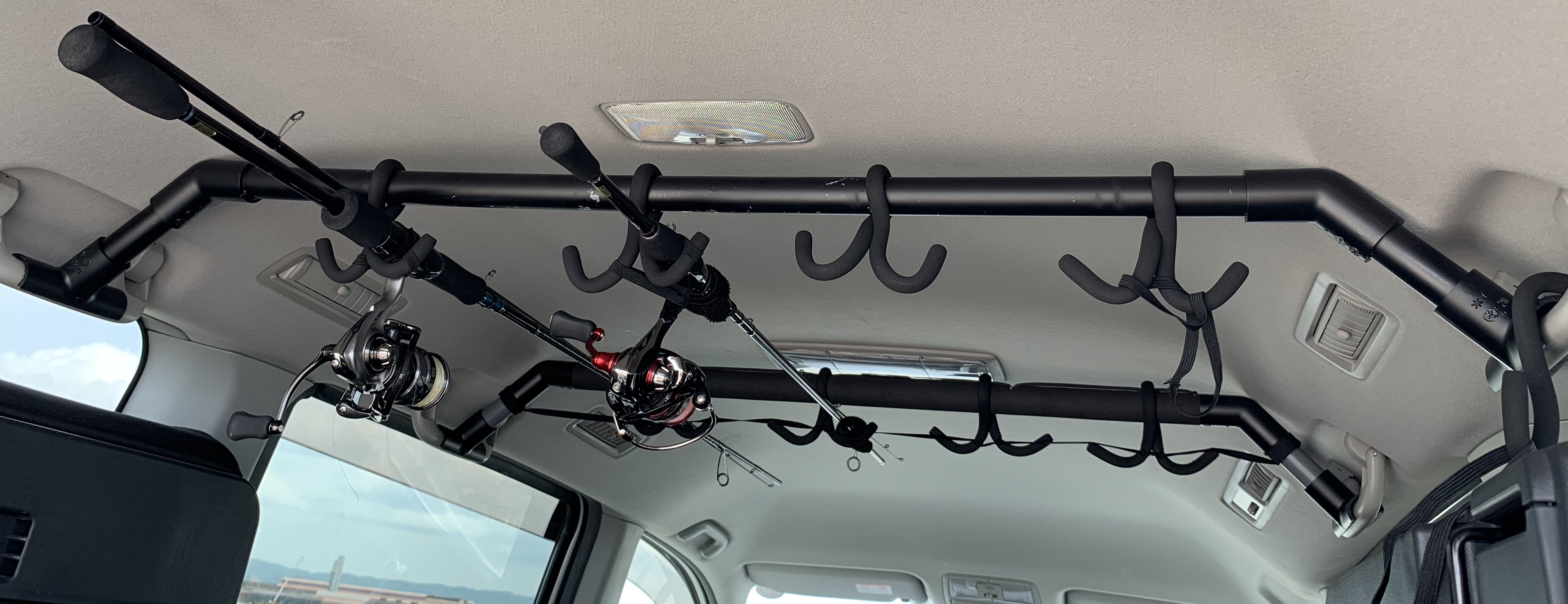
| Reinforced Hybrid DIY (Screw-clamp interior bars + EVA foam) | $25, $45 | 8, 12 lbs (3, 4 fully rigged setups) | Moderate (Absorbs road chatter) | Low (Mechanically fastened to handles) |
| Commercial Overhead Rack (Carmate Inno / Yakima interior) | $180, $350 | 15, 25 lbs (5, 8 heavy offshore setups) | High (Molded elastomer cushions) | Negligible (Bolted steel brackets) |
Essential Reinforcements for Budget Overhead Rod Racks
If budgetary constraints dictate a DIY route, you must abandon unthreaded tension rods entirely. Instead, purchase dedicated telescoping car interior bars designed to physically lock around vehicle assist grips via contoured hook clamps. Once a mechanical interface secures the crossbar to the car frame, implement three non-negotiable modifications.
First, replace dollar-store plastic clips with closed-cell pipe insulation or dense EVA craft foam. Slicing high-density foam tubes along their length and sliding them over the crossbars creates a continuous shock-absorbing cradle. This isolates the carbon rod blank from the metal bar and eliminates chatter.
Second, eliminate rigid zip ties in favor of wide velcro cinch straps. Heavy-duty hook-and-loop wraps distribute holding pressure over two inches of surface area rather than pinching the blank at a single point. Cinch the butt section firmly behind the reel seat so the rod cannot slide forward under hard stops.
Third, stabilize the forward third of the rods. Never let the delicate tip section dangle freely. Anchor a secondary front bar far enough forward so the rod rests near the stripper guide, leaving only the flexible upper tip suspended in dead space away from all headliners and rear side windows.
Tailgate Rod Transport and Assist Grip Weight Thresholds
A vehicle's overhead grab handles were engineered to assist passenger entry and egress, typically rated for static loads between 30 and 50 pounds. However, when dynamic weight hangs from both sides over thousands of highway miles, fastener fatigue becomes a factor.
Adding heavy conventional saltwater reels to an overhead rack shifts the center of gravity downward, turning the assembly into an inverted pendulum. On washboard gravel tracks leading to remote launches, this pendulum effect exerts continuous twisting torque on plastic grab handle retaining clips.
Keep weight low by stripping heavy reels off the blanks and stowing them in a padded gear crate on the trunk floor. Transporting bare rods overhead drastically slashes dynamic swinging weight, eliminates blank bending fatigue, and guarantees that your grab handles remain firmly seated inside the chassis pillar.
Frequently Asked Questions (FAQ)
Q1: Can dollar-store tension rods damage a car's interior headliner?
A1: Yes. The constant vibration forces the rubber feet of tension rods to rub against fabric headliners and plastic pillar moldings. Over several trips, this friction leaves permanent circular indentations, scuffs, or tears in delicate vehicle upholstery.
Q2: What is the best cheap material to cushion rods on a DIY interior bar?
A2: Closed-cell polyethylene pipe insulation or high-density EVA foam strips provide the best protection. Unlike open-cell dollar-store sponges that compress completely flat under reel weight, high-density closed-cell foam preserves a continuous damping barrier that stops road chatter.
Q3: Is it safe to leave rods strapped to a vehicle roof mount rack in the summer heat?
A3: No. Cabin temperatures near the roofline can easily exceed 140°F (60°C) on sunny days. Sustained extreme heat softens epoxy resins on guide thread wraps and can warp high-modulus graphite blanks held under tension.
Engineering Prudence for Vehicle Rod Storage in 2026
Saving money on angling accessories makes sense until the cost of a hardware failure eclipses the price of the tackle it holds. A $3 dollar-store tension rod rig performs adequately when carrying inexpensive fiberglass beaters to a neighborhood pond, provided you drive cautiously. But placing high-modulus tournament blanks onto unanchored friction poles invites structural fracture from shock and inertia.
If commercial roof systems sit outside your immediate budget, bypass fragile dollar-store tension poles entirely. Invest thirty dollars in mechanically clamped interior utility bars, line them with closed-cell EVA foam, and secure the rod butts with broad velcro fasteners. Protecting fine carbon blanks demands hardware that respects the physical realities of vehicle travel.