Kanano Senritsu and ZOC: The Shocking Fallout, Broken Contact, and Final Legal Apology
Kanano Senritsu and ZOC: The Shocking Fallout, Broken Contact, and Final Legal Apology
When alternative pop outfit ZOC debuted in 2018, they deliberately shattered Tokyo’s manufactured idol culture. Co-founded by eccentric singer-songwriter Seiko Oomori alongside charismatic breakout Kanano Senritsu, the collective offered an unapologetic sanctuary for society's misfits, outcasts, and survivors. As documented in early coverage from the CDジャーナル Report, the initial lineup, featuring Senritsu, Katy Kashii, Karen Aizome, Marina Nishii, and Sayaka Unagi, commanded immediate cultural resonance by ditching pristine commercial perfection for raw vulnerability. Yet behind the rebellious aesthetic lay years of internal combustion, management fractures, and acrimonious legal battles.
The bitter public friction reached a milestone resolution on March 1, 2026, when Senritsu revealed on Instagram Live that a grueling 2.5-year legal battle with ZOC’s management entity (operating as METAMUSE) had officially concluded with a formal apology. The announcement resolved one of the most volatile disputes in modern J-pop. It exposed the operational fault lines running through Japanese agency culture, independent creative collectives, and the heavy toll exacted on performers caught between visionary art and systemic exploitation.
📌 Key Takeaways:
- The Legal Resolution: On March 1, 2026, Kanano Senritsu confirmed the conclusion of a 30-month legal battle, securing a formal apology from the agency behind METAMUSE (formerly ZOC).
- The Breaking Point: A July 2020 sudden departure spiraled into allegations of illegal drug use, covert management recordings, and an official management bulletin declaring her entirely unreachable.
- Creative Rebirth: Senritsu reclaimed her artistic agency through sister duo femme fatale and solo singles like "more kyun dorei," navigating intense personal turbulence, domestic abuse recovery, and industry isolation.
The Port Arthur of Alternative Pop: Inside ZOC's Volatile Chemistry
ZOC, short for "Zone of Control", was never meant to behave like a standard idol project. Seiko Oomori framed herself not as an executive boss, but as an active "accomplice" alongside young women whose lived experiences broke conventional societal taboos. Among them, Kanano Senritsu stood out instantly. Transparent about her childhood trauma, adolescent survival, and time spent in a juvenile detention center, Senritsu offered a rare, magnetic honesty. Fans rallied behind her piercing intellect and her self-funded charity initiatives for disadvantaged youth.
That chemistry drew thousands of fans across Akihabara and Shibuya. Alongside subcultural icon Katy Kashii, Senritsu became the visual and ideological anchor for a legion of youth alienated by corporate pop. Yet the very intensity that fueled ZOC's creative output ignited constant friction behind the scenes. In an industry where talent management demands ironclad compliance, ZOC's defiance carried internal liabilities. Creative decisions clashed violently with agency directives, personal rivalries mounted, and boundaries between personal trauma and marketable image collapsed under the spotlight.
The Broken Contact Declaration and the July 2020 Rupture
The operational unraveling accelerated in July 2020. Following weeks of whispers concerning backstage friction between Senritsu and Oomori, management abruptly announced Senritsu’s departure, citing irreconcilable differences. Rather than a quiet, coordinated exit, the severance exploded across Japanese social media. Anonymous accounts and fringe industry figures leaked damaging rumors alleging illicit substance use, directly threatening Senritsu's career.
The crisis escalated when agency representatives took the extraordinary step of issuing a public notice stating they were in a state of onshin futsū, broken contact, unable to reach Senritsu directly as scheduled promotional obligations hung in limbo. Rather than retreat into silence, Senritsu pushed back on social networks, accusing internal staff of gaslighting, targeted harassment, and coordinating smear campaigns to destroy her marketability. The battle lines were drawn in public, dividing the fanbase and setting off a protracted legal standoff that drifted out of public view into closed courtrooms.
Timeline of Friction: From Rebellion to the 2.5-Year Settlement
To grasp how a collaborative indie-pop experiment disintegrated into litigation, it helps to examine the shifting operational milestones across ZOC's operational history:
| Timeframe | Key Event | Direct Fallout |
|---|---|---|
| September 2018 | Official ZOC Formation | Breakout recognition; positioning as anti-traditional counterculture idols. |
| July 2020 | Senritsu's Sudden Departure | Broken contact alerts issued; competing claims of harassment and contract violations. |
| 2022, 2023 | Rebranding to METAMUSE & Lawsuit Filing | Group seeks fresh commercial slate; Senritsu mounts formal litigation over reputational damage. |
| October 2024 | Hospitalization & Domestic Violence Recovery | Senritsu confirms safety following high-profile assault involving former Repezen Foxx member DJ Maru. |
| September 2025 | Release of "more kyun dorei" | Direct release of early ZOC-era track at her final solo birthday showcase at LIQUIDROOM. |
| March 2026 | Formal Legal Settlement & Agency Apology | 30-month litigation resolves; METAMUSE management delivers formal restitution and apology. |

Reclaiming the Songbook: The Release of 'More Kyun Dorei'
Artistic ownership remained a central grievance throughout the estrangement. During ZOC's nascent phase, Oomori had composed music specifically tailored to Senritsu’s vocal range and persona. Following the acrimonious split, those compositions were locked behind agency publishing rights, leaving Senritsu unable to perform works she helped popularize.
That dynamic shifted dramatically in September 2025. Performing at Tokyo's LIQUIDROOM for her landmark birthday event, fabulous bitch forever, Senritsu stunned attendees by performing "more kyun dorei" (More Kyun Slave), an unreleased track conceived during her earliest days alongside Oomori. Distributed directly across digital platforms the following morning on September 9, 2025, the single served as a direct reclamation of her creative history. She performed the piece not under agency supervision, but on her own commercial terms.
Navigating Domestic Violence, Industry Precarity, and Solo Survival
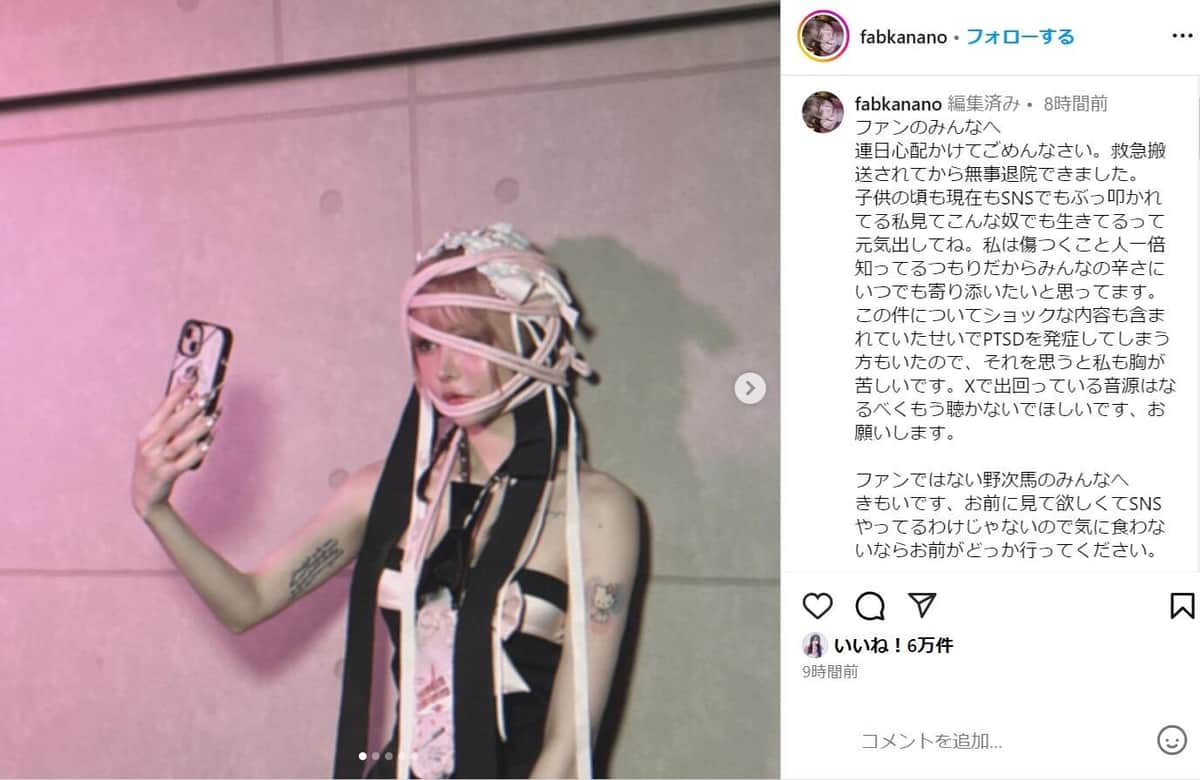
Senritsu’s legal standoff unfolded alongside severe, documented personal crises. In October 2024, entertainment news outlets across Japan reported on her emergency hospitalization following an incident of physical domestic violence involving her former partner, DJ Maru (formerly of the collective Repezen Foxx). Fans rallied around her as she confirmed her discharge on October 6, posting: "I am now in a safe place."
The assault laid bare the vulnerability of independent female artists operating without the fortress-like public relations machinery of legacy entertainment offices (jimusho). Outside the protective umbrella of mainstream agencies, young performers bear the brunt of online harassment, contract disputes, and predatory relationships entirely alone. Senritsu’s resilience, building her sister duo femme fatale alongside real-life sister Tonchiki Tsuchimikado, developing fashion ventures, and pursuing litigation, became a rare survival case study for an industry notorious for discarding outspoken talent.
Frequently Asked Questions (FAQ)
Q1: Why did Kanano Senritsu leave ZOC in 2020?
A1: Her departure was caused by deep ideological, creative, and operational disagreements with producer Seiko Oomori and the agency's executive team. The split escalated rapidly when unverified allegations regarding illegal drug use surfaced online, prompting management to publish statements asserting she had cut off communication.
Q2: What were the terms of the March 2026 lawsuit settlement?
A2: During an Instagram broadcast on March 1, 2026, Senritsu confirmed that her 2.5-year civil case against the operating agency behind METAMUSE (formerly ZOC) settled conclusively. The agreement included a formal apology from management acknowledging institutional fault and mischaracterization of events surrounding her exit.
Q3: What happened between ZOC and METAMUSE?
A3: Facing high-profile member departures, including Katy Kashii, and repeated public controversies, ZOC rebranded as METAMUSE in 2022 to signal a refreshed conceptual direction. The group later repurposed aspects of its brand identity back toward its original moniker while navigating continuous lineup transitions.
Structural Lessons for the Alternative J-Pop Industry
The resolution of the dispute between Kanano Senritsu and METAMUSE management marks the closing chapter of one of alternative idol pop’s most fractured eras. It highlights the structural hazards when alternative marketing capitalizes on genuine trauma without establishing rigorous legal boundaries, employee protections, or clear intellectual property agreements. When collectives frame themselves as sisterhoods rather than corporate businesses, the inevitable commercial disputes become deeply personal and destructive.
By forcing a formal apology through the judicial system, Kanano Senritsu disrupted a long-standing industry precedent that required departed idols to remain silent. Her trajectory from juvenile ward survivor to cultural icon, legal victor, and autonomous creator demonstrates that individual agency can hold entrenched entertainment institutions accountable.