Mastering Flourless Gateau Chocolat: The Complete Baker's Blueprint
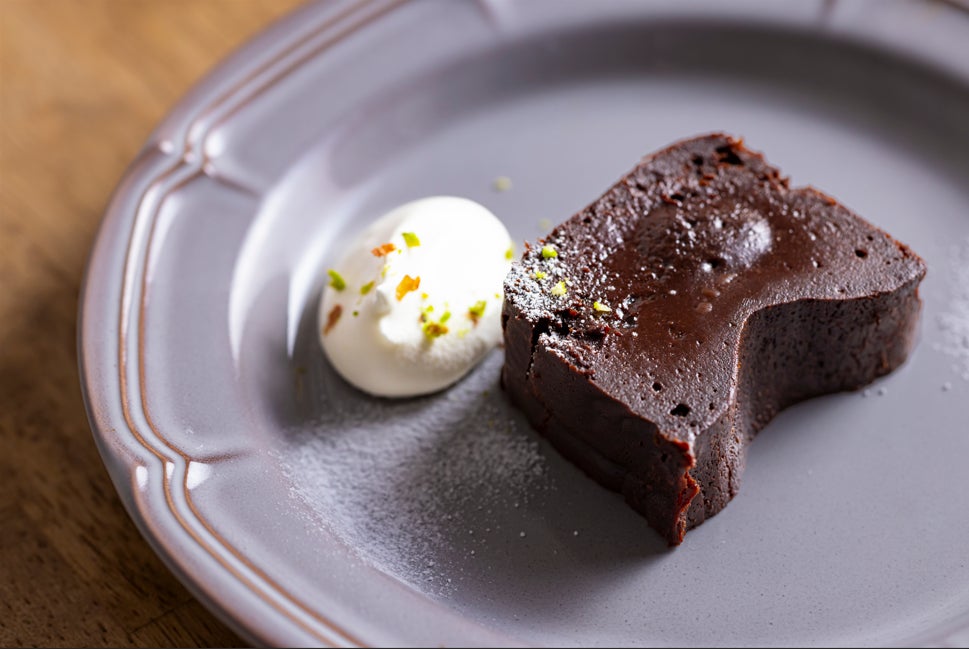
High-end pastry kitchens have steadily dismantled the assumption that classic French baking requires a starch backbone. Across professional bakeries, patissiers are abandoning weak wheat flour (hakurikiko) to pursue an uncompromised expression of pure cacao. This culinary evolution reached commercial dining rooms this year; as detailed in a recent PR TIMES Report on culinary operator L8 LLC and restaurateur Mayuko Yoshitome's Kakogawa dining room, modern kitchens are engineering flourless chocolate cakes where texture relies entirely on dairy emulsions and egg protein webs rather than grain binders.
Eliminating flour strips away safety margins. Without starch granules absorbing free moisture and setting crumb walls, a flourless chocolate cake must balance fat, water, and air through mechanical discipline. The difference between an oily, collapsed puddle and a luxurious French gateau chocolat comes down to molecular stability. Mastering this bake requires an exact breakdown of ingredient ratios, thermal handling, and folding physics.
📌 Key Takeaways:
- The Structural Shift: Removing wheat flour shifts structural responsibility entirely to egg proteins, which form a delicate lattice capable of holding heavy fats.
- The Emulsion Rule: Fat-to-liquid cohesion hinges on creating a glossy suspension between unsalted butter and chocolate before incorporating whipped eggs.
- Thermal Discipline: Core baking temperatures must not exceed 85°C (185°F), preserving a velvety crumb that sets into dense fudge as cocoa butter crystallizes during cooling.
The Demise of Wheat Flour in Classic French Patisserie
Traditional gateau chocolat recipes published throughout the late 20th century frequently included between 20 and 40 grams of weak flour. Cookbooks framed this modest addition as a stabilizing agent to prevent collapse upon cooling. In practice, wheat starch absorbs volatile cocoa aromas and creates an open, spongy crumb that dilutes mouthfeel. When cake flour hydrates, it forms gluten networks that hold moisture, but it leaves behind a bready residue on the palate.
Pastry masters have pushed past this compromise. By dropping flour entirely, bakers showcase pure cocoa solids in high-grade dark chocolate couverture. Japanese pastry authority Yoko Wakayama highlighted this transition in her seasonal chocolate works, demonstrating that increasing egg volume while eliminating dry grain creates a remarkably light initial lift that settles into an unctuous center. Without flour masking the palate, every note in the cacao bean, from red fruit acidity to roasted earth, remains intact.
The Physics of the Emulsion: Bain-Marie and the Egg Yolk Ribbon Stage
A flourless gateau chocolat is an emulsion under thermal pressure. If butter and melted chocolate separate early, oil leaks into the pan base during baking, leaving the top dry and rubbery. Controlled heating is non-negotiable. Using a bain-marie chocolate melting setup, suspending a heatproof bowl over barely simmering water without the bottom touching the liquid, keeps temperatures below 50°C (122°F). High heat scorches cocoa butter and destabilizes the lecithin network.
While the chocolate and butter cool into a silky liquid, whip the egg yolks and sugar until they reach the egg yolk ribbon stage. Beat the mixture until pale yellow, thick, and voluminous. When the whisk is lifted, the batter should fall back in distinct folds that hold their shape for three to four seconds before sinking. This stage serves two purposes: it dissolves sugar crystals into the egg water and disperses tiny air cells that ease the integration of the dense chocolate-butter base.
Pour the warm chocolate-butter blend into the ribboned yolks gradually, stirring from the center outward. The natural lecithin in the yolks binds the high fat content of the couverture and unsalted butter emulsion with the water phase. The result is a smooth, glossy batter that mirrors a loose ganache.
The Meringue Folding Technique: Building Lift Without Grain
Without baking powder or flour, aerated egg whites provide the sole leavening agent. Many home bakers over-whip whites into stiff, dry peaks, believing extra air yields a taller cake. Stiff meringue is brittle; its rigid protein walls break when forced into heavy chocolate, creating white streaks and forcing frantic over-mixing that deflates the batter.
Whip egg whites to flexible, glossy medium peaks. The tip should gently hook downward when the beater lifts. At this stage, protein films retain enough elasticity to expand in the oven without rupturing.
Execute the meringue folding technique in three deliberate steps:
Introduce one-third of the meringue directly into the chocolate base. Fold briskly to sacrifice this portion, lightening the density of the chocolate batter. Next, add half of the remaining whites, cutting down the center with a flexible silicone spatula, sweeping around the bowl's bottom, and folding upward in a rhythmic J-motion. Rotate the bowl 90 degrees with every stroke. Finally, add the remaining meringue, folding gently until the last white ribbons vanish into a uniform mahogany hue. Stop mixing immediately.
Formulating the Balance: Gluten-Free Baking Ratios
Baking without flour requires tight mathematical ratios. Increasing cocoa percentages without adjusting butter levels increases bitterness and dries out the crumb. The table below outlines how ingredient dynamics shift across classic, flourless, and dense terrine-style formulas.
| Formula Style | Core Ingredient Ratio (by weight) | Bake Temp & Time | Target Crumb Profile |
|---|---|---|---|
| Standard Gateau (With Flour) | 100g Choc : 80g Butter : 3 Eggs : 30g Flour : 70g Sugar | 170°C (340°F) | 35, 40 min | Spongy, light exterior, tender dry crumb |
| Flourless Gateau (Zero Starch) | 150g Choc (65%) : 100g Butter : 3 Eggs : 60g Sugar | 160°C (320°F) | 28, 32 min | Crisp surface shell, deeply fudgy, melt-in-mouth core |
| Chocolate Terrine (Egg-Set Custard) | 200g Choc : 120g Butter : 3 Whole Eggs (No Whip) : 40g Sugar | 140°C (285°F) Water Bath | 45 min | Silky, ganache-dense, zero air suspension |
For an optimal gluten-free baking ratio, select dark chocolate couverture hovering between 60% and 70% pure cocoa solids. Couverture contains extra cocoa butter (minimum 31%), ensuring clean liquefaction under heat. Lower-percentage baking chips contain emulsifiers, stabilizers, and reduced cocoa butter, which compromise the suspension and leave an artificial aftertaste.
Pan Preparation and Thermal Precision in the Oven
Baking temperature precision dictates the internal structure. Flourless cakes cooked at excessive heat puff up rapidly into a cracked soufflé before collapsing into a rubbery crater. Baking at 160°C (320°F) gives egg whites time to coagulate smoothly, creating a delicate crust while leaving the center velvety.
Springform pan preparation requires equal care. A 15cm (6-inch) or 18cm (7-inch) springform pan works best. Coat the base and sides with softened butter, then line both with parchment paper. Cut the bottom circle flush with the interior edge and extend the side collar 2 centimeters above the rim to support initial expansion. Dusting cocoa powder onto greased parchment adds unnecessary bitterness, so clean paper works best.
Pull the cake when the perimeter appears matte and set, while the central 5-centimeter zone shows a gentle tremble when the pan is nudged. An internal probe thermometer inserted halfway toward the center should register 82°C, 85°C (180°F, 185°F). Residual heat carries the center through final setting as the cake rests on a wire rack.
Serving Realities: How Temperature Dictates Texture
Unlike standard sponge cakes that degrade as they cool, a flourless gateau chocolat transforms across distinct temperature stages:
Served warm, roughly twenty minutes out of the oven, the core flows like a soft pudding. Fat emulsions remain liquid, yielding an unctuous center framed by a fragile crust.
Served at room temperature, around 20°C (68°F), the crumb settles into an authentic fudge texture. Dairy and cocoa fats solidify into a smooth suspension that yields easily to a fork.
Served chilled after twelve hours in the refrigerator, the cake tightens into a dense, velvety terrine. Slicing with a hot, dry chef's knife produces mirror-sharp edges. Bring slices back toward cool room temperature for twenty minutes before plating to let the aromatic cocoa volatiles release on the tongue.
Frequently Asked Questions (FAQ)
Q1: Why does my flourless gateau chocolat crack deeply across the center?
A1: Deep fissures stem from over-whipped egg whites or an overly hot oven. When meringue is whipped past medium peaks, trapped air pockets expand aggressively and tear the surface before egg proteins can coagulate. Bake at 160°C (320°F) and whip whites only until they form glossy, slightly flexible peaks.
Q2: Can I substitute granulated sugar with honey or liquid syrups?
A2: Avoid liquid sweeteners in flourless gateau chocolat formulas. Liquid sugars alter the moisture-to-fat balance and disrupt the crystalline matrix needed to whip and stabilize egg whites. Stick to fine caster sugar, which dissolves cleanly into egg yolks during ribboning and reinforces the meringue walls.
Q3: Why did butter leak out of the pan during baking?
A3: Leaking fat indicates a broken emulsion. This issue occurs when melted chocolate and butter are mixed into egg yolks while still scorching hot (above 55°C / 131°F), or when the base is folded unevenly. Keep your chocolate-butter mixture lukewarm before blending, and fold thoroughly until the batter shows uniform gloss and color.
The Modern Standard for Pure Chocolate Baking
Removing wheat flour from gateau chocolat is more than an adjustment for gluten-sensitive diets. It represents a commitment to ingredient clarity. By eliminating grain starches that muddy the palate, bakers allow cacao solids, butterfat, and delicate egg protein structures to carry the cake entirely on their own terms.
Baking this cake successfully requires strict adherence to temperature control and physical technique: melting couverture gently over indirect steam, ribboning yolks to a pale custard, whipping egg whites to flexible medium peaks, and keeping oven temperatures steady. Master these mechanics, and your flourless gateau chocolat will deliver an intense, silky chocolate profile that flour-based recipes can never match.