Microscopic Edge Proof: How Sakai Jikko Knives Outperform Factory Cutlery
Place a mass-produced German kitchen knife and a hand-forged Japanese blade under a scanning electron microscope, and the myth of industrial uniformity collapses immediately. Factory edges reveal jagged troughs, crushed carbides, and microscopic burrs left behind by mechanical grinding wheels. In contrast, an artisan-finished blade from Sakai displays an apex measured in fractions of a single micron. Driven by international culinary demand and spotlighted by a recent PR TIMES Report detailing initiatives led by Jikko Cutlery President Toshiyuki Jikko, culinary professionals worldwide are scrutinizing the metallurgical physics that separate hand-forged Sakai Uchihamono cutlery from assembly-line stainless steel.
Sakai, an industrial satellite city south of Osaka, produces an estimated 90% of the hand-forged single-bevel knives used by professional Japanese chefs. The brand Jikko Cutlery (實光刃物), established in 1901, operates at the center of this culinary corridor. While global department stores stock automated stamped cutlery that relies on thick secondary bevels to survive blunt abuse, culinary masters continue to pay premium rates for Sakai blades. The reason is rooted in cellular biology and knife steel geometry.
📌 Key Takeaways:
- The Microscopic Edge: Hand-forged Sakai high-carbon blades achieve an apex radius below 0.3 microns, cutting through plant and fish cell walls without bursting internal water vacuoles.
- The Sakai Division of Labor: Unlike solitary knifemakers, traditional Sakai Uchihamono relies on an interdependent guild system separating master blacksmiths (kaji) from master sharpeners (habazuke).
- The Generational Shortage: Regional craft organizations warn that Sakai’s active master blacksmith count could fall to roughly 5 specialists within two decades without sustained training subsidies.
The Sub-Micron Geometry of Sakai Uchihamono Blades
Factory blades depend on automated roller mills and robotic belt sanders. These machines stamp knife profiles out of broad sheets of alloyed steel, heat-treat them in massive conveyor furnaces, and grind the cutting edges with high-speed synthetic abrasive wheels. This friction-heavy process generates localized thermal blooms that decarb the steel apex. The result is an unstable wire edge that dulls within days of heavy prep work.
Traditional Sakai blacksmithing bypasses bulk mechanical stress by employing cold hammer compaction and charcoal forge heating. Blacksmiths hand-laminate brittle high-carbon core steels, predominantly Hitachi Yasugi White Steel (Shirogami) or Blue Steel (Aogami), to protective jackets of soft wrought iron (jigane). This composite structure absorbs shock while allowing the cutting core to reach a hardness rating of 62 to 64 HRC.
The decisive performance gap surfaces during final sharpening. At Jikko Cutlery, craftspeople execute the hatsuke process entirely by hand across rotating water stones running at low revolutions. This eliminates destructive frictional heat. By working progressively from coarse grits to natural finishing stones, sharpeners establish an edge profile that measures between 0.15 and 0.3 microns at the apex. Stamped German and Chinese factory blades rarely narrow past 1.0 to 1.5 microns, forcing the cook to wedge through food via brute force rather than genuine surgical separation.
Why Master Sushi Chefs Reject Industrial Factory Edges
Slice a piece of raw bluefin tuna or sea bream with an ordinary Western chef knife, and the cut surface turns opaque within minutes. Look at that fish flesh under magnification: cell walls are ruptured, releasing intracellular fluid, myoglobin, and natural fats onto the cutting board. This leakage accelerates oxidation, dulls the fish’s translucent sheen, and changes its texture on the palate.
Single-bevel culinary cutlery forged in Sakai, specifically the yanagiba for slicing raw fish and the usuba for sheet-cutting vegetables, relies on an asymmetrical geometry engineered to prevent this cellular blowout. The front face (kiriha) features a wide, flat primary bevel, while the back side (urasuki) is ground slightly concave. This hollow ground back creates an air pocket between the blade and the protein, dropping cutting friction to near zero. When a sushi chef pulls a Jikko yanagiba through a fillet, the blade splits the muscle fibers cleanly without tearing them.
Vegetable prep reveals the same mechanical divide. Stamped multi-purpose kitchen knives smash through the rigid pectin cell walls of onions, radishes, and scallions. This ruptures the vacuoles containing sulfur compounds and alliinase enzymes, releasing the volatile aerosols that irritate human eyes. A hand-forged Sakai usuba sharpened to sub-micron tolerances slices cleanly between plant cells, minimizing fluid loss and leaving ingredients crisp for hours longer in service.
Metallurgical and Structural Benchmarks: Handmade vs. Stamped
The gulf between industrial production runs and hand-forged Sakai cutlery is quantifiable across hardness, geometry, edge lifespan, and metallurgical consistency. Laboratory analysis and commercial kitchen stress tests highlight why Osaka’s knife district retains an undisputed market hold:
| Performance Metric | Sakai Jikko Hand-Forged Cutlery | Standard Factory Stamped Blades |
|---|---|---|
| Core Steel Composition | Hitachi Shirogami #2 / Aogami Super (High Carbon) | X50CrMoV15 or 420J2 (Low-Cost Stainless) |
| Core Hardness Rating | 61, 65 HRC (High hardness, low flex) | 54, 57 HRC (Tough but quick to roll) |
| Edge Apex Thickness | 0.15, 0.30 microns (Hand-stoned apex) | 1.00, 1.80 microns (Machine-buffed) |
| Edge Angle Per Side | 8°, 12° (Single-bevel or acute double) | 18°, 22° (Blunt compound bevel) |
| Production Process | Split artisan guild: Master smith + Master sharpener | Continuous automated stamping & robotic belts |
| Useful Service Life | 15, 30+ years (Renewable across stone whetting) | 2, 5 years (Disposed once primary grind thickens) |
The operational gap becomes clear after hundreds of board strikes. A soft factory blade rolled to 56 HRC bends along its micro-bevel when striking wooden boards, demanding frequent burnishing with a honing steel. A Sakai blade at 63 HRC does not roll; its microscopic edge remains rigid, shedding dull atoms gradually until a short session on a 5,000-grit water stone restores full sharpness.
The Vanishing Guilds Threatening Sakai's Cutlery Supply
Despite rising global demand, Sakai’s artisanal supply chain faces severe demographic pressure. Unlike knife manufacturing hubs in Seki or Sanjo, where integrated factories handle every production step under a single roof, Sakai relies entirely on an artisanal ecosystem. Independent blacksmiths forge the raw blanks, separate sharpeners grind the profiles, and assembly shops mount the magnolia-wood handles.
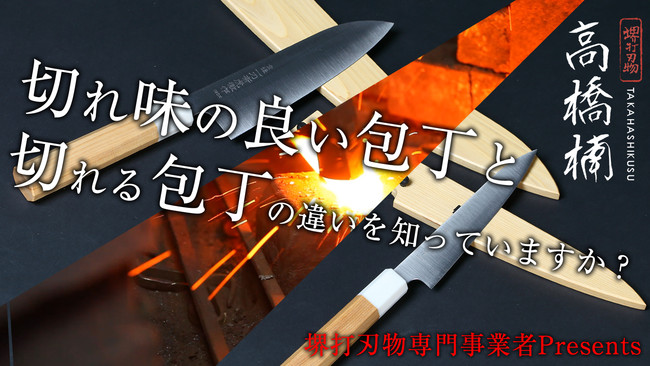
This generational vulnerability reached public awareness through industrial filings and crowdfunded preservation initiatives across Osaka Prefecture. Industry reports from historic Sakai wholesaler Takahashi Kusu sounded a blunt alarm: without immediate interventions to train younger successors, Sakai’s active master blacksmith count could contract to as few as 5 craftsmen within 20 years. At that point, the regional guild system risks operational collapse.
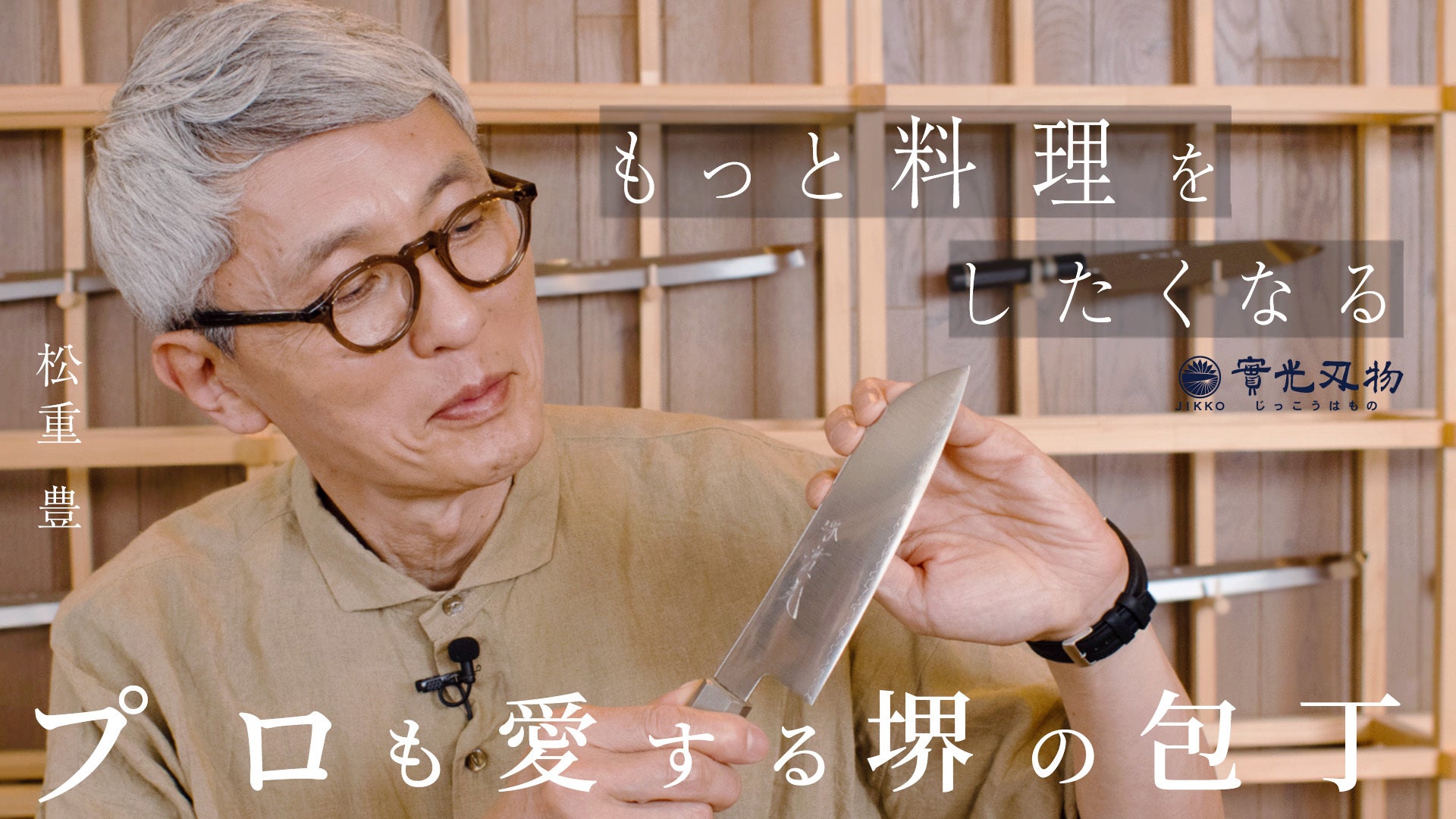
Firms like Jikko Cutlery have responded by modernizing their business architecture. While preserving hand-sharpening methods inside their Sakai workshops, Jikko expanded direct consumer outreach and built multi-language educational portals. The objective is commercial: secure premium international margins to fund multi-year apprentice salaries, stabilizing Sakai Uchihamono before the elder generation of smiths retires permanently.
Who Needs a Sakai Jikko Knife, and Who Should Avoid It
The performance benefits of a hand-forged Sakai high-carbon blade are real, but these knives demand discipline. Treating a Jikko White Steel blade like a stamped supermarket knife will destroy it within days.
Ideal Profiles:
- Professional Chefs and Line Cooks: High-volume culinary teams prepping fish, poultry, and vegetables benefit directly from clean cellular slicing, zero food bruising, and prolonged edge retention.
- Dedicated Home Cooks: Cooks who enjoy regular water stone sharpening and appreciate high-carbon steel responsiveness will find tools like Jikko's double-bevel gyuto (chef knife) or santoku vastly superior to Western factory equivalents.
- Precision Knife Workers: Anyone preparing raw crudo, sashimi, or paper-thin garnishes where surface texture and visual presentation matter.
Risk Profiles (Who Should Avoid These Blades):
- Dishwasher Users: Sakai knives cannot survive dishwashers. Harsh detergents will corrode the high-carbon steel, and high-heat drying cycles will crack natural wood handles.
- Rough-Prep Cooks: Cutting through poultry bones, dense squash, frozen meats, or using twisting motions will chip an acute 63 HRC edge instantly. Heavy utility work requires a thick factory cleaver, not an artisanal Japanese edge.
- Low-Maintenance Users: Unclad carbon steel must be rinsed, wiped dry, and protected against ambient humidity. If you leave wet tools sitting in the sink, choose a modern powder-metallurgy stainless steel instead.
Frequently Asked Questions (FAQ)
Q1: Why do Sakai Jikko knives cut cleaner than standard Western cutlery?
A1: Sakai Jikko knives use hand-forged high-carbon steels hardened to 61, 65 HRC, allowing the edge to be sharpened down to an acute 8° to 12° angle with an apex width below 0.3 microns. Standard Western knives use softer stainless alloys (54, 57 HRC) ground to 20° angles, which crush food cells instead of cleanly splitting them.
Q2: Will a high-carbon Sakai blade rust immediately?
A2: Carbon steel oxidizes when exposed to water, acid, and air. During food prep, the blade develops an inert blue-gray patina that stabilizes the metal. If left wet or dirty in a sink, it will develop orange rust within an hour. Rinsing the blade in warm water and drying it thoroughly with a towel after use keeps it rust-free.
Q3: Can I sharpen a Sakai single-bevel knife using a regular pull-through sharpener?
A3: Never use pull-through sharpeners or electric grinding wheels on Sakai cutlery. These tools grind both sides symmetrically at blunt angles, destroying the asymmetrical single-bevel geometry and chipping the hard steel. Sakai blades must be maintained on water stones (whetstones) across progressive grits from 1,000 to 6,000.
Preserving the Sakai Edge in Modern Commercial Kitchens
The global knife market is crowded with laser-etched "Damascus" stainless blades, automated factory knockoffs, and hollow branding campaigns. Against that noise, the performance of a hand-forged Sakai Jikko knife remains anchored in basic physics. The sub-micron apex of a properly hammered piece of Shirogami steel cuts cleaner, lasts longer, and preserves food quality better than any automated industrial blade.
As international kitchens prioritize ingredient presentation and reduce culinary prep waste, the hand-hammered steel of Sakai Uchihamono stands on its own merits. The challenge over the coming decade is not convincing professional chefs of the blade's superiority; it is keeping Sakai's traditional workshops staffed with trained blacksmiths so this craft survives into the next generation.