Nissan Y51 Fuga Facelift Truth: Why the Late Kouki Models Completely Redefined the VIP Sedan Scene
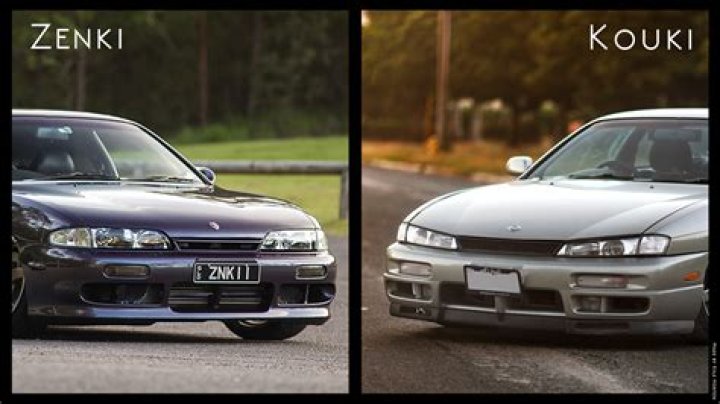
Used rear-wheel-drive Japanese executive sedans are experiencing an unprecedented revival among import purists and VIP styling builders. At the epicenter of this surge sits the Nissan Fuga Y51, a platform that carried Nissan’s rear-drive luxury ambitions from late 2009 through 2022. The sharp division between the early production cycle, known domestically as the Zenki (2009, 2015), and the late-model facelift, the Kouki (2015, 2022), creates a genuine fork in the road for prospective buyers.
Enthusiasts constantly debate whether the aesthetic overhaul and chassis quietness of the late model justify a market premium that can run 40% to 70% above early cars. Fresh industry attention has amplified this rivalry, highlighted by a recent Yahoo!ニュース Report examining how pioneer aero tuners are re-engineering the Kouki platform to lead modern VIP street styling. Understanding the mechanical, visual, and identity shifts between these two eras is critical before committing to an import order.
📌 Key Takeaways:
- Visual Restructuring: The 2015 Kouki mid-cycle refresh discarded Nissan badging entirely for domestic Japanese showrooms, adopting Infiniti double-arch wave grilles, sharp full-LED lighting, and reshaped bumper fascias.
- Dynamic Refinement: Kouki models introduced revised double-piston shock valving, structural acoustic glass, and upgraded sound deadening, transforming high-speed ride compliance.
- VIP Tuning Demand: Early Zenki chassis serve as accessible entry points for aggressive coilover and drift configurations, while Kouki platforms dominate high-end aesthetic builds and luxury street displays.
The Visual Metamorphosis: From Organic Lines to Global Infiniti Badging
The original 2009 Zenki Y51 arrived with a muscular, flowing silhouette shaped under Nissan design veteran Shiro Nakamura. Up front, it featured soft horizontal grille slats, chrome surround accents, and sweeping, organic bi-xenon projector headlamps. The domestic market badge proudly carried the classic chrome Nissan ring. While imposing in traffic, the Zenki maintained a distinctly domestic Japanese sedan posture, blending seamlessly alongside corporate Toyota Crowns and Honda Legends.
Everything changed in February 2015. Nissan executed a structural brand experiment across the Japanese archipelago. Rather than wearing the traditional Nissan emblem, the Kouki Fuga rolled off the Tochigi assembly line branded exclusively with the Infiniti badge front and rear. This change aimed to elevate the vehicle into direct competition with European executive icons like the BMW 5 Series and Mercedes-Benz E-Class.
The Kouki front fascia received an aggressive redesign. A deep, three-dimensional double-arch grille with intricate wave-pattern mesh dominated the front profile. Nissan replaced the soft Zenki headlamps with sharp, swept-back assemblies illuminated by signature LED daytime running rings and full-LED low and high beams. Out back, redesigned LED taillights gained a distinct double-arch internal glow pattern, framed by a redesigned chrome trunk garnish and a chiseled rear diffuser panel. The car ceased looking like an executive taxi. It became a wide, menacing highway cruiser.
Mechanical Refinement and Chassis Dampening: Upgrades Under the Metal
Underneath the sculpted sheet metal, the engine options remained fundamentally rooted in the proven VQ and VK architecture. The naturally aspirated VQ37VHR 3.7L V6 continued as the core powertrain pillar, producing 333 horsepower and 363 Nm of torque, backed by a fast-shifting 7-speed automatic transmission with downshift rev-matching. Base trims utilized the 2.5-liter VQ25HR, while efficiency-focused corporate fleets leaned on the 3.5-liter V6 parallel hybrid.
The driving experience between Zenki and Kouki diverged substantially through suspension dampening and cabin acoustic treatments:
- Frequency-Sensitive Shock Valving: Nissan re-engineered the front double-wishbone and rear multi-link suspension dampening curves for the Kouki. Engineers introduced dual-piston shock valving capable of separating micro-frequency road vibrations from heavy body compression, fixing the low-speed jitter that plagued 19-inch-equipped Zenki Sport models.
- Kouki models incorporated thicker windshield glass and front door acoustic laminates. This dropped ambient road noise at 100 km/h by roughly 3 decibels compared to early iterations.
- Structural Adhesive Points: Late chassis received localized structural bonding around the rear bulkhead, improving torsional rigidity under lateral load.
- The Kouki integrated an overhauled radar-guided emergency braking architecture, full-speed adaptive cruise control, and multi-angle active lane intervention, replacing the rudimentary forward-collision warnings on Zenki models.
Generational Contrast: Zenki vs Kouki Technical and Spec Breakdown
Deciding between early and late model years requires weighing price floor accessibility against factory refinement and exterior aggression. The table below outlines the core technical and mechanical distinctions across the production run.
| Feature Category | Zenki (Early: 2009, 2015) | Kouki (Late: 2015, 2022) |
|---|---|---|
| Factory Badging | Classic Nissan Ring (Grille & Trunk) | Infiniti Double-Arch Emblems (JDM spec) |
| Front Lighting | Halogen DRL with Bi-Xenon Projector | Full LED Headlights with Integrated Halos |
| Front Grille Structure | Four horizontal chrome-plated slats | Three-dimensional sport wave-mesh grille |
| Rear Profile | Segmented LED brake clusters; soft bumper lip | Continuous LED light guides; integrated lower diffuser |
| Ride Quality & Dampening | Conventional hydraulic single-valve shocks | Double-piston variable dampening dampers |
| Average JDM Used Cost (2026) | $4,500, $8,500 USD (auction base) | $11,500, $19,000 USD (auction base) |
The Mitsubishi Proudia Anomaly: A 552-Unit OEM Collector Oddity
A fascinating chapter in Y51 history revolves around a badge-engineered corporate sibling that catches even seasoned automotive historians off guard. Between 2012 and 2016, Nissan entered an OEM supply agreement with Mitsubishi Motors, which had shuttered development of its own traditional sedans. Nissan supplied the Y51 chassis to be sold through Mitsubishi dealer networks as the second-generation Mitsubishi Proudia (with a long-wheelbase version sold as the Dignity).
Mitsubishi added horizontal three-diamond slats across the grille and unique corporate badging, leaving the rear cabin, chassis, and 3.7-liter VQ37VHR running gear untouched. Official registry records confirm that only 552 units of the Proudia were ever registered in Japan, transforming it into an ultra-rare curio.
While most corporate executives treated them as basic fleet transit, modern grass-roots builders have started tracking these rare chassis down. Japanese drift car fabricators have begun gutting low-mileage Proudias, dropping them on custom coilovers, welding rear differentials, and exploiting the VQ37VHR's high-revving response. The Proudia remains the ultimate sleeper twist on the Y51 platform.
Junction Produce and the Modern VIP Car Scene Renaissance
The Y51 Kouki has emerged as a cornerstone of Japan’s VIP car scene (Bippu), stepping into the shoes once filled by the legendary Y33 Cima and Toyota Aristo JZS161. While modern Japanese safety regulations and crash standards made late-model sedans taller and bulkier, builders have adapted using bespoke aerodynamic packages.
Pioneering Osaka tuning house Junction Produce reignited enthusiasm for the Kouki with dedicated aero kits tailored precisely to the late-model bumper geometry:
- Designed to extend the rear trunk lip outward by 35mm without adding bulk, balancing the Kouki’s rounded decklid.
- Mounts along the upper rear window glass, visually lowering the car's high roofline.
- Junction Produce fueled an unexpected resurgence of bumper and roof-mounted whip antennas, evoking early 1990s VIP highway aesthetics while contrasting cleanly with the Kouki’s sharp LED headlights.
- The wider Kouki front fenders comfortably swallow 20-inch to 21-inch stepped-lip wheels with low offsets (+15 to +25), allowing deep concave wheel faces when paired with negative camber control arms.
Builders who once exclusively modified early Toyota Celsiors or Crowns now pursue the Y51 Kouki for its potent direct-injected power and superior interior tech. It pairs vintage stance with modern, trouble-free reliability.
Ownership Reality: Selecting Between Early Bargains and Late Perfection
Deciding between a Zenki and Kouki comes down to how you plan to build the car, along with realistic maintenance tolerances.
Who Should Choose the Early Zenki (2009, 2015)
The Zenki is the optimal selection for enthusiasts planning aggressive custom modifications. If you intend to install static coilovers, modify front fenders, pull rear quarter panels, or swap out the entire bumper assembly for an aftermarket fiberglass aero kit, spending the extra money on a Kouki makes little sense.
The early chassis is also exceptionally affordable. However, buyers must budget for preventive maintenance. Early VQ37 engines (specifically 2009 to early 2012) utilized paper-based oil gallery gaskets behind the timing cover. These can deteriorate over time, leading to oil pressure drops and costly repairs. Verify whether the galley gasket service has been completed using updated metal gaskets.
Who Should Choose the Late Kouki (2015, 2022)
If your goal is an immaculate, high-end daily driver, executive cruiser, or restrained VIP build featuring light aero, subtle suspension drops, and luxury multi-piece wheels, the Kouki stands far ahead. The factory exterior styling requires almost no cosmetic help to turn heads.
The interior offers revised infotainment integration, significantly quieter cruising dynamics, and factory-standard metallic galley gaskets that eliminate early engine failure worries. You pay a noticeable premium at auction for late-model examples, but you gain a modern, road-trip-ready machine.
Frequently Asked Questions (FAQ)
Q1: Can I convert a Zenki Y51 front end to look like a Kouki model?
A1: Yes, but the conversion is neither cheap nor purely plug-and-play. A complete front-end swap requires the Kouki hood, front bumper, upper and lower grilles, LED headlight assemblies, core support brackets, and custom wiring harnesses to adapt Zenki bi-xenon pinouts to the Kouki full-LED systems.
Q2: Why did the domestic Japanese Y51 Fuga use Infiniti badges instead of Nissan logos after 2015?
A2: In 2014 and 2015, Nissan attempted to establish Infiniti as a standalone global luxury competitor within Japan without launching a separate dealership network. Flagships like the Y51 Fuga and V37 Skyline received official Infiniti emblems straight from the factory floor, although the cars continued to be sold through existing Nissan showroom networks.
Q3: Does the Y51 Fuga suffer from dashboard melting or cracking issues like the earlier Y50?
A3: Nissan resolved the severe polyurethane decomposition that plagued the Y50 Fuga dashboard. The Y51 utilizes a higher-grade composite and leather-stitched upper dash structure that handles UV exposure substantially better, showing virtually zero instances of the sticky deterioration seen on mid-2000s models.
The Last Traditional Rear-Drive Executive Flagship
The Y51 Fuga closed an iconic chapter in automotive manufacturing. When production ended in mid-2022 without an internal-combustion rear-wheel-drive successor, Nissan closed the door on more than half a century of traditional corporate sedan dominance tracing back to the Gloria and Cedric.
Today's used marketplace clearly reflects this transition. Zenki iterations provide accessible fun for enthusiasts seeking cheap, naturally aspirated V6 torque and aggressive stance platforms. Kouki models stand as the refined pinnacle of Nissan’s modern executive engineering. With sharp LED architecture, high-speed road manners, and an imposing presence, the late Y51 proves that Nissan’s final classic luxury flagship went out on its own terms.