On-Air Tension: The Exact Moments Caught on Camera in the Tokyo 03 Showdown
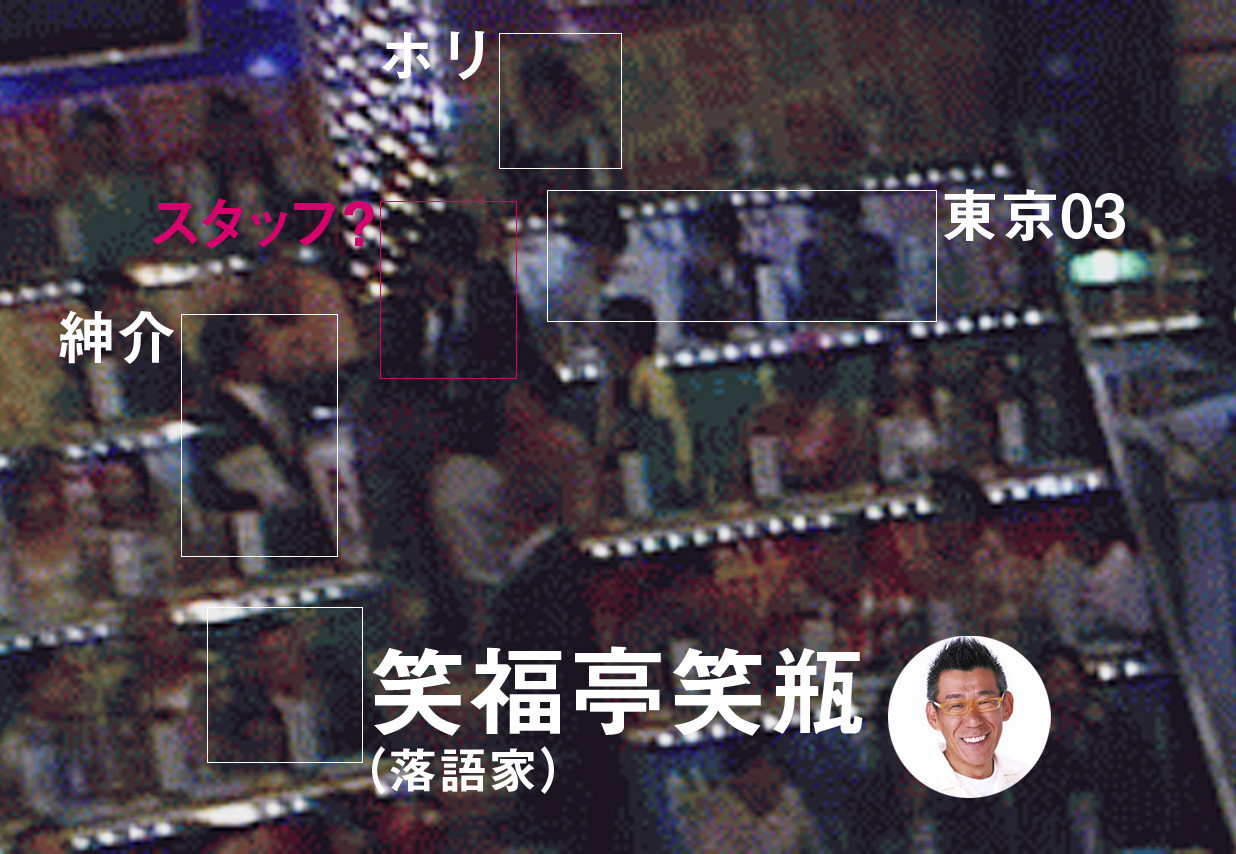
Live Japanese television thrives on meticulous planning disguised as chaotic spontaneity, but on the evening of October 3, 2009, real terror pierced the facade. Millions of viewers tuned into Tokyo Broadcasting System (TBS) for the five-hour marathon variety special All-Star Thanksgiving ('09 Autumn). Instead of festive banter, they watched a genuine backstage rage spill onto the soundstage floor. Shinsuke Shimada, one of the most powerful and feared variety hosts in modern Japanese entertainment history, confronted the sketch comedy trio Tokyo 03 on-air, an altercation captured in background camera angles that broke the unspoken rules of network television.
The unscripted clash, documented across the country and detailed in contemporaneous coverage like the Japan Today Report, ignited an industry-wide debate over backstage hierarchies. More than an isolated temper tantrum, the moment exposed the brutal mechanics of television authority, agency leverage, and the strict feudal expectations placed on rising performers.
📌 Key Takeaways:
- The Catalyst: Fresh off winning the King of Conte 2009 championship, Tokyo 03 reportedly failed to observe customary pre-show greeting rituals (aisatsu) in Shimada's dressing room prior to the live broadcast.
- The On-Air Flashpoint: While a performance by pop singer Silvia and gymnasts occupied the primary camera foreground, viewers caught Shimada physically cornering and verbally dressing down the seated trio in the blurred background.
- The Long-Term Shift: The public backlash and chilling atmosphere signaled the beginning of the end for coercive, autocratic variety hosting, paving the way for Tokyo 03 to become the definitive masters of contemporary theatrical sketch comedy.
The Spark in Studio 6: How Backstage Protocol Broke Down
The backstage culture of Japanese commercial television operates on rigid, unwritten etiquette known as aisatsu. Junior talents (kohai) are expected to locate senior powerhouses (senpai) hours before recording, knock on their dressing room doors, bow, and present their respects. For decades, skipping this formality was not just viewed as poor manners. It was interpreted as open disrespect toward the senior host's authority and network standing.
Just eleven days before the broadcast, on September 22, 2009, Tokyo 03, comprising Satoshi Iizuka, Akihiro Kakuta, and Akinaga Toyomoto, won the prestigious King of Conte 2009 tournament. The victory instantly catapulted the Production Jinrikisha trio from underground live theater favorites into high-rotation television properties. Thrust overnight into prime-time programming, they arrived at the bustling TBS Akasaka studios alongside more than 150 celebrities and comedians, completely unfamiliar with the sprawling logistics of the network's flagship variety broadcast.
Accounts from floor directors and agency staff later revealed that the trio either ran out of time or could not access Shimada's guarded green room before the opening buzzer sounded. To Shimada, a veteran Yoshimoto Kogyo heavyweight whose rating hits like Quiz! Hexagon II dictated network schedules, the oversight felt deliberate. His authority was unassailable, and within the industry, slighting him carried immediate professional consequences.
The Uncut Broadcast: What Viewers Saw During the Circus Act
The confrontation did not happen during a commercial break. It took place live on air while TBS producers attempted to mask the fury with loud music and athletic showmanship.
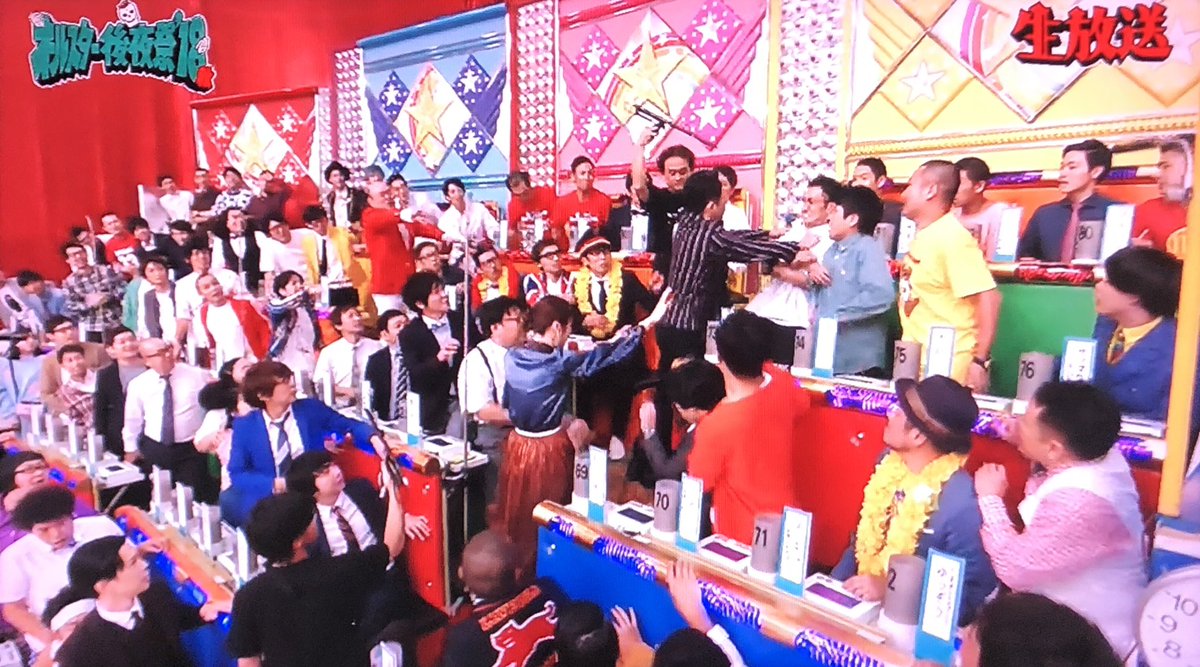
Two hours into the broadcast, the production introduced an exhibition performance featuring singer Silvia alongside acrobatics and cheer routines. As the camera framed the stage performers in crisp focus, the studio backdrop remained wide enough for viewers to see the guest bleachers. Suddenly, Shimada strode across the floor toward the section where Tokyo 03 sat.
The sequence unfolded in full view of attentive viewers:
Shimada leaned over the front desk, his body rigid and aggressive. Eyewitnesses later confirmed he grabbed Satoshi Iizuka by his clothing while unleashing a barrage of profanities, furious that the newly crowned champions had not paid proper homage. Veteran comedian Koji Imada, co-hosting the program, rushed behind Shimada in an attempt to physically de-escalate the situation and shield the camera's sightline. Other Yoshimoto comedians seated nearby froze in palpable shock. When the musical number ended and the broadcast cut back to the full studio, the room's energy had flatlined. Hostess Wakako Shimazaki appeared shaken, laughter vanished from the studio audience, and Tokyo 03 sat motionless, heads bowed toward the studio floor.
Timeline of the On-Air Escalation
The broadcast timeline shows how an internal dressing-room slight crossed over into public view, leaving the production crew scrambling to protect both their star talent and the network's sponsor-backed live program.
| Broadcast Window | Studio Activity | Observed Tension & Industry Impact |
|---|---|---|
| Pre-Show (16:00, 18:00) | Rehearsals & 150+ guest arrivals | Tokyo 03 fails to complete formal dressing-room greetings with Shimada due to scheduling bottlenecks. |
| Mid-Show (20:15, 20:25) | Live musical act & acrobatic routine | Shimada crosses the floor; physical confrontation captured in background wide shots; co-hosts intervene. |
| Post-Act (20:26, 21:00) | Studio wide shot returns to quiz floor | Studio laughter plummets; Tokyo 03 remains seated in silence; online message boards flood with real-time viewer reports. |
| Post-Broadcast (23:30+) | Emergency backstage mediation | Jinrikisha agency management escorts Tokyo 03 to issue formal apologies to Shimada and TBS executives. |
Power Dynamics on Display: Feudal Hierarchies and Agency Turf
The altercation exposed the asymmetrical power structures governing Japanese variety shows in the 2000s. Yoshimoto Kogyo held undisputed sway over prime-time television real estate. Shimada was the crown jewel of that apparatus, capable of minting careers or blacklisting acts with a single word to executive producers.
In contrast, Production Jinrikisha operated as a smaller, boutique comedy agency focused heavily on live theater craft, monologue performance, and narrative sketches rather than television variety gamesmanship. Jinrikisha talents had built a reputation for dry, situational realism rather than aggressive studio banter. To Shimada, the trio’s perceived informality represented an intolerable breakdown in the industry’s master-apprentice code.
Social media was still nascent, but Japanese forums like 2channel erupted during the live broadcast. Viewers who noticed the background assault began compiling screengrabs, transcribing audio blips, and demanding explanations from TBS. The network and talent agencies initially attempted to suppress the story, treating it as an internal miscommunication. Yet the sheer visibility of the clash prevented it from disappearing into the quiet files of showbiz gossip.
The Turning Tide: How the Confrontation Reshaped Japanese Comedy
The immediate fallout saw Tokyo 03 endure quiet marginalization from select high-profile Yoshimoto-hosted variety programs. They did not retaliate in the press. They did not leak grievances to tabloids. Instead, Satoshi Iizuka, Akihiro Kakuta, and Akinaga Toyomoto retreated to their primary strength: theater stages and pristine, character-driven comedy.
The dynamic shifted dramatically in August 2011, less than two years later. Shinsuke Shimada abruptly announced his complete retirement from the entertainment industry following police and internal investigations revealing his connections to organized crime syndicates (Yakuza). His swift departure shattered the single most dominant variety empire in the country and punctured the culture of backstage intimidation that sustained it.
With Shimada out of broadcasting, Tokyo 03 steadily emerged as cultural giants on their own terms. Today, their nationwide theater tours sell out major venues in seconds, their writing is studied across the comedy landscape, and all three members hold coveted roles in critically acclaimed television dramas, commercial campaigns, and theatrical productions. They achieved creative independence without bowing to the aggressive variety archetype that nearly extinguished their careers on that October night.
Frequently Asked Questions (FAQ)
Q1: Did Shinsuke Shimada ever publicly apologize to Tokyo 03?
A1: No public apology was ever issued by Shimada to Tokyo 03 on television. Backstage, Production Jinrikisha executives brought the trio to Shimada's dressing room after the All-Star Thanksgiving broadcast to apologize for the perceived breach of greeting etiquette, resolving the situation behind closed doors to avoid an outright media war.
Q2: Why was Tokyo 03 unable to greet Shimada before the broadcast?
A2: Tokyo 03 had just won the King of Conte 2009 championship eleven days prior and was unfamiliar with the chaotic schedule of TBS's massive live productions. With over 150 celebrities competing for space and attention in the hallways, the trio ran out of preparation time before being directed to their floor seats, unintentionally skipping the dressing-room greeting.
Q3: How did other comedians present in the studio react during the incident?
A3: Comedians sitting near Tokyo 03 froze in visible discomfort. Senior host Koji Imada physically stepped in behind Shimada to calm him down and attempt to block the sightline of the active cameras, while co-host Wakako Shimazaki struggled to maintain her composure during subsequent cue cards.
The Lasting Legacy of a Television Flashpoint
The 2009 showdown between Shinsuke Shimada and Tokyo 03 remains an indelible moment in Japanese broadcasting history because it captured something television networks spend millions trying to hide: the raw, transactional reality behind the laughs. It demonstrated how close the line ran between variety camaraderie and outright workplace bullying.
More than a decade and a half later, Japanese entertainment operates in a radically different climate. Compliance mandates, agency breakups, and digital streaming platforms have dismantled much of the feudal control once wielded by single gatekeepers. Tokyo 03 stands as living proof that creative rigor outlasts broadcast intimidation, transforming an on-air humiliation into an unintended catalyst for their enduring legacy.