One Hair Tie, No Pins: Watch How a Short Bob Transforms into a Sleek Bun
Bob haircuts look sharp and intentional when freshly blown out, but anyone wearing chin-length hair knows the quiet frustration of trying to pull it back. Stray nape layers slide out within minutes, traditional bobby pins poke into the scalp, and mini claw clips rarely survive a brisk commute. Over the past three seasons, Tokyo-based salon stylists have dismantled that problem entirely using a structural twist that eliminates pins altogether.
Documented across leading digital hairstyle channels, including the YouTube (Chie's Hair Arrange) Report, this minimalist technique relies on an inverted ponytail flip, known universally in Japanese styling as kururinpa. By pairing an inside-out loop with a half-gathered tail, the method traps short, blunt layers under tension, producing an elegant low chignon in less than two minutes with nothing more than a single polyurethane elastic.
📌 Key Takeaways:
- The Mechanical Shift: The Japanese kururinpa inverted flip creates self-locking side rolls that wedge blunt nape layers in place without hairpin anchors.
- Tool Redundancy: Replacing bulky clips with a single 2mm silicone or polyurethane elastic eliminates scalp pressure and prevents mid-day slipping.
- Universal Bob Utility: The sequence secures chin-to-collarbone lengths, fine strands, and heatless daily textures in roughly 90 to 120 seconds.
The Mechanical Architecture of the Kururinpa Inversion
Traditional updos require excess hair length to wrap around a central base. When hair sits at chin level, that length simply does not exist. Forcing short strands into a standard bun produces loose perimeter ends that immediately splay outward. The topsy tail low bun solves this by reversing where the holding tension originates.
Instead of wrapping the hair around itself externally, the stylist loops the gathered bundle through an internal slit created directly above the elastic band. As the tail flips downward through this opening, the hair on either side rolls inward toward the center of the head. These side rolls act as mechanical clamps. They squeeze the shorter strands along the neck and temples, preventing them from falling downward. What looks like an intricate, salon-grade chignon is actually a self-tightening knot that leverages the natural resistance of the hair shaft.
Step-by-Step Execution: Transforming Short Layers in Ninety Seconds
Achieving a reliable hold requires following an exact order of operations. Skipping hair preparation or rushing the internal flip will leave the back looking loose or visibly split.
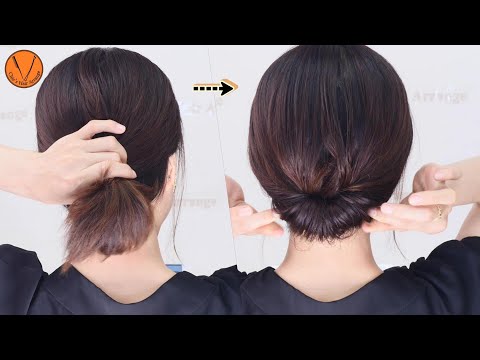
First, distribute a dime-sized amount of lightweight styling balm or matte pomade from the mid-lengths down to the perimeter. This provides essential grip on freshly washed or fine hair. Gather the hair into a low ponytail sitting roughly 1 to 2 inches above the base of the neck. When wrapping your single elastic band on its final pass, do not pull the ponytail all the way through. Stop halfway, creating a small, rounded loop bun with the loose ends pointing down toward the nape.
Next, use your index finger and thumb to gently separate the hair directly above the elastic into two equal halves, creating a small vertical pocket. Take the loop bun from underneath, turn it inward toward the head, and thread it completely down through the opening. Once the loop passes through, tug the base of the elastic downward to cinch the knot. Finish by lightly pulling 2mm ribbons of hair outward from the crown and side rolls to soften the silhouette and conceal the hair tie completely.
Styling Method Breakdown for Chin-to-Collarbone Hair
Short hair requires distinct structural strategies compared to long hair. The table below outlines how this single-elastic method measures up against common styling alternatives on bobs ranging from 6 to 10 inches in total length.
| Method | Hardware Needed | Average Prep Time | Nape Layer Containment |
|---|---|---|---|
| Kururinpa Loop Bun | 1 Polyurethane Elastic | 60, 90 seconds | High (self-locking side rolls) |
| Traditional Bobby Pin Chignon | 6, 12 Metal Pins, 1 Tie | 5, 8 minutes | Moderate (pins slip during movement) |
| Mini Claw Clip Twist | 1, 2 Acetate Claw Clips | 30, 45 seconds | Low (nape strands fall free quickly) |
| Stout Tail Stub | 1 Standard Fabric Elastic | 20, 30 seconds | Poor (blunt edges fan outward stiffly) |

Fine Hair Density and Layer Containment Secrets
One primary concern with short hair updos is scalp exposure along the back parting. When someone parts their hair to feed the bundle through, the scalp can show if the split is made too aggressively. Preventing this comes down to two specific mechanical habits demonstrated by stylists like Gunji Ayana and Maya Hair Channel.
First, never split the hair straight down to the skin. Part only the top surface layer of the gathered pony, leaving a thin under-veil of hair untouched against the nape. This keeps the scalp completely hidden while offering an internal tunnel for the loop. Second, pinch and elevate hair at the occipital bone before making the flip. Adding this subtle crown height changes the pulling angle of the elastic, ensuring that the bun rests flat against the neck rather than projecting outward awkwardly.
Stylists routinely pair this technique with micro-hold hairsprays such as Spiky Hard Spray or dry texturizing powders. Spraying the tail lightly prior to looping prevents individual strands from drifting out of the roll. The result is a heatless everyday updo that holds firmly through an eight-hour workday without requiring constant readjustment in front of a mirror.
Diagnostic Troubleshooting: Avoiding Common Updo Failures
When this hairstyle unravels or looks uneven, the root issue almost always traces back to band thickness or tension distribution. Standard textile hair elastics are too bulky for chin-length hair; their sheer diameter forces the inversion hole to stretch open too wide, creating a loose, droopy base. Thin polyurethane bands, typically measuring 1.5mm to 2mm, provide the exact degree of tight, low-profile grip required.
Another frequent mistake involves flipping the loop upward from bottom to top rather than downward from top to bottom. Flipping upward exposes the blunt, jagged ends of the cut at the crown of your head, destroying the smooth, spherical shape of the chignon. Inverting downward keeps all loose ends neatly tucked underneath the roll, completely concealed against the nape.
Frequently Asked Questions (FAQ)
Q1: Will this updo work on a blunt French bob cut above the jawline?
A1: It depends on the nape length. You need at least 3 to 4 inches of hair at the back of the head to successfully draw it into an elastic band. If your bob has a shaved or stacked undercut, this method will not grip the shortest bottom sections without supplemental side clips.
Q2: How can I prevent the polyurethane elastic from snapping during the flip?
A2: Avoid over-stretching the band when tying the initial ponytail. Wrap it firmly two to three times until snug, but leave enough flexibility to pull the looped hair through without hyper-extending the synthetic polymer.
Q3: How do you remove the elastic at night without pulling or breaking fine hair?
A3: Never yank the band straight down over the bun. Instead, gently peel the outer rolls back to locate the exposed loop of the elastic, then use small beauty shears or an elastic-cutter hook to snip the band cleanly away.
Why Minimalist Tension Updos are Reshaping Short Hair Routines
The rise of the no-pin messy bun reflects a broader shift toward functional, low-damage hair care. Heavy metal hairpins cause localized friction, snap fragile hair around the ears, and create uncomfortable pressure points against the scalp. Claw clips crack under stress and prevent you from leaning back comfortably during transit or desk work.
By relying on spatial geometry rather than hardware, the single-band topsy tail approach proves that short hair does not need complicated salon interventions to look polished. A well-placed invert, a steady pull, and subtle surface texturing allow blunt bobs to transition seamlessly into formal gatherings or casual errands in under two minutes.