The Evolution of 'Yuru-Fuwa' Medium Hair Styling: From Tight Ringlets to Airy Movement
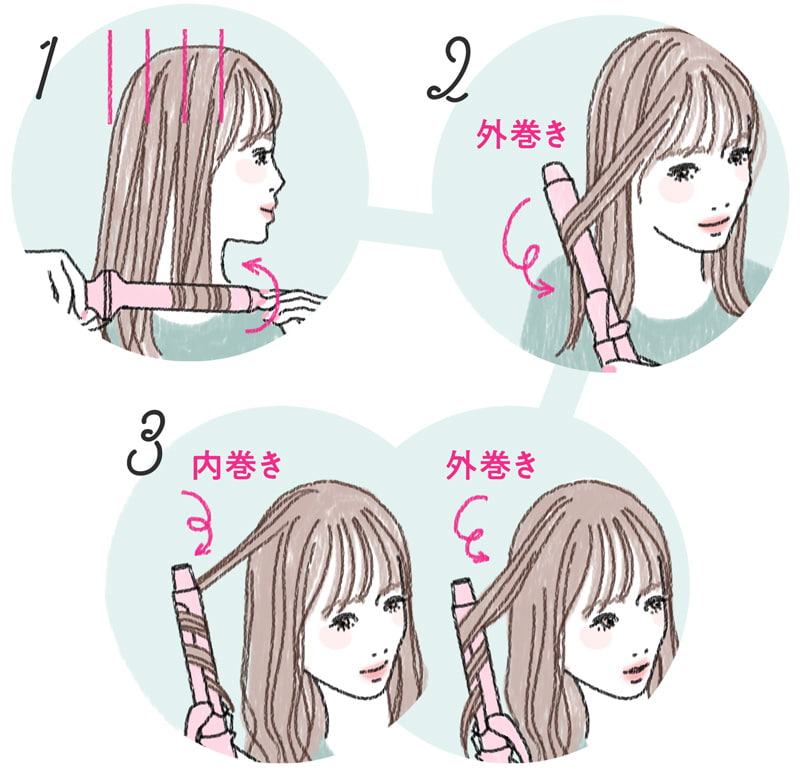
Walk through the salons of Omotesando or Daikanyama on any given afternoon, and you will notice a distinct departure from the stiff, lacquered curls that defined East Asian hair styling a decade ago. Japanese hairstyling has moved decisively toward yuru-fuwa, a compound of yuruyaka (loose or gentle) and fuwafuwa (airy and soft). For medium-length hair that grazes the collarbone, this silhouette represents a precise balance of dimensional volume and uncalculated ease. As documented by beauty reporters in an archival livedoor ニュース Report, achieving this effortless wave pattern hinges on selecting a wider 32mm iron and initiating the curl slightly above the mid-lengths rather than gripping the ends into rigid coils.
The aesthetic looks casual, yet the underlying technique relies on controlled heat mechanics and strategic sectioning. By moving away from uniform ringlets and heavily sprayed finishes, Tokyo stylists created a visual language where movement originates from the interior architecture of the cut. The outcome is hair that reacts naturally to wind and daily movement, transforming what used to require an hour of salon maintenance into an efficient morning ritual.
📌 Key Takeaways:
- The Structural Pivot: Modern yuru-fuwa styling abandons uniform spiral ringlets in favor of alternating forward-and-reverse mid-shaft bends that preserve straight ends.
- The Essential Hardware: A 32mm barrel remains the golden ratio for collarbone-length hair, providing enough circumference to prevent tight shrinkage while generating necessary lift.
- Weightless Longevity: High-hold aerosol sprays have yielded to lightweight botanical finishing oils that seal the cuticle without cementing strands together.
The Cultural Departure from Rigid Salon Spirals
The genesis of modern Japanese medium wave styling traces back to a conscious rejection of the hyper-structured aesthetics of the late 1990s and early 2000s. During the height of the CanCam and JJ magazine eras, Tokyo salons popularized pristine, symmetrical barrel curls known as nagashime or heavy maki-gami. These styles relied on rigid thermal sets and generous amounts of hard-setting hairspray. Every lock had a designated coordinate, and movement was treated as structural failure.
By the mid-2010s, urban lifestyles and shifting beauty ideals dismantled that philosophy. The aesthetic appetite swung toward nuke-kan (transparency and effortless omission) and koda-wari (unspoken intentionality). Women sought hair that looked like they had simply rolled out of bed with ideal biological texture.
This cultural shift forced stylists to rethink heat distribution. Instead of coiling hair from the ends upward toward the scalp, which concentrates thermal pressure on the most damaged, fragile portions of the hair, stylists began wrapping the mid-lengths first. This distributed the tension across healthier strands while allowing the tips to retain a relaxed, natural drop.
Why the 32mm Barrel Became Tokyo's Indispensable Tool
The engineering of the curling iron directly dictates whether a wave looks modern or dated. For medium-length hair, defined within Japanese cosmetology as falling between the chin and the top of the clavicle, barrel diameter determines whether the finished look feels airy or compressed. A 26mm barrel creates tight, springy loops that shorten the hair’s perceived length by several inches. A 38mm barrel, while popular for long hair, lacks sufficient surface tension to hold a lasting bend on medium cuts without excessive product.
Cosmetic testing across Tokyo salons solidified the 32mm iron as the baseline tool. The 32mm circumference matches the natural curl diameter found in naturally textured, coarse-to-medium Asian hair shafts. It offers enough curve to lift hair away from the cheekbones while leaving the profile wide and sweeping.
Stylists also adjusted their thermal approach. Operating tools between 140°C and 160°C (284°F, 320°F) reshapes hydrogen bonds effectively while avoiding the thermal blistering associated with Western 200°C styling. When small ribbons of hair are wrapped smoothly around a 32mm cylinder at these moderate temperatures, the cuticle lays flat, creating the soft shine characteristic of the yuru-fuwa finish.
Two Decades of Japanese Medium Hair Aesthetics
To understand how the modern wave reached its current form, consider the progression of tools, techniques, and finishes over the past twenty years:
| Era | Core Aesthetic | Primary Tooling | Finishing Product |
|---|---|---|---|
| 2002, 2009 | Uniform spiral curls; inward rolling (*uchi-maki*) | 26mm curling irons at high heat | Hard-hold aerosol lacquers and waxes |
| 2010, 2018 | Mixed curls (*mix-maki*); softening perimeter | 32mm ceramic barrels | Silicone serums and light flexible mists |
| 2019, 2026 | Deconstructed yuru-fuwa; natural ends; face-framing ribbons | 32mm ceramic-coated irons (140°C, 160°C) | Cold-pressed multi-oils and shea balms |

Sectioning Architecture and Heat Mechanics for Lasting Bounce
Mastering yuru-fuwa waves on medium hair requires treating the head as three distinct thermal zones rather than curling around in a circle.
Zone 3: Canopy & Face Frame
(Reverse ribbon curls, 45° angle)
Zone 2: Occipital Mid-Shaft
(Alternating inward/outward wraps)
Zone 1: Nape & Perimeter
(Outward flick / Soto-hane base)
The process begins in Zone 1 (the nape). Clamping medium hair into curls near the neck creates awkward bulk that widens the jawline visually. Instead, sweep the lowest horizontal section downward and rotate the iron outward to form a subtle external flick (soto-hane). This grounds the style, establishing a clean foundation that prevents the hair from balling up around the collar.
Move to Zone 2 (the mid-lengths). Divide this band into vertical sections no wider than two inches. The technique relies on alternating tension: wrap one section forward (uchi-maki) and the next backward (soto-maki). The critical adjustment is placement. As outlined in Japanese professional manuals, open the clamp and insert the barrel at the center of the hair shaft, roughly level with the bottom of the ears, rather than at the tip. Roll upward for two full turns, hold for 3 to 4 seconds, release the clamp slightly, and slide the iron downward, leaving the final inch uncurled.
Finish with Zone 3 (the surface canopy and face frame). Pick up thin, pencil-thick strands at the crown and wrap them around the barrel flat against the metal, avoiding rope-twisting. Release the hair immediately into your palm, letting it sit supported for two seconds while the keratin bonds cool and lock into place. For the bangs and cheek sections, hold the iron vertically and turn away from the face, drawing the barrel out smoothly to create an elongated S-curve.
Finishing Formulas: Replacing Lacquer Sprays with Weightless Lipids
The structural integrity of yuru-fuwa hair relies on a counterintuitive principle: traditional strong-hold hairsprays actually destroy the effect. Polymers in fast-drying sprays bond adjacent hair fibers into unified plates. When wind hits those stiff sections, they move as rigid blocks, exposing the styling beneath.
Instead, contemporary Japanese regimens turn to low-viscosity, plant-based oils and balms that work through surface tension. Products formulated with sesame, jojoba, and squalane coat individual hair shafts without binding them together.
Application technique is critical here:
- Dispense two to three drops of oil into your palms and rub them together vigorously, warming the product across your palms and between your fingers.
- Tilt your head forward and rake your hands upward from the nape through the interior hair, ensuring product reaches the underlayer rather than sitting on top.
- Gently scrunch the ends upward to re-engage the wave patterns.
- Use only the remaining residue on your fingertips to smooth flyaways along the parting and define the face-framing strands.
This creates separation: hair clumps into textured ribbons that catch light naturally, yet individual strands slide past one another fluidly when you walk.
Frequently Asked Questions (FAQ)
Q1: Will a 32mm curling iron work if my hair sits above my shoulders?
A1: If your cut rests above the chin, a 32mm barrel lacks the rotational clearance needed to create a full wave cycle, making a 26mm barrel the safer choice. However, if your ends reach anywhere between the collarbone and shoulders, the 32mm barrel remains ideal. It delivers soft, open bends rather than compact curls that pull length upward.
Q2: Why do my loose waves drop flat within two hours?
A2: Premature drop typically happens when hair is manipulated before the thermal bonds set. Keratin softens under heat and resets as it cools. If you brush through or touch your waves while they are still warm, the shape stretches out and collapses. Let every curl cool completely before raking through with your fingers or applying finishing oil.
Q3: Is it possible to recreate yuru-fuwa styling using a flat iron?
A3: Yes. You can achieve this shape with a flat iron by employing an alternating wrist flick down the hair shaft. Clamp at the mid-lengths, rotate your wrist inward for two inches, reverse outward for two inches, and slide straight off the ends. Flat irons provide slightly less root lift, but they offer precise control over the wave's wave crests.
The Enduring Geometry of Effortless Movement
The popularity of the yuru-fuwa wave on medium hair highlights an important reality in modern beauty culture: sophisticated styling now prioritizes natural movement over visible effort. What initially looks like casual, wind-tossed texture actually relies on deliberate thermal geometry, balanced 32mm proportions, and a light hand with finishing oils.
By stepping away from tight, uniform ringlets and hard-hold lacquers, this technique embraces the hair's natural weight and swing. For medium cuts navigating seasonal changes, daily commutes, and active routines, this approach delivers an enduring solution: polished hair that moves naturally through the day.