Tested Ratios: How to Make Smooth 4-Fold Porridge in Standard Rice Cookers
The Mechanics of 4-Fold Porridge: Perfecting Late-Stage Weaning in Modern Rice Cookers
Parents navigating late-stage infant weaning eventually confront an unexpected kitchen physics problem: the sticky, volatile behavior of reduced-water rice gruel. Known across Japanese pediatric nutrition guidelines as 4-bai gayu (4-fold rice porridge), this staple marks the bridge between strained infant mush and chewy table food for babies aged 9 to 11 months. Yet cooking micro-portions of dense rice porridge inside high-powered home appliances frequently triggers starch geysers through the steam vents, scorched heating elements, or watery, uneven textures.
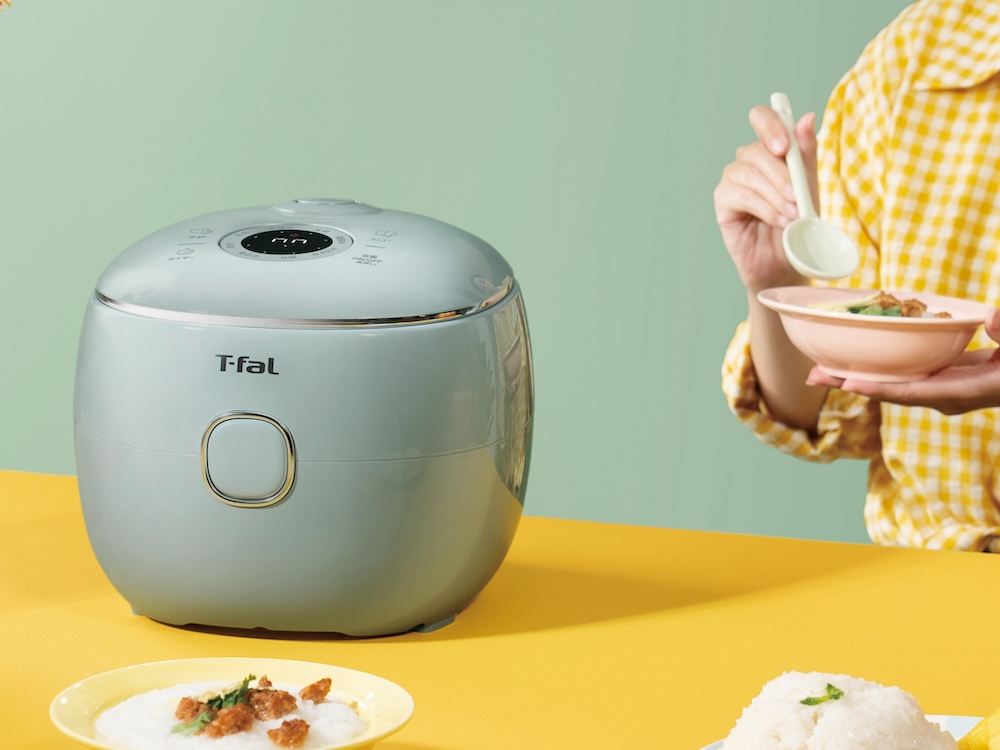
Hardware manufacturers are paying close attention to these household frustrations. As detailed in a recent 家電 Watch Report, Groupe SEB Japan expanded its kitchen lineup with the T-fal "The Pop" four-cup micom rice cooker, an entry priced at ¥13,200 designed specifically to handle delicate side-dish simmering alongside routine starch cycles. Managing high-density starch suspensions requires more than just an updated appliance; it demands an understanding of gelatinization thresholds, thermal venting mechanics, and exact volumetric ratios.
📌 Key Takeaways:
- The Critical Ratio: 4-fold porridge requires a strict 1:4 raw rice-to-water ratio by weight, or a 1:2 ratio when starting with already-cooked family rice.
- The Appliance Hazard: Dense porridge generates heavy, foaming amylose bubbles that routinely clog the thermal inner lid vent if cooked on standard white rice cycles.
- The Dual-Cook Solution: Using a heat-resistant glass container placed directly inside the main inner pot allows simultaneous batch cooking of adult rice and baby porridge without scorched pans.
The Late-Stage Weaning Window and Texture Calibration
Infant oral motor mechanics evolve rapidly between the ninth and eleventh months. Pediatric nutritionists classify this phase as the kamikami (chewing) period. At this developmental marker, infants move away from swallowing puree with their tongues and begin mashing soft solids against the roof of the mouth using their gums.
Standard 5-fold porridge (5-bai gayu), commonly served during earlier months, contains enough free liquid that babies can swallow it without chewing. The 4-fold ratio eliminates excess pooling liquid entirely. The finished grain retains visible structural integrity while flattening effortlessly between two fingers under mild pressure, roughly mimicking the density of ripe banana flesh.
Transitioning too late delays jaw muscle development. Moving too early, conversely, causes gagging or digestive discomfort from unchewed starch kernels. The challenge lies in consistency: an extra tablespoon of evaporated water during a standard boiling cycle can accidentally transform a tender 4-fold mixture into dense toddler rice (nanban), overwhelming an infant's developing palate.
Raw Rice vs. Cooked Rice: Demystifying the Moisture Mathematics
Home cooks routinely ruin porridge textures by confusing raw rice formulas with leftover cooked rice formulas. Raw polished short-grain rice expands dramatically, absorbing roughly 2.2 to 2.5 times its dry weight during a baseline steaming cycle. Porridge formulas scale upward from that baseline.
When starting with raw, rinsed grains, true 4-fold porridge demands four parts water to one part rice by volume or weight. For a usable three-day batch, measure 50 grams of raw rice to 200 grams of water.
Raw Rice Method:
50g dry short-grain rice + 200ml filtered water = ~230g finished 4-fold porridge
Starting from leftover cooked table rice requires an entirely different calculation because the grains have already absorbed their primary hydration load. Using four times the water on cooked rice produces an over-diluted, watery soup resembling early-stage infant gruel.
Cooked Rice Method:
100g warm cooked white rice + 200ml filtered water = ~280g finished 4-fold porridge
For the cooked rice method, loosen the grains thoroughly in the cold liquid before applying heat. Breaking up clumps beforehand prevents the center of the starch mass from remaining dense while the outer perimeter dissolves into paste.
| Weaning Stage | Target Age | Raw Rice Ratio | Cooked Rice Ratio | Target Texture |
|---|---|---|---|---|
| 10-Fold (10-bai) | 5, 6 Months | 1 : 10 | 1 : 5 | Silky, strained soup |
| 7-Fold (7-bai) | 7, 8 Months | 1 : 7 | 1 : 3, 4 | Soft curds, tongue-crushable |
| 5-Fold (5-bai) | 8, 9 Months | 1 : 5 | 1 : 2.5 | Visible grains, light liquid sheen |
| 4-Fold (4-bai) | 9, 11 Months | 1 : 4 | 1 : 2 | Soft banana firmness, no pooling |
| Soft Rice (Nanban) | 12, 18 Months | 1 : 2, 3 | 1 : 1.2, 1.5 | Plump, sticky table-ready rice |
Preventing Boil-Overs: The Physics of Thermal Inner Lid Vents
The single most common failure when preparing porridge in an automated cooker is the dreaded starch boil-over. Amylose and amylopectin molecules leach out into the hot water during prolonged simmering. These long-chain carbohydrates create a resilient surface tension, forming thick, gelatinous bubbles that resist popping.
On a standard quick-cook or white rice cycle, appliances heat rapidly to reach maximum boil. This thermal surge forces starch foam up into the thermal inner lid vent. Once the vent blocks, pressurized boiling liquid sprays across countertops, posing burn risks and creating stubborn cleanup chores.
Starch Boil-Over Mechanism:
High Heat Cycle → Amylose Foaming → Vent Clogging → Steam Pressure Spikes → Countertop Boil-Over
Preventing this eruption requires specific mechanical adjustments:
- Activate the Dedicated Porridge Program: Microcomputer (micom) and induction cookers feature algorithmic heating cycles within their dedicated porridge settings. These programs keep the liquid simmering below the rapid, violent boil that produces heavy foam.
- Respect the Capacity Ceiling: A 5.5-cup rice cooker cannot make 5.5 cups of porridge. Because liquid expansion is significant, the maximum liquid fill line for porridge cycles sits at roughly one-third the volume of standard rice cooking. Never exceed the internal "Porridge" watermark stamped into the metal bowl.
- Inspect the Inner Gasket: Older rubber seals trap dried starches from previous batches, choking the pressure valve. Remove and wash the inner lid assembly after every single porridge session.
The Heatproof Glass Method: Simultaneous Family and Baby Prep
Running a full 60-minute rice cooker cycle just to yield three tablespoons of baby porridge wastes electricity and clutters the schedule. The most efficient workaround relies on a double-boiler technique executed directly inside your standard appliance.
Parents can steam adult table rice in the main pot while simultaneously cooking 4-fold porridge in a heat-resistant glass container placed upright in the center.
============================================
RICE COOKER INNER POT
[ Family White Rice + Normal Water Line ]
|
v
+--------------------+
| Pyrex Glass Cup |
|---|
| (1 part raw rice |
| + 4 parts water) |
+--------------------+
============================================
To execute this setup safely:
- Use a certified borosilicate heatproof cup or small ceramic bowl capable of withstanding 120°C (248°F). Verify that the appliance lid shuts fully without touching the rim of the glass.
- Measure the family's rice and water into the main non-stick pot first. Part the raw grains in the exact center and press the glass cup firmly down onto the base of the metal pan. This prevents the vessel from tipping over during boiling.
- Add 20 grams of washed raw rice and 80 milliliters of fresh water directly into the glass cup. Do not cover the glass with plastic wrap or lids; steam must enter and vent freely.
- Close the cooker and initiate your standard white rice cycle. The ambient water cooking the family's rice transfers heat evenly through the glass walls, gently cooking the baby's porridge without burning the base.
- Upon completion, the glass container will be scalding. Remove it using silicone pinch grips rather than bare hands.
Post-Cook Processing and Safe Batch Freezing Protocols
Once the cooker chimes, give the porridge an essential ten-minute rest with the lid closed. This resting period allows remaining surface moisture to settle evenly into the core of the rice grains. Stir gently with a baby food spatula to redistribute the starch suspension.
Busy households cannot cook fresh porridge three times daily. Batch freezing keeps infant feeding efficient, but starch matrices behave unpredictably in sub-zero environments if handled incorrectly. Retrogradation, the process where amylose chains re-align and expel water during freezing, can turn thawed porridge grainy, rubbery, and unpalatable.
Optimal Storage Workflow:
Cooked Porridge → Rapid Ambient Cool (15 mins) → Silicone Portion Molds → Deep Freeze (-18°C) → Vacuum Ziplock Bag (Max 7 Days)
Portion the warm porridge into food-grade silicone freezing trays in 30-gram to 50-gram increments. Do not leave porridge at room temperature for longer than 30 minutes, as warm, wet starches represent ideal breeding grounds for Bacillus cereus bacteria.
Once fully frozen solid at -18°C (0°F), pop the porridge cubes out of the silicone molds and store them inside an airtight, labeled freezer bag. Use the stock within seven days. Beyond one week, moisture loss inside frost-free freezers degrades both nutritional density and cellular texture.
To serve, place one cube in a ceramic dish, add a single teaspoon of filtered water to compensate for evaporation, cover loosely, and microwave at medium power until bubbling throughout. Let the bowl cool down to lukewarm skin temperature before serving.
Frequently Asked Questions (FAQ)
Can I use brown rice or mixed grains for 4-fold porridge?
Avoid whole brown rice during the 9 to 11-month window. The outer bran layer contains insoluble fiber that taxes an infant's digestive system and resists chewing against soft gums. If you want to introduce whole grains, stick to white rice mixed with a maximum of 10% rolled oats or germinated brown rice (haigamai), both of which soften thoroughly under steam.
My rice cooker doesn't have a porridge button. How can I stop it from boiling over?
If forced to use a single-switch cooker without computerized sensors, rely strictly on the heatproof glass cup method described above. Cooking the porridge inside a cup surrounded by family-portion rice dampens heat transfer and keeps bubbles contained, preventing liquid from rising to the steam vent.
The porridge turned out too thick after cooling down. How do I fix it?
Starches naturally stiffen as temperatures drop from boiling to body temperature. Never thin it out by vigorously whipping the mixture, which breaks starch granules and turns the texture gummy. Instead, gently stir in warm dashi broth, formula, breast milk, or boiled water one teaspoon at a time until the porridge relaxes back into soft curds.
Transitioning Toward Table Food
Mastering the 4-fold ratio represents the home stretch of early infant feeding. As an infant approaches their first birthday, gum-mashing efficiency increases, hand-eye coordination improves, and meal routines transition from liquid spoon-feeding to self-guided hand-to-mouth exploration.
Watch your child's cues at the table. When an infant easily manages 4-fold porridge without spitting out chunks or swallowing whole, begin gradually shifting toward soft rice (nanban) using a 1:2 or 1:3 raw-rice-to-water ratio. Understanding how household cookers handle starch chemistry turns these kitchen transitions into a calm, predictable science.