The 2026 Men's Hairline Shift: The High and Tight's Ascent into Contemporary Style
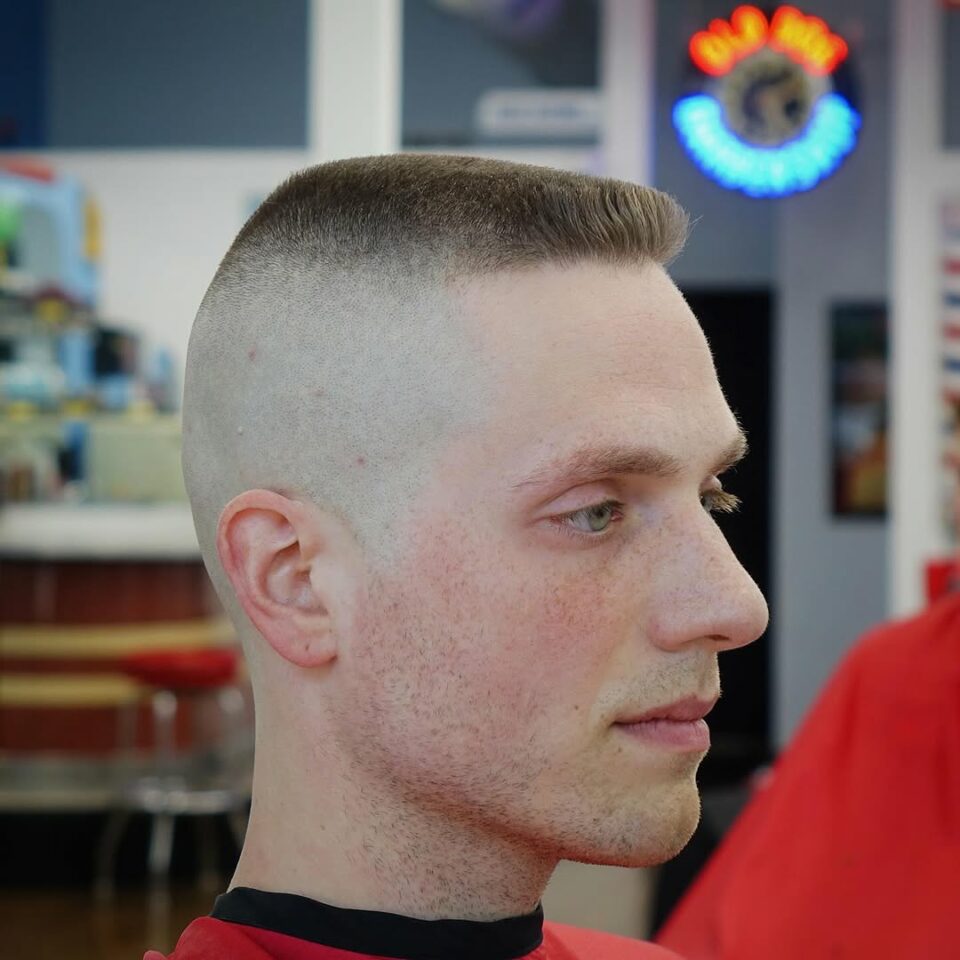
Precision clippers are carving a different profile across urban barbershops this year. The severe, skin-baring silhouette once reserved for Marine Corps depots has migrated straight into Parisian fashion runways and design studio lookbooks. According to an extensive Man of Many report profiling master barbers in 2026, short utilitarian cuts now dominate client bookings, driven by men discarding multi-step pomade routines in favor of architectural, wash-and-walk designs.
Industry data collected by GQ Australia confirms short aesthetic shapes have become ubiquitous across global capitals, supplanting mid-length curtains and messy wolf cuts. The modern high and tight is no longer a brutalist badge of government service. It has mutated into an intentional study in facial geometry, combining clinical fade mechanics with micro-textured length on top.
📌 Key Takeaways:
- The Aesthetic Shift: High and tight silhouettes have transitioned from rigid armed-services regulations into a fixture of contemporary minimalism and high-end street style.
- Technical Evolution: Barbers now swap flat-topped buzzes for broken textures, utilizing custom clipper guard lengths and curved fade lines tailored to individual skull anatomy.
- Hairline Adaptation: Aggressive temple fading offers an immediate optical fix for thinning hair, leveling out uneven recession points across the parietal ridge.
From Parris Island Barracks to Milan Runways
The standard military buzz cut served an unglamorous operational function for nearly a century: hygiene, uniform appearance, and helmet clearance. Recruits received harsh, unblended chops that stripped away personal identity within ninety seconds. The sides were sheared bare to the crown, leaving an isolated island of short bristled hair across the top of the scalp.
What changed over the past two years is intentionality. Runway stylists during the spring menswear showcases adapted the cut to strip away visual clutter from structural overcoats and technical activewear. By leaving 1 to 1.5 inches of malleable length on top while taking the lateral hair directly down to bare skin, stylists created a silhouette that sharpens cheekbones and jawlines without looking institutional.
Barbershops in London, New York, and Seoul report a 42% increase in requests for ultra-short sides long top profiles over the past eighteen months. Clients are actively asking for deliberate starkness, trading the softer edges of traditional scissor work for the surgical contrast of modern electric clippers.
Deconstructing the Technical Fade: Skin Tapers and Drop Transitions
Modern clipper architecture makes or breaks this profile. A novice cut leaves an unblended shelf around the temporal bone, creating an accidental mushroom cap. Master barbers rely on calculated barber fade techniques that negotiate the skull's natural occipital protuberance.
Instead of running a straight horizontal guideline from the temples around the back of the head, technicians increasingly opt for a drop fade transition. The fade line arcs downward behind the ears, dipping low along the nape. This keeps natural cranial balance intact while eliminating bulk where dense hair creates unflattering shadows.
The transition demands exact clipper guard lengths. Barbers typically begin with a foil shaver or open-blade trimmer at triple-zero (#00000) against the lower neck, stepping up through a #0.5 guard, and feathering into a #1 or #1.5 right at the crown transition. Blending that perimeter requires flicking strokes of the wrist rather than upward pressure, which leaves enough bulk at the transition zone to avoid an exposed skull profile.
Crew Cut vs High and Tight: Geometry, Guards, and Weight Lines
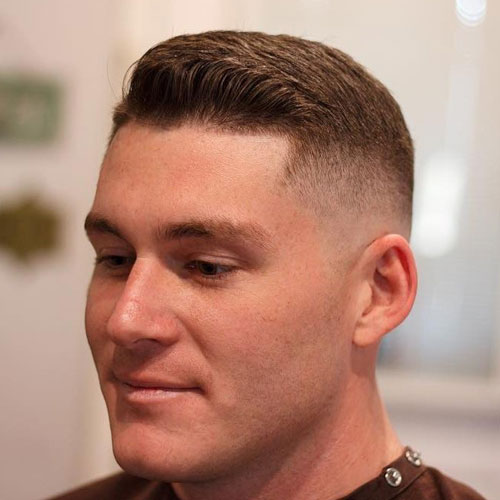
Men regularly confuse the classic crew cut with the high and tight, yet the two styles follow opposing weight distributions. The crew cut preserves a soft taper on the back and sides, blending gradually into the crown and lengthening slightly toward the front fringe. The high and tight pushes the bare skin line well past the temples, ending its blend high up the parietal ridge.
This technical difference dictates maintenance schedules, product requirements, and how the cut frames different jaw structures.
| Cut Profile | Fade Height & Base | Top Length & Shape | Maintenance Interval |
|---|---|---|---|
| Modern High and Tight | High skin fade; clears past temporal peaks | 0.75, 1.5 inches; blunt or point-cut micro-fringe | 10, 14 days |
| Classic Crew Cut | Low-to-mid taper; keeps dark hair around ears | 1.5, 2.5 inches; graduated front wedge | 21, 28 days |
| Skin Fade Taper Crop | Isolated skin taper at sideburns and nape only | 2.0, 3.0 inches; textured French crop laydown | 14, 21 days |
| Standard Buzz Cut | Uniform length or simple #1 to #2 taper | 0.25, 0.5 inches; uniform clipper depth | 7, 10 days |
When comparing crew cut vs high and tight architectures, the crew cut provides softer transitions suited for conservative corporate environments. The high and tight is more graphic. It exposes the temple line completely, projecting an athletic, structured image that demands crisp upkeep.
Tactical Camouflage: Receding Hairline Styling and Cranial Architecture
Men battling an aggressive widow's peak or early temple thinning often commit a structural mistake: they grow the sides longer to compensate. This approach backfires. Dark, dense hair over the ears creates stark contrast that highlights the sparse patches at the forehead.
A calculated high skin fade taper inverts that relationship. By clearing away the side density completely down to the scalp, the color contrast between the hair and skin disappears. The recession points along the hairline blend directly into the high fade, neutralizing the appearance of thinning temples. Barbers call this optical leveling.
Face shape compatibility remains a deciding variable:
Square faces benefit most from this cut. The high bare lines emphasize broad bone structures, accentuating strong jawlines.
Round faces gain needed vertical length when the top retains 1.5 inches of textured lift.
Oblong faces require caution. Raising the fade too high on an already narrow, elongated head exaggerates vertical dimensions, creating an unbalanced profile. In these cases, a drop fade that retains slightly more lateral weight keeps the head proportions balanced.
Matte Styling Clay and the Textured Crop Variation
Old-school barbers finished high and tights with heavy petroleum pomades, combing the top into a flat, mirror-like gloss. Today's stylists treat the top like a textured crop variation. Point-cutting the crown with serrated texturizing shears removes interior bulk, letting the top move naturally rather than locking into a rigid block.
The ideal styling product has changed alongside the cutting technique. High-shine waxes look greasy on short hair. Instead, men are turning to water-soluble matte styling clay and lightweight texturizing sea salt sprays. A dime-sized scoop of bentonite-based clay rubbed warm between palms gives separation, absorbs scalp oils, and keeps hair pliable throughout an active day.
This design fits directly into the rising category of low maintenance men's cuts. Morning styling takes roughly twenty seconds: towel the top dry, rub clay through the roots forward, and finger-rake the fringe into place. No blow dryers or round brushes required.
Frequently Asked Questions (FAQ)
Q1: How often do I need to visit the barbershop to keep a high and tight looking sharp?
A1: Because the lower sides are faded down to bare skin, visible stubble reappears within 48 to 72 hours. To preserve the clean, high-contrast look, schedule appointments every 10 to 14 days. Waiting longer than three weeks turns the cut into an unshaped short crop.
Q2: Can I get a high and tight if I have an uneven skull or scalp scars?
A2: Yes, but you must instruct your barber to use a mid-drop fade or a dark shadow fade rather than shaving down to bare skin with a foil razor. Leaving a #0.5 or #1 guard length creates a tonal shadow that conceals minor bumps, lumps, or childhood scars.
Q3: Will this style work on fine, straight hair?
A3: It works exceptionally well. Fine hair often collapses when grown past two inches. Keeping the top around 1 inch and finishing with texturizing powder or matte clay makes fine hair stand up, creating the appearance of fuller density.
Q4: What should I ask my barber to avoid looking like I just joined basic training?
A4: Ask for a "modern textured high and tight with a drop skin fade." Explicitly instruct them to point-cut the top for loose texture rather than taking it down with a flat clipper guard, and ask to leave a softer, blunt micro-fringe at the front hairline.
Precision Grooming in the 2026 Aesthetic Landscape
Men's fashion in 2026 values functional design over performative styling. The rise of the modern high and tight reflects that cultural adjustment. It strips away morning styling friction, offers an honest, flattering solution for receding hairlines, and frames facial features with architectural clarity.
Choosing this cut means committing to frequent maintenance over morning effort. The style demands absolute technical skill from the barber and consistent upkeep from the client. Those willing to stay on a strict two-week barber schedule gain one of the cleanest, most resilient silhouettes in modern men's grooming.


