The Complete 100-Yen Somen Storage Guide: How to Keep Dried and Boiled Noodles Fresh

Japanese pantry organization has turned hyper-specialized kitchen storage into an art form, driven largely by design breakthroughs from budget retail chains. According to a recent Excite エキサイト Report analyzing home organization trends on lifestyle network RoomClip, dedicated food containers from 100-yen stores have shifted from cheap plastic bins to precision-engineered vessels tailored to exact pantry dimensions and specific staple foods.
Among these staples, somen, Japan’s ultra-thin, delicate wheat noodle, presents unique storage risks. Uncooked dried strands rapidly absorb ambient moisture and surrounding kitchen odors, while leftover boiled noodles clump and dry out within hours if exposed to air. Managing both states does not require luxury homeware. Sourcing the right containers from Daiso, Seria, and Can Do keeps dry bundles shelf-stable for seasons and preserves cooked noodles without turning them to mush.
📌 Key Takeaways:
- The Pest and Humidity Threat: Standard somen bundles measure approximately 19 centimeters and absorb surrounding cooking odors through cardboard packaging, requiring rigid, sealed storage to block moisture and flour beetles.
- 100-Yen Market Capabilities: Major Japanese budget retailers offer airtight noodle dispensers, snap-tight silicone-gasket boxes, and portion-measuring lids for roughly ¥110 ($0.75 USD) per unit.
- Cooked Noodle Preservation: Cooked somen maintains its springy texture when rinsed of excess starch, divided into single-serving nests, and sealed in freezer-safe food containers with a splash of water.
The Kitchen Science Behind Somen Degradation
Dried somen noodles are exceptionally porous. Unlike thick spaghetti, which resists humidity through sheer density, somen strands are pulled fine, often under 1.3 millimeters in diameter, and coated with a microscopic layer of vegetable oil during traditional stretching processes. This thin profile accelerates degradation when exposed to kitchen air. Ambient relative humidity above 60% softens the starch, promoting mold development and ruining the noodle's firm snap (*koshi*).
Pantry pests pose an equal threat. Cigarette beetles (*tobacco beetles*) and sawtoothed grain beetles easily bore through paper wrappers and thin plastic film. Traditional wooden gift boxes (*kiribako*) look elegant, yet they rarely provide an airtight seal against microscopic pests once opened. Modern pantry organization demands impermeable barriers made of food-grade polypropylene or polystyrene paired with elastomeric seals.
Cooked somen deteriorates through a completely different mechanism: starch retrogradation. Once boiled and cooled, amylose molecules recrystallize, forcing out water and turning the noodles rubbery. Left uncovered in a standard refrigerator, the cool airflow saps moisture, cementing the delicate strands into an inseparable block. Preventing this requires an airtight physical seal and targeted moisture management.
Daiso, Seria, and Can Do: Sizing Up the Big Three 100-Yen Options
Japan’s top dollar-store operators approach food preservation with distinct design philosophies. Daiso leads in functional mechanics. Daiso pasta and noodle containers frequently incorporate dual-aperture portion dials on the lids, allowing cooks to shake out exactly 100-gram portions without dragging a digital scale onto the counter. While originally molded for 25-centimeter spaghetti, these elongated cylinders hold three to five bundles of somen securely while resting upright on pantry shelves.
Seria prioritizes minimalist aesthetics and airtight seals. Seria airtight food storage lines, such as the popular "Shikiri" and "Dry Food Keeper" series, employ clean white or transparent lids fitted with silicone rings. These models abandon internal portion dividers in favor of absolute environmental isolation. For pantries prone to summer humidity, Seria’s locking lid food savers offer superior pest deterrence over simple friction-fit lids.
Can Do kitchen organizers stand out in compact footprint design. Their slim refrigerator storage cases maximize narrow gaps inside standard Japanese galley kitchens. Can Do often stocks modular rectangular cases engineered to stack vertically. These clear cases let cooks check inventory levels at a glance, preventing accidental duplicate purchases during midsummer noodle sales.
Container Specifications, Materials, and Practical Applications
Selecting the right vessel depends on whether the noodles are raw bundles destined for shelf life or cooked leftovers planned for tomorrow's lunchbox. The following breakdown shows how standard 100-yen options compare across technical specs and culinary roles.
| Container Model / Category | Primary Material & Seal | Capacity & Dimensions | Best Culinary Use Case |
|---|---|---|---|
| Vertical Dispenser Bottle (Daiso) | Polypropylene; Twist-turn portion cap | 1.2 L (~1.0 kg dried capacity) | Dried somen noodle preservation with portion control |
| Silicone-Lock Dry Box (Seria) | AS Resin body; Silicone gasket latches | 900 mL (Low-profile rectangular) | Moisture and weevil prevention in high-humidity pantries |
| Slim Deep-Pull Case (Can Do) | Polystyrene body; Friction slide top | 1.5 L (Slender horizontal design) | Pantry organization bins for drawer pull-outs |
| Microwave-Safe Steam Tub (Daiso / Seria) | BPA-free Polypropylene (-20°C to 140°C) | 500, 700 mL (Shallow stackable) | Boiled somen leftover storage and single-meal freezing |
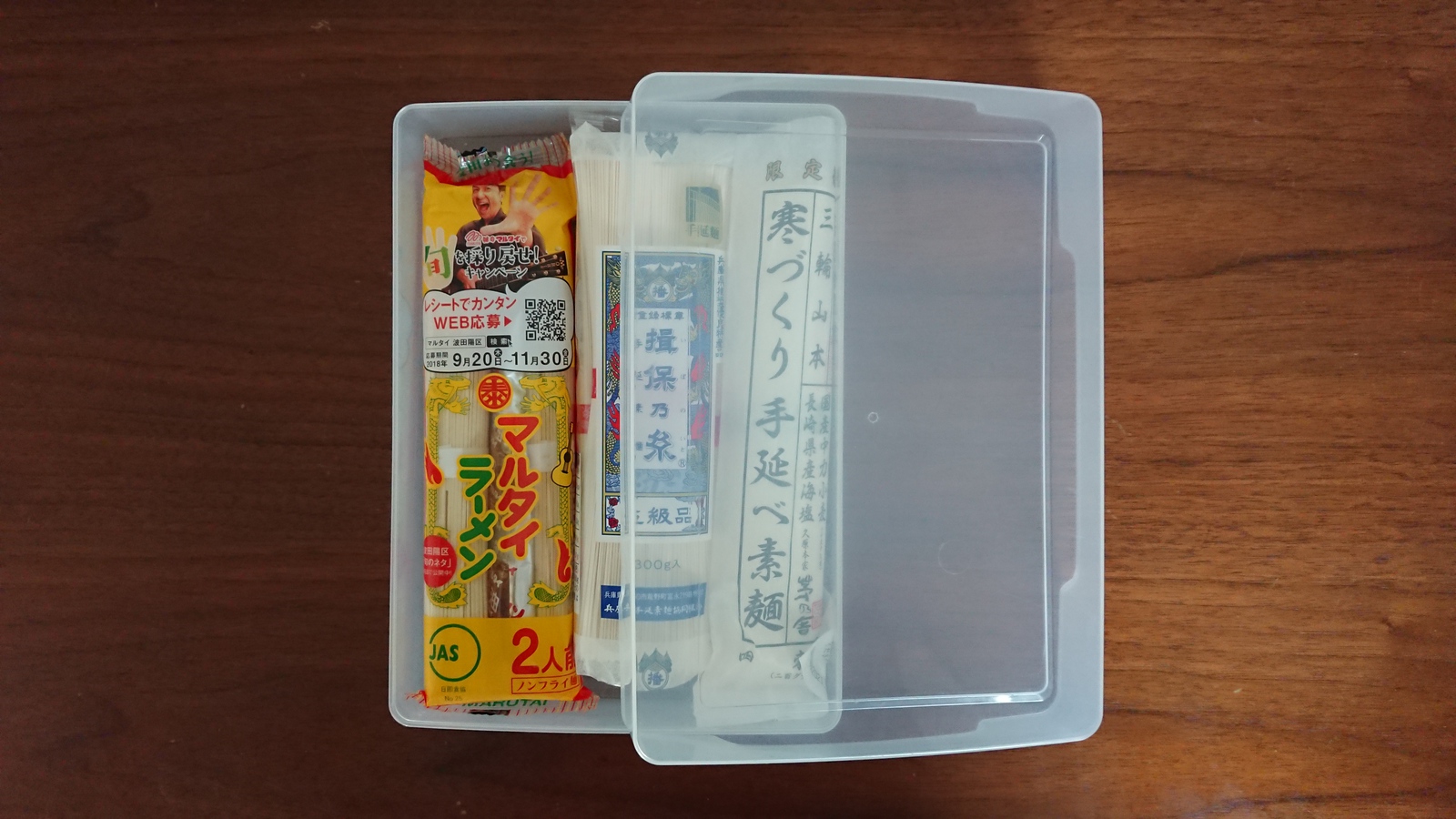
Safeguarding Dried Bundles from Humidity and Pests
To keep dried noodles pristine for up to three years, discard cardboard outer boxes immediately. Corrugated cardboard traps humidity and attracts insects. Unpack individual bundles, keeping their traditional colored paper bands intact. These paper wrappers stabilize the delicate wheat strands inside tall containers.
Place a food-grade silica gel pack at the base of an airtight noodle dispenser before dropping bundles in vertically. If using horizontal locking lid food savers, position the desiccant pack near the lid seam where air transfer typically occurs. Avoid storing noodles next to pungent kitchen items. Dried wheat absorbs volatile organic compounds rapidly; setting your somen adjacent to curry powder, dried shiitake mushrooms, or laundry detergents permanently alters its flavor profile.
When selecting a dispenser, check clearance heights inside your cupboards. Standard somen strands measure roughly 19 centimeters long. While spaghetti containers accommodate noodles up to 24 centimeters, excess head space can cause fragile somen ends to snap if the container is jostled. Placing a round disc of food-grade parchment paper inside the cap cushions the tips and prevents breakage.
Freezing and Chilling Boiled Leftovers Without Texture Loss
Cooked somen spoils quickly if neglected. Room temperature storage invites bacterial growth within four hours during summer months. Even inside a refrigerator, plain boiled somen deteriorates into an unpalatable, pasty lump overnight unless prepped correctly.
Rinse cooked noodles vigorously under cold running water to wash away loose surface starch. Once chilled, drain thoroughly. For next-day refrigerator storage, roll individual servings into compact nests using a fork or chopstick twist. Place these noodle nests side by side in slim refrigerator storage cases.
Add a single tablespoon of cold water over each nest before snapping the lid shut. This modest water cushion maintains a 100% micro-humidity environment inside the container, preventing surface drying without diluting the noodles into soup. Kept this way, cooked somen retains pleasant chew for 24 to 36 hours.
For long-term preservation, turn to freezer-safe food containers. Lay individual noodle nests onto plastic cling wrap, seal each bundle tightly to expel air pockets, and arrange them inside shallow 100-yen plastic tubs rated down to -20°C. Frozen somen keeps for up to three weeks. Reheat by dipping frozen bundles directly into boiling water for 15 seconds, or drop them frozen into simmering *nyumen* broth.
Curating Pantry Shelves and Maximizing Drawer Depth
Kitchen drawers in urban apartments rarely provide excess vertical clearance. Traditional round jars waste valuable perimeter space through geometric dead zones. Shifting to modular, square-edged pantry organization bins increases shelf capacity by up to 30% compared to loose bagged packages.
Sort inventory systematically. Use horizontal pull-out organizers for unopened packages while dedicating tall, transparent canisters strictly to open bundles ready for dinner rotations. Label lids with the purchase date using grease pencil or masking tape. Somen produced with aged wheat (*hine-mono*) handles aging gracefully, but basic supermarket variants taste best when consumed within twelve months of opening.
Group dipping sauces, dried kelp (*kombu*), and bonito flakes in matching modular bins directly alongside your noodle cases. Keeping these related items together streamlines summer meal preparation into a single, efficient workstation routine.
Frequently Asked Questions (FAQ)
Q1: Can I reuse 100-yen plastic containers indefinitely for dried somen?
A1: Polypropylene and polystyrene containers degrade over time from kitchen oils and UV light exposure. Replace 100-yen plastic cases every two to three years, or whenever rubber gaskets lose elasticity and plastics turn cloudy.
Q2: Is a silicone gasket mandatory for dry noodle storage?
A2: Gaskets are not mandatory if you consume noodles within several weeks. However, for humid climates or long-term pantry storage, silicone-gasket lids provide the only reliable barrier against microscopic flour weevils and humidity spikes.
Q3: Why did my cooked somen turn mushy after thawing from the freezer?
A3: Overcooking prior to freezing causes texture collapse. Boil noodles 30 seconds under package instructions if you plan to freeze them. Thaw quickly by dropping frozen portions straight into hot broth rather than letting them thaw on the counter.
Smart Pantry Systems for Modern Kitchens
Kitchen efficiency depends on matching container designs to how food actually deteriorates. For thin dried somen, this means deploying rigid, gasket-sealed dispensers that shut out pantry moisture and ward off determined insects. For cooked leftovers, maintaining a fresh texture requires controlled hydration inside airtight chill tubs.
Daiso, Seria, and Can Do provide durable, purposeful alternatives to expensive container sets. Outfitting kitchen drawers with a coordinated assortment of vertical noodle towers, silicone-latched bins, and modular freezer containers costs less than ten dollars. The result is a clean pantry setup that keeps delicate Japanese noodles crisp, fresh, and ready for every season.