The Complete Barcelona Souvenir Handbook: Mass Favors and Clever DIY Tips
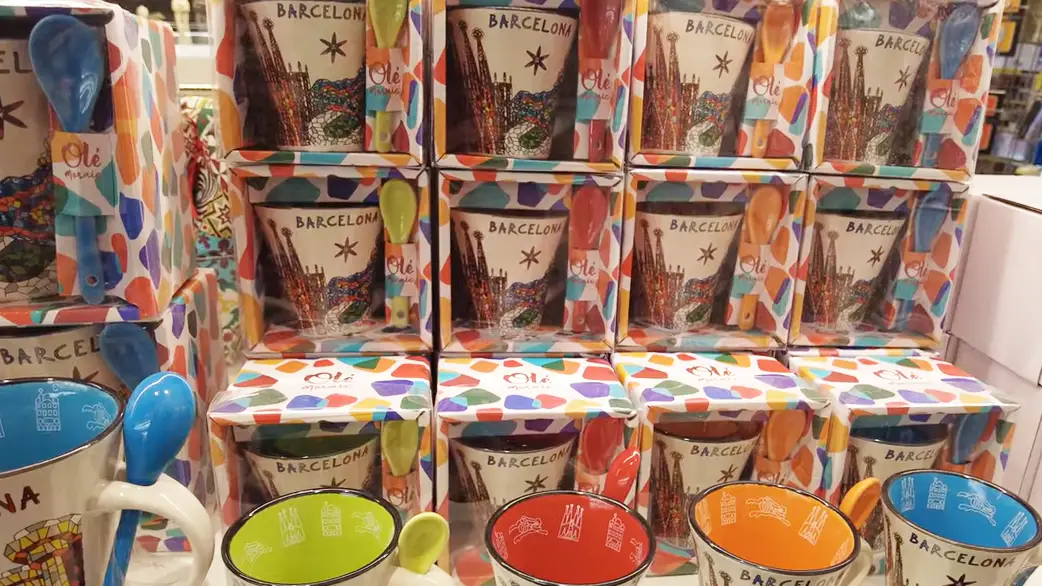
Every traveler returning from Catalonia faces the same unspoken luggage tax. You need twenty distinct tokens of appreciation for desk-mates, neighbors, and casual acquaintances, yet the souvenir shops flanking La Rambla sell little beyond stamped castanets and industrial sangria jugs priced at steep markups. Sourcing thoughtful, authentic favors without detonating your holiday budget requires trading the souvenir strip for neighborhood grocers, regional market stalls, and local department store basements. Buying edible goods in bulk transforms a chore into an edible curation project.
(Source: MSN: "【旅のお土産ラッピングアイデア】100均・セリアのスタンプで ...")
Elevating these grocery-aisle discoveries depends on presentation. As covered in a recent lifestyle feature by the MSN Report documenting food stylist valo's work, creative packaging with basic craft supplies transforms standard bulk purchases into polished gifts. Combining affordable Catalan culinary staples with deliberate repackaging techniques lets you provide distinctive mementos without overspending or overloading your baggage.
📌 Key Takeaways:
- The Budget Route: Mercadona supermarket finds and regional grocers yield authentic Catalan pantry goods at 60% lower costs than airport duty-free shelves.
- Packaging Strategy: Buying multi-pack sweets and dividing them into parchment bags sealed with baker's twine creates upscale presents on a shoestring budget.
- Customs Reality: Tinned seafood, vacuum-packed dry turrón, and dense biscuits sail through customs, while soft cheeses and glass bottles require strategic packing.
Mercadona Supermarket Finds That Outperform Tourist Shops
Mercadona remains Spain’s most dominant grocer for good reason. Its private-label brand, Hacendado, delivers exceptional quality control on regional staples at baseline local prices. For bulk favors, the sweet aisle holds clear winners: Carquinyolis Catalan biscuits. These hard, twice-baked almond biscotti are fragrant with lemon zest and aniseed, traditionally dipped into sweet moscatel wine. A 250-gram bag costs roughly €1.80, containing dozens of individually portioned cookies that withstand turbulence without crumbling into dust.
Seasonal confections also provide tremendous mileage outside peak holiday months. Turrón bars and portions, traditionally reserved for Christmas, now occupy store shelves across Barcelona year-round. While premium almond-paste blocks can cost upwards of €12 in specialty boutiques, Mercadona offers classic turrón blando (soft Jijona style) and turrón duro (brittle Alicante style) alongside chocolate-praline twists for between €1.60 and €2.40 per slab. Slicing these slabs into squares or grabbing pre-portioned bite-size assortments yields instant, low-cost office hand-outs.
Savory snackers should veer toward the chip aisle for Espinaler sauce snacks. Espinaler sauce, a tangy blend of vinegar, red pepper, and spices born in Vilassar de Mar, is a Catalan vermouth-hour institution. Mercadona stocks proprietary potato chips pre-seasoned with paprika and vinegar mimicking this flavor profile, along with small 100ml plastic bottles of genuine Espinaler sauce for approximately €2.20. Paired together, they offer colleagues an authentic taste of Barcelona aperitivo culture.
Department Store Secrets: Navigating El Corte Inglés Gourmet Club
When you need gifts carrying visual prestige without paying boutique markups, the subterranean food halls of El Corte Inglés in Plaça de Catalunya represent prime hunting grounds. The general supermarket section provides reliable standard pricing, while the adjacent El Corte Inglés Gourmet Club curates heritage brands in ready-to-gift packaging. You can browse both sections with a single cart, matching budget items with higher-end items.
The standout confectionery purchase here is Catànies praline almonds by Cudié. These toasted Marcona almonds are coated in white chocolate praline, dusted with bitter cocoa powder, and melt smoothly on the palate. Miniature decorative boxes of Catànies sell for €3.50 to €5.00, establishing them as an easy choice for close managers or clients who warrant something finer than everyday supermarket cookies.
Chocolate lovers should seek out Chocolate Amatller tins. Founded in Barcelona in 1797, Amatller is one of Europe's oldest continuous chocolatiers. The brand packages dark cocoa leaves and Marc de Cava truffles in tinplate boxes decorated with original art nouveau illustrations by Alphonse Mucha. At €4.20 to €6.50 per tin, the packaging serves as a keepsake long after the chocolate disappears, eliminating any need for supplementary gift wrap.
Cost Breakdown and Luggage Impact of Popular Catalan Souvenirs
Weight limits and breakage risks determine which items make sense for travel. Glass bottles quickly eat away at baggage allowances, while lightweight tins and vacuum packs provide efficient value per kilogram.
| Product & Brand | Average Price (€) | Weight & Transit Durability | Ideal Recipient |
|---|---|---|---|
| Chocolate Amatller Tins | €4.20, €6.50 | 65g; Rigid metal shell, crush-proof | Close colleagues, design enthusiasts |
| Hacendado Carquinyolis Biscuits | €1.70, €2.10 | 250g; Dense, dry crumb, low fragility | General office teams, communal pantry |
| Cudié Catànies Almond Packs | €3.50, €5.00 | 80g; Cardboard carton, temperature-sensitive | Foodies, direct supervisors |
| Gourmet Conservas (Cockles/Mussels) | €3.80, €8.50 | 115g; Hermetically sealed, high carry weight | Home cooks, cocktail party hosts |
| Miniature Olive Oil Bottles (D.O. Siurana) | €1.90, €3.20 | 100ml; Glass breakage risk, liquids rule | Dinner hosts, close friends |
Dodging the Pitfalls of La Boqueria Market Snacks
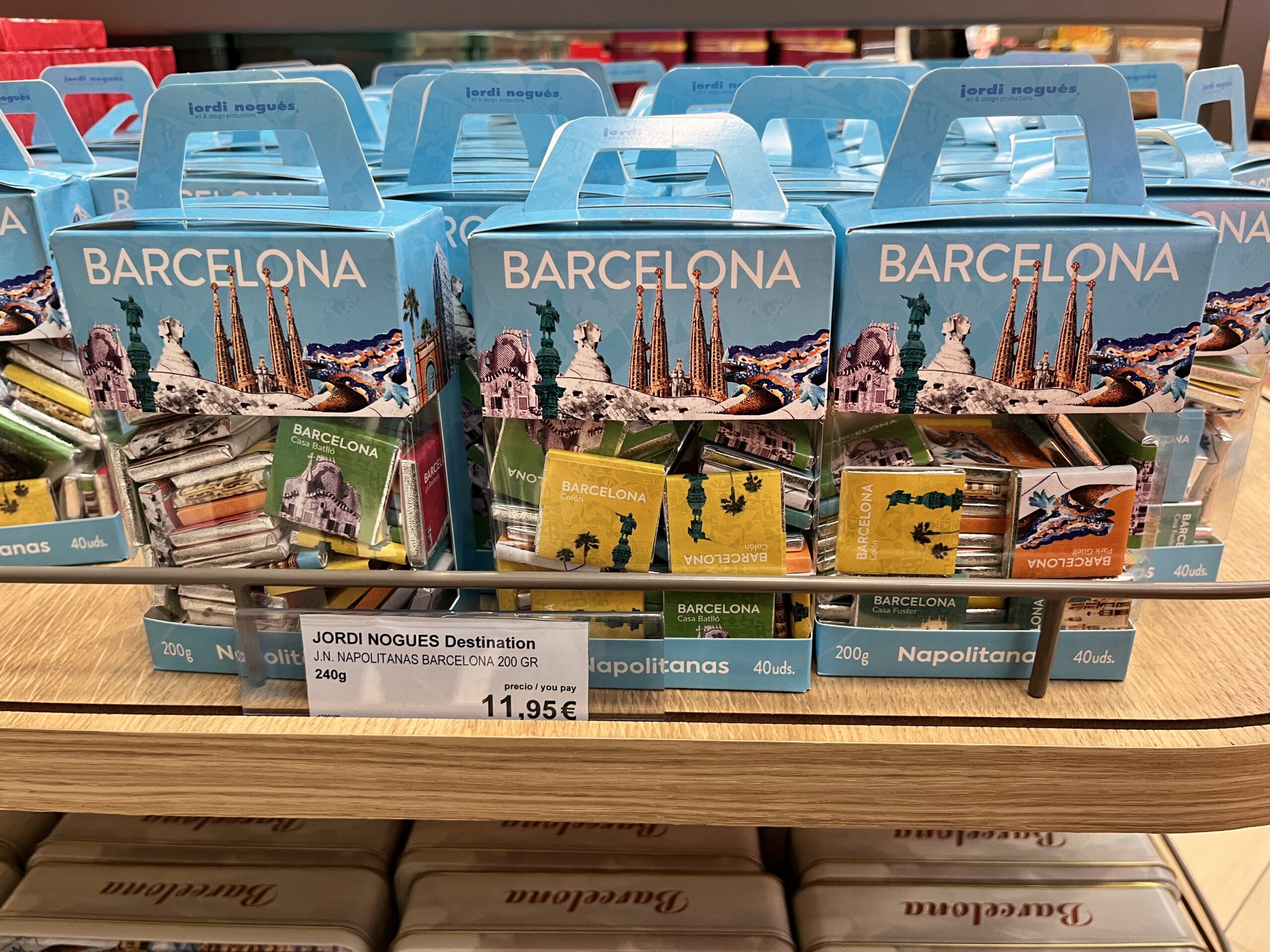
The Mercat de Sant Josep de la Boqueria draws tens of thousands of visitors daily, but navigating its central aisles requires a critical eye. Stalls fronting the main entrance along La Rambla routinely stock overpriced fruit cups, commercial gelatine candies shaped like peppers, and vacuum-sealed cones of generic chorizo. These grab-and-go treats target impulse foot traffic at inflated prices of €4.00 to €7.00 per cup for products that rarely originate in Catalonia.
Walking toward the market’s rear stalls uncovers generational fishmongers and dry-goods merchants selling genuine local provisions. Look for gourmet Spanish conservas: tinned razor clams (navajas), cockles (berberechos), and mussels in escabeche from producers like Ramón Peña, Espinaler, or Ortiz. Spain views tinned seafood as haute cuisine rather than survival rations. A tin of spiced Galician sardines paired with a bag of artisanal crisps costs around €4.50 to €6.00, delivering a savory, culinary gift that slips neatly into shoe corners inside your luggage.
For market shopping with lower markups and fewer crowds, head five minutes east toward Mercat de Santa Caterina beneath its undulating ceramic roof, or take the metro south to Mercat de Sant Antoni. Stalls in both locations sell cured cheeses like raw-milk Manchego or Catalan Garrotxa wrapped in airtight plastic by weight, generally saving you 25% to 40% compared to central tourist markets.
DIY Souvenir Wrapping Hacks for Affordable Office Souvenirs
Bulk gifting often creates an aesthetic dilemma: large grocery multi-packs are economical, yet distributing unadorned plastic wrappers around an office floor feels cheap. Adopting straightforward packing methods bridges that gap, elevating low-cost regional pantry items into polished, personal tokens.
Pack a flat bundle of brown craft paper bags, small glassine envelopes, and baker’s twine in your suitcase before departure. Split large boxes of Carquinyolis or multi-bar packs of turrón into individual portions. Slip two almond biscuits and a single-origin chocolate tablet into an unbleached parchment pouch. As highlighted in Japanese DIY wrapping methods, using simple rubber stamps, a vintage mail mark or botanical imprint, creates an artisanal feel for pennies.
Miniature olive oil bottles round out these custom packages. Catalan Arbequina oil, pressed in areas like Siurana, is celebrated for its buttery texture and lack of bitterness. Look for 100ml travel-ready tins or dark glass flasks in neighborhood bodegas for around €2.00 each. Stash the oil inside a small muslin drawstring bag alongside a sprig of dried rosemary purchased from a spice stall. This arrangement feels curated and personal, even though the total materials clock in well under €4.00 per person.
Frequently Asked Questions (FAQ)
Q1: Can I pack Spanish tinned fish and olive oil in my carry-on luggage?
A1: Liquid rules apply strictly at Barcelona-El Prat Airport (BCN). Olive oil bottles exceeding 100ml will be confiscated at security checkpoints. Gourmet conservas contain preserving oil or brine, and security staff regularly classify them as liquids if net weights surpass the 100ml allowance. Pack all tinned seafood, sauces, and cooking oils securely inside your checked luggage, wrapped in sealed zip-top bags.
Q2: What is the expected shelf life for authentic Catalan turrón and carquinyolis?
A2: Both confections offer long shelf stability. Carquinyolis are dry biscuits with low moisture content, remaining crisp for four to six months when stored away from humidity. Turrón bars packed with almonds and honey stay fresh for nine to twelve months at room temperature. Keep chocolate-covered varieties like Catànies in a cool room to prevent cocoa butter bloom.
Q3: Where can I buy last-minute bulk souvenirs on a Sunday in Barcelona?
A3: Standard supermarkets like Mercadona, Lidl, and municipal markets close completely on Sundays across Catalonia. If you must shop before a Sunday departure, visit the gourmet convenience shops inside major train stations (Barcelona Sants) or the duty-free shops at El Prat Airport Terminal 1 and 2, though airport prices average 30% to 50% higher than city-center supermarkets.
Mastering Barcelona's Edible Souvenir Trail
Successful souvenir shopping comes down to planning your grocery run like an intentional stop on your itinerary. Dedicate an afternoon hour to roaming a suburban Mercadona for carquinyolis and spiced crisps, stop by El Corte Inglés for Amatller tins and Catànies, and purchase tinned seafood directly from quiet outer market stalls. This straightforward strategy avoids marked-up tourist shops while keeping your suitcase intact.
When you pair modest, authentic pantry staples with thoughtful homemade packaging, bulk gift-giving stops feeling like an obligation. Your recipients receive a genuine taste of Catalonia's rich culinary traditions, and your bank account remains untouched by tourist traps.