The Dirty Secret Behind Viral Ab Trends: Why Your Ab Bench Workouts Are Failing
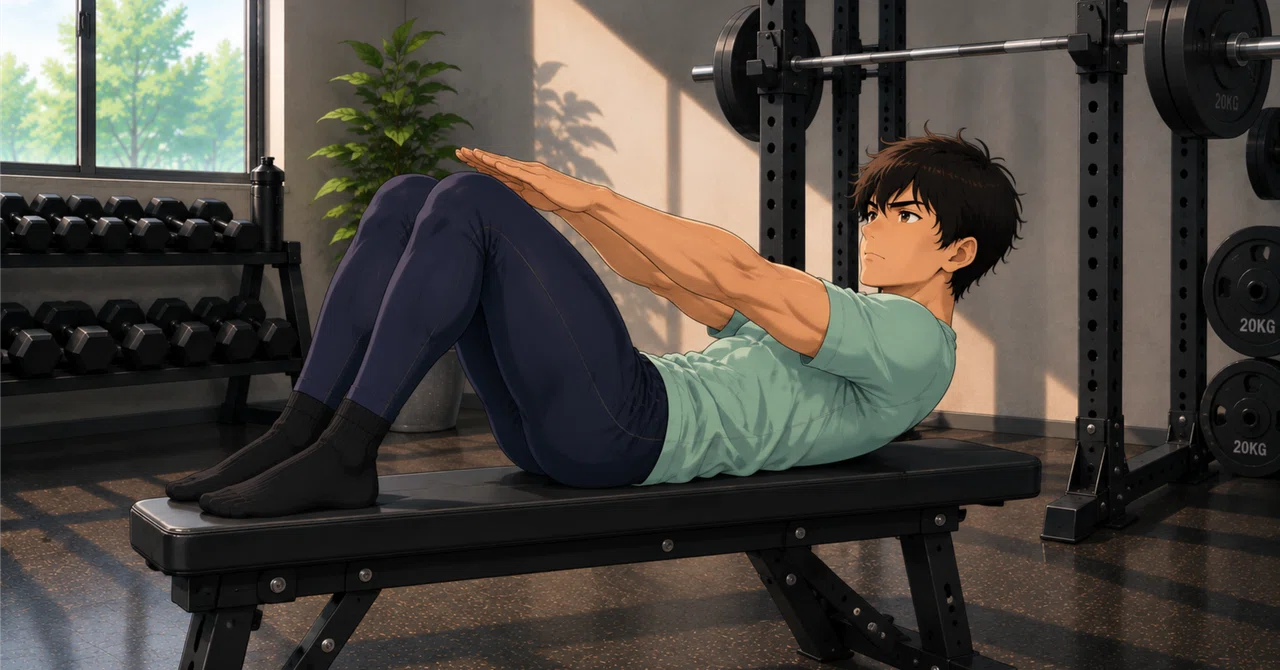
Social media feeds are flooded with five-minute core blast challenges promising chiseled midsections, yet orthopedic clinics and physical therapy practices are seeing a predictable consequence: chronic lower back agony. As analyzed in firsthand training dispatches such as this note Report, building an enduring midsection demands systematic resistance and biomechanical precision rather than frantic, unanchored daily repetitions. Mainstream fitness channels often celebrate burning sensations that stem from metabolic waste pooling in overused hip stabilizers rather than targeted abdominal muscular work.
The ubiquitous decline ab bench sits in commercial facilities and home garages alike, yet it remains one of the most misused pieces of apparatus in strength sports. When trainees lock their ankles into rollers and yank their torsos toward their knees, they rarely train their abdominal wall. Instead, they expose their lower backs to hazardous shear forces while letting their hip flexors do the heavy lifting.
📌 Key Takeaways:
- Core Mechanical Flaw: Most lifters execute straight-spine hip flexion on decline benches, shifting mechanical load away from the core and onto the psoas.
- Spine Protection Protocol: Initiating reps with an intentional posterior pelvic tilt eliminates lumbar shear and forces direct rectus abdominis activation.
- Hypertrophy Reality: Abdominal muscles follow the same biological rules of mechanical tension as any skeletal muscle group, requiring systematic resistance scaling rather than endless high-rep floor circuits.
The Social Media Fallacy of High-Rep Floor Circuits
Short-form video platforms routinely push five-minute, no-equipment ab routines that promise rapid aesthetic changes. These routines create an intense burning sensation that many mistake for productive muscular stimulation. In an analysis published by Esquire on fitness industry misdirection, professional trainers pointed out that these rapid circuits primarily induce metabolic stress through continuous, incomplete contractions without producing sufficient mechanical tension.
Floor crunches provide a remarkably short range of motion. The floor acts as a physical barrier that prevents natural spinal extension, cutting off the muscle in its lengthened state. The rectus abdominis functions primarily to flex the thoracic and lumbar spine, drawing the sternum toward the pelvis. When you perform high-speed crunches on a flat surface, the abdominal wall moves through less than 30 degrees of total articulation.
This truncated range limits the recruitment of deep motor units. Muscular adaptations occur most effectively when muscle fibers experience tension while stretching under control. High-rep floor routines burn because lactic acid pools in the tissue during continuous isometric tension, not because the fibers are receiving the mechanical overload required for genuine tissue remodeling.
Hip Flexor Compensation and Lumbar Spine Compression
The standard sit-up executed on an adjustable slant board frequently becomes a hip flexor exercise masquerading as core work. When your feet are anchored into footpads, the iliopsoas and rectus femoris take over mechanical responsibility. These muscles originate on the lumbar spine and pelvis, inserting into the femur. When they contract against an anchored foot, they pull directly on the lower lumbar vertebrae.
This dynamic triggers dangerous hip flexor compensation. As the psoas contracts forcefully to hoist a rigid torso upward, it pulls the lumbar spine forward into excessive lordosis. This motion induces substantial lumbar spine compression, squeezing the posterior edges of the intervertebral discs. Biomechanics pioneer Dr. Michiya Tanimoto of Juntendo University has repeatedly emphasized that repeated spinal bending under uncontrolled load creates structural strain rather than muscular efficiency.
The failure to distinguish between hip flexion and genuine spinal flexion is the reason so many trainees abandon the decline ab bench due to lower back pain. If your hip angle closes while your spine remains rigid like a board, your abdominals are performing nothing more than a static, isometric brace. Your hip flexors are doing over 80% of the dynamic work, pulling your spine into an unstable arch.
Spinal Flexion Mechanics on an Adjustable Slant Board
To shift tension directly onto target tissues, lifters must master deliberate spinal flexion mechanics. The movement cannot be an explosive hinge at the acetabulofemoral joint. It must be an intentional, segment-by-segment rolling of the spine. The process begins with an aggressive posterior pelvic tilt, flattening the lumbar curve before any upward torso movement occurs.
Think of the movement as curling your ribcage down toward your belt buckle. Your lower back should press firmly against the bench pad during the early phase of the ascent before peeling upward one vertebra at a time. The hips should remain passive, functioning purely as a stable pivot rather than a motor.
Adjusting the board's angle alters the resistance curve entirely. On a flat floor, tension drops to near zero at the top and bottom of a crunch. On a decline surface, gravitational resistance reaches its peak precisely where the abdominal fibers must work hardest to maintain spinal flexion. Controlling the eccentric descent, unrolling the spine slowly back onto the pad, produces the deep mechanical disruption required for long-term tissue adaptation.

Execution Metrics: Floor Circuits Versus Slant Board Protocols
Direct comparisons between traditional floor-based bodyweight training and structured decline bench loading demonstrate distinct biomechanical and physiological profiles.
| Training Variable | Viral Floor Circuits | Calibrated Decline Bench |
|---|---|---|
| Spinal Range of Motion | 15°, 30° (Truncated flexion) | 45°, 60° (Full flexion and extension) |
| Primary Prime Mover | Iliopsoas & Rectus Femoris (Compensatory) | Rectus Abdominis & Internal Obliques |
| Lumbar Shear Forces | Moderate to high under high velocity | Minimal when posterior pelvic tilt is held |
| Overload Progression Method | Increasing reps to fatigue (50, 100 reps) | Angle incline adjustments & external loads (8, 15 reps) |
| Hypertrophic Stimulus | Primarily local endurance adaptation | True structural cross-sectional growth |
Reverse Crunches and True Progressive Overload
Trainees fixated on the traditional sit-up often overlook the opposite movement path: curling the pelvis up toward the ribcage. Performing reverse crunches on bench equipment turns gravity into an ally for the lower abdominal fibers. By lying supine on a decline, gripping the top handle or footpads securely, you anchor your upper body and force the lower trunk to pull the load.
The movement should not consist of swinging your legs upward. Momentum must be stripped out entirely. Your knees remain at a fixed angle, while your lower abdominal wall contracts to roll your pelvis off the bench pad. Each repetition demands an intense isometric core contraction at the top of the stroke, elevating the hips toward the ceiling through deliberate muscular effort.
Abdominal progressive overload works best when treated identically to bench presses or squats. Muscle fibers respond to scalable resistance. Once a trainee can execute 12 to 15 strict repetitions with a four-second eccentric cadence, they should not default to doing 50 reps. Instead, increase the bench angle by one notch or hold a 5 to 10-pound plate behind the head. This targeted mechanical stimulus signals the rectus abdominis to expand its cross-sectional area, creating the defined muscular partitions necessary for six-pack muscle hypertrophy.
Integrating Decline Stations into Home Gym Equipment
Setting up an effective core station does not require sprawling commercial setups. A reliable adjustable slant board has emerged as an essential piece of home gym workout equipment. Selecting the right bench requires checking specific mechanical features rather than falling for flashy aesthetics.
The critical factor is pad length and anchor adjustability. Benches with fixed foot rollers often force individuals taller than six feet into awkward hip angles, locking the pelvis into anterior tilt before the movement even begins. Seek platforms that offer at least four distinct angle settings between 15 and 45 degrees, with adjustable ankle and knee support rollers to ensure a snug, individualized lock.
High-density foam padding is non-negotiable. Cheap padding compresses completely beneath the sacrum during the bottom of a repetition, pushing bony landmarks directly into metal frames and disrupting clean movement patterns. A solid, stable foundation allows you to concentrate entirely on spinal flexion mechanics, eliminating the balance compensations common on cheaper, wobbly hardware.
Frequently Asked Questions (FAQ)
Q1: Why does my lower back hurt whenever I use an ab bench?
A1: Back discomfort occurs when your hip flexors dominate the movement, pulling the lumbar spine into an exaggerated arch. To eliminate this issue, establish an active posterior pelvic tilt before initiating each rep, curl your torso inward rather than hinging at the hips, and avoid anchoring your feet with your hips locked into full extension.
Q2: Can using an ab bench burn stubborn belly fat directly?
A2: Spot reduction of adipose tissue is physiologically impossible through localized exercise. While an ab bench builds the underlying muscular thickness and structural density of the rectus abdominis, revealing those muscles requires maintaining a sustained caloric deficit to reduce overall systemic body fat levels.
Q3: How many times per week should the core be trained with a decline bench?
A3: Because weighted and decline core training causes direct muscular breakdown, training the midsection two to three times per week with 48 hours of recovery between sessions is optimal. Performing 3 to 4 focused sets of 10 to 15 controlled repetitions provides far greater hypertrophic stimulation than daily high-rep circuits.
Engineering Resilient Core Hypertrophy
Building a resilient, visually prominent midsection requires discarding social media fads in favor of basic exercise science. The abdominal wall does not respond to mystical high-frequency circuits. It follows the same biological imperatives of mechanical tension, full range of motion, and progressive overload that govern every other muscle in the human body.
The decline bench remains an effective training tool when treated with technical respect. By actively mitigating hip flexor compensation, executing deliberate spinal flexion, and treating abdominal work with progressive resistance, lifters can develop both exceptional core strength and deep muscular definition while insulating their spines from injury.