The Evolution of Invisible Falsies: Sho-Bi's Soft Micro-Band Launch
For years, clear-band false eyelashes promised the illusion of naturally dense lashes without the harsh, heavy border of traditional black bands. In practice, millions of users discovered an aggravating cosmetic paradox: the clear plastic band often proved far more distracting than the black strip it replaced. Under office fluorescents, midday sun, or smartphone camera flashes, rigid synthetic nylon acts like a miniature light pipe, casting a milky sheen along the eyelid while the stiff edges pop free at the corners.
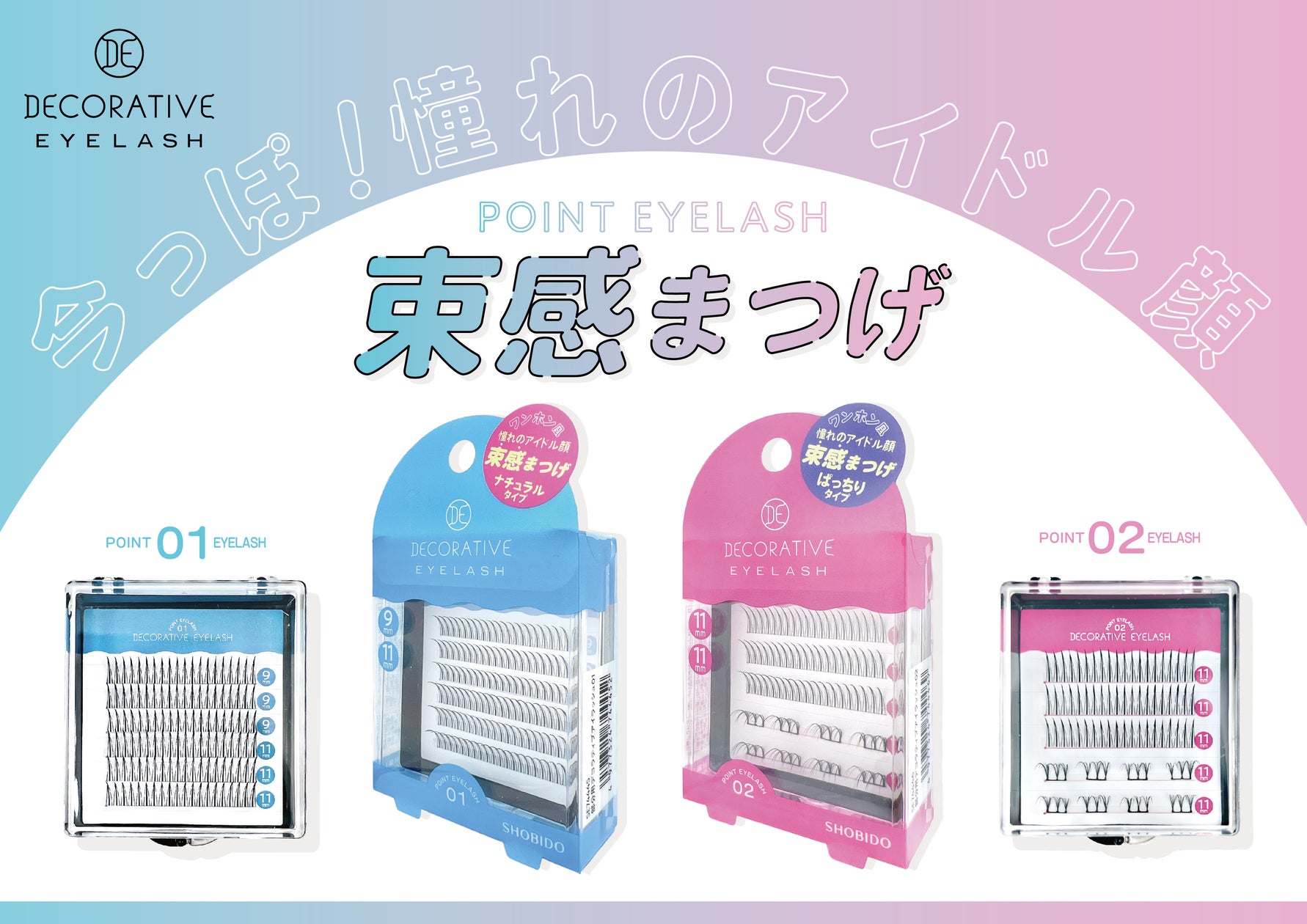
The industry response reached a turning point when Tokyo-based beauty developer Shobido Corporation overhauled traditional monofilament manufacturing. As detailed in an official PR TIMES Report, the company engineered soft micro-band lash segments designed to sit flush against the lid without the structural rigidity that causes inner corner lifting. Paired with recent advances in non-reflective adhesives and refined application methods, these ultra-pliable designs have systematically tackled the glare problem that plagued transparent falsies for over a decade.
📌 Key Takeaways:
- The Glare Problem: Traditional transparent bands use extruded nylon monofilament, which catches light and creates clear band glare that photographs as a shiny, white line on the lid.
- The Structural Fix: Next-generation Sho-Bi clear band falsies substitute rigid full strips with ultra-fine, low-durometer partial lash clusters that flex across the eyelid's natural contours.
- Application Strategy: Eliminating visibility requires a combination of lash line tightlining, eyelash band trimming into smaller segments, and pairing them with matte lash adhesive to kill glue shine.
The Optical Physics Behind Clear Lash Band Glare
The fundamental flaw of early invisible false eyelashes lies in optical physics rather than lash placement. Standard transparent bands are extruded from high-density nylon or polyester monofilament, chosen by manufacturers for tensile strength and ease of machine-knotting. These solid, rounded synthetic fibers possess a smooth outer surface and a high refractive index. When overhead light strikes the cylindrical band, the curved surface gathers and bounces light directly toward observers and camera lenses.
This clear band reflection produces an unintentional highlighting effect. Instead of disappearing into the flesh tones of the eyelid, the band creates a bright, translucent halo that accentuates the gap between natural lashes and the artificial strip. The issue magnifies whenever standard latex adhesives dry into a glossy, rubberized coating, creating an unbroken strip of high-sheen plastic across the lash line.
Lighting conditions dictate the severity of the problem. Diffuse, indirect daylight masks the reflection reasonably well. Point-source lighting, such as ring lights, direct sun, or flash photography, converts the transparent plastic line into a stark, visible seam. For wearers who prefer no-makeup makeup looks or minimal eyeliner, this optical flare completely defeats the purpose of buying transparent bands.
Sho-Bi's Material Redesign: From Rigid Strips to Micro-Bands
Solving this optical flaw required rethinking both the material composition and the physical footprint of the lash spine. In its product development overhaul, Shobido Corporation targeted the structural rigidity that forces wearers to anchor full bands with excessive, shiny glue. By moving toward specialized soft micro-band lash architecture, the brand produced bands with dramatically reduced diameter and flattened surface profiles that diffuse light rather than reflect it.
The structural redesign also addressed the mechanical tension of the eye. A continuous plastic band acts like a spring; every time the eyelid blinks, the band fights to flatten out, pulling away from the curved margins of the eye. This tension causes inner corner lifting, exposing the thickest, shiniest anchor point of the strip. Shobido's release split the traditional full band into delicate partial lash clusters. By isolating the fibers into localized groupings on pliable micro-bases, the lateral tension across the eyelid drops to near zero.
These partial clusters mimic the natural distribution of human hair follicles. Natural lashes do not emerge from an uninterrupted rail; they grow in staggered rows with varying root densities. Distributing the lash volume across segmented, low-sheen clear roots allows the wearer's real skin tone to show through between clusters, neutralizing the artificial straight-line silhouette that draws the eye.
| Feature / Specification | Standard Monofilament (Pre-2023) | Modern Soft Micro-Band (Sho-Bi Era) |
|---|---|---|
| Band Diameter / Profile | 0.18 mm, 0.25 mm (Round, rigid extrusion) | 0.05 mm, 0.08 mm (Flattened, pliable spine) |
| Light Refraction & Glare | High specular reflection (noticeable shine under flash) | Diffused matte transmission (absorbs ambient light) |
| Inner Corner Detachment Rate | Frequent (high kinetic resistance to blinking) | Extremely low (flexes freely with ocular movement) |
| Structural Format | Full 30 mm, 34 mm continuous strip | 3 mm, 6 mm segmented clusters or featherweight strips |
Eradicating Eyelash Glue Residue and Border Flash
Even the most advanced soft micro-band lash will fail if paired with outdated adhesive chemistry. A primary contributor to noticeable clear bands is dried eyelash glue residue. Conventional white-to-clear adhesives rely on formulas that leave an acrylic or latex sheen behind once water evaporates from the emulsion. That dried residue creates an uneven, high-gloss ridge along the top edge of the falsie.
To combat this, the market has migrated toward matte lash adhesive formulations. These adhesives incorporate microscopic silica spheres or specialized film-formers that dry completely flat, absorbing ambient light instead of bouncing it back. A micro-drop placed along the spine with an ultra-fine brush applicator provides structural hold without creating pools of adhesive that creep up the lash shafts.
Precision application also requires waiting for the adhesive to transition properly. Applying a band while the adhesive remains wet and milky guarantees smeared residue across the eyelid skin. Waiting 20 to 30 seconds until the adhesive turns tacky and semi-translucent ensures a clean bond on contact, preventing messy build-up that turns chalky or reflective as the day progresses.
Essential Application Mechanics: Trimming, Tightlining, and Placement
Natural falsies application with clear bands demands fundamentally different prep work than working with dramatic black-band alternatives. Where a thick black band functions as built-in liquid liner, concealing placement mistakes and messy roots, a clear band exposes every millimeter of skin beneath it.
Precision adjustments make the difference between seamless integration and an obvious, shiny strip:
- Strategic Eyelash Band Trimming: Full-strip clear lashes almost always feature blunt plastic anchor tabs at the extreme ends where the cutting die severed the nylon. These sharp outer tips have no hair attached and will lift, poke the lid, and reflect light. Always snip these clear tabs off flush against the outermost hair fiber before application.
- Lash Line Tightlining: Before applying the falsie, use a waterproof, smudge-proof dark brown or black pencil to deposit pigment directly into the waterline and the gaps between natural lash roots. Tightlining eliminates the pale skin line that frequently shows beneath a clear band, giving the eye depth without requiring a visible liquid eyeliner wing on top of the lid.
- Segmenting the Band: Cutting a full clear-band strip into three or four separate sections eliminates the rigid mechanical arc entirely. Applying these individual segments along the outer two-thirds of the eye leaves the sensitive, highly mobile inner corner bare, preventing corner lift completely.
- Under-Lash Placement: Placing soft micro-band clusters underneath the natural lashes rather than on top of the eyelid skin hides the band entirely within the lash bed. This technique shields the micro-band from overhead illumination, rendering the attachment point invisible from straight-on angles.
Who Benefits Most From Clear Micro-Bands (And Who Should Avoid Them)
Clear micro-bands are specifically engineered for natural daytime wear, subtle eye enhancement, and low-contrast makeup styles. They are ideal for individuals with hooded eyes or monolid anatomy, where heavy black bands can press uncomfortably into the crease or overwhelm limited eyelid real estate. Makeup wearers who routinely skip liquid eyeliner find clear bands far more forgiving, as they blend seamlessly into bare skin when applied with a matte adhesive.
Conversely, clear bands are an inefficient choice for heavy, high-glam aesthetics. If your makeup routine includes dense smoky eyeshadow, thick gel eyeliner, or dramatic multi-layered falsies, a traditional flexible black cotton band remains superior. Black bands create a solid, continuous border that reinforces deep eyeliner tones without needing the meticulous precision work required to hide a clear spine. Those working under harsh television studio lighting or performing on stage should likewise rely on dark bands, as stage-level lumens can still induce minor glare along clear edges.
Frequently Asked Questions (FAQ)
Q1: Why do my clear-band false eyelashes look white or shiny in photos?
A1: The cylindrical nylon monofilament used in traditional clear bands has a high refractive index, acting like a light pipe that bounces camera flashes straight back into the lens. In addition, white-to-clear adhesives often dry into a glossy, semi-reflective acrylic surface. Switching to a matte lash adhesive and using soft micro-bands with low-sheen finishes solves this problem.
Q2: How do I stop the inner corners of clear lash bands from peeling up?
A2: Inner corner detachment happens because standard clear bands have structural spring-tension that fights the natural curve of the eye. Cut off the excess plastic anchor tab at the front of the band, snip the band into two or three smaller segments, or avoid placing false lashes all the way into the inner corner where blinking motion is most pronounced.
Q3: Can I apply clear-band lash clusters underneath my natural eyelashes?
A3: Yes. Under-lash application (tucking the micro-band beneath the natural lash base just above the wetline) is one of the most effective ways to hide the band. Sandwiched inside the root bed, the band is shielded from ambient light, completely eliminating top-down glare.
The Path Forward for Invisible Lash Engineering
The evolution of false eyelash manufacturing highlights a broader shift across the cosmetic industry: moving away from theatrical, high-maintenance products toward weightless, skin-first engineering. By phasing out rigid monofilament strands in favor of compliant micro-bases and targeted partial clusters, manufacturers have transformed clear lashes from an aggravating, reflective strip into a truly undetectable tool for everyday makeup routines. Mastered alongside matte adhesives and simple tightlining habits, the dreaded plastic shine of transparent falsies has finally become an issue of the past.