The Hidden Cleat Eyelet Revealed: Why Pro Soccer Players Never Skip the Top Hole
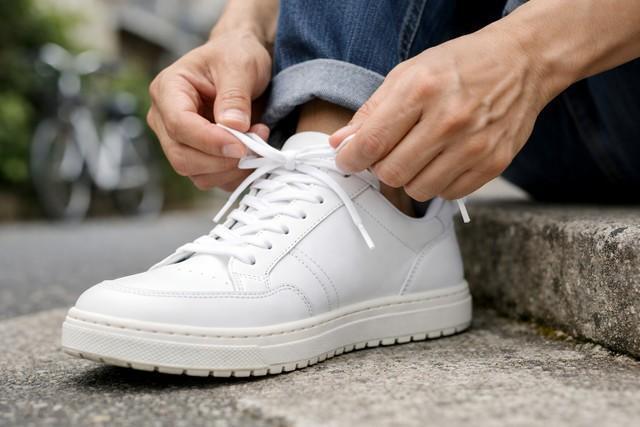
Every weekend, millions of soccer players lace up their boots, pull the strings tight, and ignore the offset pair of holes positioned right at the ankle collar. Most assume those extra eyelets are manufacturing afterthoughts or decorative quirks. In reality, skipping them is the primary reason your heel slides upward during sharp cuts, your toes slam into the toe box on sudden stops, and blistering ruins your match fitness by the seventieth minute. Equipment staff across elite European academies teach youth prospects to treat that final hole not as an accessory, but as the mechanical anchor of the entire boot.
The biomechanics of this tiny grommet have recently captured mainstream attention beyond tactical locker rooms. As detailed in an investigative footwear guide by the MSN Report, that seemingly redundant top hole is explicitly designed for a technique known as the heel lock, or runner's loop. Meanwhile, consumer interest in non-traditional lacing systems has surged globally, exemplified by Japanese footwear major ASBee, whose April 2026 instructional demonstrations highlighting slip-free, no-tie lacing techniques drew over 1.6 million views. When modern football boots weigh less than 190 grams and feature razor-thin synthetic uppers, manual lockdown execution makes the difference between an elite touch and a sprained lateral ligament.
📌 Key Takeaways:
- The Root Cause: Heel slippage and toe-jamming stem from incomplete collar lockdown rather than incorrect boot sizing.
- The Mechanical Fix: Engaging the top eyelet through a heel lock knot generates downward rearfoot force without strangling the instep.
- Custom Lacing Matters: Alternate configurations such as window lacing and over-under threading resolve wide-foot pinch points while maintaining structural containment.
The Engineering Behind the Extra Boot Eyelet
Look closely at modern football boots from Nike, Adidas, or Puma. The eyelet row does not end uniformly. Instead, an extra hole sits slightly higher and further back toward the Achilles tendon. Shoe lasts are sculpted on standardized foot molds, meaning production models cannot accommodate every calcaneus shape perfectly. Boot manufacturers punch this offset hole to allow players to manually adjust collar tension.
When you plant your foot to change direction, your body generates deceleration forces up to three times your body weight. If your heel lifts even three millimeters inside the cup, that kinetic energy dissipates. Worse, your foot slides forward. The big toe rams into the synthetic front, producing subungual hematomas, known colloquially as runner's toe. Engaging that extra eyelet transforms the lacing matrix from a flat top-cinch into a 45-degree anchoring harness that seats the calcaneus firmly against the internal heel counter.
Step-by-Step Heel Lock: Creating the Runner's Loop
Executing the heel lock knot does not require buying specialized gear or swapping out stock laces. It simply alters how the final two inches of lace interact with the upper eyelets.
Follow these steps before your next training session:
Lace your boots using your normal pattern up to the second-to-last eyelet. Take the lace on the outside of your foot and feed it directly into the final top eyelet on the exact same side, pushing from the outside inward. Do not cross over the tongue yet. Leave a loop roughly two inches wide sitting against the collar. Repeat this identical step on the medial side with the inside lace, leaving a matching loop.
Cross the lace ends across the tongue. Thread the left lace through the right loop, and thread the right lace through the left loop. Pull the lace ends outward and slightly downward toward your sole rather than straight up toward your shins. You will feel the collar cinch around your ankle, sealing the opening. Tie your standard bow knot over the top.
Biomechanical Comparison of Football Boot Lacing Methods
Different lacing strategies serve distinct physiological needs. Applying the wrong pattern can restrict blood flow or trigger extensor tendonitis along the top of the foot. The following breakdown shows how common configurations perform across key stability indicators.
| Lacing Technique | Primary Mechanical Function | Target Foot Type & Issue | Lockdown Index (1, 10) |
|---|---|---|---|
| Standard Criss-Cross | Uniform medial-lateral tension | Standard width, neutral arches | 6.0 / 10 |
| Heel Lock (Runner's Loop) | Rearfoot anchoring & heel retention | Narrow heels, blister-prone ankles | 9.5 / 10 |
| Window (Parallel) Lacing | Relieves dorsal pressure hotspots | High arches, instep nerve pain | 7.0 / 10 |
| Over-Under Lacing | Friction reduction & dynamic flex | Wide forefeet, stiff synthetic uppers | 7.5 / 10 |

Adapting for Wide Forefeet and High Arches
Modern boots feature notoriously narrow silhouettes. Wingers and playmakers with broad forefeet often buy boots half a size too large just to relieve lateral midfoot squeeze. This creates empty space at the front, which ruins clean ball striking and causes severe toe jamming.
You can correct this fit mismatch with lace routing. Thread the bottom eyelets straight across. On the first two eyelet rows where your metatarsals widen, skip the crossover entirely. Run the lace straight up the outside edge to create an open window, then resume standard criss-cross lacing across the midfoot. This isolates forefoot expansion while letting the upper flex naturally without pinching the fifth metatarsal.
High-arched players frequently suffer from tingling toes during the second half of matches. That numbness happens when criss-crossed laces press down on the superficial peroneal nerve. By installing a window directly over the peak of your instep, you remove vertical pressure while keeping the collar completely locked down.
Lockdown Fit vs. Ankle Mobility: The Pitch Performance Trade-off
Some players avoid the top eyelet because they fear it immobilizes the ankle joint. There is a physiological distinction between joint restriction and rearfoot containment. Rigid athletic tape wraps immobilize the talocrural joint to prevent inversion sprains, reducing ankle dorsiflexion by up to 15%. A properly executed runner's loop does nothing of the sort.
The heel lock focuses downward tension onto the calcaneus bone rather than circumferential compression around the Achilles tendon. Your ankle retains complete range of motion to point your toes for a driven strike or flex upward to absorb a hard ground duel. Sports science assessments show that eliminating internal foot shift reduces micro-abrasions by over 80%, preserving blister prevention cleats integrity throughout congested match schedules.
Pro Player Hacks and Matchday Customization
Look into an elite dressing room before kickoff and you will rarely see factory-threaded boots. Professional equipment managers systematically adapt lacing setups to counter wet turf conditions and accommodate high-friction grip socks.
Many midfielders swap standard polyester laces for textured silicone-infused flat laces. These resist water absorption in heavy rain and hold tension without slipping loose inside the eyelet track. Players also combine grip socks with a heel lock knot to eliminate friction points entirely. If your laces run too short after adding the extra eyelet loop, lace technicians cut the bottom row completely, starting the lace pattern at the second eyelet row. The upper maintains its forefoot shape on modern synthetics, and you gain three inches of lace length to secure the final knot.
Frequently Asked Questions (FAQ)
Q1: Why are my soccer cleat laces too short to tie the heel lock knot?
A1: Modern boots often ship with laces measuring only 100 to 110 cm, tailored for simple criss-cross lacing. Skip the lowest eyelet pair near the toe box to gain extra working length, or replace them with 120 cm to 130 cm textured flat laces.
Q2: Does using the extra eyelet cause pain along the front of the ankle?
A2: Pressure pain occurs when you pull the knot vertically instead of outward and downward. If the tongue lacks padding, thread the laces through the tongue's central loop to keep it from bunching up against your flexor tendons.
Q3: Can youth players use the runner's loop on soft ground (SG) boots?
A3: Yes. In fact, younger players benefit even more from the technique because soft ground studs exert higher rotational drag, which pulls the heel upward whenever a child sprints through wet grass.
The Evolution of Boot Lockdown Mechanics
Boot marketing campaigns consistently spotlight ultra-lightweight carbon fiber soleplates and grip textures. Yet no chemical coating or cleat geometry can compensate for an unstable footbed. That forgotten eyelet remains one of the simplest, most effective ergonomic tools sitting right on your feet. Adjusting your lacing setup takes three minutes at home. It saves your skin, restores sharp multidirectional agility, and ensures the energy you put into the pitch translates directly into performance.