The Hidden Winter Date Mistake: Why All-Black Outfits Fail Inside Aquariums

A winter aquarium date seems foolproof on paper. It offers an escape from sub-zero winds, soft ambient lighting that flatters facial features, and built-in visual stimulation that eliminates awkward conversational pauses. Yet countless men walk straight into a stylistic and physical trap between December and February. They default to safe winter uniforms: monochromatic black outfits topped with heavy goose-down parkas.
Ten minutes through the turnstiles, the reality of the venue sets in. Tropical exhibits push warm, humid air into crowded corridors, leaving heavy-jacket wearers flushed and uncomfortable. When your date pulls out a smartphone beside a glowing jellyfish tank, that black sweater absorbs what little light remains, rendering you a featureless silhouette on screen. Nailing the winter aquarium aesthetic requires balancing indoor climate control with deliberate optical contrast.
📌 Key Takeaways:
- The Lighting Hazard: Actinic blue tank illumination absorbs dark fabrics, rendering all-black outfits invisible or turning men into indistinct silhouettes in smartphone portraits.
- The Thermal Shock: Marine pavilions maintain indoor temperatures between 21°C and 24°C (70°F, 75°F) with high relative humidity, making down puffers and thick synthetics uncomfortably warm within 15 minutes.
- The Winning Strategy: Light neutral knit textures, an unstructured blazer beneath a tailored wool overcoat, and walking-friendly dress sneakers deliver comfort, maneuverability, and visual depth.
The Optical Trap of Actinic Blue Tank Lighting
Modern public aquariums rely on specialized actinic LED lighting peaking in the 420, 460 nanometer blue spectrum to replicate deep-ocean conditions and stimulate coral fluorescence. That same blue glow wreaks havoc on traditional menswear palettes. Black, navy, and dark charcoal absorb this wavelength almost entirely, collapsing all visual texture into a flat, shadowy void.
When someone snaps a photo of you standing in front of a floor-to-ceiling tank, an all-black outfit strips away torso definition. You end up looking like a floating head against illuminated water. Subtle light-reflecting fabrics and lighter shades solve this problem instantly.
Replacing dark tops with an off-white, oatmeal, or light dove grey knit changes how the camera captures the moment. Lighter tones reflect ambient tank light back into the camera lens, carving out shoulder lines, chest dimensions, and posture. A neutral color palette creates natural separation between your silhouette and the aquatic backdrop, ensuring couples' photos capture genuine dimension instead of two dark outlines.
Navigating the 24-Degree Indoor Microclimate
Stepping out of freezing street conditions into a major aquarium creates immediate thermal whiplash. Facilities must sustain delicate marine ecosystems, keeping main public corridors at roughly 21°C to 23°C (70°F, 73°F). Rainforest and tropical reef zones frequently climb to 24°C to 26°C (75°F, 79°F) with relative humidity levels exceeding 65%.
Wearing a heavy Arctic-grade down parka or a non-breathable synthetic jacket creates a miserable physical experience. You start overheating inside the first gallery. Carrying a bulky 4-pound jacket over your forearm for two hours cramps your posture, restricts hand-holding, and telegraphs poor planning.
Smart indoor winter layering hinges on shedding warmth quickly without losing aesthetic cohesion. Mid-weight layers made from merino wool or high-twist cotton regulate core body heat far better than synthetic fleece. When you check your outer coat or drape it over an arm, your underlying outfit must function as a self-contained, stylish outfit rather than an exposed undershirt.
The Smart Casual Layering Formula: Textures Over Bulk
Striking the right balance for smart casual menswear in low-light venues comes down to tactile variance. Flat woven cotton and synthetic tech fabrics read as dull under dim gallery spotlights. Rich knit sweater textures add physical depth that registers even in low light.
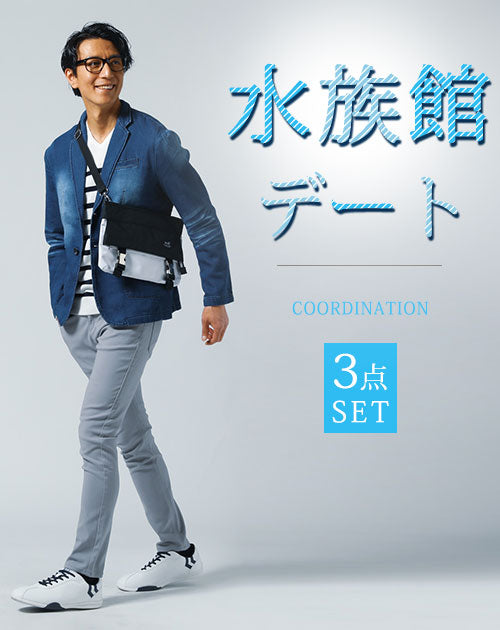
A ribbed fisherman sweater, mid-gauge waffle knit, or cable crewneck in ecru or soft camel catches overhead directional lights along its raised ridges. If you want to elevate the first date impression further, introduce an unstructured blazer crafted from brushed wool, flannel, or knit jersey. Unstructured jackets eliminate rigid shoulder padding and canvas chest pieces, moving easily with your body while framing your torso cleanly.
For your outer shield during the transit phase, opt for thoughtful wool overcoat styling. A tailored single-breasted wool overcoat or a relaxed balmacaan coat in camel or herringbone provides freezing-weather protection on the street. Once inside, checking the coat or removing it reveals a sharp, textured mid-layer underneath.
Field Breakdown: Assessing Winter Aquarium Ensembles
To understand why traditional cold-weather choices fall short, consider how different garment combinations perform across the four primary challenges of an indoor aquarium date.
| Outfit Configuration | Thermal Comfort (22°C / 72°F) | Photo Contrast (Blue LED) | Mobility & Ease |
|---|---|---|---|
| All-Black Monochrome & Down Parka | Severe overheating; trapped moisture from synthetic fills. | Poor; subject appears as an indistinct dark silhouette. | Cumbersome; heavy coat must be carried for hours. |
| Streetwear Hoodie & Cargo Pants | Moderate; fleece lining can retain excess humidity. | Fair; graphics distract from low-light portraits. | High comfort, but underdressed for evening dinner transitions. |
| Textured Cream Knit & Wool Overcoat | Optimal; breathable wool releases heat once coat is removed. | Superior; light tones bounce blue ambient glow clearly. | Effortless; clean lines and functional indoor movement. |
| Unstructured Blazer & Merino Base | High; temperature-regulating fine gauge wool breathes easily. | Excellent; subtle fabric sheen defines torso contours. | Polished; seamless shift from exhibits to reservations. |
Footwear Mechanics: Polished Floors and Splash Zones
Aquarium floors present a distinct footwear challenge. Interior pathways consist almost universally of polished concrete, sealed stone, or smooth terrazzo designed for industrial cleaning. Near interactive touch pools, splash zones, and penguin exhibits, walking surfaces are routinely damp.
Stiff leather dress shoes with untreated oak soles turn into slip hazards on slick, wet stone. Bulky technical snow boots are equally problematic: they track street slush inside, make feet sweat within minutes, and look out of place indoors.
Walking-friendly dress sneakers strike the ideal middle ground. A minimalist low-top sneaker made from clean white or off-white calfskin leather provides rubber-soled traction on damp tiles. These shoes give you the cushioning needed for the 5,000 to 8,000 steps typical of a thorough museum tour, while maintaining a refined aesthetic that holds up when you move on to a restaurant afterward.
Building a Silhouette That Works in Every Room
Trousers pull the entire outfit together. While your top half should feature light neutrals to capture the dim lighting, your pants should anchor the look with solid structure. Relaxed tapered wool trousers or heavy cotton chinos in charcoal, deep olive, or navy ground the lighter tones up top.
Avoid skin-tight cuts. Slim-straight or relaxed-taper silhouettes permit air circulation, keeping you cooler in humid tropical exhibits. Pair them with a clean leather belt and matching watch strap to demonstrate attention to detail without looking stiff.
The goal is effortless intentionality. When you step into a dimly lit gallery, your light knit catches the ambient blue glow, framing you cleanly in every photograph. When you shed your overcoat, you reveal a composed, breathable outfit designed specifically for the climate you are actually standing in.
Frequently Asked Questions (FAQ)
Q1: Why are all-black outfits so problematic in aquariums if black is slimming?
A1: Actinic blue lighting used in aquariums operates at a short wavelength that dark, matte fabrics absorb almost completely. Instead of looking tailored, an all-black outfit loses all visible lines and folds, turning your body into an undifferentiated dark block in smartphone photos.
Q2: How should I manage my heavy winter coat inside the venue?
A2: Use the facility coat check or self-service lockers near the entrance whenever available for a nominal $2, $5 fee. If you must carry your coat, choose a structured wool coat over a bulky down jacket; wool coats drape cleanly over an arm without looking messy or taking up space.
Q3: Can I wear leather Chelsea boots instead of dress sneakers?
A3: Yes, provided they feature rubber lug or Dainite soles. Avoid leather-soled boots, which offer virtually no grip on wet, polished concrete walkways around interactive tanks.
Balancing Cold Streets and Humid Galleries
Planning for a winter aquarium date requires designing around two completely different environments: the freezing weather outside and the warm, humid climate within the glass walls. Relying on an uninspired dark winter coat guarantees thermal discomfort and flat, murky photos.
By pairing light-reflecting neutral knits with breathable tailoring, flexible trousers, and rubber-soled leather footwear, you eliminate the friction of indoor winter dating. You stay cool in humid corridors, look sharp in photos against the blue tanks, and transition into an evening dinner without needing a wardrobe change.