The Modern Fiber Arts Revival: How Viral Trends Reshaped Needlecrafts
Handmade garments have migrated from suburban living rooms straight to Paris runway mood boards and algorithmic feeds. What began as an indoor distraction during early pandemic lockdowns has matured into a powerful, youth-led textile movement. As documented in a seminal peninsulapress.com Report on the third craft revival, independent fabric artists laid the foundation for an aesthetic shift that prioritizes tangible production over mass manufacture. In 2026, fiber arts represent both cultural defiance against fast fashion and an intricate study in material science.
Yet for newcomers drawn into this tactile ecosystem, the foundational choice between single hook vs two needles remains a primary technical hurdle. While observers often conflate the two practices under the loose umbrella of yarn crafts, the structural physics of their stitches, production speeds, and structural outputs are entirely distinct. Understanding these mechanics reveals why one craft dominates structured sculpture while the other remains the undisputed gold standard for supple, wearable garments.
📌 Key Takeaways:
- Core Mechanical Divide: Crochet relies on a single hook manipulating one active loop at a time, whereas knitting manages dozens of open, live loops across two pointed needles simultaneously.
- Material and Density Trade-offs: Crochet consumes approximately 25% to 33% more yarn than knitting for an identical surface area, resulting in a heavier, more rigid fabric best suited for 3D forms.
- Industrial Irreproducibility: Commercial machinery can effortlessly replicate flat and circular knitwear, but true crochet cannot be automated by contemporary industrial looms, making every commercial crochet item exclusively handmade.
Single Hook vs Two Needles: Tool Mechanics and Stitch Anatomy
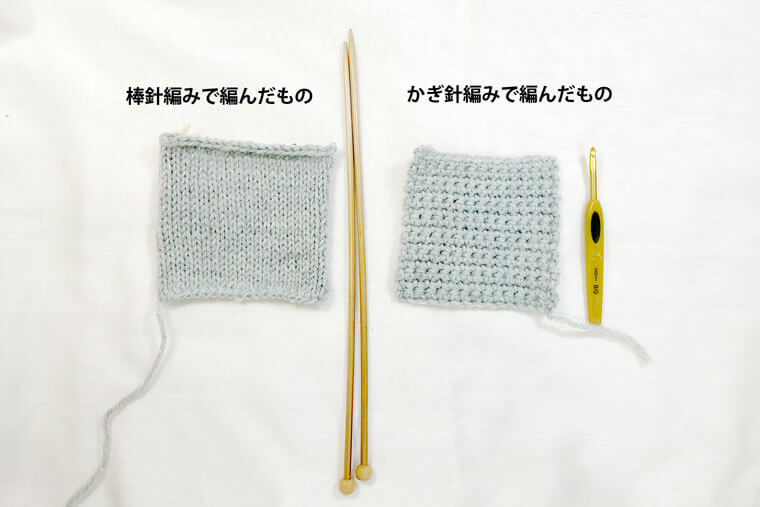
The operational difference between these two crafts comes down to loop containment. In knitting, the maker works with two tapered needles, sliding a row of interconnected live loops from the left needle to the right. Every stitch in the working row rests openly on the shaft. Drop a needle, and an entire column can unravel downward in seconds, a disaster known across maker communities as a dropped stitch. Recovering that run requires catching the loose loop with a repair latch before tension destroys the surrounding rows.
Crochet operates on an entirely different mechanical logic. The artisan wields a single hook, typically crafted from aluminum, bamboo, or ergonomic resin, to pull loops through previous anchor points. Only one live loop rests on the tool at any given moment. When a crocheter pauses, drops their tool, or steps away, the surrounding structure stays locked in place. Stitch anatomy and looping in crochet rely on self-anchoring knots like single, double, and treble stitches, where the yarn wraps around itself to form a miniature post.
This structural independence explains why beginner learning curves diverge so sharply. Novices learning crochet often struggle initially with uniform tension and recognizing where to insert the hook into intricate post heads. Once that visual literacy clicks, however, the fear of disastrous project failure drops close to zero. Knitting presents an easier visual baseline, every stitch sits neatly in a row, but demands coordinated bilateral motor skills and constant vigilance over vulnerable, open loops.
Yarn Consumption and Fabric Behavior: Drape, Stretch, and Density
The architectural differences between knots and intermeshed waves directly dictate how the finished textile behaves. Knitting creates a succession of interlocking, v-shaped loops called stockinette or garter ridges. Because these loops merely slide through one another without knotting, the resulting web offers remarkable two-way elasticity. Knitwear stretch and drape allow garments to mold around human shoulders, wrists, and torsos without bunching or adding excessive bulk.
Crochet builds density rather than glide. Because each crochet stitch incorporates multiple yarn overs and wrapping passes, the fabric develops significant physical thickness. This makes yarn consumption comparison an essential calculation for any textile artist. Laboratory swatch tests confirm that crochet consumes between 25% and 35% more yardage than standard stockinette knitting when working with the exact same yarn weight and hook/needle millimeter gauge. A lightweight sweater that requires four skeins of wool when knit may swallow five or six skeins if executed in crochet.
That rigid structural density, however, serves as crochet’s greatest asset in non-apparel designs. Three-dimensional amigurumi toys, sculptural accessories, structured tote bags, and firm home decor demand internal integrity. Amigurumi structural density prevents fiberfill stuffing from poking through the gaps, allowing makers to sculpt firm, freestanding objects. Knitting the same shape requires extraordinarily fine gauge needles and often yields a floppy, distorted form that collapses under its own weight.
Technical and Material Comparison: Knitting Versus Crochet
| Core Parameter | Hand Knitting (Two Needles) | Crochet (Single Hook) |
|---|---|---|
| Active Tool Mechanics | Dozens of simultaneous open loops on 2 pointed needles | Single live loop held on 1 notched hook |
| Relative Yarn Consumption | Baseline efficiency (approx. 25%, 33% less yarn) | Higher consumption due to layered wraps and knots |
| Fabric Drape & Elasticity | High mechanical stretch, fluid drape, contours to body | Stiff, textured, dense, holds 3D self-supporting shapes |
| Error Recovery Risk | High risk; dropped stitches run down vertically | Minimal risk; unravels cleanly stitch-by-stitch to error |
| Industrial Automation | Fully automated by circular and flatbed knitting machines | Cannot be automated; 100% handmade by human artisans |
| Ideal Project Archetypes | Fine sweaters, socks, fitted beanies, fluid shawls | Amigurumi, market bags, granny square cardigans, rugs |
The Neurological Pull: Repetitive Craft Stress Relief and the Modern Maker
The viral explosion of fiber arts across social feeds is not purely aesthetic; it answers a profound psychological exhaustion. As screen times among working adults climbed past eight hours daily, tactile, offline hobbies emerged as practical forms of cognitive grounding. The rhythmic, bi-manual movement patterns required by needlecrafts lower cortisol levels and activate alpha brain wave states associated with deep focus.
Vancouver textile artist Kevin Yee highlighted this psychological shift during a recent showcase of contemporary Canadian craft culture. Yee noted that the repetitive motor looping of crochet served as an indispensable anchor for regulating nervous system strain. Focusing hands on yarn tension and stitch counts interrupts anxiety spirals, replacing fragmented digital scrolling with immediate, physical feedback.
Fiber arts tool mechanics foster a state of micro-accomplishment that modern knowledge work rarely provides. A software engineer or student can spend hours resolving complex issues without producing anything visible. In contrast, fifteen minutes with a hook or pair of needles yields two inches of warm, tangible progress. That feedback loop explains why crafting circles have sprung up across university campuses and tech hubs, transforming traditional domestic solitary labor into communal gathering points.
The Slow Fashion Surge and Economic Reality in 2026
The broader needlecraft revival has collided head-on with corporate apparel manufacturing. Awareness surrounding fast fashion supply chains has pushed younger buyers toward garments with traceable provenance. When fast fashion brands stock racks with faux-crochet festival tops, conscious consumers quickly spot the reality behind the label: because industrial looms cannot replicate true crochet loops, every authentic crochet piece sold in high-street stores relies on low-wage manual labor.
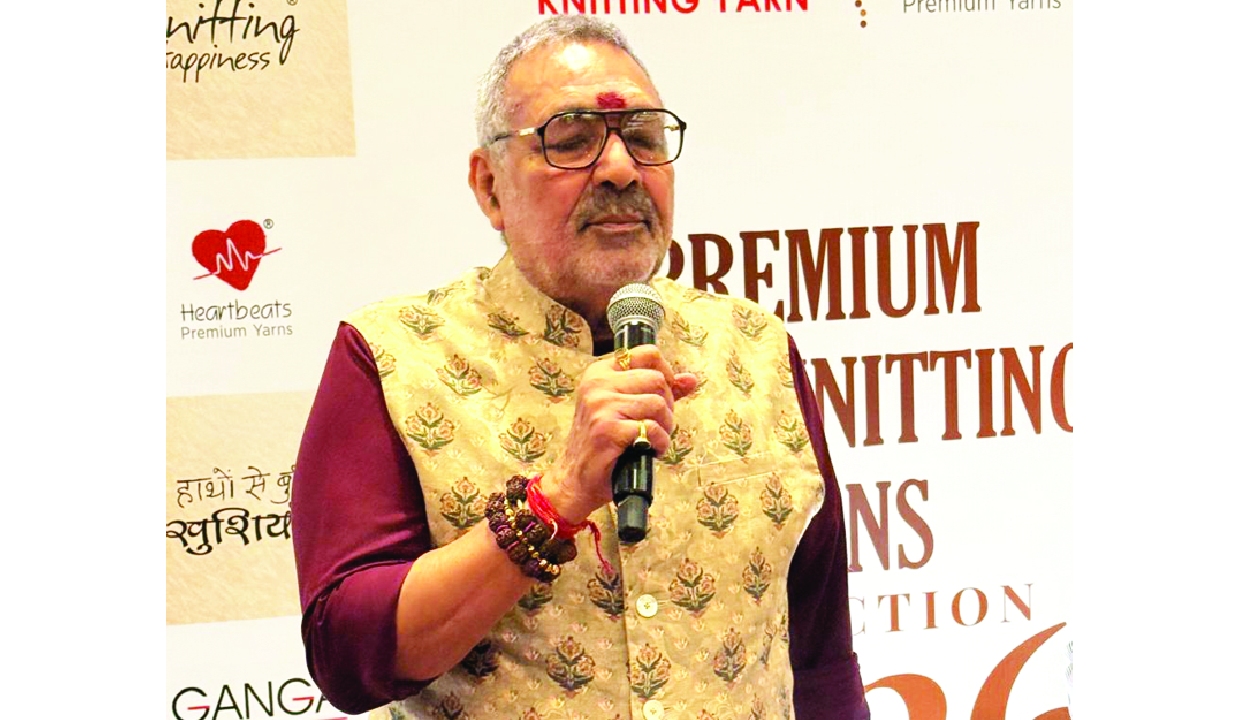
This realization has ignited a global conversation around artisanal value and ethical compensation. Speaking in New Delhi, India’s Union Textiles Minister Giriraj Singh emphasized that the worldwide demand for crochet and hand knitting represents a multi-million-dollar economic driver capable of revitalizing decentralized rural artisan clusters. By connecting home-based creators directly to international boutique markets via social platforms, generational handcrafters are converting traditional skills into sustainable, home-based livelihoods.
At the grassroots level, independent pattern designers have established micro-publishing empires. Independent creators sell downloadable PDF templates on community platforms, netting between $6 and $12 per pattern with zero distribution overhead. A single viral design for a patchwork hexagon cardigan can generate upwards of $50,000 in pattern royalties within months, proving that handcrafting techniques now drive serious digital commerce.
Selecting the Right Discipline: Project Matching and Skill Paths
Choosing whether to pick up an aluminum hook or a pair of birch needles comes down to the items you intend to build and your patience for mechanical precision. Neither discipline is inherently superior, but each rewards different spatial problem-solving styles.
Crochet is ideal for makers who prioritize speed, structural independence, and sculptural design. If your immediate goals include whimsical plushies, sturdy tote bags, modular granny square blankets, or heavy cardigans with distinctive surface texture, single-hook crafting is the clear path. It accommodates irregular adjustments on the fly, lets you alter shapes without complex mathematical decreases, and forgives mid-project interruptions without unraveling.
Knitting is the discipline of choice for those who want classic, lightweight garments that mirror retail apparel. If your ambition centers on seamless wool socks, featherweight cashmere pullovers, or supple beanies that glide under winter coat collars, two needles are non-negotiable. While the learning curve requires stricter discipline around maintaining tension and preventing dropped stitches, the payoff is a refined, fluid fabric with timeless tailoring potential.
Frequently Asked Questions (FAQ)
Q1: Why can't modern machines replicate crochet stitches?
Commercial knitting machines operate using thousands of tiny latched needles arranged in fixed beds, moving yarn through loops in simple back-and-forth passes. Crochet requires a free-floating hook to maneuver around finished posts, pull yarn through varying angles, and wrap working yarn multiple times around an anchor. Building a robotic mechanism capable of mimicking human finger manipulation for crochet remains cost-prohibitive compared to human labor.
Q2: Does knitting always take longer than crochet?
Generally, yes. Because individual crochet stitches like half-double or double crochet incorporate tall vertical posts, a single pass creates significantly more fabric height than a standard knit row. Crocheters typically complete a blanket or scarf in roughly one-half to one-third of the time required by a hand knitter using comparable yarn weights.
Q3: Which craft is easier on wrists and hand joints?
Both crafts carry ergonomic risks if practiced without proper breaks, but they stress different muscle groups. Knitting distributes fabric weight evenly across both hands, but circular needle use requires prolonged micro-movements of finger joints. Crochet concentrates mechanical action in the dominant wrist and grip fingers. Crafters dealing with joint tenderness often find ergonomic silicone-handled hooks or continental-style knitting to be the gentlest approaches.
The Enduring Cultural Identity of Handcrafted Textiles
The boundary dividing crochet and knitting is not a competitive rivalry; it is a collaborative spectrum of textile engineering. Where knitting achieves unmatched fluidity and body-skimming grace, crochet provides structural fortitude and boundless geometric freedom. Both crafts transform a continuous strand of spun fiber into an enduring, functional object through deliberate human effort.
In an environment increasingly dominated by synthetic production and short-lived consumer goods, picking up yarn tools is an act of intentional slowness. The ongoing renaissance across online creator networks and regional workshops underscores a permanent shift: consumers no longer view knitting and crochet as nostalgic relics of previous generations. Instead, they stand as vibrant, indispensable methods for taking personal control over what we wear, how we decompress, and what we value in an automated world.