The Secret Seasoning Chef Hack: Why Higashimaru Udon Soup Makes the Ultimate Fried Rice
Every home cook chasing restaurant-quality fried rice eventually collides with the exact same failure: moisture. In commercial kitchens, woks blast under jet-engine burners that vaporize liquid seasoning on contact, leaving each grain of rice coated in aromatic oils rather than pooled in sauce. In residential kitchens where gas burners top out at a fraction of that thermal output, dumping tablespoons of liquid soy sauce into a pan drops the surface temperature instantly, turning crisp grains into a sodden, gummy mass.
Over the past year, an unassuming solution tucked away in Japanese pantries has swept domestic kitchens and social feeds. Instead of reaching for the soy sauce bottle, home cooks and culinary creators are tearing open packets of Higashimaru Udon Soup powder. As highlighted in a recent livedoor ニュース Report covering culinary channel Meshi Koizumi, splitting a single pouch of Higashimaru seasoning across multiple dishes, including a quick, savory fried rice, has turned the sixty-year-old broth base into one of Japan's most reliable stir-fry shortcuts.
📌 Key Takeaways:
- The Moisture Fix: Swapping liquid soy sauce for dehydrated dashi powder eliminates steam buildup, allowing home woks to achieve authentic para-para (separated, non-sticky) rice texture.
- The Flavor Mechanics: Higashimaru's blend relies on Kansai-style light soy sauce, kelp, and bonito, delivering concentrated umami without darkening the rice or introducing bitter scorched sugars.
- Widespread Utility: Verified culinary experiments and official social demonstrations show single seasoning packets easily stretching across quick single-pan meals, cold soups, and curry variations.
The Moisture Trap: Why Liquid Soy Sauce Ruins Weeknight Yakimeshi
Traditional Japanese fried rice, or yakimeshi, relies on a delicate touch. Unlike Chinese wok cookery, which often embraces robust dark soy sauce and intense smoky wok hei, Japanese home versions favor a lighter, golden hue with balanced savory notes. Achieving this at home is notoriously difficult.
When cold rice hits hot fat, the exterior starches fry and form a micro-crust. The moment a cook drizzles liquid soy sauce directly over the pan, two problems occur. First, the water content in the sauce drops pan temperature immediately. Second, the porous starches absorb the liquid, swelling the rice into a sticky mash. Cooks try to compensate by leaving the rice over the flame longer, which burns the delicate soy sugars before excess water evaporates.
Powdered seasoning bypasses this thermodynamic trap completely. By delivering salt, dried soy sauce, and aromatic extract in a moisture-free matrix, the grains stay separate. The rice toasts against the metal, developing a nutty aroma while absorbing zero water.
Kansai Dashi Chemistry: Decoding Higashimaru's Red-Box Formula
Higashimaru Shoyu, headquartered in Tatsuno, Hyogo Prefecture, and led by President Kohei Takeuchi, has produced its signature instant udon soup since 1964. While Tokyo cooking relies on dark *koikuchi* soy sauce paired with aggressive dried bonito flakes, the Kansai culinary tradition centers on *usukuchi* (light) soy sauce blended with delicate kelp (*kombu*) and sweet sardine or bonito dashi.
The contents of Higashimaru's iconic red-and-white sachet look simple, but the chemistry is calculated:
First, dehydrated usukuchi soy sauce provides clean sodium without heavy brown pigments, preserving the bright golden color of fried egg and rice. Second, the combination of kelp extract and dried fish flakes triggers synergistic umami. Glutamates from the kelp bind with inosinates from the fish, multiplying perceived savoriness far beyond what raw salt or monosodium glutamate achieve alone.
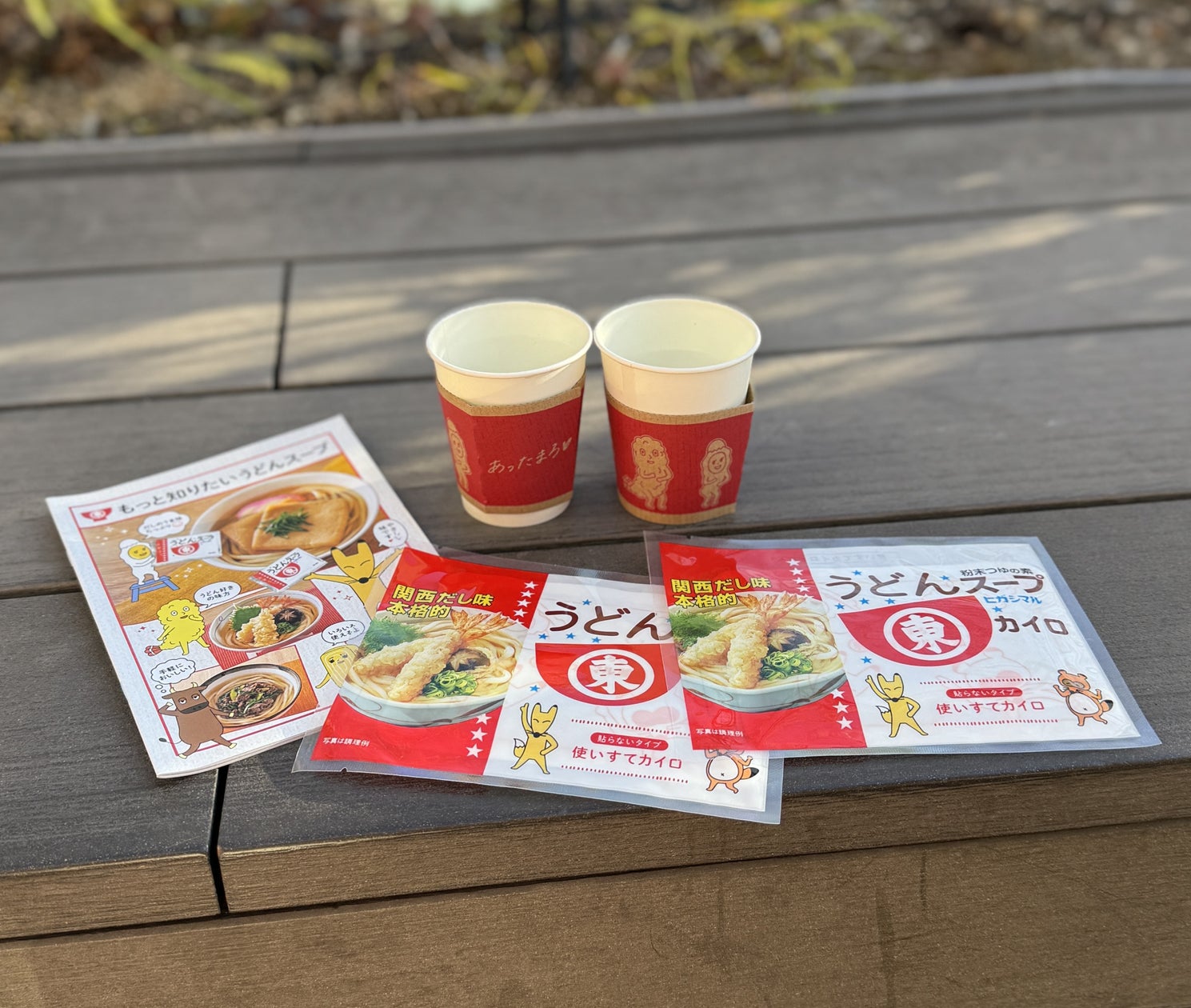
This culinary footprint has driven remarkable physical engagement. At an official winter installation at Tokyu Plaza Omotesando "Omokado" from January 10, 23, 2026, Higashimaru served more than 6,500 cups of hot broth over a single three-day weekend. The ubiquity of the seasoning profile explains why Japanese cooks intuitively reach for it when everyday recipes need a quick lift.
Performance Across Pan Styles: Powdered Base Versus Liquid Seasonings
Understanding how different seasoning methods behave on residential burners clarifies why dried dashi powder has gained such momentum. The following breakdown compares standard home-cooking approaches against specialized powdered bases.
| Seasoning Method | Moisture Impact on Rice | Flavor & Color Profile | Pan Heat Retention |
|---|---|---|---|
| Traditional Dark Soy Sauce (1, 2 tbsp) | High liquid volume; frequently produces soft or clumping grains | Deep brown color; rich caramelization with risk of scorching | Drops pan temperature by 20°C, 40°C instantly |
| Higashimaru Udon Soup Powder (0.5, 1 packet) | Zero moisture; preserves crisp outer starch barrier | Pale golden hue; layered bonito, kelp, and mellow soy umami | Zero temperature drop; maintains maximum frying heat |
| Standard Granular Chicken Bouillon (1 tsp) | Zero moisture; keeps individual grains separated | Yellowish tint; poultry-forward savoriness lacking seafood depth | Maintains pan heat; dissolves easily in cooking oil |
| Higashimaru Curry Udon Soup (0.5 packet) | Zero moisture; starch thickeners toast against the pan surface | Warm ochre color; spiced curry aroma backed by dashi foundation | Maintains pan heat; oils toast spices immediately |

The Half-Packet Rule: Mastering the Single-Pan Yakimeshi Technique
Executing this technique requires precision. Because one standard 8-gram sachet of Higashimaru is calibrated to flavor approximately 250 to 300 milliliters of hot water for soup broth, pouring a full packet into a single bowl of rice will overwhelm the palate with sodium.
Professional home demonstrators, including YouTube channel Meshi Koizumi, emphasize rationing: use exactly half a packet (roughly 4 grams) for 200 grams of cooked white rice.
The sequence matters just as much as the measurement:
Heat a tablespoon of neutral oil or lard over high flame. Pour in one beaten egg, allowing it to puff for barely three seconds. Immediately dump the rice directly onto the soft curd, using a folding motion to break up lumps so the egg fat coats the rice starch.
Once the grains loosen, scatter the half-packet of udon soup powder across the entire surface of the rice. Never drop the powder into a single mound. Toss rapidly for sixty seconds. The residual oil dissolves the dried seasonings, adhering them directly to each grain. Finish with finely chopped scallions and cracked white pepper. The entire cooking window takes less than four minutes.
From Curry Powders to Chanpon: The Evolution of Soup Packet Hacks
The viral adoption of udon soup powder has expanded beyond the standard red box. Higashimaru's Curry Udon Soup packet, traditionally formulated with potato starch, warming spices, and fish stock, has become an alternative favorite for home cooks seeking comfort food without dragging out jars of spice pastes. By using half a curry packet for fried rice and reserving the other half for an egg-drop udon bowl, busy cooks produce two distinct weeknight meals from a single packet of stock.
Higashimaru's corporate media channels have aggressively nurtured this consumer creativity. On July 16, 2026, Higashimaru's official X account published a chilled soup (*hiyajiru*) recipe leveraging the powdered soup base, generating over 271,000 views from readers looking for effortless summer meals. Later, a post showcasing an Akashi-yaki style dipping broth made with the powder passed 480,000 views.
These figures reflect a fundamental shift in how Japanese pantry staples function. Products originally sold as single-use soup bases now serve as granular, high-intensity flavor concentrates across a wide spectrum of everyday cooking.
Frequently Asked Questions (FAQ)
Q1: Will using udon soup powder make the fried rice taste overwhelmingly fishy?
A1: No. The dashi profile in Kansai-style broth relies heavily on kelp alongside mild dried bonito flakes. When toasted in cooking oil alongside egg and rice, the seafood notes soften into a well-rounded, savory background savoriness rather than a sharp fish flavor.
Q2: Should I use freshly cooked warm rice or cold refrigerated rice for this hack?
A2: Slightly cooled, freshly cooked rice with lower surface moisture works best. If using cold refrigerated rice, microwave it for 30 to 45 seconds until lukewarm before it hits the pan; dropping hard, freezing starch into the wok will chill your skillet and cause the grains to break apart into paste.
Q3: Can I add extra vegetables and meat without diluting the seasoning?
A3: Yes, but keep the additions dry. Diced roast pork (chashu), bacon, or finely minced scallions fry well without releasing water. If you include high-moisture vegetables like cabbage, bean sprouts, or onions, cook them separately first to cook off water before incorporating them into the rice.
Rethinking Pantry Staples in Modern Home Cooking
The widespread adoption of Higashimaru soup powder for fried rice illustrates how practical kitchen shortcuts overcome hardware limitations. Most home cooks do not possess commercial wok stations or professional culinary training. What they do have is a crowded cabinet of dry seasonings designed by food scientists to deliver balanced salinity, aroma, and glutamate synergy in seconds.
By identifying liquid water as the root cause of soggy fried rice, home cooks repurposed a humble supermarket sachet into a reliable cooking tool. As weeknight cooking prioritizes speed and simplicity without sacrificing texture, these pantry hacks demonstrate that the secret to better meals often lies not in exotic ingredients, but in understanding how ordinary staples work under heat.