Unbelievable 100-Yen Finds: The Secret to Hanging Air Plants on a Budget
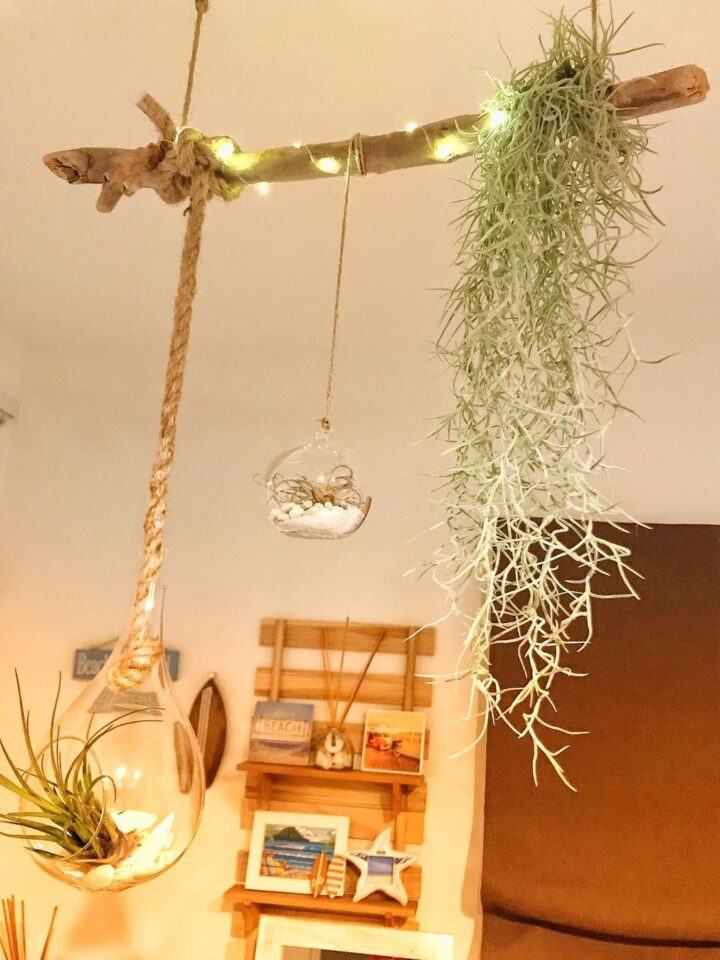
Urban apartment dwellers across Tokyo, Osaka, and international design forums are bypassing luxury nurseries to hunt down rare botanical finds in discount aisles. What started as casual thrifting has exploded into a full-scale movement known as the "plant digging" trend. According to an investigative Excite エキサイト Report, discerning shoppers are regularly scouring local Daiso outposts for coveted epiphytes like Tillandsia gardneri, species that command upwards of ¥2,000 to ¥4,000 ($15, $28) in specialty boutiques but appear on budget shelves for a single ¥100 to ¥300 coin. Yet acquiring these delicate specimens is only half the battle. The real design challenge lies in keeping them alive in tight spaces without spending a fortune on display mounts.
Suspended air plants offer an ideal compromise between botanical design and urban space limits. By taking advantage of inexpensive everyday hardware, interior plant enthusiasts are transforming utilitarian kitchen racks, craft wire, and mesh baskets into bespoke vertical gardens. These 100-yen shop DIY fixtures not only match the clean look of high-end home goods brands, but they also give epiphytes the exact airflow they require to survive indoors.
📌 Key Takeaways:
- The Movement: The viral "plant digging" phenomenon turns discount retailers like Daiso and Seria into treasure troves for rare cultivars like Tillandsia gardneri at a fraction of nursery costs.
- The Botanical Fix: Hanging air plants in open-air wire and mesh configurations guarantees crucial 360-degree ventilation, eliminating the rot commonly caused by damp, stagnant terrarium containers.
- The Cost Advantage: Assembling a multi-tier vertical display using 100-yen craft aluminum wire and mesh baskets typically costs under $5 total, outperforming pre-assembled boutique hangers priced at $35 to $60.
The "Plant Digging" Craze in 100-Yen Aisles
In mid-2026, social feeds like Instagram and Lemon8 saw a dramatic surge in posts tagged with #植物ディグ (plant digging). Botanical hobbyists treat budget household chains as uncurated discovery grounds. Daiso plant finds, historically limited to standard succulents and small Tillandsia ionantha, have expanded unexpectedly into rare, soft-leafed varieties. Spotting a healthy Tillandsia gardneri with its silver-green, rosette-shaped foliage tucked beside household cleaning supplies delivers the thrill of finding valuable antiques at a garage sale.
Specialty green retailers typically mark up epiphytes to cover commercial greenhouse overhead and long cultivation cycles. When large-scale retailers partner directly with regional agricultural suppliers, small batches of exotic bromeliads slip into general inventory at baseline consumer prices. These budget gems sell out within hours of delivery. Once brought home, these delicate plants require immediate attention to environmental setup to survive in residential environments.
Why Air Circulation Decides the Survival of Hanging Epiphytes
New growers frequently make the mistake of dropping air plants into closed glass bowls or deep ceramic cups. In nature, Tillandsia do not grow in soil. They use their modest root systems solely as anchors, clinging to tree bark, rock faces, and cliff crevices high above forest floors. Their leaves are covered in specialized microscopic scales called trichomes, which capture moisture and airborne minerals directly from the surrounding atmosphere.
When these plants are submerged in stagnant air or placed against non-porous surfaces following a watering cycle, moisture pools in the leaf axils. This creates an ideal breeding ground for bacterial rot that can destroy a healthy specimen within days. Suspending plants ensures continuous air circulation for Tillandsia from every angle, allowing outer trichomes to drink during misting and dry fully within four hours. A hanging display is not simply a minimalist styling preference; it is an essential life-support system for the plant.
Cost Comparison: 100-Yen Solutions vs. Specialty Garden Retail
Building an eye-catching hanging arrangement does not require custom-welded brass hardware or artisan macrame cords. Standard Japanese 100-yen chains (including Daiso, Seria, and CanDo) stock everyday structural supplies that convert directly into hanging systems. Comparing these humble supplies against high-end nursery equipment reveals a stark price gap.
| Display Method | 100-Yen Shop Component | Specialty Boutique Equivalent | Average Savings |
|---|---|---|---|
| Geometric Wire Cages | Anodized craft wire (¥110 / $0.75) | Handmade brass himmeli ($28, $45) | 95%, 97% |
| Tiered Vertical Planter | Stackable mesh baskets (¥220 / $1.50) | Tiered wire hanging grid ($35, $50) | 93%, 96% |
| Boho Hanging Sling | Jute twine & wooden rings (¥220 / $1.50) | Custom woven plant hanger ($22, $38) | 88%, 94% |
| Wall Grid Display | Coated wire mesh net & S-hooks (¥220 / $1.50) | Architectural display trellis ($40, $65) | 94%, 97% |
The numbers speak for themselves. You can assemble an entire window display containing five distinct air plant mounts for under $10 total. High-end lifestyle boutiques market the exact same functional concept at a massive markup, relying primarily on branded packaging rather than superior durability.
Building a Wire Air Plant Hanger Without Harming the Plant
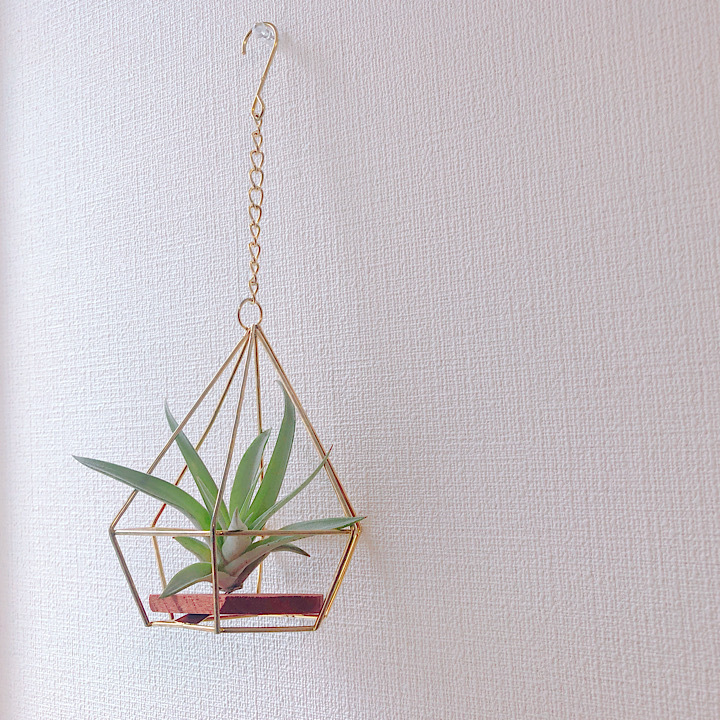
Crafting hanging equipment at home requires attention to material safety. Many hobbyists reach for standard hardware wire without checking its chemical composition. Copper is toxic to all Tillandsia species. Direct contact with bare copper wire, or even runoff water carrying trace copper ions, causes cellular necrosis in epiphytes. The leaves turn black where they touch the metal, and the center of the rosette rots out within weeks.
The safest alternative found in discount craft aisles is anodized aluminum craft wire, typically sold in 1.5mm to 2.5mm diameters. Aluminum does not leach toxic heavy metals, bends easily by hand without specialized pliers, and holds structural spiral shapes over time. To construct a spiral cone holder:
Cut an 18-inch length of 2.0mm aluminum wire. Coil the bottom into a tight cone using a small wooden marker or thumb as a mold, leaving generous gaps between rings so light and air reach the base of the plant. Extend the top wire vertically into an elongated hook that loops cleanly over curtain rods or ceiling tracks. The plant simply rests inside the open-air cradle without glue, wire pinching, or structural constriction.
Transforming Small Spaces Through Indoor Vertical Gardening
Compact city apartments often run out of usable shelf and windowsill space within weeks of starting a plant hobby. Indoor vertical gardening bypasses floor plan constraints entirely by treating bare walls and empty window frames as primary growing real estate. Suspended displays shift greenery into the upper air volume of a room, catching natural drafts while keeping tabletops and countertops clutter-free.
Mesh hanging baskets sourced from kitchen organization aisles work exceptionally well for multi-plant clusters. When suspended near a north- or east-facing window, a single 100-yen coated wire mesh shelf can hold a diverse low-cost succulent display alongside silver-leafed Tillandsia. The perforated metal lets ambient daylight illuminate the entire foliage column, eliminating the dead zones that occur when potted plants are crowded together on deep bookshelves.
Frequently Asked Questions (FAQ)
Q1: Which 100-yen materials are safest for suspending Tillandsia?
Stick to anodized aluminum wire, coated steel kitchen racks, 100% natural cotton twine, and untreated jute cord. Avoid bare copper, brass hardware, treated pressure lumber, and industrial adhesives, as off-gassing compounds and heavy metal toxicity quickly kill epiphytic foliage.
Q2: How do I water air plants when they are suspended in custom wire hangers?
If your wire cradle is made from corrosion-resistant aluminum or synthetic cord, you can mist the plant directly in place, provided the room has steady cross-ventilation. For weekly deep soaks, lift the plant gently out of its wire cradle, submerge it in room-temperature water for 20 to 30 minutes, shake off all excess water thoroughly upside down, and let it dry completely on a towel before hanging it back up.
Q3: Can rare varieties like Tillandsia gardneri thrive in wire hangers?
Yes, they actually prefer them. Tillandsia gardneri features exceptionally soft, thin trichomes that trap moisture easily, making the plant unusually prone to basal rot if left on flat trays. Suspending the plant at a slight downward angle in an open wire loop prevents water from settling at the core of the crown, preserving its delicate silver leaves.
Maintaining Vertical Plant Displays Beyond the Initial Setup
Building an attractive suspension system is only the initial step. Long-term health depends on how well that display fits your home's microclimate. Overhead air currents change drastically between winter heating cycles and summer air conditioning. Epiphytes suspended in direct line with HVAC vents will dehydrate rapidly, losing their rich leaf color as their moisture reserves drop.
Inspect your hanging hardware every few months. Cotton and jute cords exposed to frequent misting will break down over time, requiring quick replacement to keep plants from falling to the floor. Aluminum wire setups, by contrast, last indefinitely without rusting or degrading. By combining practical 100-yen hardware with sensible botanical care, you can build a lush, resilient vertical garden that looks curated, costs next to nothing, and thrives for years to come.