Viral Brainteaser Trend Sparks Math Revival: The Rise of Daily Commute Math Challenges
Every morning on the Yamanote line in Tokyo and subway cars across major metropolitan centers, thousands of passengers bypass short-form video feeds to stare at arithmetic riddles. Puzzles like 20 − 18/3 and 18 − 5/5, designed to be solved within five seconds, have become unexpected traffic drivers across digital editions of lifestyle publications. As highlighted in a recent andGIRL [アンドガール] on MSN Report, these micro-challenges challenge adults on basic arithmetic operations they have not parsed by hand since grade school.
What looks like trivial clickbait points to a genuine cognitive blind spot. When faced with converting fractions to whole numbers inside standard order-of-operations formulas, surprising numbers of educated professionals hesitate or commit foundational errors. The viral spike in commute math brainteasers reveals how quickly working adults shed elementary school calculation habits, sparking an organic revival in mental math fluency.
📌 Key Takeaways:
- The Viral Trigger: Lifestyle magazines and morning puzzle aggregators are driving millions of page views with five-second arithmetic tests centered on fraction-to-integer conversion.
- The Cognitive Snag: Adults frequently confuse the order of operations by subtracting left-to-right before simplifying the fraction, turning
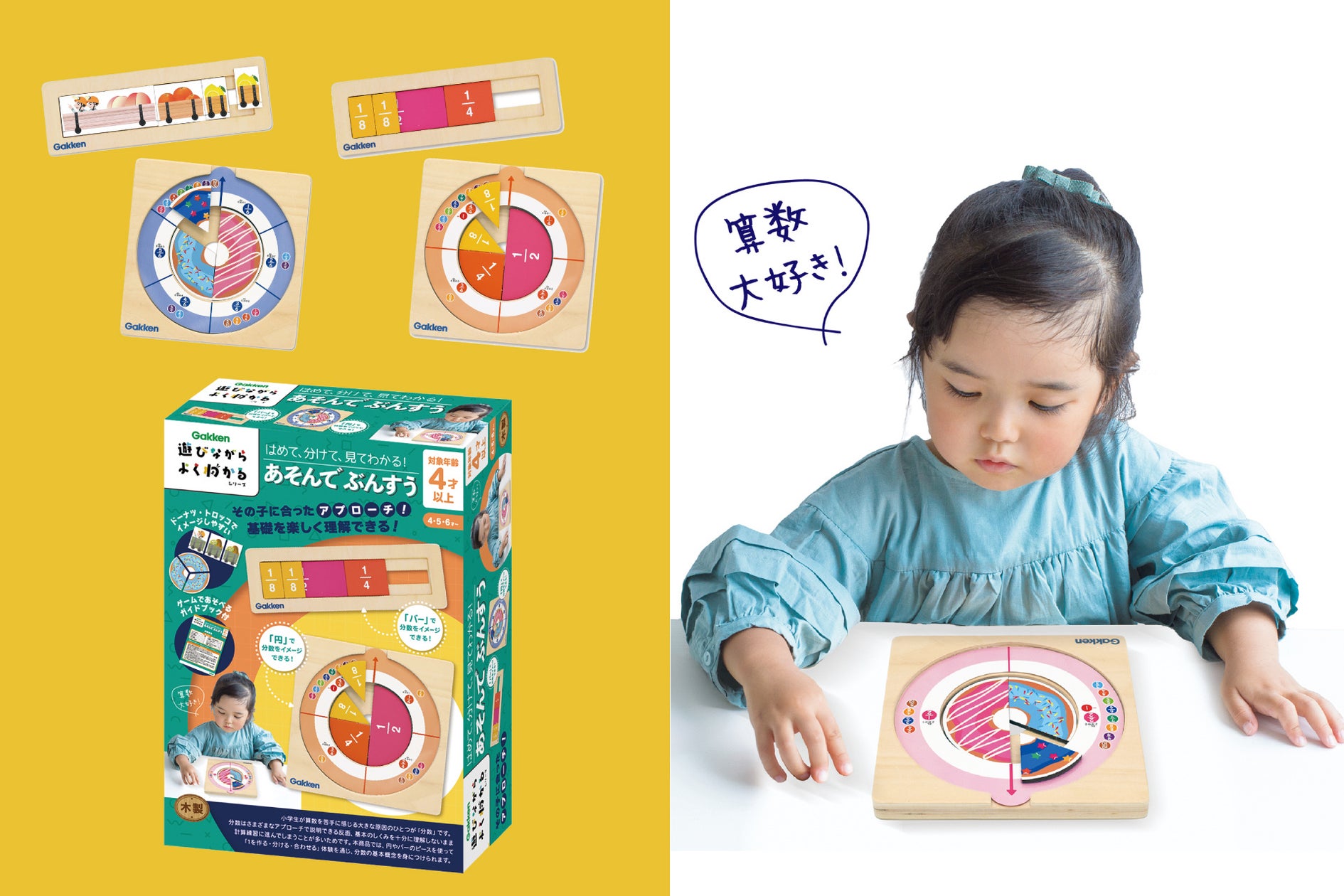
20 − 18/3into an incorrect2/3instead of14.- The Educational Response: Publishers and learning companies, including Gakken Sta:Ful, are rolling out new visual and physical arithmetic tools to address fractions as the single largest stumbling block in arithmetic education.
How Commute Micro-Puzzles Captured Adult Attention
The appetite for bite-sized arithmetic did not emerge in a vacuum. Casual gaming shifted heavily toward rapid logic exercises over the past three years, preparing users for content that offers immediate cognitive feedback. When lifestyle outlet andGIRL launched its series of morning math quizzes on September 28, 2026, posing questions like 18 − 5/5, social feeds logged thousands of user shares within hours.
Commuters found themselves caught between pride and embarrassment. The prompt promises that any competent adult should solve the equation in five seconds flat. When an adult miscalculates 18 − 5/5 as 13/5 because they subtracted 5 from 18 first, the cognitive shock prompts an immediate retry. By October 3, 2026, follow-up problems such as 20 − 18/3 repeated the traffic surge, proving that audience interest was not an algorithmic fluke.
Commuters report using these micro-tests as mental wake-up calls. Scrolling social media leaves many feeling drained before stepping into the office. Working through quick numerator and denominator division provides a crisp, dopamine-driven sense of competence before the workday starts.
The Mechanics of Converting Fractions to Whole Numbers
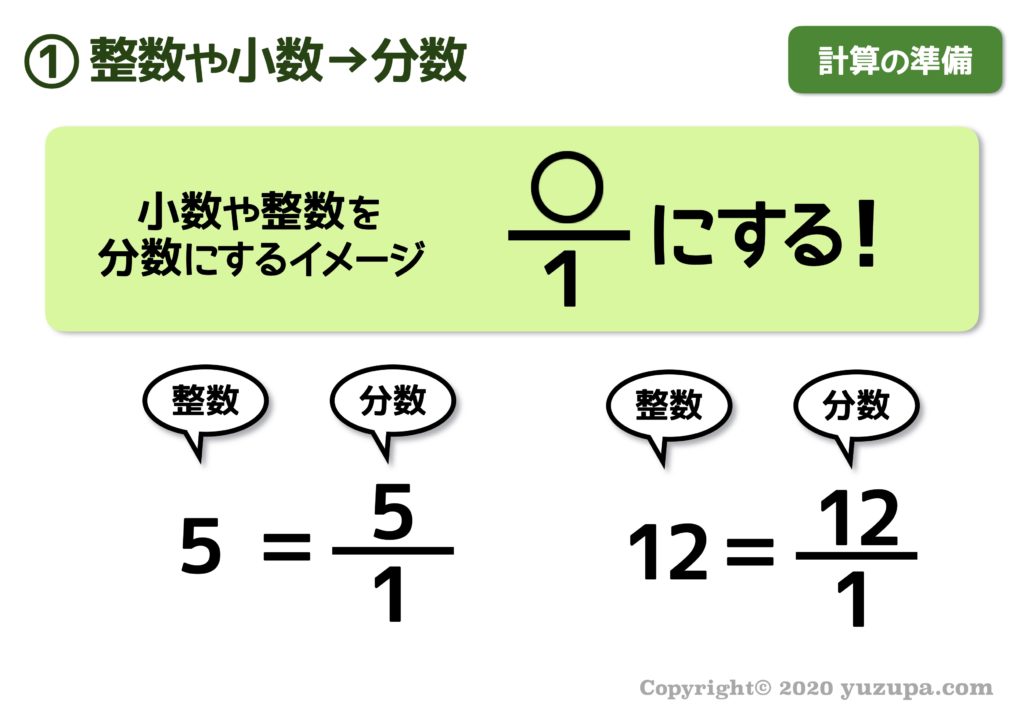
The core challenge behind these viral math revival puzzles comes down to translating fraction notation into basic division. In Japanese elementary education, the phrase 分数 を 整数 に 直す describes converting an improper fraction into an integer or whole number. While the rule is mathematically simple, adult intuition often trips over symbolic formatting.
A fraction is a division expression where the top number represents the dividend and the bottom serves as the divisor. When the numerator is an exact multiple of the denominator, the fraction simplifies neatly into a whole number without leaving a remainder:
18 / 3 = 18 ÷ 3 = 6
5 / 5 = 5 ÷ 5 = 1
Once converted, the larger expression resolves through standard order of operations. In the expression 20 − 18/3, the fraction functions as a single division term that holds priority over subtraction. The step-by-step resolution proceeds cleanly:
20 − (18 ÷ 3) = 20 − 6 = 14
Adults who stumble do so because they read left-to-right without applying operator precedence. They subtract 18 from 20 to get 2, leaving them with the nonsensical result of 2/3. The trick lies in recognizing that fraction reduction methods must precede addition and subtraction.
Why Elementary Math Fundamentals Slip From Adult Memory
Fractions represent the historically steepest drop-off point in mathematical confidence. A market study released on May 25, 2026, by Gakken Sta:Ful, a subsidiary of Nihon Shuppan Hanbai led by President Noriaki Aoki and Nippan President Ken Togashi, confirmed that elementary students consistently rank arithmetic as their most difficult subject, with fractions identified as the primary source of academic friction.
To combat this persistent issue, Gakken Sta:Ful launched tactile educational kits designed to make fractional division visible and physical. When children fail to develop an intuitive visual grasp of parts versus wholes, they rely on rote memorization. That memorization erodes rapidly over decades of relying on smartphone calculators and automated spreadsheets.
| Expression Type | Common Mistake | Correct Mathematical Step | Accurate Integer Result |
|---|---|---|---|
| 18 − 5/5 | (18 − 5) / 5 = 13/5 | Convert 5/5 to 1 first | 17 |
| 20 − 18/3 | (20 − 18) / 3 = 2/3 | Convert 18/3 to 6 first | 14 |
| 24 ÷ 8/2 | (24 ÷ 8) / 2 = 1.5 | Reduce 8/2 to 4 first | 6 |
| 15 + 36/4 | (15 + 36) / 4 = 12.75 | Reduce 36/4 to 9 first | 24 |
University of Tokyo professor Katsuhiro Nishinari explored this disconnect in an analysis published by Toyo Keizai in early 2025. Nishinari examined why children and adults struggle with the mechanics of fraction division, particularly the rule requiring one to invert the fraction and multiply. In equations like 6 ÷ 1/2, transforming the operation to 6 × 2 = 12 feels counterintuitive if one only associates division with making quantities smaller. Without conceptual grounding, people freeze when encountering mixed forms during everyday tasks.
Mental Math Calculation Tricks for Faster Commute Solutions
Resolving mental math brainteasers within the targeted five-second window requires bypassing long division entirely. Practiced commuters rely on divisible fraction rules and prime factoring to spot whole numbers instantly.
The fastest mental math shortcut checks whether the numerator ends in an even digit (for division by 2), sums to a multiple of three (for division by 3), or ends in 0 or 5 (for division by 5). In the case of 18/3, adding 1 + 8 = 9 verifies divisibility by 3 immediately, yielding 6 before the eye moves back to the subtraction sign.
Another technique handles mixed numbers to whole numbers by splitting compound fractions into clean additive parts. As educational commentaries on Yahoo! News pointed out in May 2026, mixed numbers, such as 2 and 1/3, exist specifically to bridge improper values with real-world measurements. Recognizing that an improper fraction like 7/3 is simply 2 + 1/3 prevents mental overload when balancing budgets, reviewing construction specs, or timing culinary recipes.
The Cultural Function of Micro-Learning in 2026
The success of morning arithmetic quizzes reflects a broader shift in digital media consumption. Commuters are actively seeking small, structured challenges that provide a clean resolution. Unlike open-ended news stories or stressful workplace notifications, basic mathematics offers unambiguous closure.
A problem like 20 − 18/3 possesses exactly one correct answer. The process is deterministic, fair, and self-contained. For an urban commuter navigating unpredictable transit delays and overflowing inboxes, spending thirty seconds mastering a fraction conversion provides a rare moment of complete cognitive control.
Online communities on Reddit and Japanese social platforms have developed informal speed-solving threads around these daily drops. Users swap mental calculation shortcuts, share self-deprecating memes about forgetting third-grade rules, and encourage peers to keep their mental arithmetic sharp. What began as lifestyle clickbait has quietly evolved into a daily workout for working minds.
Frequently Asked Questions (FAQ)
Q1: Why must the fraction be simplified before completing the subtraction?
Under standard algebraic order of operations (PEMDAS/BODMAS), division and multiplication take precedence over addition and subtraction. Because a fraction bar represents division, the term 18/3 must be computed as 6 before evaluating 20 − 6.
Q2: How do you identify whether an improper fraction converts into an exact whole number?
An improper fraction converts into an integer if and only if the numerator divided by the denominator yields a remainder of zero. Apply standard divisibility tests: if the digits of the numerator sum to a multiple of 3, it divides evenly by 3; if the last two digits form a multiple of 4, it divides evenly by 4.
Q3: Why do so many adults fail these five-second tests despite holding degrees?
Adult brains develop heavy reliance on visual pattern recognition and automated tools. In casual mobile browsing, the brain favors reading left-to-right rather than scanning for mathematical operator hierarchy, leading to careless sequence errors rather than a genuine lack of intelligence.
Cognitive Agility on the Daily Commute
The sustained popularity of morning math challenges demonstrates that mental calculation remains an appealing personal benchmark. While automated software handles corporate data and algorithmic spreadsheets, keeping the mind nimble against simple arithmetic traps preserves foundational analytical instincts.
Taking ten seconds on the morning train to parse 20 − 18/3 is not about testing for an elementary school exam. It serves as a deliberate mental reset. Taking a few moments to simplify fractions into whole numbers offers an accessible, satisfying way to start the morning with clarity and focus.