Visual Evolution of Japan's Volleyball Icons: From Past Legends to Ishikawa and Takahashi
When Japan swept Iran in straight sets on September 13, 2026, to capture the Asian Volleyball Championship in Fukuoka, the roar inside the arena carried far beyond regional bragging rights. The victory formally punched Japan’s ticket to the 2028 Los Angeles Olympics, marking their third consecutive Olympic berth since Tokyo 2021. As detailed in an MSN Report, the early qualification offers a strategic breather, yet it exposes the team to the psychological trap of complacency that derailed their quarterfinal campaign in Paris.
Still, the global spectacle surrounding Ryujin Nippon cannot be measured on the scoreboard alone. Across arenas in Bangkok, Manila, and Gdansk, Japanese national team jerseys sell out within minutes of gate openings. International broadcasts regularly cut to weeping supporters clutching glossy photo placards. The Japanese media labels this fascination under a familiar cultural tag: ikemen (handsome men). Yet what began decades ago as domestic television packaging has crystallized into an unprecedented crossover of aesthetic idolization and world-class athletic legitimacy.
📌 Key Takeaways:
- Early LA 2028 Clearance: Japan's straight-sets sweep over Iran in Fukuoka secured their Olympic berth two years ahead of the Games, locking the world number six squad into three consecutive tournaments.
- Generational Evolution: The team moved past the 1990s broadcast novelty era, where good looks compensated for mediocre international results, establishing a roster where aesthetic appeal runs parallel to elite overseas contracts.
- Commercial Powerhouse: Visual icons Yuki Ishikawa and Ran Takahashi have driven commercial partnerships to record heights, expanding Ryujin Nippon’s reach across Southeast Asia and Europe through cross-border lifestyle endorsements.
Fukuoka Gold and the High Stakes of Early Qualification
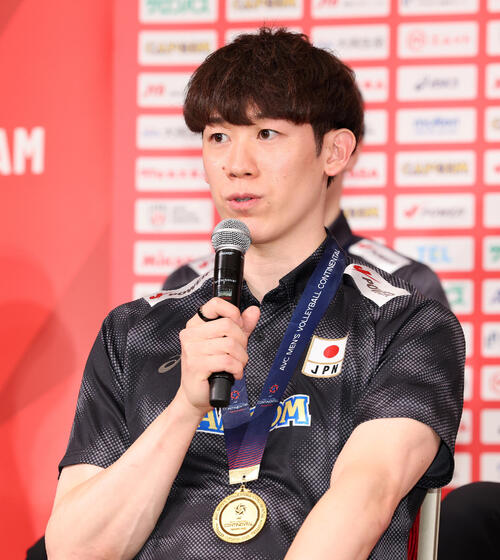
Twenty-four hours after sweeping world number 18 Iran in Fukuoka, team captain Yuki Ishikawa walked into a press conference room in central Tokyo. At 30, carrying the wear of grueling seasons in Italy’s SuperLega, the outside hitter looked visibly unburdened. "To win the Asian Championship and take this ticket early brings pure relief," Ishikawa told reporters on September 14. "Securing qualification was our entire focus, and getting it done here changes our preparation completely."
The breathing room is unprecedented for a men's program that previously endured a 16-year Olympic drought between Beijing 2008 and Tokyo 2021. Yet relief carries hazards. Analysts were quick to point out that locking down an Olympic berth nearly two full seasons ahead of the opening ceremony creates a long competitive vacuum. During the Paris 2024 quadrennial, Japan carried the "strongest squad in history" label into the tournament, only to stumble in high-pressure stretches against Italy. Early qualification eliminates the do-or-die urgency of last-chance intercontinental tournaments, putting pressure on head coach staff to engineer elite test matches.
Alongside Ishikawa, outside hitter Ran Takahashi immediately pivoted into commercial duties. On September 15, Takahashi joined his older brother Rui in Tokyo to sign an expansive brand ambassadorship with Suntory Sports. Fresh off his season with Poland’s Bogdanka LUK Lublin, Takahashi admitted the squad barely had time to toast their Fukuoka gold before flight schedules and corporate commitments fragmented the roster. The demand for their presence reflects a dual reality: these players are world-caliber athletes and high-yield entertainment properties.
The Lineage of Ryujin Nippon’s Idol Culture
Japan’s tradition of marketing national volleyball players through a pop-idol lens dates back four decades. In the late 1980s and early 1990s, commercial broadcasters transformed the FIVB World Cup into a glitzy domestic fixture. Pop agency Johnny & Associates debuted groups like V6 and Arashi on the volleyball court, having them perform theme songs on temporary stages prior to first serve. The players themselves were styled to match the aesthetic of Japanese television dramas.
Yuichi Nakagaichi and Masaji Ogino anchored the 1990s visual movement. Nakagaichi, with his sharp jawline and explosive back-row attack, drew screaming crowds of high school students to suburban gymnasiums. Takashi Narita brought a calmer, cinematic presence. Broadcasters cut to slow-motion replays of players brushing sweat from their faces to pop ballads. The coverage generated ratings, but it hid a painful athletic truth: the men's national team was sliding rapidly down the world rankings, eventually falling off the Olympic map entirely after Barcelona 1992.
In the late 2000s, opposite spiker Takahiro Yamamoto stepped into the spotlight, followed closely by the dual-ace pairing of Kunihiro Shimizu and Tatsuya Fukuzawa. Fans flocked to their matches, yet the domestic volleyball machinery treated them primarily as television stars. International victories were sparse. The disconnect between media idolization and on-court relevance led critics to dismiss the squad as lightweight pin-ups unable to withstand European physical dominance.
Tracking the Eras of Japan's Volleyball Visual Icons
The transformation from media curiosities to athletic powerhouses unfolded across three distinct periods, mapped by changes in domestic league structures and overseas mobility:
| Era | Key Figures | Cultural & Media Blueprint | On-Court Performance |
|---|---|---|---|
| 1988, 1998 | Yuichi Nakagaichi, Takashi Narita, Masaji Ogino | Broadcast idolization; Johnny's boyband halftime shows; domestic high school girl fandom. | Barcelona 1992 appearance, followed by an international slide and Olympic absence. |
| 2003, 2014 | Takahiro Yamamoto, Kunihiro Shimizu, Tatsuya Fukuzawa | Tabloid and variety show features; corporate league model; domestic variety fame. | Beijing 2008 qualification; early group exits; missed 2012 and 2016 Games. |
| 2015, 2026 | Yuki Ishikawa, Ran Takahashi, Yuji Nishida | TikTok and Instagram viral clips; global streaming; high-end fashion and lifestyle deals. | VNL Silver (2024), World No. 6 rank, early qualification for LA 2028. |
How Yuki Ishikawa and Ran Takahashi Broke the Novelty Mold
The fundamental break with past generations lies in technical execution. Yuki Ishikawa made a calculated decision as a university standout at Chuo University: he bypassed the comfort of Japanese corporate leagues to sign with Italian outfits Modena, Latina, and later Allianz Milano. By proving that an undersized Asian outside hitter could hit past towering European middle blockers, Ishikawa stripped away the label of soft pin-up. His poise under pressure and calculated approach turned him into a respected captain across Italian volleyball before he took the national team armband.
Ran Takahashi accelerated that blueprint on mobile screens. Boasting quarter-American heritage, Takahashi combines boyish features with extraordinary defensive reflexes. Instead of relying on Japanese network television for exposure, his profile surged on TikTok and Instagram during the 2021 Tokyo Games. Short videos of his pipe attacks, back-row pancake saves, and training antics drew hundreds of millions of views throughout Southeast Asia.
Crucially, Takahashi backed the visual charm with grueling overseas experience. Taking contracts with Kioene Padova, Vero Volley Monza, and Bogdanka LUK Lublin, he developed into one of the most reliable serve-receivers on the international circuit. When Takahashi dives across the hardwood to salvage an errant pass, spectators witness genuine grit rather than staged marketing. The visual appeal serves as the hook, but the technical mastery keeps audiences engaged.
The Global Digital Fandom and Southeast Asian Explosions
The modern fanbase for Ryujin Nippon looks entirely different from the domestic crowds of the 1990s. When the Volleyball Nations League (VNL) holds pool matches in Pasay City, Philippines, or Bangkok, Thailand, the arena lobby turns into a sea of red Japan jerseys. Fans wait outside team hotels for hours, holding signs written in Japanese calligraphy. Supporters track travel itineraries, share practice clips, and run dedicated online communities across X, TikTok, and Weibo.
This dynamic has overturned long-standing sports marketing formulas. In European clubs, Japanese players were once signed as public relations exercises to attract Japanese corporate sponsors. Today, European clubs benefit from massive spikes in social media engagement and international merchandising sales. When Takahashi transferred to Lublin, the Polish club's digital followings jumped by tens of thousands of international users overnight. Match broadcasts were added to regional streaming platforms across Asia purely to accommodate his fanbase.
The players navigate this visibility with careful boundaries. Ishikawa keeps his public profile focused squarely on match analysis, fitness, and recovery. Takahashi mixes commercial campaigns with casual, behind-the-scenes glimpses into his brotherly dynamic with Rui. Neither falls into the old variety-show circuits that diminished the serious sports credibility of past generations. They run their platforms like elite global athletes who understand their cultural power.
Frequently Asked Questions (FAQ)
Q1: Why are Japan men's national volleyball players so popular internationally?
A1: The team combines exceptional court mechanics, speed, floor defense, and tactical back-row offense, with strong visual charisma. Modern stars like Yuki Ishikawa and Ran Takahashi compete in top European leagues, earning competitive credibility that backs up their massive social media followings.
Q2: How did Japan qualify for the Los Angeles 2028 Olympic Games so early?
A2: Japan won the Asian Volleyball Championship in Fukuoka on September 13, 2026, sweeping Iran in the final. Under the updated Olympic qualification structure, continental championship titles provide direct berths, securing their spot two seasons ahead of schedule.
Q3: Who were the original visual icons of Japanese men's volleyball?
A3: The idolization trend began in the late 1980s and 1990s with stars like Yuichi Nakagaichi, Takashi Narita, and Masaji Ogino. It was heavily driven by domestic TV networks pairing matches with pop idol musical performances to boost television ratings.
Sustaining the Standard on the Road to Los Angeles 2028
Securing an Olympic spot two seasons early solves logistics, but it presents a tactical riddle for Japan's technical staff. Without the crucible of qualifying tournaments, the national team risks falling out of sync with the physical intensity of European and South American powers. Winning over fans across Asian arenas is gratifying; navigating the knockout rounds against towering Italian and Polish blocks requires cold tactical precision.
The visual fascination surrounding Ishikawa, Takahashi, and their teammates is no longer a marketing illusion built by domestic television directors. It is an authentic byproduct of world-class play wrapped in charismatic presence. Over the next two years leading into Los Angeles 2028, the team's legacy will hinge on whether that popularity translates into the Olympic podium finish that has eluded Japanese men's volleyball for more than five decades.